What Tool to Cut Metal Roofing: A Homeowner’s Guide to Choosing the Right Cutting Tools

Cutting metal roofing may look like a simple DIY task, but choosing the wrong tool can damage expensive panels, create unsafe conditions, or leave rough edges that lead to future problems. Many homeowners ask what tool to cut metal roofing when installing a small roof section, replacing damaged panels, adding flashing, or completing a roofing project.
The right cutting tool depends on the type of metal roofing, the thickness of the material, the size of the cut, and whether you are making a straight cut, curved cut, or detailed trim. Some tools are designed for occasional homeowner projects, while others are better suited for professional roofing contractors.
In this guide, we will explain the best tools for cutting metal roofing, when to use each option, safety considerations, common mistakes to avoid, and when hiring a roofing professional is the smarter choice.
Quick Answer
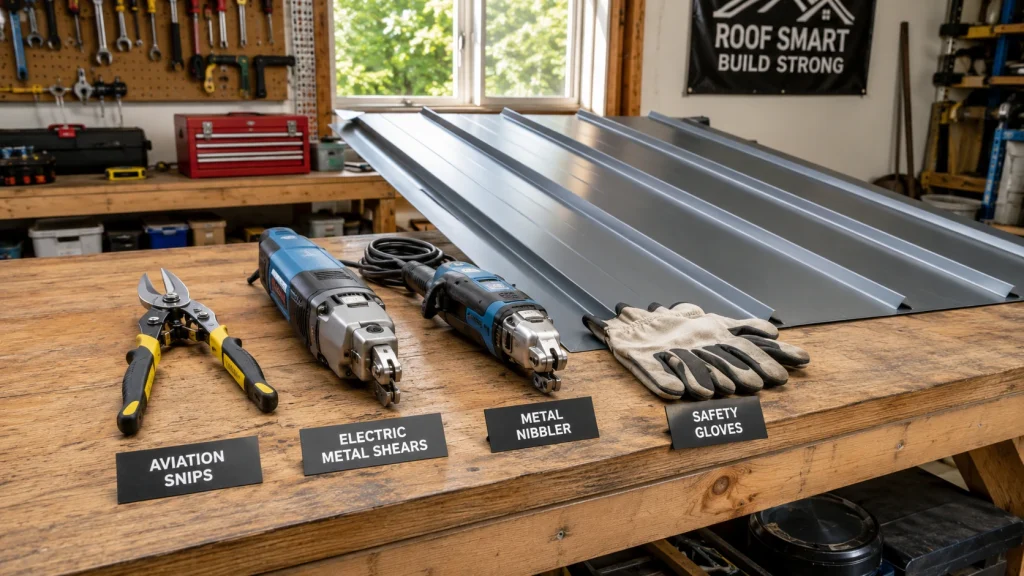
The best tool to cut metal roofing depends on the project. For small cuts, aviation snips or metal shears work well. For long straight cuts, electric metal shears, nibblers, or circular saws with metal-cutting blades are better options. Always use proper safety equipment and avoid damaging the protective coating.
Understanding Metal Roofing Before Choosing a Cutting Tool
Metal roofing panels are made from materials such as steel, aluminum, copper, or zinc-coated steel. Each material behaves differently when cut.
Most residential metal roofs include protective coatings that help prevent rust and weather damage. A poor-quality cut can remove this protection, expose the metal underneath, and shorten the roof’s lifespan.
Before choosing a tool, consider:
- Metal type: Steel usually requires stronger cutting tools than aluminum.
- Panel thickness: Thicker panels need more powerful equipment.
- Cut location: Edge trimming requires different tools than cutting openings.
- Amount of cutting: A small repair job does not require the same equipment as a full roof installation.
A homeowner replacing one damaged panel may only need hand tools, while someone cutting dozens of panels for a new roof installation may need professional-grade equipment.
Best Tools to Cut Metal Roofing
1. Aviation Snips: Best for Small Cuts and Simple Trimming
Aviation snips are one of the most common tools for homeowners working with metal roofing.
They look similar to scissors but are designed specifically for cutting sheet metal. They are useful for small adjustments, trimming edges, and cutting flashing materials.
There are three common types:
- Left-cut snips: Best for cutting curves toward the left.
- Right-cut snips: Best for curves toward the right.
- Straight-cut snips: Best for straight lines.
Advantages
- Affordable
- Easy to control
- No electricity required
- Good for small roofing repairs
Limitations
- Slow for large cuts
- Can be tiring on thicker metal
- May leave uneven edges if used incorrectly
For occasional homeowner projects, aviation snips are often the safest starting point.
2. Electric Metal Shears: Best for Faster Straight Cuts
Electric metal shears are designed specifically for cutting sheet metal quickly and smoothly.
They work similarly to scissors but use motor power instead of hand force. They are useful when cutting multiple roofing panels or making longer straight cuts.
Benefits
- Faster than manual snips
- Cleaner cuts
- Less physical effort
- Good for repeated work
Considerations
Electric shears require more control because mistakes can happen quickly. A small error can damage an entire roofing panel.
3. Metal Nibbler: Best for Detailed Cuts
A metal nibbler removes small pieces of metal as it moves along the cutting path.
This makes it excellent for:
- Curved cuts
- Pipe openings
- Vent openings
- Skylight preparation
A nibbler creates cleaner detailed cuts compared with many other power tools.
Pros
- Excellent control
- Good for complex shapes
- Less distortion of metal panels
Cons
- More expensive
- Creates small metal chips
- Requires practice
Homeowners should use caution because metal fragments can become dangerous if proper eye protection is not worn.
4. Circular Saw With Metal-Cutting Blade: Best for Long Cuts
A circular saw can cut metal roofing quickly when equipped with the correct blade.
However, using the wrong blade can damage panels, create excessive sparks, and remove protective coatings.
If using a power saw:
- Choose a blade designed for metal cutting.
- Cut slowly and carefully.
- Support the panel properly.
- Wear safety equipment.
According to OSHA construction safety guidance, workers should take proper precautions when using power tools because cutting operations can create hazards from flying particles, sharp edges, and equipment misuse.
5. Angle Grinder: Powerful but Requires Extra Care
An angle grinder with a suitable metal-cutting disc can cut through metal roofing quickly.
However, it is not always the best choice for homeowners.
Advantages
- Very powerful
- Cuts thick metal effectively
- Useful for difficult materials
Disadvantages
- Creates sparks
- Can damage coatings
- Requires careful handling
- Produces rougher edges
For most residential roofing projects, safer cutting methods are usually preferred.
Tool Comparison: Which Metal Roofing Cutter Should You Choose?
| Tool | Best Use | Skill Level | Main Advantage | Limitation |
|---|---|---|---|---|
| Aviation Snips | Small repairs and trimming | Beginner | Affordable and easy | Slow on large cuts |
| Electric Shears | Straight panel cuts | Intermediate | Faster and cleaner | Requires power |
| Metal Nibbler | Curves and openings | Intermediate | Precise cutting | Higher cost |
| Circular Saw | Long straight cuts | Advanced | Very fast | Can damage coating |
| Angle Grinder | Heavy cutting | Advanced | Powerful | More safety risks |
Step-by-Step: How to Cut Metal Roofing Safely
1. Measure the Cut Carefully
Measure twice before cutting.
Metal roofing panels are expensive, and a wrong measurement can waste material.
Mark the cutting line clearly using:
- Permanent marker
- Chalk line
- Measuring tape
- Straight edge
2. Protect Yourself Before Cutting
Metal roofing edges are extremely sharp.
Wear:
- Safety glasses
- Cut-resistant gloves
- Long sleeves
- Hearing protection when using power tools
The National Safety Council recommends proper eye protection when working with tools that can create flying particles, especially during cutting and grinding activities.
3. Secure the Metal Panel
Loose panels can move while cutting, causing inaccurate cuts or injuries.
Place the panel on a stable surface and secure it before using power tools.
4. Make the Cut Slowly
Avoid forcing the tool through the metal.
A controlled cut creates:
- Cleaner edges
- Less panel damage
- Better installation results
5. Protect the Cut Edge
After cutting:
- Remove sharp burrs.
- Clean away metal fragments.
- Apply appropriate touch-up protection if required.
This helps prevent corrosion and keeps the roofing system durable.
DIY Cutting vs Hiring a Roofing Professional
| Situation | DIY May Work | Professional Recommended |
|---|---|---|
| Cutting one small piece of flashing | Yes | Not always needed |
| Replacing a small panel | Possible with experience | Helpful |
| Cutting many roofing panels | Difficult | Recommended |
| Creating roof openings | Risky | Recommended |
| Working near roof edges | Unsafe | Recommended |
Metal cutting is only one part of roofing work. Proper installation, sealing, fastening, and weatherproofing are equally important.
Expert Tip
Expert Tip: Never cut metal roofing without planning where the cut edge will be installed. Factory-finished edges are usually more durable, so avoid exposing cut edges in highly visible or water-exposed areas whenever possible.
When to Call a Roofing Professional
Not every metal roofing project is suitable for DIY work.
You should consider hiring a roofing professional when:
- You need to replace multiple roofing panels.
- The roof has leaks or structural damage.
- You need to cut around vents, skylights, or chimneys.
- The roof is steep or difficult to access.
- You are unsure about proper sealing methods.
A professional roofer understands how cuts affect water drainage, flashing, fasteners, and long-term roof performance.
The National Roofing Contractors Association provides roofing industry resources and contractor education information that can help homeowners understand professional roofing standards.
Common Mistakes Homeowners Should Avoid
- Using the wrong blade: A general-purpose blade may damage metal roofing panels.
- Cutting without measurements: Incorrect cuts can waste expensive materials.
- Ignoring safety equipment: Sharp metal edges can cause injuries.
- Leaving exposed cut edges untreated: This may increase corrosion risk.
- Using excessive force: Let the tool do the work.
- Cutting on the roof without experience: Falling risks increase when handling tools at height.
- Choosing tools based only on price: The cheapest tool may create poor results and additional repair costs.
FAQs
What is the easiest tool to cut metal roofing?
For small homeowner projects, aviation snips are usually the easiest tool. They are affordable, simple to control, and do not require electricity.
Can I cut metal roofing with a regular saw?
A regular wood-cutting saw blade is not recommended. Use a blade specifically designed for cutting metal to avoid damaging the roofing material.
Can metal roofing panels be cut without damaging them?
Yes. Using the correct tool, making controlled cuts, and protecting exposed edges can help prevent damage.
Is an angle grinder good for cutting metal roofing?
An angle grinder can cut metal roofing, but it requires extra caution because it creates sparks, heat, and rough edges.
Do I need special tools to cut corrugated metal roofing?
For small cuts, snips may work. For larger projects, electric shears or nibblers usually provide better results.
Can cutting metal roofing cause rust?
Improper cutting can expose unprotected metal and increase corrosion risk. Proper finishing and protection are important.
Should homeowners cut their own metal roofing?
Small trimming jobs may be manageable, but larger roofing modifications often require professional skills to prevent leaks and installation problems.
Conclusion
Choosing what tool to cut metal roofing depends on your project size, material thickness, and cutting requirements. Aviation snips are excellent for small repairs, while electric shears, nibblers, and specialized saw blades are better for larger or more complex jobs.
The right tool can make cutting easier, but proper technique and safety matter just as much. A poorly cut panel can create future problems with leaks, rust, and roof performance.
Before starting any metal roofing project, evaluate your experience, the condition of your roof, and the risks involved. For simple tasks, the right tools can help you complete the job successfully. For larger roofing work, hiring a qualified professional is often the best investment for protecting your home.
Make the smart choice: use the right cutting method, prioritize safety, and protect your roof for years to come.
