
What Are the Benefits of a Metal Roof? A Practical Homeowner’s Guide
Choosing a new roof is a major decision for any homeowner. You are not only paying for materials and labor. You are also choosing how well your home will handle heat, storms, moisture, maintenance, and long-term protection.
So, what are the benefits of a metal roof compared with more common roofing materials like asphalt shingles? For many homeowners, the biggest benefits are long lifespan, strong weather resistance, energy efficiency, low maintenance, and a clean modern look. But metal roofing is not perfect for every home or every budget.
In this guide, Roofers Gazette explains the real advantages, the possible downsides, and the important things to check before you invest in a metal roof.
Quick Answer
The main benefits of a metal roof are durability, long lifespan, energy efficiency, fire resistance, low maintenance, and strong protection against wind, rain, and snow. A properly installed metal roof can cost more upfront, but it may save homeowners money over time by reducing repairs, replacements, and cooling demand.
Why Homeowners Are Choosing Metal Roofs
Metal roofing has moved far beyond barns, sheds, and commercial buildings. Today, many U.S. homeowners choose metal roofs for suburban homes, cabins, coastal properties, and modern custom houses.
The reason is simple: homeowners want roofing systems that last longer and require fewer repairs.
A roof is one of the most important protective parts of a house. It keeps water out, helps manage heat, supports attic ventilation, and protects the structure below. When a roof fails, the damage can spread quickly to decking, insulation, ceilings, walls, and even electrical systems.
A metal roof can be a smart choice because it is built to handle many of those risks better than some traditional materials.
1. Metal Roofs Can Last a Long Time
One of the biggest benefits of a metal roof is its long service life.
A standard asphalt shingle roof often needs replacement sooner than many homeowners expect, especially in areas with strong sun, high humidity, hail, heavy rain, or poor attic ventilation. Metal roofing, when installed correctly, can last much longer.
The exact lifespan depends on:
- Type of metal
- Coating quality
- Roof design
- Installation quality
- Local weather
- Ventilation
- Maintenance
- Fastener and flashing condition
Standing seam metal roofing usually performs better than exposed-fastener panels because the fasteners are hidden and protected from weather. Exposed-fastener metal roofs can still perform well, but they often need more regular fastener inspection.
Key point: A metal roof is not automatically long-lasting just because it is metal. The material, underlayment, flashing, ventilation, and installer skill all matter.
2. Metal Roofing Handles Weather Well
Metal roofs are popular in areas that deal with tough weather. They can perform well against wind, rain, snow, and sun when properly installed.
Wind Resistance
Metal roofing panels are usually installed in large sections. This can reduce the number of weak points compared with smaller individual roofing pieces.
A properly installed metal roof can resist strong winds, but the details matter. Panel attachment, edge flashing, ridge caps, clips, screws, and roof deck condition all affect performance.
Homeowners in storm-prone areas should ask contractors about:
- Wind rating
- Manufacturer installation requirements
- Local building code compliance
- Edge metal details
- Fastener type and spacing
- Warranty coverage for wind damage
Rain and Water Shedding
Metal roofs shed water quickly because the surface is smooth. This can help reduce the amount of time water sits on the roof.
However, metal roofing still needs good flashing. Valleys, chimneys, skylights, sidewalls, vents, and roof transitions are common leak points on any roof.
Important warning: Most roof leaks are not caused by the main field of roofing material. They often happen around flashing, penetrations, or poor installation details.
Snow Shedding
In colder climates, metal roofs can help snow slide off more easily than rougher roofing surfaces. This may reduce heavy snow buildup in some cases.
But snow sliding off a metal roof can also be dangerous near walkways, driveways, decks, and entry doors. Snow guards may be needed to slow the release of snow and ice.
3. Metal Roofs Can Improve Energy Efficiency
Metal roofs can help reduce heat absorption, especially when they use reflective coatings or lighter colors. This can be useful in warmer climates where cooling bills are a concern.
The U.S. Department of Energy explains that cool roofs are designed to reflect more sunlight and absorb less solar energy, which can help lower roof surface temperature.
Metal roofing is often available with reflective paint systems and special coatings. These finishes can help the roof reflect solar heat instead of holding it.
This does not mean every metal roof will automatically lower your energy bill. Energy performance depends on:
- Roof color
- Coating reflectivity
- Attic insulation
- Attic ventilation
- Climate
- Home design
- HVAC condition
- Sun exposure
A dark metal roof may still get hot in direct sun. A lighter or reflective metal roof generally performs better for heat reflection.
Practical Homeowner Example
A homeowner in Texas, Florida, Arizona, or Georgia may care more about cooling performance. In that case, a light-colored reflective metal roof may be a smart upgrade.
A homeowner in a colder northern state may focus more on snow shedding, durability, and ice-related performance instead.
4. Metal Roofs Are Low Maintenance
Another major benefit of metal roofing is lower routine maintenance compared with some other roofing systems.
Metal does not crack like some materials. It does not lose granules like asphalt shingles. It is also less likely to absorb moisture.
Still, low maintenance does not mean no maintenance.
Homeowners should check for:
- Loose fasteners
- Damaged sealant
- Scratched coating
- Rust on vulnerable areas
- Loose flashing
- Clogged gutters
- Debris in valleys
- Damage after storms
- Sealant failure around penetrations
For standing seam roofs, maintenance is often simpler because fasteners are hidden. For exposed-fastener roofs, screws and washers should be inspected more often.
Smart rule: Have a metal roof inspected after major storms and every few years as part of normal home maintenance.
5. Metal Roofing Can Offer Strong Fire Resistance
Metal is non-combustible, which can make it a strong roofing option in areas where fire resistance matters.
This is especially important in wildfire-prone regions. The National Fire Protection Association shares guidance on preparing homes for wildfire and reducing ember risks, and the roof is one of the most important parts of the home to protect.
However, the roof system is more than the visible metal panels. Fire performance may also depend on the underlayment, roof deck, attic vents, nearby debris, gutters, and local building requirements.
A metal roof can help, but homeowners should also:
- Keep gutters clean
- Remove leaves and pine needles
- Trim overhanging branches
- Protect attic vents
- Maintain defensible space
- Choose proper underlayment
- Follow local fire codes
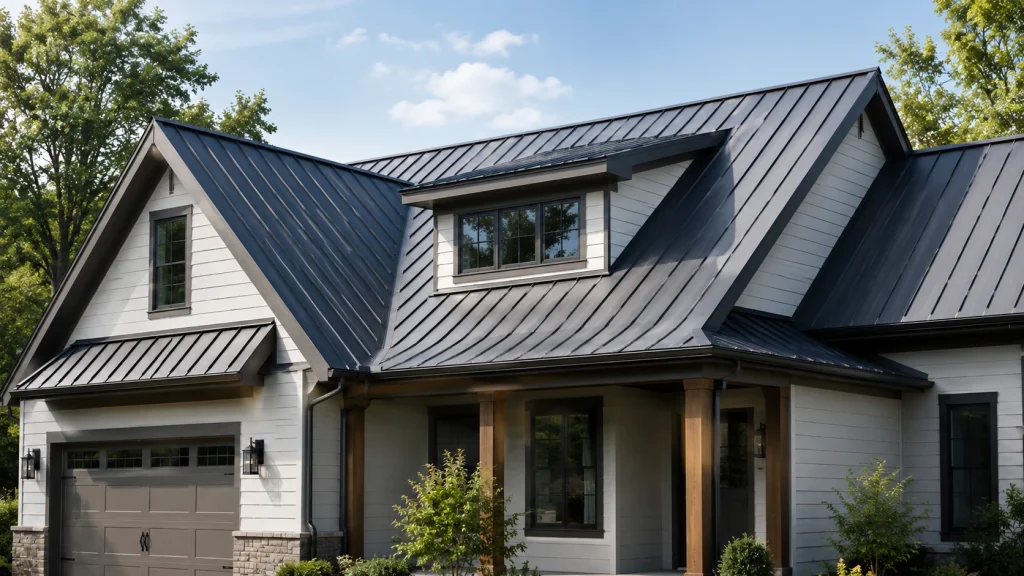
6. Metal Roofs Can Improve Curb Appeal
Metal roofing can give a home a clean, sharp, and modern look. It is available in many styles, including:
- Standing seam panels
- Metal shingles
- Metal shakes
- Metal tiles
- Corrugated panels
- Stone-coated steel
Standing seam metal roofing is popular for modern and farmhouse-style homes. Metal shingles can work well for homeowners who want durability but prefer a more traditional look.
Color options are also wide. Homeowners can choose charcoal, bronze, black, green, white, red, gray, copper tones, and more.
The right metal roof can improve curb appeal, but the wrong style or color can look out of place. Before choosing a color, compare samples against your siding, trim, gutters, brick, stone, and neighborhood style.
7. Metal Roofs May Add Long-Term Value
A metal roof can be a strong selling point for buyers because it suggests durability, lower maintenance, and fewer near-term replacement worries.
This does not mean every homeowner will recover the full upfront cost at resale. Roofing value depends on your market, home condition, buyer expectations, roof age, warranty, and installation quality.
But from a practical standpoint, many buyers like knowing the roof may not need replacement soon.
A well-installed metal roof can support long-term value because it may:
- Reduce future replacement concerns
- Improve curb appeal
- Support energy-efficiency goals
- Strengthen weather protection
- Lower maintenance worries
- Show that the home has been upgraded
8. Metal Roofing Is Often More Sustainable
Many homeowners also choose metal roofing because it can be a more sustainable option than materials that need frequent replacement.
Metal roofing can often contain recycled material, and many metal roofing products can be recycled at the end of their service life. Since metal roofs can last a long time, fewer replacements may mean less roofing waste over time.
That said, sustainability depends on the product, coating, local recycling options, and how long the roof actually lasts.
A poor installation that fails early is not sustainable. A well-installed roof that lasts for decades is much better for both your budget and waste reduction.
Benefits and Limitations of Metal Roofing
| Factor | Benefit | Limitation to Consider |
|---|---|---|
| Lifespan | Can last longer than many traditional roofing materials | Depends heavily on installation and material quality |
| Weather resistance | Performs well against wind, rain, sun, and snow | Hail, poor flashing, or bad installation can still cause damage |
| Energy efficiency | Reflective coatings may reduce heat absorption | Dark colors and poor attic insulation can reduce the benefit |
| Maintenance | Usually requires less routine upkeep | Exposed fasteners and sealants still need inspection |
| Fire resistance | Metal is non-combustible | Full roof system and surrounding debris still matter |
| Appearance | Many styles and colors available | Some HOAs may limit metal roofing styles or colors |
| Cost | May save money long term | Higher upfront cost than asphalt shingles |
Cost Considerations: Is a Metal Roof Worth the Price?
Metal roofing usually costs more upfront than basic asphalt shingles. This is one of the biggest reasons homeowners hesitate.
The higher price may come from:
- More expensive material
- Specialized installation
- Better coating systems
- Custom flashing
- Roof complexity
- Tear-off and disposal
- Deck repairs
- Labor skill requirements
But the upfront price is only one part of the decision.
A cheaper roof that needs replacement sooner may cost more over the long run. A better roof that lasts longer may provide stronger value, especially if you plan to stay in the home for many years.
When the Higher Cost Makes Sense
A metal roof may be worth it if:
- You plan to live in the home long term
- Your area gets severe weather
- You want lower maintenance
- Your current roof has failed early before
- You want a modern or premium look
- You want better heat reflection
- You are replacing the roof anyway
When It May Not Be the Best Choice
A metal roof may not be the best choice if:
- You plan to sell very soon
- Your budget is very tight
- Your roof structure needs major repair first
- Your HOA does not allow the style
- You choose a low-quality installer to save money
Decision point: A metal roof is usually a long-term investment, not the cheapest short-term roofing option.
Installation Quality Matters More Than Many Homeowners Realize
A metal roof can fail early if it is installed poorly. This is why contractor selection is one of the most important parts of the project.
Common installation mistakes include:
- Incorrect fastener placement
- Over-tightened or under-tightened screws
- Poor flashing around chimneys and skylights
- Wrong underlayment
- Poor panel alignment
- Bad ridge cap installation
- No allowance for thermal movement
- Improper cutting methods
- Weak edge details
- Ignoring manufacturer instructions
Metal expands and contracts as temperatures change. A good installer understands how to allow for that movement without creating leaks or panel stress.
The Metal Roofing Alliance notes that metal roofing energy performance can depend on finishes and coatings, which is another reason product selection and proper installation should work together.
Safety: Why Metal Roofing Is Not a Casual DIY Project
Roofing is dangerous work. Metal panels can be slippery, sharp at the edges, and difficult to handle in wind.
Homeowners should be very careful about walking on any roof. This is even more important with metal roofing, especially when it is wet, icy, dusty, or steep.
OSHA’s residential construction guidance explains that falls are a major risk in residential construction work, including roofing.
Do not climb on a metal roof without proper training, equipment, and fall protection. Saving money on a DIY repair is not worth a serious injury.
Expert Tip
Expert Tip: Before choosing a metal roof, ask the contractor for the exact panel type, coating system, underlayment, ventilation plan, flashing details, and warranty terms in writing. A good metal roof is a complete system, not just metal panels.
Warning Signs Your Metal Roof Needs Attention
Even durable roofs need inspection. Call a professional if you notice:
- Water stains on ceilings
- Loose or missing flashing
- Rust spots
- Bent or lifted panels
- Missing screws
- Cracked sealant
- Dripping in the attic
- Loose ridge cap
- Damaged gutters
- Scratches that expose bare metal
- Panels moving or making unusual noise
- Leaks around skylights, vents, or chimneys
Small issues can become expensive if ignored. A loose fastener or failing sealant may seem minor, but water can travel under panels and damage the roof deck.
When to Call a Roofing Professional
Call a roofing professional if you are considering a metal roof replacement, seeing signs of leaks, or dealing with storm damage.
A professional roofer can inspect the full system, not just the surface. This includes decking, underlayment, ventilation, gutters, flashing, and attic conditions.
You should call a roofer when:
- Your roof is leaking
- Panels are loose or damaged
- You see rust or coating failure
- A storm caused dents or lifted sections
- Your roof is near the end of its life
- You want to switch from shingles to metal
- You are unsure whether repair or replacement makes sense
- You need documentation for insurance
- You have skylights, chimneys, or complex rooflines
A trusted contractor should explain the problem clearly, show photos, discuss options, and avoid pressuring you into the most expensive choice.
Repair vs Replacement: How to Think About the Decision
Not every metal roof issue means you need a full replacement. Some problems can be repaired if the roof is still in good condition overall.
Repair May Make Sense When:
- Damage is limited to one area
- Flashing needs resealing or replacement
- A few fasteners are loose
- Minor storm damage is isolated
- The roof is still relatively new
- The coating is mostly intact
Replacement May Make Sense When:
- Leaks are widespread
- Panels are badly rusted
- The roof was poorly installed
- Fasteners are failing across the roof
- The roof deck has moisture damage
- Repairs are becoming frequent
- The roof no longer meets your needs
A professional inspection can help you avoid two expensive mistakes: replacing a roof too early or repairing a roof that is already failing.
Common Mistakes Homeowners Should Avoid
Many metal roofing problems start before installation even begins. Avoid these common mistakes:
- Choosing the cheapest bid without checking details. Low bids may leave out important items like underlayment, flashing, tear-off, or deck repairs.
- Ignoring attic ventilation. Poor ventilation can trap heat and moisture under any roofing system.
- Assuming all metal roofs are the same. Standing seam, corrugated panels, metal shingles, and stone-coated steel are different products.
- Not checking HOA rules. Some neighborhoods limit roof colors, profiles, or materials.
- Skipping written warranties. Get manufacturer and workmanship warranty details in writing.
- Walking on the roof without safety gear. Metal roofs can be slippery and dangerous.
- Forgetting about gutters and snow guards. Water and snow movement must be managed properly.
- Hiring a contractor with no metal roofing experience. Metal roofing requires specific skills and details.
FAQs
What are the main benefits of a metal roof?
The main benefits of a metal roof are long lifespan, strong weather resistance, low maintenance, energy efficiency, fire resistance, and improved curb appeal. It can cost more upfront, but it may provide better long-term value than cheaper roofing materials.
Is a metal roof better than shingles?
A metal roof can be better than shingles for durability, lifespan, weather resistance, and energy performance. However, asphalt shingles usually cost less upfront. The better choice depends on your budget, home style, climate, and how long you plan to stay in the home.
Does a metal roof make a house hotter?
Not necessarily. Many metal roofs use reflective coatings that help reduce heat absorption. Roof color, attic insulation, ventilation, and local climate all affect indoor temperature. A light-colored reflective metal roof can help improve cooling performance in warm areas.
Are metal roofs noisy when it rains?
Modern metal roofs are usually not extremely noisy when installed over proper decking, underlayment, and insulation. Noise may be more noticeable on simple structures like barns or sheds, but most homes have layers that reduce sound.
Can a metal roof rust?
Some metal roofs can rust if the coating is damaged, the wrong metal is used, or maintenance is ignored. High-quality coated steel, aluminum, copper, and properly installed systems are designed to resist corrosion. Coastal areas may require special material choices.
Is a metal roof good for storm-prone areas?
A properly installed metal roof can be a strong option for storm-prone areas because it handles wind, rain, and impact better than many materials. However, severe hail can still dent some metal roofs, and installation quality is critical.
Should I install a metal roof myself?
Most homeowners should not install a metal roof themselves. Metal roofing requires special tools, safety equipment, flashing knowledge, and experience. Mistakes can cause leaks, warranty issues, and safety risks. Hiring a qualified metal roofing contractor is usually the safer choice.
Conclusion
So, what are the benefits of a metal roof? For many homeowners, the biggest advantages are durability, long lifespan, energy efficiency, low maintenance, fire resistance, and strong weather protection. A metal roof can also improve curb appeal and support long-term home value when the product and installation are right.
But the best roofing decision is not only about the material. It is about the full system: roof deck, underlayment, flashing, ventilation, gutters, coatings, fasteners, and contractor skill.
If you are comparing roofing options, do not focus only on the lowest price. Look at long-term performance, safety, maintenance, warranty coverage, and the needs of your specific home. Before making the final decision, schedule a professional roof inspection and ask for clear written recommendations.
A well-chosen metal roof can protect your home for years, but a poorly installed one can create expensive problems. Make the decision carefully, choose a qualified contractor, and invest in a roof that supports your home, budget, and peace of mind.
