
What Size Furring Strips for Metal Roof? A Complete Homeowner’s Guide

Installing a metal roof is a major investment, and many homeowners ask the same question before starting the project: what size furring strips for metal roof installation works best? Choosing the wrong size can lead to uneven panels, poor ventilation, loose fasteners, and a shorter roof lifespan.
Whether you’re installing metal roofing over an existing shingle roof or building a new roof system, the size, spacing, and quality of your furring strips matter just as much as the roofing panels themselves. This guide explains the recommended dimensions, spacing, installation tips, common mistakes, safety considerations, and when it’s best to hire a roofing professional.
Quick Answer
For most residential metal roofing projects, 1×4 pressure-treated furring strips (approximately ¾ inch × 3½ inches) are the most commonly recommended choice. They provide solid support, create an air gap for ventilation, and work well with most metal panels. In some situations, 2x4s or larger lumber may be required depending on roof design, snow loads, or manufacturer specifications.
Furring strips are narrow pieces of lumber fastened to the roof deck before metal panels are installed.
They serve several important purposes:
- Create a level surface for metal panels
- Improve roof ventilation
- Reduce moisture buildup
- Help prevent panel movement
- Allow easier installation over existing shingles in some situations
- Improve drainage beneath the roofing system
Without properly installed furring strips, a metal roof may experience premature wear, trapped moisture, or uneven panel alignment.
For roof safety during installation, follow the recommendations in the OSHA residential roofing safety guidance.
Standard Furring Strip Sizes for Metal Roofs
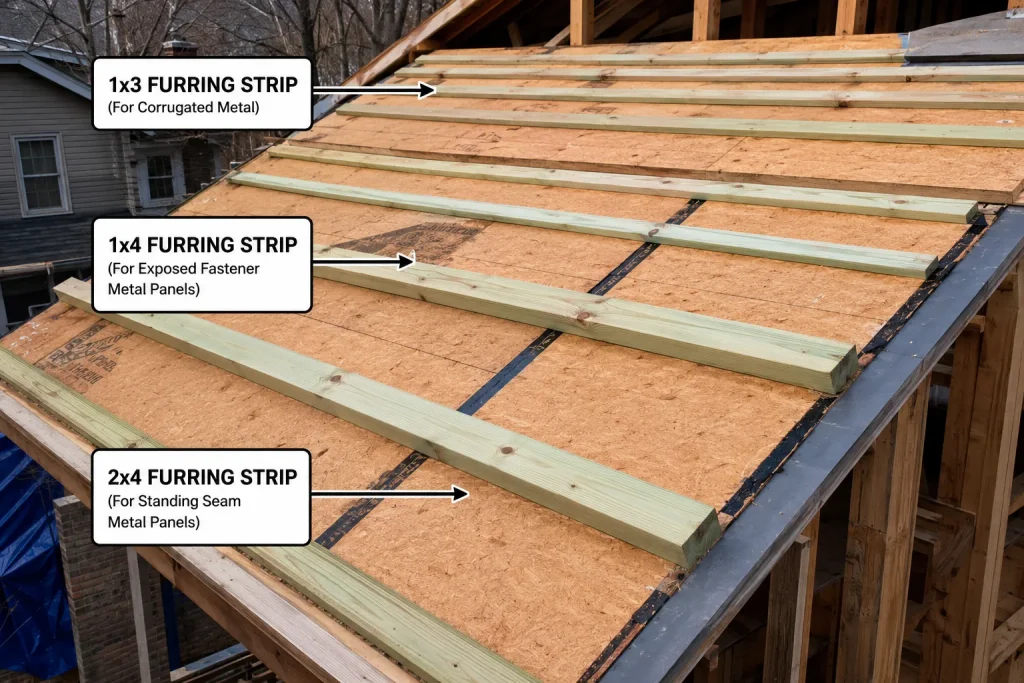
The correct size depends on your roof structure, local building codes, and the metal roofing manufacturer.
| Furring Strip Size | Typical Use | Best For |
|---|---|---|
| 1×3 | Light-duty applications | Small sheds and outbuildings |
| 1×4 | Most residential roofs | Standard metal roofing |
| 2×2 | Limited specialty applications | Lightweight panels |
| 2×4 | Heavy snow areas or structural applications | Larger roofs requiring additional strength |
For most homeowners, 1×4 furring strips provide the best balance of strength, cost, and installation ease.
Why 1×4 Furring Strips Are Usually Recommended
Professional roofers frequently choose 1×4 boards because they:
- Offer adequate fastening width
- Resist twisting better than smaller boards
- Create consistent ventilation space
- Support common exposed-fastener metal panels
- Are widely available at home improvement stores
Pressure-treated lumber is often recommended where moisture exposure is possible.
How Thick Should Furring Strips Be?
Thickness affects ventilation and panel support.
Typical options include:
- ¾ inch (actual thickness of standard 1x lumber)
- 1½ inches (actual thickness of 2x lumber)
A thicker strip creates a larger air gap, which may improve airflow beneath the roofing system.
However, using thicker lumber isn’t always better. Follow both local building code requirements and your roofing manufacturer’s installation instructions.
The Metal Construction Association offers educational resources on metal roofing systems and best practices.
Recommended Furring Strip Spacing
Spacing depends on the roofing profile and manufacturer’s instructions.
Typical spacing includes:
- 24 inches on center (most common)
- 16 inches on center for areas with heavy snow
- Custom spacing for specialty panels
Never assume spacing requirements are universal.
Always verify:
- Roof pitch
- Wind zone
- Snow load
- Panel profile
- Manufacturer recommendations
Should Furring Strips Run Horizontally or Vertically?
In most residential applications, furring strips are installed horizontally across the roof rafters.
This allows:
- Proper attachment of metal panels
- Consistent support
- Improved airflow beneath roofing
Some roofing systems use vertical battens combined with horizontal battens, especially for ventilated roof assemblies.
Can You Install Metal Roofing Over Existing Shingles?
Sometimes.
Many manufacturers allow metal roofing over one layer of asphalt shingles when local building codes permit.
However, the existing roof must be:
- Structurally sound
- Dry
- Relatively flat
- Free from major damage
Furring strips can create a level surface while allowing ventilation between the old roof and new metal panels.
Before proceeding, review local building requirements and consult your roofing manufacturer.
The International Code Council (ICC) publishes building codes adopted by many U.S. jurisdictions.
How to Choose the Right Furring Strip Size
Consider these factors before purchasing materials.
Roof Structure
Older homes may require stronger lumber if the roof deck is uneven.
Snow Load
Homes in northern climates often benefit from closer spacing or larger framing members.
Wind Exposure
High-wind regions require stronger fastening systems.
Roofing Manufacturer Requirements
Many warranties require following specific installation methods.
Ignoring manufacturer instructions can void warranty coverage.
Roof Deck Condition
Replace damaged decking before installing furring strips.
Step-by-Step Installation Overview
1. Inspect the Roof
Check for:
- Rotten decking
- Loose shingles
- Water damage
- Sagging areas
Repair structural issues first.
2. Install Underlayment
Use the underlayment specified by your roofing manufacturer.
Proper underlayment helps protect against moisture intrusion.
3. Mark Furring Strip Locations
Measure carefully to maintain consistent spacing.
Uneven spacing can make panel installation difficult.
4. Secure the Furring Strips
Fasten directly into structural framing where required.
Use corrosion-resistant fasteners.
5. Verify Alignment
Check that every strip is straight before installing roofing panels.
Minor alignment problems become much more noticeable after metal panels are attached.
Expert Tip:
Before fastening every furring strip, snap chalk lines across the roof. Spending a few extra minutes on layout helps prevent crooked metal panels and reduces installation problems later.
Benefits of Properly Sized Furring Strips
Using the correct size provides several advantages.
- Better panel support
- Longer roof lifespan
- Improved ventilation
- Reduced condensation
- Easier repairs
- Better appearance
- More consistent fastener holding power
Proper ventilation also helps improve overall roof performance. The U.S. Department of Energy explains how roof ventilation affects energy efficiency and moisture control.
DIY vs Professional Installation
| DIY | Professional |
|---|---|
| Lower labor costs | Expert installation |
| Suitable for experienced homeowners | Better warranty compliance |
| Requires roofing safety knowledge | Proper structural evaluation |
| Higher risk of installation mistakes | Faster project completion |
| May affect manufacturer warranty | Better long-term reliability |
Working on a roof is dangerous. Falls remain one of the leading causes of construction injuries. Always use proper fall protection and avoid working in wet or windy conditions.
When to Call a Roofing Professional
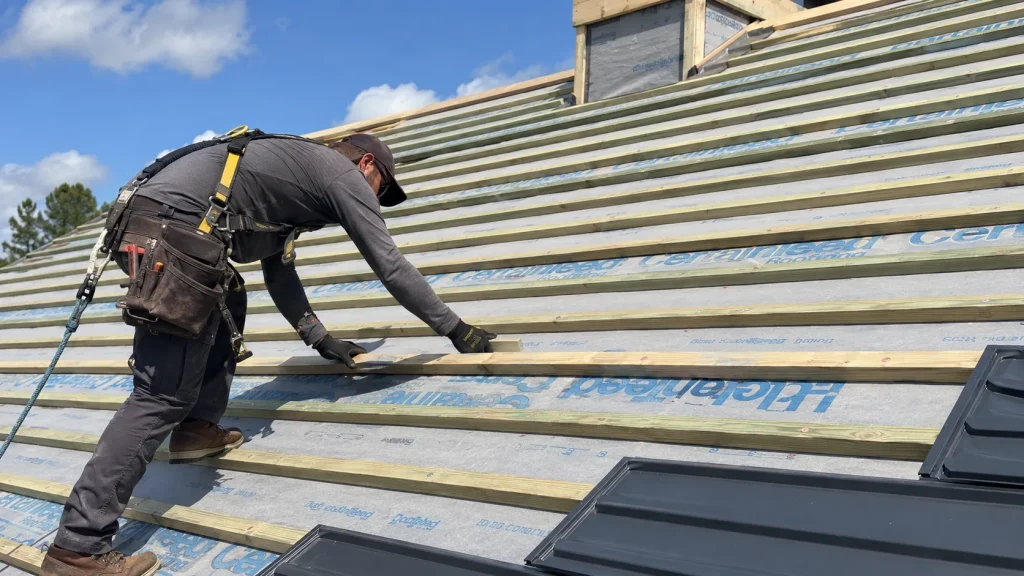
Although experienced DIY homeowners may install furring strips, professional help is recommended if:
- Your roof has structural damage
- The roof pitch is steep
- There is widespread water damage
- You are installing standing seam metal roofing
- Local code requirements are unclear
- Heavy snow or hurricane conditions require specialized engineering
- Manufacturer warranty requirements are complex
A qualified roofing contractor can verify proper spacing, fastening methods, ventilation, and structural integrity before installation begins.
Cost Factors
Several variables affect the overall project cost.
These include:
- Lumber prices
- Roof size
- Pressure-treated versus untreated wood
- Labor costs
- Roof accessibility
- Removal of old roofing
- Fastener quality
- Underlayment selection
While choosing cheaper materials may reduce upfront costs, quality lumber typically improves long-term durability.
Common Mistakes Homeowners Should Avoid
- Choosing undersized furring strips
- Ignoring manufacturer spacing requirements
- Installing strips on damaged roof decking
- Using untreated lumber where moisture exposure is likely
- Skipping roof ventilation planning
- Fastening into weak decking instead of structural framing
- Forgetting to verify local building code requirements
- Assuming every metal roofing system uses identical installation methods
Avoiding these mistakes helps improve both performance and roof longevity.
FAQs
What size furring strips for metal roof is most commonly recommended?
For most residential homes, 1×4 pressure-treated furring strips are the preferred choice because they provide reliable support and adequate ventilation.
How far apart should furring strips be under a metal roof?
Most installations use 24 inches on center, although some roofing systems require 16-inch spacing or custom layouts based on manufacturer specifications.
Can I install metal roofing directly over plywood without furring strips?
Some metal roofing systems allow direct installation over solid decking with approved underlayment. Others require furring strips. Always follow the manufacturer’s instructions.
Should I use treated lumber for furring strips?
Pressure-treated lumber is generally recommended when moisture exposure is possible because it resists decay better than untreated wood.
Do all metal roofs require furring strips?
No. Some roofing systems install directly over roof decking, while others require battens or furring strips depending on the panel design.
Can uneven furring strips damage a metal roof?
Yes. Uneven installation can cause oil canning, loose fasteners, poor panel alignment, and premature wear.
Conclusion
Choosing what size furring strips for metal roof installation isn’t just about lumber dimensions—it’s about building a durable, well-ventilated roofing system that performs for decades. For most homes, 1×4 pressure-treated furring strips provide the ideal combination of strength, support, and airflow. However, every roof is different, so always consider your local climate, building codes, roof structure, and manufacturer requirements before starting the project.
If you’re unsure about spacing, structural conditions, or installation methods, consulting a qualified roofing professional is often the smartest investment. A properly installed metal roof begins with the right foundation, and selecting the correct furring strips is one of the most important steps toward protecting your home for years to come.