
Where Should Snow Guards Be Placed on a Metal Roof? A Complete Homeowner’s Guide

If you live in a snowy climate, a metal roof offers excellent durability and sheds snow quickly. However, that same smooth surface can create a hazard when large sheets of snow and ice suddenly slide off the roof. Many homeowners ask, where should snow guards be placed on a metal roof to prevent property damage and improve safety.
The answer depends on your roof’s design, snow load, roofing material, and the areas you want to protect. This guide explains where snow guards belong, how they work, common installation mistakes, and when it’s best to hire a roofing professional.
Quick Answer
Snow guards should be placed on a metal roof above areas where sliding snow could create a safety hazard or cause damage. Common locations include above entry doors, walkways, driveways, decks, HVAC equipment, skylights, gutters, and landscaping. Proper spacing and layout depend on your roof’s slope, length, local snow loads, and the roofing manufacturer’s recommendations.
What Are Snow Guards?
Snow guards are devices installed on metal roofs to hold snow in place or slow its movement. Instead of allowing an entire sheet of snow to slide off at once, snow guards break it into smaller, safer sections.
This helps protect:
- People walking below the roof
- Vehicles parked nearby
- Gutters and downspouts
- Landscaping
- Outdoor equipment
- Lower roof sections
- Skylights and solar panels
According to the Metal Construction Association’s guidance on snow retention systems, properly engineered snow retention systems are important for preventing dangerous snow slides on metal roofing systems.
Why Snow Guards Are Important on Metal Roofs
Metal roofs naturally shed snow more easily than asphalt shingles.
While this reduces roof weight, it also increases the chance of sudden snow avalanches.
Without snow guards, sliding snow may:
- Damage gutters
- Break landscaping features
- Crush air conditioning units
- Damage vehicles
- Injure people below
- Tear off lower roof accessories
A properly designed snow guard system improves safety without preventing normal roof drainage.
Where Should Snow Guards Be Placed on a Metal Roof?
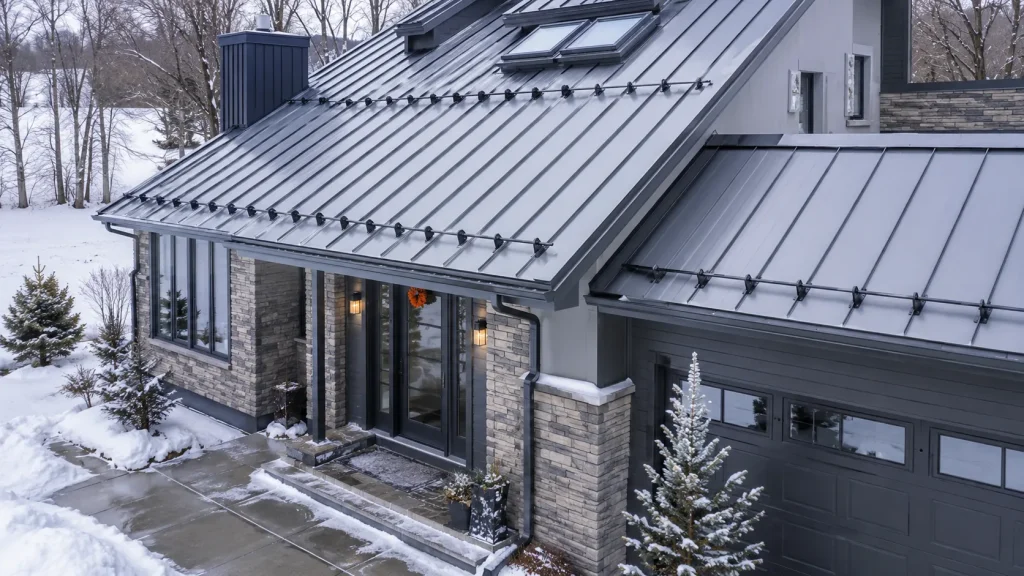
The exact placement depends on your roof layout, but several areas almost always benefit from protection.
Above Entry Doors
One of the highest-priority locations is directly above entrances.
Heavy snow sliding from a roof can fall on someone exiting the home.
Install snow guards:
- Above front doors
- Back doors
- Side entrances
- Garage entry doors
Above Walkways
Walkways receive frequent foot traffic during winter.
Snow guards reduce the chance of dangerous snow slides onto sidewalks.
Protect:
- Front sidewalks
- Backyard paths
- Wheelchair ramps
- Stairways
Above Driveways
Vehicles parked beneath roof edges can suffer expensive damage.
Snow guards help prevent:
- Broken windshields
- Dented hoods
- Roof damage to vehicles
Above Decks and Patios
Outdoor living areas often receive heavy snow slides.
Install guards above:
- Wooden decks
- Covered patios
- Outdoor kitchens
- Seating areas
Above HVAC Equipment
Outdoor heating and cooling units are expensive to replace.
Snow sliding off the roof may:
- Bend fan covers
- Damage refrigerant lines
- Block airflow
Snow guards reduce these risks.
Above Skylights
Skylights already interrupt roof drainage.
Sliding snow can impact their flashing or glazing.
Snow guards installed uphill from skylights help reduce excessive force on these roof features.
Above Lower Roof Levels
Many homes have multiple roof sections.
Snow from an upper roof can crash onto a lower roof, causing:
- Flashing damage
- Panel dents
- Increased structural stress
Snow guards help distribute snow more evenly.
Near Gutters
Large snow slides commonly rip gutters from fascia boards.
Snow guards installed higher on the roof reduce sudden impact loads.
Areas Where Snow Guards May Not Be Needed
Not every roof section requires snow guards.
Some lower-risk areas include:
- Roof sections without pedestrian traffic
- Small porch roofs with little snow accumulation
- Detached storage sheds
- Areas with minimal snowfall
A roofing contractor can determine whether these sections still require protection.
How Are Snow Guards Arranged?
Snow guards are rarely installed in a single straight line.
Instead, professionals often use staggered rows to distribute snow loads evenly.
Typical layouts include:
| Roof Condition | Recommended Layout |
|---|---|
| Short roof slope | Single row near eave |
| Medium roof slope | Two staggered rows |
| Long roof slope | Multiple staggered rows |
| Heavy snow regions | Engineered snow retention system |
| Commercial buildings | Continuous bar-style snow retention |
Proper engineering is more important than simply adding more snow guards.
Roof Pitch Matters
Steeper roofs allow snow to slide faster.
Higher slopes often require:
- Additional rows
- Closer spacing
- Stronger attachment systems
Roof Length Matters
Longer roof sections accumulate larger snow loads.
Long roof runs generally require:
- Multiple rows
- Wider snow retention systems
- Engineering calculations
Types of Snow Guards for Metal Roofs
Several styles are available.
Individual Snow Guards
Small individual pieces attached across the roof.
Best for:
- Residential homes
- Moderate snowfall
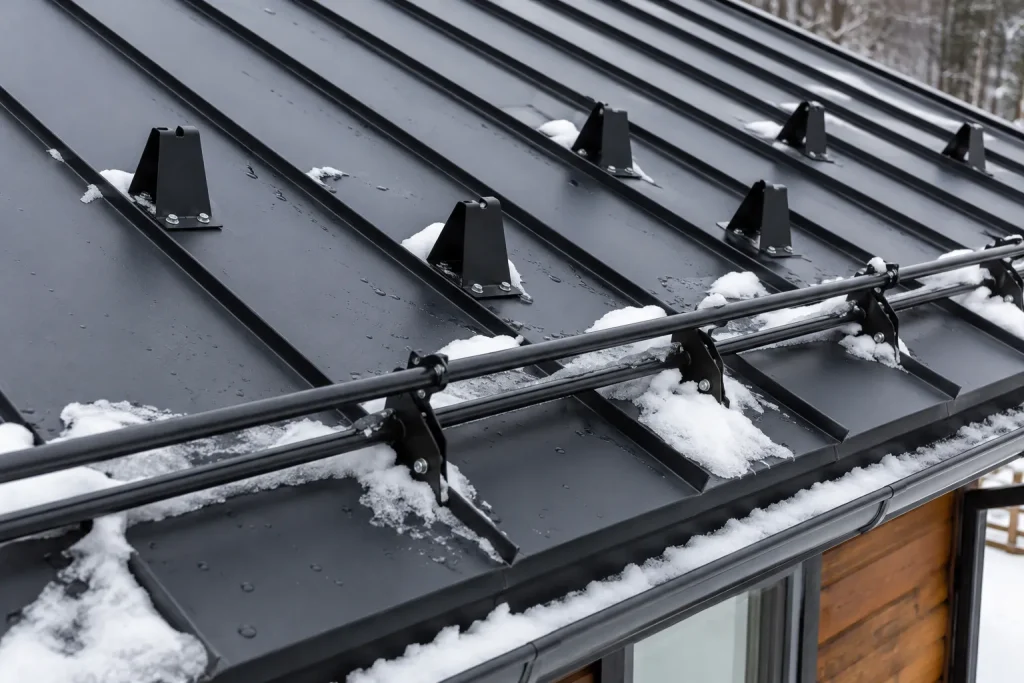
Bar-Style Snow Retention
Metal bars run horizontally across the roof.
Ideal for:
- Heavy snow regions
- Long roof panels
- Commercial buildings
Fence-Style Systems
These create a stronger barrier against large snow loads.
Often used on:
- Mountain homes
- Ski lodges
- Large residential roofs
Can You Install Snow Guards Yourself?
Some adhesive snow guards are marketed as DIY products.
However, installation mistakes can reduce effectiveness or damage the roof.
Potential problems include:
- Incorrect spacing
- Weak attachment
- Roof leaks
- Voided roof warranties
Always follow the metal roofing manufacturer’s installation instructions. Many manufacturers provide snow retention guidance specific to their roofing panels.
Expert Tip
Expert Tip: Never install snow guards only above one small section of a large roof. Snow loads should be distributed across the roof using a layout designed for your roof size and local snowfall to avoid overloading individual guards.
Factors That Determine Proper Snow Guard Placement
Every roof is different.
Professionals consider several factors before installation.
Local Snow Load
Areas with frequent heavy snowfall require stronger retention systems.
You can learn about regional snow and weather risks from the National Weather Service Winter Safety resources.
Roof Material
Snow guards for standing seam metal roofs differ from those designed for exposed-fastener metal roofs.
Using the wrong type may damage the roofing system.
Roof Structure
Engineers may evaluate:
- Roof framing
- Panel thickness
- Fastener system
- Attachment strength
Building Codes
Some areas have specific requirements regarding snow retention systems.
Local building departments may reference structural design standards published by organizations such as the International Code Council (ICC).
DIY vs Professional Installation
| DIY Installation | Professional Installation |
|---|---|
| Lower upfront cost | Higher initial investment |
| Suitable only for simple projects | Recommended for most homes |
| Risk of incorrect spacing | Proper engineering and layout |
| May affect warranty | Helps preserve manufacturer recommendations |
| Greater safety risks | Safer installation practices |
For most homeowners, professional installation is the safest long-term choice.
When to Call a Roofing Professional
Consider hiring a qualified roofing contractor if:
- Your roof is steep.
- Your home is in a heavy snow region.
- You have a standing seam metal roof.
- Snow has already damaged gutters or property.
- You’re unsure which snow retention system is compatible with your roof.
- Your roof is still under warranty.
- Multiple roof levels make snow movement difficult to predict.
Roof work is dangerous. Falls remain one of the leading causes of construction injuries, and the OSHA residential construction safety guidance emphasizes proper fall protection when working on roofs.
Common Mistakes Homeowners Should Avoid
- Installing snow guards only over one doorway instead of creating a balanced system.
- Choosing adhesive guards where mechanically attached systems are recommended.
- Ignoring the roof manufacturer’s installation guidelines.
- Assuming every metal roof needs the same spacing.
- Installing snow guards after winter damage has already occurred.
- Forgetting to protect gutters, HVAC equipment, and skylights.
- Walking on a snowy metal roof without proper safety equipment.
FAQs
Do all metal roofs need snow guards?
No. Homes in mild climates may not need them. However, they’re highly recommended in regions that receive regular snowfall and where sliding snow could create safety hazards.
Where should the first row of snow guards be placed?
The first row is typically installed several feet above the roof edge rather than directly at the eave. Exact placement depends on the roof design and manufacturer recommendations.
Can snow guards stop all snow from sliding?
No. They are designed to control and slow snow movement, not eliminate it entirely.
Are snow guards installed on standing seam roofs differently?
Yes. Many standing seam systems use clamp-on snow retention devices that avoid penetrating the roof panels, helping preserve the roof’s weather resistance.
Will snow guards damage my metal roof?
When properly selected and professionally installed, snow guards should not damage a compatible metal roof.
How much do snow guards cost?
Costs vary depending on roof size, roof type, snow guard style, and labor. Simple residential systems may cost a few hundred dollars, while engineered systems for large homes can cost significantly more.
Conclusion
Knowing where should snow guards be placed on a metal roof is essential for protecting your home, vehicles, gutters, and the people around your property during winter. The most effective locations include above entryways, walkways, driveways, skylights, HVAC equipment, and lower roof sections where sliding snow can cause damage.
While some simple installations may seem like DIY projects, proper snow guard placement depends on roof design, snow loads, and manufacturer recommendations. If you have any doubts, schedule an inspection with a qualified roofing professional. A well-designed snow retention system can improve safety, reduce costly winter damage, and help your metal roof perform reliably for years to come.