
What Are the Disadvantages of a Metal Roof? A Practical Homeowner’s Guide
A metal roof can be a smart long-term investment, but it is not the perfect choice for every home, budget, or climate. Many homeowners hear about metal roofing because it can last a long time, handle harsh weather, and improve curb appeal. Still, before spending thousands of dollars, it is fair to ask: what are the disadvantages of a metal roof?
The honest answer is that metal roofs have several possible downsides, including higher upfront cost, installation sensitivity, noise concerns, denting, expansion and contraction, slippery surfaces, and repair challenges. Some of these problems can be reduced with good materials and a qualified contractor. Others are simply part of owning a metal roof.
This guide explains the main disadvantages in plain language so you can decide whether a metal roof fits your home, budget, and expectations.
Quick Answer
What are the disadvantages of a metal roof? The biggest disadvantages are higher upfront cost, difficult installation, possible noise during rain or hail, denting from severe impact, expansion and contraction, slippery surfaces, and repair complexity. A metal roof can still be a strong option, but it needs proper materials, skilled installation, and realistic expectations.
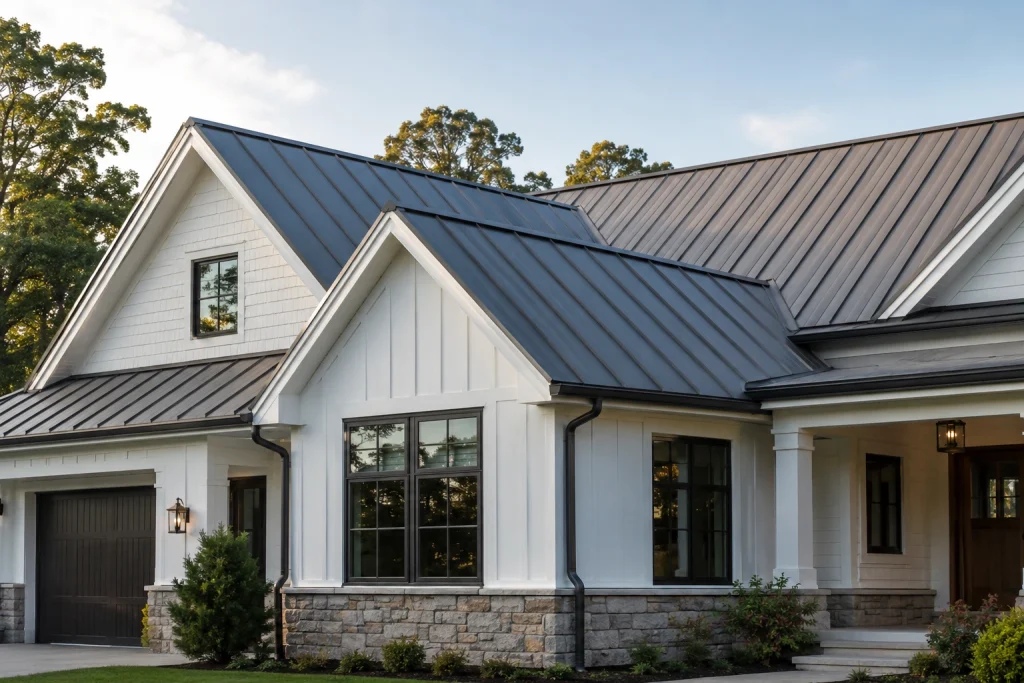
Metal Roof Disadvantages at a Glance
Metal roofing can perform very well when installed correctly, but it also comes with trade-offs. Here is a quick overview.
| Disadvantage | Why It Matters | Can It Be Reduced? |
|---|---|---|
| Higher upfront cost | Metal roofing usually costs more than asphalt shingles | Yes, by comparing bids and material options |
| Installation sensitivity | Poor installation can cause leaks, noise, panel movement, or appearance issues | Yes, with an experienced metal roofing contractor |
| Noise concerns | Rain or hail may sound louder if the roof assembly is not properly insulated | Yes, with solid decking, attic insulation, and underlayment |
| Denting risk | Hail, falling branches, or foot traffic can dent some panels | Partly, by choosing stronger gauges and impact-rated products |
| Expansion and contraction | Metal moves as temperatures change | Yes, with correct fasteners, clips, and installation details |
| Slippery surface | Metal roofs can be dangerous to walk on, especially when wet | Yes, by avoiding DIY roof walking and hiring professionals |
| Repair challenges | Matching panels, coatings, and profiles can be difficult later | Partly, by saving product details and using reputable brands |
1. Metal Roofs Usually Cost More Upfront
The first major drawback is price. A metal roof often costs more upfront than a standard asphalt shingle roof. The exact cost depends on the metal type, panel style, roof size, roof slope, local labor rates, tear-off needs, and installation complexity.
For many homeowners, this is the biggest obstacle.
A metal roof may be worth it over the long term, but the starting price can feel high. Standing seam metal roofing, for example, is usually more expensive than exposed fastener panels. Premium metals such as copper or zinc cost even more.
Why the Price Is Higher
Metal roofing can cost more because of:
- More expensive materials
- Specialized installation skills
- Custom panel cutting or forming
- Flashing details around chimneys, skylights, valleys, and walls
- Higher labor time on complex roofs
- Required underlayment and ventilation planning
A simple ranch-style home may be more affordable to roof with metal. A steep roof with dormers, skylights, multiple valleys, and several roof planes will usually cost much more.
Important: A cheap metal roof bid can be a warning sign. Low pricing may mean thinner panels, poor flashing, skipped underlayment, or inexperienced labor.
2. Installation Mistakes Can Cause Serious Problems
Metal roofing is not forgiving. Small installation mistakes can create big problems later.
A metal roof depends on correct fastening, flashing, panel alignment, expansion spacing, sealants, underlayment, and ventilation. If these details are wrong, the roof may leak, make noise, move incorrectly, or look uneven.
The Metal Construction Association’s metal roof installation manual highlights how specialized metal roofing installation can be. That matters because a contractor who mainly installs asphalt shingles may not automatically be qualified to install every metal roofing system.
Common Installation Problems
Poor metal roof installation can lead to:
- Leaks around screws, seams, valleys, or penetrations
- Loose panels during wind
- Oil canning, which is visible waviness in flat metal panels
- Misaligned panel lines
- Scratched coatings during installation
- Incorrect flashing around chimneys or skylights
- Fasteners that are overdriven or underdriven
- Poor ventilation that allows moisture problems
Why Contractor Choice Matters
A metal roof can last for decades, but only if the system is installed properly. This is why homeowners should not choose a contractor based on price alone.
Ask the contractor:
- How many metal roofs have you installed?
- Do you install standing seam, exposed fastener, or metal shingles?
- What underlayment do you use?
- How do you handle roof penetrations?
- What warranty covers labor?
- Can I see recent local projects?
A metal roof is only as strong as the installation behind it.

3. Metal Roofs Can Be Noisy Without the Right Roof Assembly
One common concern is noise. Homeowners often worry that a metal roof will sound loud during rain or hail.
The truth is balanced. A properly installed metal roof over solid decking, underlayment, attic insulation, and a finished ceiling may not sound much different from other roofing materials inside the home. But if the roof is installed over open framing, poor insulation, or a thin assembly, rain and hail can sound louder.
When Noise Is More Noticeable
Noise may be more noticeable if:
- The roof is installed over open rafters
- The attic has poor insulation
- The home has vaulted ceilings
- The roof uses exposed fastener panels without good decking
- Hailstorms are common in the area
- The old roof was quieter and heavier
Noise is not always a deal-breaker, but it should be discussed before installation.
How to Reduce Metal Roof Noise
A good contractor may reduce noise with:
- Solid roof decking
- Quality underlayment
- Proper attic insulation
- Correct fastening
- Good ventilation
- Panel systems designed for residential use
If you are sensitive to sound, ask the contractor how the full roof assembly will control rain and hail noise.
4. Metal Roofs Can Dent From Hail, Branches, or Foot Traffic
Metal is strong, but it is not damage-proof. Some metal roofs can dent from hail, falling branches, or careless foot traffic.
The risk depends on the type of metal, panel thickness, roof profile, coating, and storm severity. Aluminum and copper may dent more easily than some steel products. Thicker panels may resist dents better than thinner panels.
The Insurance Institute for Business & Home Safety provides useful homeowner education through its Roof 101 roofing guidance, including how different roof systems perform in real-world conditions. For homeowners in hail-prone areas, this kind of information matters before choosing a roof covering.
Cosmetic Damage vs Functional Damage
Not every dent means the roof is failing. Some dents are cosmetic. Others may affect seams, coatings, fasteners, or water flow.
You should schedule an inspection after a major hailstorm if you notice:
- Dents across multiple panels
- Scratched or chipped coating
- Loose flashing
- Bent seams
- Damaged ridge caps
- Leaks inside the attic
- Water stains on ceilings
Warning: Do not climb onto a metal roof after a storm to check dents yourself. Metal roofs can be slippery and dangerous.
5. Expansion and Contraction Can Create Movement Issues
Metal expands when it gets hot and contracts when it cools. This movement is normal, but the roof system must be designed to handle it.
If the panels are fastened incorrectly, movement can cause problems over time.
Possible Movement-Related Problems
Expansion and contraction may contribute to:
- Popping or ticking sounds
- Loose fasteners
- Stressed seams
- Worn sealants
- Slight panel movement
- Oil canning
- Leaks around penetrations
Standing seam systems usually handle movement better than basic exposed fastener systems because hidden clips allow panels to move. Exposed fastener panels rely more heavily on screws and washers, which may need maintenance as the roof ages.
Why This Matters for Homeowners
This is not something most homeowners can evaluate from the ground. That is why product selection and installation quality matter so much.
A contractor should choose a system that fits your roof slope, climate, and home design. They should also follow the manufacturer’s fastening and flashing instructions.
6. Metal Roofs Can Look Wavy or Uneven
Some homeowners are surprised when a new metal roof shows slight waviness. This is often called oil canning.
Oil canning means the flat areas of metal panels appear wavy or slightly rippled. It is usually a visual issue, not a structural failure. Still, it can bother homeowners who expected a perfectly flat, smooth look.
The Metal Construction Association explains that oil canning in metal roof and wall systems can appear as visible waviness in flat panel areas. This is why homeowners should ask about panel design before choosing a smooth, wide standing seam profile.
What Can Make Oil Canning More Noticeable?
Oil canning may be more visible when:
- Panels are very wide
- Panels have large flat areas
- Dark colors reflect light strongly
- The roof is viewed from certain angles
- The structure underneath is uneven
- Panels are over-fastened or poorly handled
- The installer does not allow proper movement
How to Reduce the Risk
Homeowners can reduce the risk by choosing:
- Narrower panels
- Striated or ribbed panels
- Textured finishes
- Thicker metal
- Experienced installers
- Proper substrate preparation
Important: Ask whether oil canning is covered by the warranty. Many manufacturers consider it an appearance issue, not a product failure.
7. A Metal Roof Can Be Slippery and Unsafe to Walk On
Metal roofs can be extremely slippery, especially when wet, icy, dusty, or covered with pollen. Even a low-slope metal roof can be dangerous for an untrained person.
This matters for homeowners who like to clean gutters, hang lights, remove branches, inspect skylights, or check storm damage themselves.
According to OSHA’s residential fall protection guidance, roofing work creates serious fall hazards. Homeowners should treat roof access as a safety risk, not a simple weekend task.
Avoid DIY Roof Walking
You should not walk on a metal roof unless you have the right training, footwear, fall protection, and roof knowledge. Walking in the wrong area can also dent panels or damage seams.
Call a professional for:
- Storm damage inspections
- Leak tracing
- Gutter work on steep roof edges
- Skylight repairs
- Chimney flashing checks
- Snow guard installation
- Panel repair or replacement
Safety warning: Never climb on a wet metal roof. The risk is not worth it.
8. Repairs Can Be More Complicated Than Asphalt Shingles
Metal roof repairs are not always simple. With asphalt shingles, a roofer can often replace a small damaged section. With metal roofing, repair work may require matching the panel profile, color, finish, coating, fastener type, and seam design.
This can become difficult if the original product is discontinued.
Common Repair Challenges
Metal roof repairs may be complicated because:
- Panels can run from ridge to eave in long sections
- Standing seam panels may interlock
- Color matching can be difficult after years of fading
- A scratched finish may need special touch-up
- Hidden clips may require panel removal
- Improper repair can void the warranty
For exposed fastener metal roofs, screws and washers may also need inspection or replacement over time. If washers crack or fasteners loosen, water can enter around the screw holes.
Save Your Product Information
After installation, keep records of:
- Manufacturer name
- Panel profile
- Metal type
- Gauge or thickness
- Paint color and finish
- Warranty documents
- Contractor invoice
- Photos after installation
This information can save time and money if you need repairs later.
9. Energy Savings Are Not Automatic
Many homeowners choose metal roofing because they hear it can improve energy efficiency. That can be true, especially with reflective coatings and good attic design. But a metal roof alone does not guarantee lower energy bills.
A roof’s energy performance depends on color, coating, insulation, ventilation, attic air sealing, climate, and home design. ENERGY STAR notes that cool roofs generally work best in hot, sunny climates, especially where reducing heat gain is important.
Why Some Homeowners May Not Notice Big Savings
Energy savings may be limited if:
- The attic is already well insulated
- The home is in a colder climate
- The roof color is dark
- The attic has poor ventilation
- Air leaks are not sealed
- HVAC problems are driving energy costs
- The roof assembly was not designed for energy performance
A metal roof can help, but it should be part of a complete roof and attic system.
10. Some Styles May Not Fit Every Home or Neighborhood
Metal roofing comes in many styles, including standing seam, metal shingles, metal shakes, and metal tiles. Still, not every style fits every home.
Some homeowners love the clean modern look of standing seam metal. Others feel it looks too industrial for their neighborhood. In some areas, homeowners associations may limit colors, profiles, or reflective finishes.
Check Before You Commit
Before signing a contract, check:
- HOA rules
- Local building requirements
- Historic district restrictions
- Approved roof colors
- Fire rating requirements
- Wind rating requirements
- Snow guard needs in cold climates
This step can prevent expensive surprises.
When to Call a Roofing Professional
A metal roof is not the best place for guesswork. If you notice warning signs, call a qualified roofing professional before the issue becomes more expensive.
Call a roofing professional if you see:
- Water stains on ceilings or walls
- Dripping inside the attic
- Loose or missing fasteners
- Bent or lifted flashing
- Scratched or rusting panels
- Dents after hail
- Panels that look loose or shifted
- Unusual popping or movement
- Damaged sealant around penetrations
- Gutters pulling away from the roofline
You should also call a professional before adding solar panels, skylights, snow guards, satellite equipment, or new roof penetrations. Cutting into a metal roof without proper flashing can create long-term leaks.
Expert Tip:
Before choosing a metal roof, ask the contractor to show you the exact panel sample, color sample, fastener details, underlayment type, ventilation plan, and warranty terms. Do not rely only on brochure photos. Small product differences can affect cost, appearance, noise, maintenance, and long-term performance.
Metal Roof Disadvantages vs Benefits: A Balanced View
A metal roof has real disadvantages, but that does not mean it is a bad choice. It simply means homeowners should make the decision with clear expectations.
A Metal Roof May Be a Good Choice If:
- You plan to stay in the home long term
- Your budget allows a higher upfront investment
- You want a durable roofing material
- Your home suits the look of metal roofing
- You hire an experienced metal roofing contractor
- You live in an area where fire resistance, wind performance, or heat reflection matters
A Metal Roof May Not Be the Best Choice If:
- You need the lowest upfront cost
- Your roof has many complex details and your budget is tight
- You dislike the look of metal roofing
- Your HOA has strict roof rules
- You are highly sensitive to rain or hail noise
- You cannot find a qualified local installer
- You are worried about cosmetic dents from frequent hail
The right decision depends on your home, not just the material.
Common Mistakes Homeowners Should Avoid
Homeowners can avoid many metal roof problems by slowing down before signing a contract.
Common mistakes include:
- Choosing the cheapest bid without checking installation experience
- Assuming every roofer knows how to install metal roofing
- Ignoring attic ventilation and insulation
- Not asking about oil canning before choosing wide flat panels
- Choosing a dark color without thinking about heat and fading
- Walking on the roof after storms
- Forgetting to check HOA or local rules
- Not asking whether the warranty covers labor
- Installing solar panels or skylights without proper metal roof flashing
- Not keeping product and warranty records after installation
A metal roof is a major investment. Good planning protects that investment.
FAQs
Are metal roofs bad for houses?
No, metal roofs are not bad for houses when they are properly designed and installed. In fact, they can be durable and long-lasting. The problems usually come from poor installation, wrong material choice, bad ventilation, or unrealistic expectations about cost, noise, and appearance.
What is the biggest problem with metal roofs?
The biggest problem is often poor installation. Metal roofs require correct flashing, fastening, underlayment, panel spacing, and ventilation. If the contractor does not understand metal roofing systems, leaks and appearance issues can happen.
Are metal roofs noisy when it rains?
They can be noisy if installed over poor insulation or open framing. However, a properly installed residential metal roof with solid decking, underlayment, attic insulation, and a finished ceiling is usually much quieter than many homeowners expect.
Do metal roofs dent easily?
Some metal roofs can dent from large hail, falling branches, or improper foot traffic. Dent resistance depends on the metal type, thickness, panel design, and impact rating. In many cases, small dents are cosmetic, but storm damage should still be inspected.
Do metal roofs leak more than shingles?
A properly installed metal roof should not leak more than shingles. However, metal roofs can leak if flashing, fasteners, seams, or penetrations are installed incorrectly. Exposed fastener systems may also need more maintenance over time than hidden fastener systems.
Is a metal roof worth the higher cost?
A metal roof may be worth the higher cost if you plan to stay in your home long term, want durability, and hire a qualified contractor. It may not be worth it if you need the lowest upfront price or if your home has design limits that make installation very expensive.
Can I install a metal roof myself?
Most homeowners should not install a metal roof themselves. Metal roofing requires special tools, safety equipment, flashing knowledge, and installation skill. DIY mistakes can lead to leaks, roof damage, voided warranties, and serious fall injuries.
Conclusion
So, what are the disadvantages of a metal roof? The main drawbacks are higher upfront cost, installation complexity, possible noise, denting, expansion and contraction, slippery surfaces, appearance concerns, and more complicated repairs. These issues do not automatically make metal roofing a poor choice, but they do mean homeowners need to choose carefully.
The best next step is to compare materials, understand your local climate, check your roof design, and speak with experienced metal roofing contractors. Ask clear questions. Review warranties. Look at real local projects. Make sure the full roof system—not just the panels—is designed for your home.
A metal roof can be a strong investment when it is installed correctly and matched to the right home. But the smartest roofing decision is never based on hype. It is based on facts, budget, safety, and long-term value. Before you commit, get a professional inspection and a detailed written estimate so you can move forward with confidence.