
How to Install a Metal Roof on a Mobile Home: A Practical Homeowner Guide
If your mobile home roof is leaking, aging, or costing too much to maintain, you may be wondering how to install a metal roof on a mobile home and whether it is a smart upgrade. Metal roofing can be durable, energy-conscious, and lower maintenance than many older roof coverings, but mobile homes need special care because their roof structure, weight limits, ventilation, and fastening needs may differ from site-built homes.
This guide explains what homeowners should know before starting. You will learn the basic installation process, when a roof-over may work, when full replacement is safer, what materials matter, what can go wrong, and when hiring a roofing professional is the better decision.
Quick Answer
To install a metal roof on a mobile home, inspect the existing roof structure, repair damage, add proper underlayment or insulation, install metal panels or a roof-over system, fasten panels correctly, seal edges and penetrations, and finish with flashing and trim. For safety, leaks, or structural concerns, hire a qualified roofing contractor.
Is a Metal Roof a Good Choice for a Mobile Home?
A metal roof can be a strong option for many mobile homes, especially when the existing roof is worn, leaking, or nearing the end of its service life. Metal panels shed water well, resist many weather conditions, and can last for decades when installed correctly.
Mobile homes often have lower-slope roofs, thinner decking, or older roof assemblies. That means the installation must be planned carefully. A metal roof should not simply be screwed over soft, rotted, or uneven material.
A metal roof may be a good choice if:
- The existing roof has repeated leaks.
- The roof surface is aging but the structure is still sound.
- You want a longer-lasting roofing material.
- You want to reduce future maintenance.
- You live in an area with heavy rain, sun exposure, or wind.
However, metal roofing is not automatically the right answer for every mobile home. If the framing is weak, the home has serious moisture damage, or the roof shape is badly sagging, repairs may be needed before any new roof is installed.
Mobile Home Metal Roof Installation: Roof-Over vs Full Replacement
Before thinking about panels and screws, homeowners need to understand the two main installation approaches.
Metal Roof-Over
A roof-over means installing a new metal roof system above the existing roof. This is common on many mobile homes because it can reduce tear-off labor and help improve insulation.
A roof-over may work when:
- The existing roof is mostly flat and stable.
- There is no widespread rot.
- Leaks are limited and repairable.
- The home can handle the added materials.
- Local rules allow it.
The benefit is that it can be less disruptive than full replacement. The downside is that hidden damage may remain underneath if the roof is not inspected carefully.
Full Roof Replacement
A full replacement means removing the existing roof material, repairing decking or framing, and installing the new roofing system from the roof deck up.
Full replacement is usually better when:
- The roof has soft spots.
- There is major water damage.
- The roof has mold or trapped moisture.
- The old roof has multiple layers.
- The roof deck is uneven or failing.
Do not cover serious roof damage with metal panels. Metal roofing can hide the problem for a while, but trapped moisture can continue damaging the home.
Before You Start: Important Safety and Code Considerations
Roof work is dangerous, especially on mobile homes with lower edges, older decking, or slick metal panels. According to OSHA’s residential fall protection guidance, fall protection is a major safety concern during residential roofing work.
Even if you are doing a small repair, take roof safety seriously. Metal panels can be slippery. Sharp edges can cut skin. A weak roof deck can fail under weight.
Before installation, check:
- Local permit requirements
- Park or community rules
- Wind rating requirements
- Manufacturer installation instructions
- Structural condition of the home
- Insurance requirements
- Ventilation needs
For manufactured homes, HUD provides homeowner resources for buying, installing, and maintaining HUD-certified manufactured homes through its manufactured housing homeowner resources. This matters because older mobile homes and newer manufactured homes may have different construction standards and structural limits.
Tools and Materials Commonly Used
The exact materials depend on the roof design, panel type, and manufacturer. Still, most mobile home metal roof projects involve similar components.
Common materials include:
- Metal roofing panels
- Roofing underlayment
- Foam closure strips
- Butyl tape or approved sealant
- Roofing screws with washers
- Drip edge
- Ridge cap or peak trim
- Sidewall and endwall flashing
- Pipe boots for plumbing vents
- Insulation or purlins, if used
- Metal snips or shears
- Drill or screw gun
- Measuring tape
- Chalk line
- Safety harness and roof-safe ladder setup
Always use fasteners approved for the panel system. Standard screws or the wrong washer type can cause leaks.
Step-by-Step: How to Install a Metal Roof on a Mobile Home
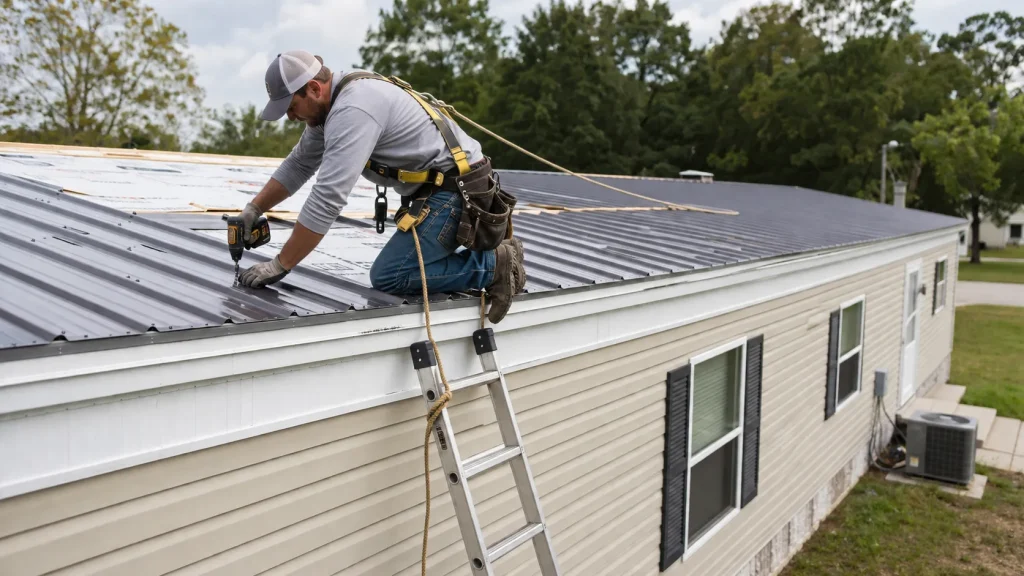
This overview is written for homeowners who want to understand the process. It is not a substitute for manufacturer instructions or a local contractor’s inspection.
1. Inspect the Existing Roof
Start with a careful inspection. Look for stains inside the home, ceiling bubbles, soft spots, sagging areas, rust, loose seams, and previous patching.
Inside the home, check:
- Ceiling discoloration
- Musty smells
- Damp insulation
- Water marks around vents
- Bowed ceiling panels
Outside, check:
- Ponding water
- Loose roof coating
- Cracked sealant
- Rusted fasteners
- Damaged flashing
- Weak roof edges
If the roof feels soft underfoot, stop. That is a warning sign that the structure may be unsafe.
2. Decide Whether Repair or Replacement Is Needed
Small leaks around a vent may only need flashing repair. Widespread roof failure usually needs more than patching.
Use this table as a practical guide:
| Roof Condition | Better Option | Why It Matters |
|---|---|---|
| One minor leak near a vent | Targeted repair | The main roof may still be serviceable |
| Multiple leaks across the roof | Metal roof-over or replacement | Patching may not solve the larger problem |
| Soft roof decking | Full replacement | New metal should not cover rotten material |
| Sagging roofline | Professional inspection | Structural support may be compromised |
| Old roof with poor insulation | Roof-over with insulation may help | Can improve comfort if designed properly |
| Severe storm damage | Contractor inspection | Insurance and structural issues may apply |
3. Measure the Roof Carefully
Measure the length, width, slope, and overhangs. Mobile homes often have long rectangular rooflines, but vents, additions, porches, and HVAC penetrations can make the project more complex.
Add extra material for trimming, overlap, mistakes, and waste. A roofing contractor will also account for panel layout, wind direction, and seam placement.
4. Repair Damage Before Installing Metal
This step is easy to skip, but it is one of the most important parts of the job.
Before installing panels:
- Replace rotten decking.
- Reinforce weak framing if needed.
- Remove loose coatings or debris.
- Fix damaged roof edges.
- Seal active leaks.
- Replace damaged vent boots.
- Check insulation for trapped moisture.
A metal roof is only as reliable as the surface beneath it. If the base is weak, the finished roof may leak, shift, or fail early.
5. Install Underlayment or a Separation Layer
Underlayment helps protect the roof deck from moisture that gets past the metal panels. On some roof-over systems, purlins or insulation boards may be added before the panels.
This layer can help:
- Reduce condensation risk
- Improve water protection
- Create a smoother panel surface
- Separate incompatible materials
- Support better fastening
Condensation is especially important on metal roofs. Warm indoor air can meet a cool metal surface and create moisture. Good ventilation and proper roof assembly design help reduce this risk.
6. Add Purlins or Framing Strips if Required
Some mobile home metal roof-over systems use purlins, which are horizontal strips installed across the roof. They create a fastening base and can provide space for airflow or insulation.
Purlins must be attached securely to structural members, not just thin or weak surface material. The spacing should match the metal panel manufacturer’s instructions.
Poor purlin spacing can cause:
- Panel flexing
- Oil canning, or visible waviness
- Loose fasteners
- Wind uplift problems
- Leaks at seams
7. Install Metal Panels
Metal panels are usually installed from one side of the roof to the other, with careful alignment at the eave. The first panel matters because every panel after it follows that line.
Basic panel installation steps include:
- Position the first panel square to the roof edge.
- Allow the correct overhang at the eave.
- Fasten according to the manufacturer’s pattern.
- Overlap the next panel correctly.
- Use closure strips where required.
- Keep screws straight and properly seated.
- Trim panels around vents and edges.
- Continue across the roof.
Do not overtighten screws. The washer should seal firmly without being crushed. Overtightening can damage the washer and create future leaks.
8. Flash Vents, Pipes, Edges, and Roof Transitions
Most roof leaks happen at details, not in the middle of a panel. Flashing protects openings and transitions.
Pay close attention to:
- Plumbing vent pipes
- Exhaust vents
- Skylights, if present
- Roof edges
- Ridge or peak areas
- Wall connections
- Porch or addition tie-ins
Use compatible sealants and flashing products. Avoid relying only on caulk. Sealant breaks down over time, while properly installed flashing gives longer-lasting protection.
9. Install Ridge Cap, Trim, and Closures
The ridge cap covers the top peak of the roof. On low-slope mobile homes, the “ridge” may be less dramatic, but the upper roof transition still needs protection.
Foam closure strips help block wind-driven rain, insects, and debris from entering under the panels. Trim pieces protect edges and improve the finished appearance.
This final detailing is where many DIY roof installations fail. A roof can look complete but still leak if trim, closures, and flashing are not installed correctly.
10. Final Inspection
After installation, inspect the full roof before calling the job complete.
Check for:
- Missing screws
- Crooked fasteners
- Crushed washers
- Unsealed penetrations
- Exposed gaps
- Loose trim
- Sharp panel edges
- Poor drainage areas
After the first heavy rain, inspect the interior ceiling and attic or roof cavity if accessible. Small leaks caught early are easier to fix.
Cost Factors Homeowners Should Understand
The cost to install a metal roof on a mobile home can vary widely. The biggest factors are roof size, roof condition, panel type, insulation needs, labor rates, and whether old materials must be removed.
Main cost factors include:
- Roof size: Larger double-wide homes cost more than smaller single-wide homes.
- Roof condition: Rot, sagging, or water damage adds repair costs.
- Panel type: Exposed-fastener panels usually cost less than standing seam.
- Insulation: Adding insulation can improve comfort but increases cost.
- Flashing complexity: Vents, additions, and roof transitions add labor.
- Location: Labor and permit costs vary by state and city.
- DIY vs professional labor: DIY may reduce labor cost but increases risk.
A cheaper installation is not always the better deal. If the roof leaks because flashing was skipped or screws were placed incorrectly, the repair can cost more than doing the job right the first time.
Best Metal Roofing Options for Mobile Homes
Most mobile homes use one of two common metal roofing styles.
Exposed-Fastener Metal Panels
These panels are attached with screws that go through the metal and into the roof structure or purlins. They are common because they are more affordable and easier to install.
Pros:
- Lower material cost
- Widely available
- Good for simple roof shapes
- Faster installation
Cons:
- Screws and washers need maintenance
- More leak points than concealed systems
- Fasteners may loosen over time
Standing Seam Metal Roofing
Standing seam panels have raised seams and concealed fasteners. They are often more durable and cleaner-looking but cost more.
Pros:
- Fewer exposed fasteners
- Strong weather performance
- Clean appearance
- Better long-term leak resistance when installed correctly
Cons:
- Higher cost
- Requires more skill
- May not suit every mobile home roof design
For many mobile homes, exposed-fastener panels are the practical budget choice. Standing seam may be worth considering if the home has the right structure, slope, and budget.
Energy Efficiency and Comfort
Metal roofing can help with comfort when paired with the right color, insulation, and ventilation. Light-colored or reflective metal panels may reduce heat gain compared with dark, heat-absorbing materials.
ENERGY STAR explains that cool roofs can lower roof surface temperature by using reflective materials or coatings that reduce heat transfer into the building. For mobile homes, this can matter because roof assemblies are often thinner than those on site-built homes.
Still, metal roofing alone does not solve every comfort problem. If your mobile home is hot in summer or cold in winter, also look at:
- Attic or roof cavity ventilation
- Insulation level
- Air leaks around ducts and vents
- Roof color
- Ceiling condition
- HVAC performance
A reflective roof with poor insulation may still feel uncomfortable. A complete roof system works better than a single material upgrade.
Durability, Wind, and Weather Concerns
Metal roofing can perform well in wind and rain, but only when it is installed correctly. Mobile homes can be more vulnerable to wind damage if the roof edges, fasteners, and attachments are weak.
The Metal Construction Association describes its metal roof installation manual as a best-practices resource for metal roofing installation. That is important because metal roofing is a system, not just a set of panels.
Durability depends on:
- Correct screw pattern
- Proper panel overlap
- Strong roof edge detailing
- Manufacturer-approved fasteners
- Good flashing
- Compatible sealants
- Adequate support below panels
In high-wind or hurricane-prone areas, ask a contractor about wind-rated materials and local code requirements. The cheapest panel may not be the best option for your climate.
Maintenance After Installation

A metal roof is lower maintenance than many roofing materials, but it is not maintenance-free.
Inspect the roof at least once or twice a year and after major storms. You do not always need to climb onto the roof. Many issues can be spotted from the ground or with binoculars.
Look for:
- Loose screws
- Missing trim
- Rust spots
- Dented panels
- Cracked sealant
- Lifted flashing
- Debris buildup
- Water stains inside the home
Keep tree branches trimmed away from the roof. Remove debris from gutters and roof edges. If you notice a leak, address it early before insulation and ceiling panels are damaged.
Expert Tip
Expert Tip:
Before approving a metal roof-over, ask the contractor to show you where the new panels will be fastened and how hidden moisture will be handled. A roof-over should never be used to hide rot, trapped water, or structural sagging.
When to Call a Roofing Professional
Installing a metal roof on a mobile home can look simple, but the risk is in the details. A professional roofer can inspect the roof structure, choose the right system, follow fastening requirements, and protect leak-prone areas.
Call a roofing professional if:
- The roof has soft spots or sagging.
- There are multiple active leaks.
- You see mold, wet insulation, or ceiling damage.
- The roof has storm damage.
- You are unsure about weight limits.
- The home is in a high-wind area.
- You need a permit or inspection.
- The roof has skylights, additions, or complex transitions.
- You are not comfortable working at height.
Roof work is not worth a serious fall injury. If the job requires climbing, cutting panels, handling long sheets of metal, or working near weak roof edges, professional help is the safer choice.
Common Mistakes Homeowners Should Avoid
- Installing metal over rotten roof material: This traps damage instead of fixing it.
- Using the wrong screws: Incorrect fasteners can leak or loosen.
- Overtightening screws: Crushed washers can fail early.
- Skipping underlayment: This reduces backup protection against water.
- Ignoring condensation: Metal roofs need proper assembly design to control moisture.
- Poor flashing around vents: Many leaks start at pipes and roof penetrations.
- Choosing panels by price only: Cheap materials may not match your wind, slope, or durability needs.
- Not checking local rules: Permits, park rules, and insurance requirements may apply.
- Walking on weak roof areas: Older mobile home roofs can be unsafe.
- Assuming metal fixes ventilation problems: Roofing material alone does not correct poor airflow.
FAQs
Can you put a metal roof over a mobile home?
Yes, many mobile homes can receive a metal roof-over if the existing roof is structurally sound. The roof should be inspected first for rot, leaks, sagging, trapped moisture, and weak edges.
Is it better to remove the old mobile home roof first?
It depends on the condition of the existing roof. If the roof has soft decking, major leaks, mold, or structural damage, removal and repair are usually safer than covering the problem.
What type of metal roof is best for a mobile home?
Exposed-fastener metal panels are common because they are affordable and practical for simple roof shapes. Standing seam roofing can offer better long-term weather protection but usually costs more and requires skilled installation.
Does a metal roof make a mobile home hotter?
Not always. A dark metal roof can absorb heat, but a light-colored or reflective metal roof with proper insulation and ventilation can help reduce heat transfer. Roof color and roof assembly design both matter.
How long does a metal roof last on a mobile home?
A properly installed metal roof can last for decades, but lifespan depends on panel quality, coating, fasteners, climate, maintenance, and installation quality. Exposed screws and sealants should be checked regularly.
Can I install a metal roof on a mobile home myself?
Some experienced DIY homeowners may handle small or simple projects, but full roof installation involves fall risk, sharp metal, structural judgment, flashing details, and leak prevention. Professional installation is usually safer for major roof work.
What is the biggest problem with mobile home metal roof installation?
The biggest problem is installing new metal over a damaged or poorly prepared roof. If rot, moisture, weak framing, or bad flashing is ignored, the new roof can still leak or fail early.
Conclusion
Learning how to install a metal roof on a mobile home starts with understanding that the roof is a complete system. The panels matter, but so do the structure underneath, underlayment, fasteners, flashing, ventilation, trim, and final inspection.
For a simple, sound roof, a metal roof-over may be a practical upgrade. For a roof with soft spots, sagging, or hidden water damage, full repair or replacement is the smarter path. The best decision is the one that protects your home, controls moisture, and matches your climate and budget.
Before spending money, inspect the roof carefully, compare repair and replacement options, and get a qualified roofing contractor involved when safety or structural issues are present. A well-installed metal roof can give your mobile home stronger protection, cleaner drainage, and better long-term value.