
Are Metal Roofs Noisy When It Rains? A Homeowner’s Guide

If you are thinking about installing a metal roof, one of the first questions you may ask is simple: are metal roofs noisy when it rains? Many homeowners picture the loud sound of rain hitting an old barn, shed, or porch roof. That image makes metal roofing seem uncomfortable for a regular home.
The truth is more balanced. A modern residential metal roof is not the same as a thin metal panel over an open structure. When installed over solid decking, underlayment, attic insulation, and finished ceilings, a metal roof can be much quieter than many people expect.
This guide explains what metal roof rain noise actually sounds like, what causes it, how installation quality affects sound, and what homeowners can do if a roof feels too loud during rainstorms.
Quick Answer
Are metal roofs noisy when it rains? Not usually when they are installed correctly on a modern home. A metal roof over solid roof decking, underlayment, attic insulation, and a finished ceiling is often only slightly louder than asphalt shingles. Noise problems usually come from poor installation, thin panels, open framing, loose fasteners, or weak attic insulation.
Why Metal Roofs Have a Reputation for Being Loud
Metal roofs are often called noisy because people compare them to older structures like barns, sheds, carports, and covered patios. Those buildings usually have exposed metal panels with little or no insulation underneath.
That setup is very different from a typical U.S. home.
A residential metal roof normally has several layers below the metal panel:
- Metal roofing panel
- Underlayment or water barrier
- Solid roof decking
- Attic air space
- Insulation
- Drywall ceiling
Each layer helps reduce sound before it reaches the living space. That is why the sound inside a finished home is usually softer and more muted than the sharp tapping sound heard under an open metal shed.
The Metal Construction Association’s guidance on metal roofing myths also notes that roof and attic insulation absorb much of the sound from rain and hail.
What Rain on a Metal Roof Actually Sounds Like
Rain on a properly installed metal roof usually sounds like a soft tapping or low drumming. In light rain, many homeowners barely notice it. During heavy rain or hail, the sound may become more noticeable, but it should not feel harsh or disruptive in most finished homes.
The noise level depends on several factors:
- How hard the rain is falling
- The type and thickness of the metal panel
- Whether the roof has solid decking
- How much attic insulation is installed
- The ceiling type inside the home
- Whether fasteners, panels, or flashing are loose
A metal roof should not rattle, bang, flap, or vibrate during normal rain. Those sounds may point to an installation issue.
Metal Roof Noise: Modern Home vs. Shed or Barn
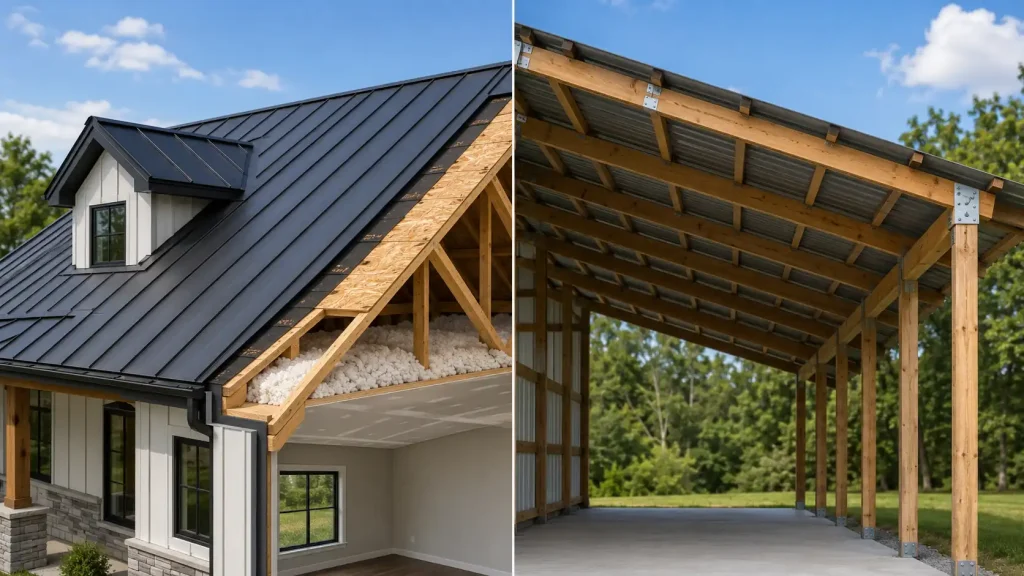
A common mistake is comparing a residential metal roof to a shed roof. The difference is important.
| Roof Type | Typical Sound Level During Rain | Why It Sounds That Way |
|---|---|---|
| Open shed or barn metal roof | Loud | No attic, no ceiling, little insulation, exposed panels |
| Metal porch cover | Moderate to loud | Often has open framing and no sound barrier |
| Modern metal roof over solid decking | Low to moderate | Decking, underlayment, attic, and insulation reduce sound |
| Metal roof over poor insulation | Moderate | Less sound absorption below the roof |
| Loose or poorly installed metal roof | Unpredictable | Panels or fasteners may vibrate or rattle |
For most homeowners, the real question is not whether metal makes sound. It does. The better question is whether that sound reaches the living space in an annoying way.
In a well-built home, it usually does not.
What Makes a Metal Roof Louder During Rain?
Several details can make a metal roof sound louder than expected. Some are normal design factors. Others may be warning signs.
1. Lack of Solid Roof Decking
Solid decking means the metal roof is installed over a firm surface, usually plywood or oriented strand board. This surface helps support the panels and reduce vibration.
If metal panels are installed over open framing, the sound can be much louder. This is common on barns, workshops, and some patio covers.
For a home, solid roof decking is one of the biggest sound-control factors.
2. Poor Attic Insulation
Insulation does more than improve energy efficiency. It also helps reduce sound transfer from outside into the living area.
The U.S. Department of Energy’s insulation guidance explains that insulation improves comfort by resisting heat flow. In roofing, that comfort benefit often includes a quieter interior because insulation adds mass and sound absorption between the roof and rooms below.
If your attic has thin, missing, damaged, or uneven insulation, rain may sound louder than it should.
3. Thin Metal Panels
Thicker panels usually feel more solid and may vibrate less than very thin panels. Metal roofing thickness is often described by gauge. A lower gauge number usually means thicker metal.
For example, 24-gauge metal is thicker than 29-gauge metal.
That does not mean every home needs the thickest available panel. But in areas with heavy storms, hail, or strong wind, panel quality matters for both durability and comfort.
4. Loose Fasteners or Clips
Fasteners, clips, and seams hold the roof system in place. If they are loose, missing, overdriven, or improperly spaced, the roof may move more than it should.
Warning sounds may include:
- Rattling
- Popping
- Flapping
- Metallic tapping in one specific area
- Vibration during wind-driven rain
These sounds should be inspected. They may not be only a noise issue. They can also indicate a leak risk or wind-resistance problem.
5. Poorly Sealed Flashing
Flashing is the metal material installed around roof edges, chimneys, skylights, valleys, vents, and wall connections. It helps direct water away from vulnerable areas.
If flashing is loose or poorly sealed, rain may create unusual tapping, dripping, or wind-driven noise. More importantly, bad flashing can let water enter the roof system.
Do not ignore repeated noise near chimneys, skylights, roof valleys, or wall intersections. These are common leak-prone areas.
6. Noisy Roof Add-Ons
Sometimes the noise is not from the metal roof itself. It may come from items attached to or near the roof.
Common sources include:
- Loose gutters
- Downspouts
- Satellite mounts
- Solar panel hardware
- Roof vents
- Chimney caps
- Tree branches touching the roof
- Loose trim or fascia
A homeowner may blame the roof panel when the real problem is a loose accessory.
Are Standing Seam Metal Roofs Quieter Than Exposed Fastener Roofs?
Standing seam metal roofs often perform better for residential comfort because the fasteners are hidden and the panels are designed to allow controlled movement. The raised seams lock the panels together and create a clean, modern appearance.
Exposed fastener metal roofs can also work well, but they rely on visible screws with washers. If those fasteners age, loosen, or are installed incorrectly, they may create more maintenance concerns.
From a noise standpoint, standing seam is often preferred for homes because it is usually installed as a higher-quality system over proper decking and underlayment.
However, the quietness of the roof still depends on the full assembly. A premium standing seam panel over weak insulation may still sound louder than expected. A good exposed fastener roof over solid decking and strong attic insulation may be comfortable.
How Roof Design Affects Rain Noise
The shape of your roof also changes how rain sounds.
Steep Roofs
On a steeper roof, rainwater runs off quickly. This may reduce the amount of time water sits and splashes on the panel. But heavy rain can still create noticeable tapping.
Low-Slope Roofs
Low-slope metal roofs may allow rain to hit at a different angle and drain more slowly. Proper design is important because low-slope roofs need correct panel profiles, seams, and drainage.
The Building America Solution Center guide to metal roofs emphasizes proper selection and installation to reduce risks from wind, water intrusion, hail, and severe weather. Those same installation details can also affect how stable and quiet the roof feels during storms.
Complex Rooflines
Homes with many valleys, dormers, skylights, and roof intersections may have more places where rain collects, channels, or changes direction. That can create louder water movement in certain areas.
This does not mean complex roofs are bad. It means installation quality becomes more important.
How to Reduce Rain Noise on a Metal Roof
If your metal roof is already installed and sounds louder than expected, there are several possible solutions. The right fix depends on the cause.
1. Improve Attic Insulation
This is often the most practical solution for homeowners. Better attic insulation can reduce rain noise and improve indoor comfort.
Common insulation options include:
- Fiberglass batts
- Blown-in fiberglass
- Blown-in cellulose
- Spray foam insulation
- Rigid foam in certain roof assemblies
Before adding insulation, check for moisture problems, blocked ventilation, or old damaged insulation. Covering up a roof leak with new insulation can create mold and hidden wood damage.
2. Seal Air Gaps
Sound travels through air leaks. Gaps around ceiling penetrations, attic hatches, recessed lights, ducts, vents, and wall top plates can allow roof noise to enter the home more easily.
Air sealing can help reduce sound transfer while also improving energy performance.
3. Check for Loose Fasteners and Panels
If the roof rattles or vibrates, do not treat it as a normal rain sound. A roofer should inspect the fasteners, seams, clips, ridge cap, flashing, and trim.
Loose roof parts can worsen over time. They may also allow wind-driven rain to enter under the panels.
4. Inspect Gutters and Downspouts
Sometimes heavy rain noise comes from water hitting metal gutters, elbows, or downspout extensions. If the sound is strongest near exterior walls, windows, or corners, the drainage system may be the cause.
Look for:
- Loose gutter brackets
- Water overshooting the gutter
- Downspouts hitting siding
- Metal elbows draining onto hard surfaces
- Clogged gutters causing overflow
A simple gutter repair may solve what seems like a roof noise problem.
5. Add Interior Sound Control
For rooms directly under the roof, interior upgrades may help. These can include thicker ceiling insulation, acoustic panels, rugs, curtains, or sound-reducing drywall during a remodel.
This is usually not the first fix, but it can help in bedrooms, home offices, or finished attic spaces.
Expert Tip
Expert Tip:
Before blaming the metal roof, listen during rain from different rooms and from the attic if it is safe to access. If the noise is loudest in one area, the issue may be loose flashing, a gutter problem, or a specific panel detail rather than the whole roof system.
Should Rain Noise Stop You from Choosing a Metal Roof?
For most homeowners, rain noise should not be the main reason to avoid metal roofing. Modern metal roofs offer several major advantages:
- Long service life
- Strong weather resistance
- Low maintenance when properly installed
- Fire resistance
- Good performance in many climates
- Clean curb appeal
- Compatibility with some solar mounting systems
- Recyclable material options
The main limitation is cost. Metal roofs usually cost more upfront than standard asphalt shingles. They also require skilled installation. A poorly installed metal roof can be noisy, leaky, and expensive to fix.
The roof system matters more than the material alone. A high-quality metal roof installed by an experienced contractor can be quiet, durable, and attractive. A low-cost installation with poor detailing can create problems.
Cost Factors That Affect Metal Roof Noise and Comfort
Noise control is often tied to overall roof quality. Cheaper installations may skip important details that improve comfort and durability.
| Cost Factor | How It Affects Noise | Why It Matters |
|---|---|---|
| Panel thickness | Thicker panels may reduce vibration | Helps improve strength and stability |
| Solid decking | Reduces drumming and movement | Essential for most residential comfort |
| Underlayment quality | Adds a layer between metal and deck | Helps with weather protection and sound dampening |
| Attic insulation | Absorbs sound before it reaches rooms | Also improves heating and cooling comfort |
| Contractor skill | Prevents loose panels and poor flashing | Reduces leaks, rattles, and future repairs |
| Roof complexity | More details can create more sound points | Requires better flashing and drainage work |
Choosing the lowest bid can be risky if it means weaker materials, rushed labor, or poor attic preparation. A metal roof is a long-term investment, so installation quality is not the place to cut corners.
Warning Signs That Your Metal Roof Noise Is Not Normal
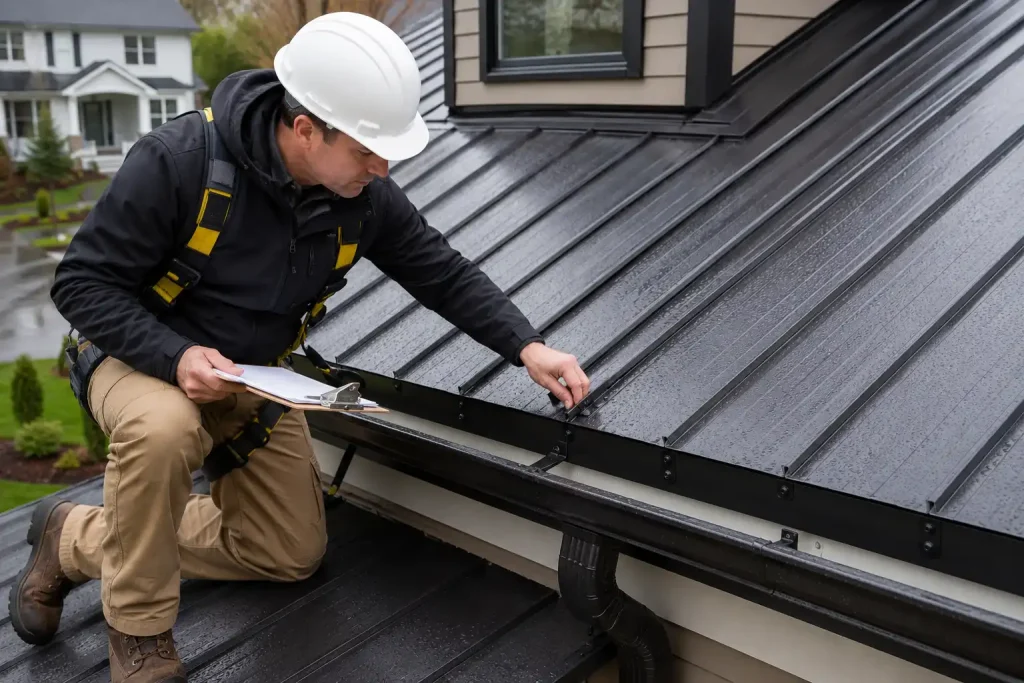
Some rain noise is normal. But certain sounds should be checked.
Call a roofing professional if you notice:
- Loud rattling during rain or wind
- A banging sound from one roof section
- Dripping sounds inside walls or ceilings
- Water stains after storms
- Rust around fasteners
- Loose ridge caps or trim
- Gutters shaking or pulling away
- A sudden increase in roof noise
- Noise near a chimney, skylight, or vent
A sudden change in sound can be an early warning sign. It may mean a panel, fastener, flashing detail, or gutter component has moved.
When to Call a Roofing Professional
You should call a roofing professional when rain noise comes with movement, leaks, stains, or repeated rattling. Metal roofs require specific tools, fasteners, sealants, and safety practices. Walking on metal roofing can also be dangerous because panels can be slippery, especially when wet.
According to OSHA’s residential fall protection guidance, roofing work involves serious fall hazards, and fall protection is important during residential construction activities.
A professional roofer can check:
- Panel attachment
- Fastener condition
- Standing seams or exposed screws
- Underlayment problems
- Flashing around roof penetrations
- Gutter and drainage issues
- Attic ventilation and moisture signs
- Signs of hidden leaks
If the roof is new, contact the installer first. The workmanship warranty may cover certain adjustments. If the installer is unresponsive or the problem seems serious, get a second opinion from a qualified metal roofing contractor.
Can You Fix Metal Roof Noise Yourself?
Homeowners can safely handle some basic checks from the ground or inside the attic. But roof-level repairs should usually be left to professionals.
Safer DIY Checks
You may be able to:
- Listen from different rooms during rain.
- Check the attic for water stains after a storm.
- Look for loose gutters from the ground.
- Trim tree branches that touch the roof, if safely reachable.
- Check whether downspouts are draining onto noisy surfaces.
- Review your attic insulation depth.
Avoid These DIY Risks
Do not climb onto a wet metal roof. Do not remove panels, open seams, or apply random sealant without knowing the system. Wrong repairs can trap moisture, void warranties, or make leaks worse.
Roof sealant is not a cure-all. If a panel or flashing detail is installed incorrectly, covering it with caulk may only hide the problem temporarily.
Common Mistakes Homeowners Should Avoid
- Assuming all metal roofs are loud: Modern residential systems are much quieter than sheds or barns.
- Ignoring attic insulation: Weak insulation can make rain noise more noticeable and reduce comfort.
- Choosing the cheapest installer: Poor workmanship can cause rattling, leaks, and early repairs.
- Blaming the roof before checking gutters: Downspouts and loose gutters often create loud rain sounds.
- Walking on the roof during or after rain: Metal panels can be slippery and dangerous.
- Using random sealants on seams: Incorrect sealants can fail or interfere with roof movement.
- Ignoring sudden noise changes: New rattling or banging should be inspected quickly.
- Forgetting ventilation: Poor attic ventilation can create moisture issues when insulation is added incorrectly.
Metal Roof Noise and Hail
Hail is louder than normal rain on almost any roof. On metal roofing, hail may create a sharper sound because hard ice is hitting a hard surface.
However, sound alone does not mean the roof is damaged. Some hail may only create cosmetic dents, while larger hail can damage panels, coatings, seams, flashing, or accessories.
After a major hailstorm, inspect from the ground first. Look for dented gutters, damaged vents, loose trim, or visible panel dents. If you suspect damage, schedule a professional inspection before filing a claim or approving repairs.
Metal Roof Noise and Bedrooms
Bedrooms under the roof may be more sensitive to rain noise, especially in one-story homes, finished attics, cabins, and homes with vaulted ceilings.
Vaulted ceilings can be tricky because there may be less attic space to absorb sound. In those cases, the roof assembly should be planned carefully before installation.
Useful options may include:
- Better roof underlayment
- Thicker insulation
- Proper air sealing
- Sound-reducing ceiling materials
- High-quality panel attachment
- A quieter roof profile
If you are replacing a roof over bedrooms, tell your contractor that sound control matters to you. This should be discussed before the roof is installed, not after.
Questions to Ask a Contractor Before Installing a Metal Roof
Before hiring a roofing contractor, ask direct questions about sound, comfort, and installation quality.
Good questions include:
- Will the metal roof be installed over solid decking?
- What underlayment will be used?
- What panel gauge do you recommend for my home?
- Is this standing seam or exposed fastener?
- How will you handle flashing around chimneys, vents, and skylights?
- Will you inspect the roof deck before installation?
- Should my attic insulation be improved before or after the roof work?
- What workmanship warranty do you provide?
- Have you installed this type of metal roof on homes like mine?
A reliable contractor should be able to answer clearly. If the answer is vague, rushed, or only focused on price, keep looking.
FAQs
Are metal roofs noisy when it rains inside a house?
Usually, no. A metal roof on a finished home is much quieter than a metal roof on a shed or barn. Solid decking, underlayment, attic insulation, and drywall all help reduce rain noise before it reaches the living space.
Is a metal roof louder than shingles?
A metal roof may sound slightly different from asphalt shingles, especially during heavy rain. But when installed correctly with good insulation, the difference is often small. Poor insulation or loose panels can make any roof feel louder.
How can I make my metal roof quieter?
The best ways to reduce metal roof noise are to improve attic insulation, seal air gaps, secure loose fasteners, inspect flashing, and check gutters or downspouts. If the noise includes rattling or banging, call a roofing professional.
Do standing seam metal roofs make less noise?
Standing seam metal roofs are often a good choice for homes because they use hidden fasteners and a cleaner panel system. They can be quiet when installed over solid decking with proper insulation. Installation quality still matters.
Is rain noise a sign of metal roof damage?
Normal tapping during rain is not usually a sign of damage. But rattling, banging, flapping, dripping, or sudden new noise may point to loose panels, bad flashing, gutter problems, or leaks. Those sounds should be inspected.
Will adding insulation reduce metal roof rain noise?
Yes, adding or improving attic insulation can reduce rain noise and improve indoor comfort. Before adding insulation, make sure there are no roof leaks, moisture problems, or blocked ventilation areas.
Should I avoid a metal roof because of rain noise?
For most homeowners, rain noise is not a strong reason to avoid metal roofing. A properly installed metal roof can be comfortable, durable, and attractive. Focus on good materials, solid decking, proper insulation, and an experienced contractor.
Conclusion
So, are metal roofs noisy when it rains? In a modern home, they usually are not as noisy as many homeowners fear. The loud “tin roof” sound mostly comes from open sheds, barns, and patio covers without decking, insulation, or finished ceilings.
For a quiet and durable result, focus on the full roof system. Solid decking, quality underlayment, proper attic insulation, secure fasteners, and skilled installation all matter. If your existing metal roof rattles, bangs, leaks, or suddenly sounds louder, schedule a professional inspection before the problem gets worse.
A metal roof can be a smart long-term investment, but only when it is installed correctly. Choose a qualified metal roofing contractor, ask the right questions, and make comfort part of the roofing plan from the start.