
How Much Does a Metal Roof Cost in Florida?

If you live in Florida and your roof is getting older, one of the first questions you may ask is simple: how much does a metal roof cost in Florida? The answer matters because a metal roof is a major home investment, especially in a state with hurricanes, heavy rain, salt air, intense sun, and strict building requirements.
In most cases, a Florida metal roof costs more upfront than asphalt shingles. However, it can also last longer, handle harsh weather better, and improve energy performance when installed correctly. This guide explains realistic cost ranges, what affects the price, which metal roof types are common in Florida, and when it makes sense to call a roofing professional before you spend money.
Quick Answer
How much does a metal roof cost in Florida? Most Florida homeowners can expect to pay about $10 to $20 per square foot installed for a metal roof. A typical full replacement often ranges from $20,000 to $50,000+, depending on roof size, metal type, roof complexity, coastal exposure, code requirements, and contractor pricing.
Average Metal Roof Cost in Florida
Metal roofing prices in Florida vary widely because homes are different. A simple one-story home inland will usually cost less than a large coastal home with valleys, dormers, skylights, and steep roof sections.
Here is a practical cost range:
| Metal Roof Type | Typical Installed Cost in Florida | Best For | Notes |
|---|---|---|---|
| Exposed-fastener metal panels | $7–$12 per sq. ft. | Budget-conscious homeowners | Lower cost, but fasteners need maintenance |
| Standing seam metal roof | $10–$20+ per sq. ft. | Long-term durability and clean appearance | Concealed fasteners, better weather protection |
| Metal shingles | $10–$18+ per sq. ft. | Traditional home appearance | Looks more like shingles or tile |
| Aluminum metal roof | $12–$22+ per sq. ft. | Coastal homes | Better corrosion resistance near salt air |
| Premium metals, such as copper or zinc | $20–$35+ per sq. ft. | Luxury or historic homes | High cost and specialized installation |
For a 2,000-square-foot roof surface, a metal roof may cost roughly:
- Exposed-fastener panels: $14,000–$24,000
- Standing seam panels: $20,000–$40,000+
- Metal shingles or aluminum systems: $20,000–$44,000+
These numbers are estimates. Your final price depends on your home, local labor rates, permit requirements, and the roofing system approved for your area.
Why Metal Roofs Cost More in Florida
Florida is not an easy roofing environment. A roof must deal with heat, rain, wind, humidity, and sometimes saltwater exposure. That is why Florida metal roof pricing is often higher than in calmer climates.
1. Hurricane and Wind Requirements
Many Florida homes must meet strict wind-resistance rules. Homes in coastal counties and high-wind areas may need specific products, fastening patterns, underlayment, and installation methods.
Before choosing a product, homeowners can check whether a roofing system has approval through the Florida Product Approval search. This matters because not every metal roof panel is approved for every Florida location.
Important warning: A cheaper panel may not be legal or suitable for your area. Always ask the contractor for the product approval number before signing.
2. Roof Size and Shape
Roofing is priced by the roof surface area, not the living area of the home. A 2,000-square-foot house may have a roof surface of 2,300 to 3,000 square feet, depending on the pitch and design.
Cost increases when the roof has:
- Multiple slopes
- Valleys
- Dormers
- Chimneys
- Skylights
- Low-slope sections
- Complicated flashing areas
- Two-story access challenges
A simple gable roof is usually cheaper than a complex roof with many angles.
3. Metal Type and Panel Style
The metal roofing style has a major effect on price.
Exposed-fastener panels are usually the most affordable. The screws are visible on the surface of the roof. This system can work well when installed correctly, but rubber washers around screws can wear over time.
Standing seam metal roofs cost more because the fasteners are hidden under raised seams. This gives better protection from water entry and creates a cleaner appearance.
Metal shingles cost more than basic panels because they require more pieces, more detail work, and more labor.
4. Coastal Exposure
Florida coastal homes often need stronger corrosion resistance. Salt air can be tough on roofing materials, fasteners, and coatings.
For coastal homes, contractors may recommend:
- Aluminum panels
- High-quality painted steel
- Stainless or corrosion-resistant fasteners
- Approved coatings
- Extra attention to flashing and sealants
This can raise the price, but it helps protect the roof from early failure.
Cost Factors That Affect Your Final Estimate
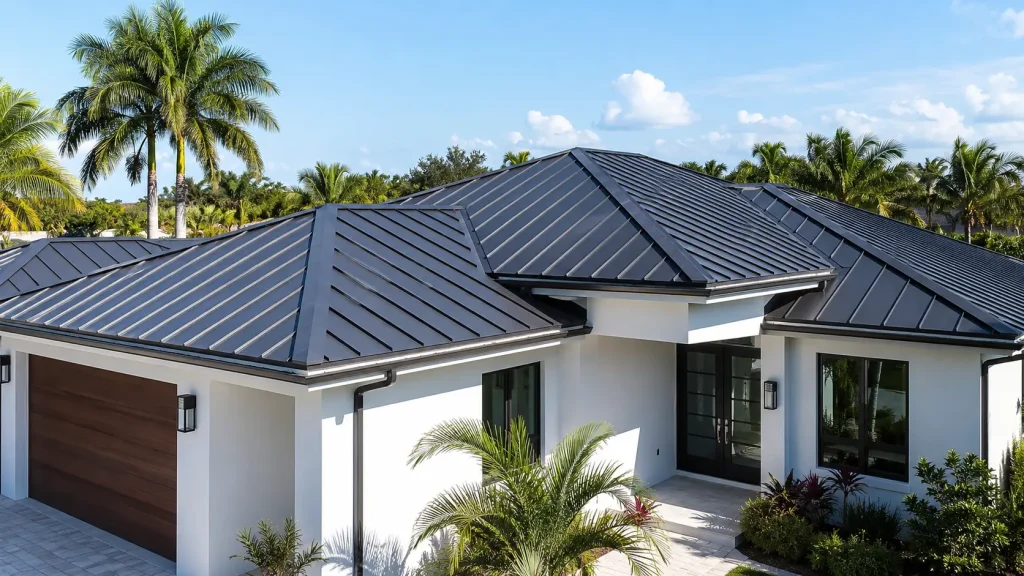
A metal roof estimate is not just a price for panels. It includes materials, labor, removal, accessories, permits, and jobsite conditions.
Tear-Off and Disposal
If your old roof must be removed, the contractor will charge for labor, dumpsters, and disposal. Tear-off costs more if there are multiple old layers or damaged decking underneath.
In Florida, many homeowners replace roofs after storm damage or insurance inspections. If the decking is soft, rotten, or not up to code, it may need repair before the new metal roof goes on.
Underlayment and Roof Deck Protection
Underlayment is the protective layer between the roof deck and the metal panels. In Florida, this layer is very important because wind-driven rain can push water under roof coverings.
Higher-quality underlayment costs more, but it can improve water protection. Some roof assemblies also require a sealed roof deck, depending on local code and insurance requirements.
Flashing Details
Flashing is the metal or waterproofing detail around roof edges, walls, chimneys, valleys, vents, and skylights. Poor flashing is one of the most common causes of roof leaks.
A good metal roof estimate should include proper flashing, not just panels. Do not choose a contractor who gives a vague estimate with no details about flashing.
Permits and Inspections
Most Florida roof replacements require permits. Permit costs vary by city or county. Inspections may also be required during or after installation.
Permits add cost, but they help confirm that the work follows local building rules.
Labor Quality
Metal roofing is not a beginner-friendly installation. Panel alignment, fastening, flashing, ventilation, and expansion movement all matter.
A low labor price may look attractive, but poor installation can cause:
- Leaks
- Oil canning
- Loose panels
- Rust around wrong fasteners
- Failed inspections
- Warranty problems
- Wind damage during storms
With metal roofing, installation quality is just as important as material quality.
Standing Seam vs Exposed-Fastener Metal Roofs in Florida
Two common choices for Florida homeowners are standing seam and exposed-fastener metal roofs.
Standing Seam Metal Roof
A standing seam roof has raised vertical seams and hidden fasteners. This is often considered the premium residential metal roof option.
Benefits include:
- Better water resistance
- Clean modern appearance
- Fewer exposed screw points
- Strong long-term performance
- Good choice for many Florida homes
The downside is cost. Standing seam systems require skilled labor and specialized tools. For many homeowners, the higher price is worth it because there are fewer exposed fastener points.
Exposed-Fastener Metal Roof
Exposed-fastener panels cost less. They are common on barns, sheds, workshops, and some homes.
Benefits include:
- Lower upfront cost
- Faster installation
- Practical for simpler roofs
- Good value when installed correctly
Limitations include:
- Screws are exposed to sun and rain
- Washers can wear over time
- More maintenance may be needed
- Not always ideal for complex residential roofs
For Florida homes, exposed-fastener systems can work, but homeowners should understand the maintenance responsibility.
Is a Metal Roof Worth It in Florida?
For many Florida homeowners, a metal roof can be worth the higher upfront cost. The value depends on how long you plan to stay in the home, your local storm exposure, your budget, and the quality of installation.
Benefits of Metal Roofing in Florida
Metal roofs are popular in Florida because they can offer:
- Long service life
- Strong wind performance when properly installed
- Good rain shedding
- Fire resistance
- Energy efficiency with reflective coatings
- Lower long-term replacement frequency
- Strong curb appeal
Reflective roof surfaces can help reduce heat absorption. The U.S. Department of Energy explains that cool roofs reflect more sunlight and absorb less solar energy, which can be helpful in hot, sunny climates like Florida.
Limitations to Consider
Metal roofs are not perfect for every homeowner.
Possible drawbacks include:
- Higher upfront cost
- More need for skilled installation
- Possible denting from severe hail or falling branches
- Noise concerns if installed over poor decking or insulation
- Possible corrosion issues near the coast if the wrong material is used
- Repair work can be more specialized than asphalt shingles
The best choice is not always the most expensive roof. The best choice is the system that fits your home, location, budget, and long-term plans.
Metal Roof Cost vs Asphalt Shingles in Florida
Asphalt shingles usually cost less upfront than metal roofing. That is why many homeowners choose shingles when budget is the top concern.
However, metal roofing may last longer and perform better in Florida’s climate when properly installed.
| Comparison Point | Asphalt Shingles | Metal Roof |
|---|---|---|
| Upfront cost | Lower | Higher |
| Lifespan | Shorter | Longer |
| Storm resistance | Depends on rating and installation | Strong when properly installed |
| Heat performance | Can absorb more heat | Reflective coatings can help |
| Maintenance | More frequent over time | Usually lower, but still needed |
| Appearance | Traditional | Modern, coastal, or premium |
| Best for | Lower initial budget | Long-term investment |
If you plan to sell soon, shingles may be more budget-friendly. If you plan to stay in the home for many years, a metal roof may offer better long-term value.
Example Metal Roof Cost Scenarios
Here are realistic examples to help you understand pricing.
Example 1: Small Inland Florida Home
A one-story home in Central Florida has a simple roof shape and about 1,700 square feet of roof surface.
Estimated cost:
- Exposed-fastener panels: $12,000–$20,000
- Standing seam: $17,000–$34,000
This home costs less because the roof is simple and access is easier.
Example 2: Coastal Home Near Salt Air
A coastal home has 2,400 square feet of roof surface. The homeowner wants aluminum standing seam panels because of salt exposure.
Estimated cost:
- Aluminum standing seam: $30,000–$52,000+
The price is higher because corrosion resistance and coastal code requirements matter more.
Example 3: Large Home With Complex Roof Design
A larger Florida home has valleys, dormers, skylights, and steep sections. The roof surface is about 3,200 square feet.
Estimated cost:
- Metal shingles: $35,000–$60,000+
- Standing seam: $38,000–$65,000+
Complexity increases labor time, flashing details, and waste.
Expert Tip
Expert Tip:
Before comparing metal roof quotes, ask each contractor to price the same roof system, same underlayment, same panel type, same warranty, and same permit scope. Otherwise, the cheapest quote may only look cheaper because important items are missing.
Common Warning Signs Your Florida Roof Needs Attention
A metal roof may be part of a replacement plan if your current roof is showing serious signs of wear.
Watch for:
- Missing or lifted shingles
- Repeated leaks after rain
- Water stains on ceilings
- Sagging roof areas
- Rusted flashing
- Soft or rotted decking
- Mold or moisture in the attic
- Loose gutters or fascia damage
- Storm damage after hurricanes or tropical storms
- Insurance notices requiring roof repair or replacement
Do not ignore active leaks. Water can damage insulation, drywall, electrical systems, and roof framing.
When to Call a Roofing Professional

You should call a roofing professional when you are dealing with leaks, storm damage, roof age concerns, or a full replacement decision.
Roofing work is dangerous, especially on steep or wet surfaces. OSHA notes that fall protection is a major issue in residential construction, and its residential fall protection guidance highlights the serious risks of roofing work.
Call a licensed roofing contractor if:
- Your roof is leaking
- You see storm damage
- Your roof is over 15–20 years old
- You are considering metal roof replacement
- You live in a high-wind or coastal area
- Your insurance company requested roof documentation
- You need permit-compliant work
- You are unsure whether repair or replacement is smarter
A professional can inspect the roof deck, ventilation, flashing, and existing roof condition before recommending a system.
DIY warning: Homeowners should not attempt a full metal roof installation without proper training, safety equipment, and code knowledge. A small mistake can cause leaks, failed inspections, or warranty problems.
Questions to Ask Before Hiring a Metal Roofing Contractor
Choosing the right contractor is one of the most important parts of the project.
Ask these questions before signing:
- Are you licensed and insured in Florida?
This protects you if something goes wrong. - What metal roofing system are you installing?
Ask for the manufacturer, panel profile, gauge, coating, and approval information. - Is the product approved for my area?
Some products are approved outside high-wind zones but not in certain coastal areas. - What underlayment is included?
Underlayment is critical for water protection. - How will flashing be handled?
Poor flashing can ruin an otherwise good roof. - What warranties apply?
Separate material warranties from workmanship warranties. - Does the quote include tear-off, permits, disposal, and inspections?
Missing items can make a cheap quote expensive later. - Can you provide recent local references?
Local experience matters in Florida roofing.
Common Mistakes Homeowners Should Avoid
- Choosing only by lowest price. A cheap metal roof can become expensive if it leaks or fails inspection.
- Ignoring Florida product approval. Not every metal roofing product is approved for every area.
- Comparing different systems as if they are the same. Standing seam and exposed-fastener roofs are not equal.
- Skipping roof deck repairs. Installing metal over damaged decking can cause long-term problems.
- Overlooking ventilation. Poor attic ventilation can trap heat and moisture.
- Forgetting coastal corrosion risk. Salt air can shorten the life of the wrong material.
- Not reading the warranty. Some warranties require proper installation, ventilation, and maintenance.
- Trying risky DIY work. Metal panels are slippery, sharp, and difficult to install correctly.
- Failing to plan for gutters. Florida rain is heavy, and gutters help move water away from the foundation.
- Not getting multiple detailed estimates. A good estimate should clearly explain materials, labor, scope, and exclusions.
How to Get a More Accurate Metal Roof Estimate
Online price ranges are helpful, but they cannot replace a local roof inspection.
To get a more accurate estimate:
- Measure your home’s approximate footprint.
This gives you a starting point, but remember roof surface area is usually larger. - Identify your roof style.
Simple roofs cost less. Complex roofs cost more. - Decide which metal roof type you want.
Compare exposed-fastener, standing seam, metal shingles, and aluminum. - Ask about code requirements.
Florida homes may need specific approved systems. - Request itemized quotes.
The quote should show tear-off, underlayment, flashing, panels, permits, and cleanup. - Compare value, not just price.
A higher-quality system may save money over time.
Maintenance Costs After Installation
Metal roofs are often described as low maintenance, but they are not no-maintenance.
Homeowners should still check for:
- Loose fasteners
- Scratched coating
- Debris in valleys
- Clogged gutters
- Sealant wear
- Damaged flashing
- Storm-related dents or lifted edges
Exposed-fastener systems may need screw inspection and replacement over time. Standing seam systems usually require less fastener maintenance because the fasteners are concealed.
A yearly roof check is smart, especially after hurricane season.
FAQs
How much does a metal roof cost in Florida for a 2,000-square-foot roof?
A 2,000-square-foot metal roof in Florida often costs about $20,000 to $40,000+ for standing seam and about $14,000 to $24,000 for exposed-fastener panels. Complex roofs, coastal materials, and code requirements can increase the price.
Is a metal roof cheaper than shingles in Florida?
No. A metal roof usually costs more upfront than asphalt shingles. However, it may last longer, require fewer replacements, and perform better in Florida’s heat, rain, and wind when installed correctly.
What is the best metal roof for Florida homes?
Standing seam metal roofing is often a strong choice for Florida homes because it has hidden fasteners and good weather resistance. Coastal homes may benefit from aluminum or corrosion-resistant systems.
Does a metal roof help with cooling costs in Florida?
It can. Light-colored or reflective metal roofing can reduce heat absorption. This may help lower attic heat and cooling demand, especially when paired with proper attic ventilation and insulation.
Can I install a metal roof over shingles in Florida?
Sometimes it may be allowed, but it depends on local code, roof condition, manufacturer rules, and contractor judgment. In many cases, removing old roofing is better because it allows inspection of the roof deck.
How long does a metal roof last in Florida?
A properly installed metal roof can often last several decades. Lifespan depends on material type, coating quality, coastal exposure, installation quality, and maintenance.
Why are metal roofs expensive in Florida?
Metal roofs cost more in Florida because of material costs, skilled labor, wind requirements, permits, underlayment, flashing, and coastal corrosion concerns. Complex roof shapes and storm-resistant installation details also increase the price.
Conclusion
So, how much does a metal roof cost in Florida? Most homeowners should expect about $10 to $20 per square foot installed, with many full replacements landing between $20,000 and $50,000+. The final cost depends on roof size, panel type, coastal exposure, code requirements, labor quality, and the condition of the existing roof.
A metal roof can be a smart long-term investment in Florida, but only if the right system is installed the right way. Before choosing a contractor, compare detailed estimates, confirm product approval, ask about underlayment and flashing, and make sure the installer understands Florida roofing conditions.
The best next step is to schedule a professional roof inspection and request itemized quotes from qualified local roofing contractors. That gives you the clearest path to a safe, durable, and cost-effective roofing decision.