
How to Walk on a Metal Roof Without Slipping: A Homeowner Safety Guide

Walking on a metal roof can feel intimidating, and for good reason. Metal panels are smoother than shingles, and they can become dangerously slick when wet, dusty, icy, or covered with pollen. If you are wondering how to walk on a metal roof without slipping, the safest answer is simple: avoid walking on it unless it is truly necessary.
This guide explains when roof access may be reasonable, when it is too risky, what shoes and safety gear matter, where to step, and when to call a roofing professional. The goal is to help homeowners make a smart, safe decision before checking gutters, looking for damage, cleaning debris, or inspecting a suspected roof problem.
Quick Answer
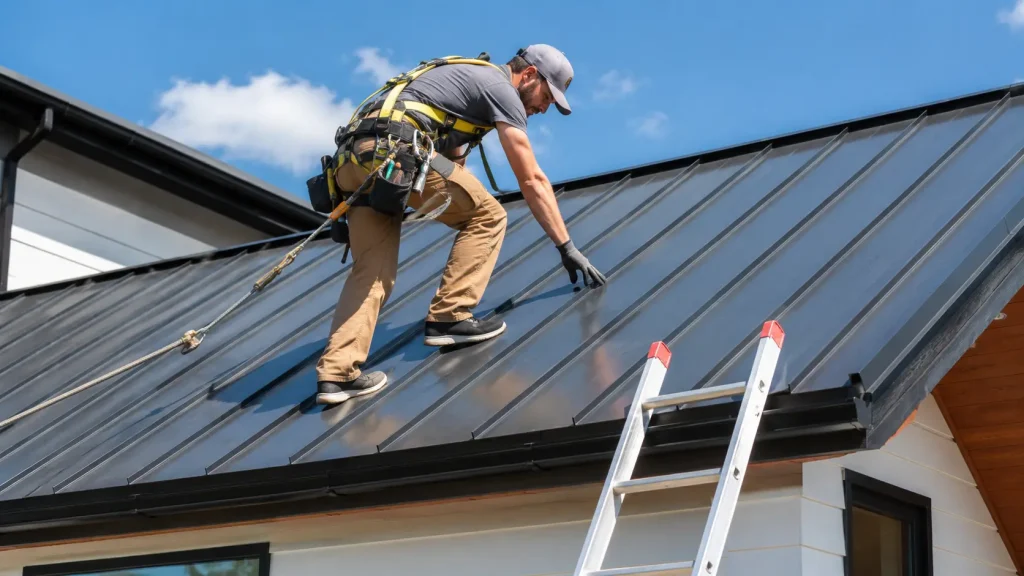
To walk on a metal roof without slipping, wear clean soft-soled shoes, avoid wet or windy conditions, use proper fall protection, step slowly near structural supports, and never walk on steep, icy, damaged, or unfamiliar roof panels. For most homeowners, the safest choice is to inspect from the ground or hire a roofer.
Should Homeowners Walk on a Metal Roof?
In many cases, homeowners should not walk on a metal roof. Even a low-slope roof can be risky if the surface is dusty, damp, oily, or coated with loose granules from nearby shingles. A small slip can turn into a serious fall within seconds.
According to OSHA residential fall protection guidance, falls are a major danger in residential construction work, including roofing. While OSHA rules are written for workers and employers, the safety lesson also matters for homeowners: roof work is not casual home maintenance.
You may be tempted to walk on the roof to:
- Remove leaves or branches
- Check for storm damage
- Clean gutters
- Inspect loose screws
- Look for leaks around flashing
- Clean skylights
- Adjust a satellite dish or vent cover
Some of these tasks look simple from the ground. But once you are on a metal roof, the pitch, panel coating, heat, and surface texture can change how safe it feels.
Important warning: If the roof is steep, wet, icy, damaged, or higher than one story, do not walk on it yourself. Call a roofing professional.
Why Metal Roofs Can Be Slippery
Metal roofs are durable, long-lasting, and attractive, but the same features that make them shed rain and snow well can also make them slippery underfoot.
Smooth Painted Coatings
Many metal roofs have factory-applied paint or protective coatings. These coatings help protect the panels from corrosion and fading. However, they can feel slick, especially when moisture or dust sits on the surface.
A standing seam metal roof, for example, often has long smooth panels with raised seams. The panels are designed to move water off the roof efficiently. That is good for the house, but not always good for foot traction.
Moisture, Dew, and Morning Condensation
A roof does not need visible rain to be slippery. Morning dew, fog, or light condensation can create a thin film of moisture. On metal, that film may be hard to see.
Avoid walking on a metal roof:
- Early in the morning
- After rainfall
- During mist or fog
- When frost is possible
- When snow or ice is present
- When humidity is high and the roof feels damp
Even if the roof looks dry from the ground, test conditions carefully before assuming it is safe.
Dust, Pollen, Leaves, and Algae
A dry metal roof can still be slippery if the surface is dirty. Pollen, dust, pine needles, leaves, or algae can act like tiny ball bearings under your shoes.
This is especially common near trees, in shaded areas, and in humid climates. Valleys and low-slope roof sections often collect debris first.
Roof Pitch
The steeper the roof, the more dangerous it becomes. A low-slope porch roof may feel manageable, while a steep main roof may be unsafe even with good shoes.
Roof pitch is usually written as rise over run, such as 4:12 or 8:12. A 4:12 roof rises 4 inches for every 12 inches of horizontal distance. The higher the first number, the steeper the roof.
For homeowners, steep metal roofs should be treated as professional-only areas.
Safety First: Know When Not to Step on the Roof
Before learning where to step, first learn when to stay off the roof. This is the most important part of the decision.
Do not walk on a metal roof if:
- The roof is wet, icy, snowy, or frosty
- The wind is strong or gusty
- The roof pitch feels too steep
- You do not have proper shoes
- You do not have a stable ladder
- The roof panels look loose, dented, or damaged
- You see rust, holes, or soft areas
- You feel nervous or unsteady
- You need to carry tools with both hands
- You are working near a roof edge, skylight, or valley
The OSHA fall protection standard for construction explains the importance of protecting people from fall hazards during construction activities. Homeowners should apply the same mindset: if there is a real chance of falling, the task is not worth doing without proper protection.
What to Wear When Walking on a Metal Roof
Your footwear can make a major difference. The wrong shoes can make a safe-looking roof much more dangerous.
Best Shoes for Walking on a Metal Roof
Wear shoes with:
- Soft rubber soles
- Clean bottoms
- Good tread
- Flexible grip
- Secure laces
- A snug fit
Soft-soled work shoes or roofing shoes are usually better than hard plastic or worn-out sneakers. The sole should grip the metal without scratching the coating.
Shoes to Avoid
Do not wear:
- Flip-flops
- Sandals
- Dress shoes
- Worn sneakers with smooth soles
- Muddy boots
- Heavy boots with hard aggressive lugs
- Shoes with gravel stuck in the tread
Dirty shoes can damage the roof coating. Small stones in the tread can scratch painted metal panels, which may lead to cosmetic damage or future corrosion concerns.
Clothing and Safety Gear
Wear clothing that lets you move carefully. Avoid loose items that can catch on seams, fasteners, vents, or gutters.
Useful safety gear may include:
- Work gloves
- Safety glasses
- A tool belt or pouch
- A properly fitted fall-arrest harness
- Roof anchor system installed correctly
- Stable ladder with proper extension above the roof edge
Never carry loose tools in your hands while climbing. Keep your hands free so you can maintain balance.
How to Walk on a Metal Roof Without Slipping: Step-by-Step
If roof access is truly necessary and conditions are safe, move slowly and plan every step.
1. Check the Weather and Roof Surface
Choose a dry, calm day. Midday is often safer than early morning because dew has had time to dry.
Before stepping fully onto the roof, check the surface from the ladder. Look for moisture, loose debris, algae, frost, or dust. If your shoe slides even slightly, stop.
2. Use a Proper Ladder
Your ladder should be stable, placed on firm level ground, and extended above the roof edge. Never lean a ladder against gutters that may bend or pull away.
The OSHA ladder safety guidance gives detailed ladder requirements for work settings, but homeowners can still learn from the basics: ladders must be stable, secure, and used carefully.
Avoid climbing while carrying tools, buckets, or heavy items. Use a rope or tool pouch when appropriate.
3. Step Where the Roof Has Support
Metal panels are not all supported the same way. Some areas may have framing, purlins, or decking underneath. Others may flex more.
As a general rule, step:
- Near panel seams when manufacturer guidance allows
- Over structural support points
- On flatter sections when possible
- Away from unsupported panel centers
- Away from skylights and roof edges
The exact safe stepping area depends on the roof system. Standing seam panels, exposed-fastener panels, metal shingles, and corrugated panels can all behave differently. The Metal Construction Association’s metal roof installation manual is a useful industry resource because it shows how specific metal roof systems require proper installation and handling.
4. Walk Slowly and Keep Your Weight Balanced
Take short steps. Keep your feet flat and your weight centered. Do not run, jump, pivot quickly, or make sudden turns.
Move like you are walking on a smooth ramp:
- Place one foot carefully.
- Confirm it feels stable.
- Shift weight slowly.
- Move the next foot.
- Keep your body low and balanced.
Avoid stepping backward unless you can clearly see where your foot is going.
5. Stay Away From Roof Edges
The roof edge is one of the most dangerous areas. A small slip near the edge gives you very little time to recover.
Stay well away from:
- Eaves
- Rakes
- Valleys
- Skylights
- Chimneys
- Roof openings
- Loose flashing
- Wet shaded areas
If the work requires reaching the edge, such as gutter cleaning, it is usually safer to work from a properly positioned ladder or hire a contractor.
6. Do Not Walk on Fasteners, Ribs, or Raised Seams Carelessly
On exposed-fastener metal roofs, screws and washers can be damaged if stepped on repeatedly. On standing seam roofs, raised seams may be part of the locking system and should not be bent or crushed.
Walking in the wrong place can cause:
- Dents
- Scratches
- Loosened fasteners
- Damaged seams
- Paint coating wear
- Leaks around screws or flashing
Safety and roof protection go together. A careful step protects both you and the roof.
Table: DIY Roof Access vs Calling a Professional
| Situation | DIY May Be Reasonable? | Better Choice |
|---|---|---|
| Looking at the roof from the ground | Yes | Use binoculars or phone zoom |
| Cleaning low gutters from a stable ladder | Sometimes | Use ladder safety and avoid roof walking |
| Checking a minor visible issue on a low-slope dry roof | Maybe | Only with proper shoes and safety setup |
| Walking on a steep standing seam roof | No | Call a roofing professional |
| Inspecting storm damage after hail or wind | No | Schedule a roof inspection |
| Working near skylights, valleys, or edges | No | Call a professional |
| Repairing flashing, screws, seams, or leaks | Usually no | Hire a qualified roofer |
| Roof is wet, icy, dusty, or windy | No | Wait or call a roofer |
Special Considerations by Metal Roof Type
Not all metal roofs feel the same underfoot. The safest walking method depends on the panel style and support system.
Standing Seam Metal Roofs
Standing seam roofs have long panels with raised vertical seams. They often look clean and modern, but the panels may be smooth and slick.
Be careful not to crush or bend the seams. Some standing seam roofs also have concealed clips, which means the support points are not always obvious from above.
For many homeowners, standing seam roofs are best left to professionals.
Exposed-Fastener Metal Roofs
Exposed-fastener roofs have visible screws with washers. These roofs are common on homes, barns, porches, and sheds.
Avoid stepping directly on screws because it can loosen washers or damage seals. If fasteners are old, cracked, rusty, or backing out, the roof may already need inspection.
Corrugated Metal Roofs
Corrugated roofs have repeated ridges and valleys. They may seem easier to grip, but they can still be slippery. Some corrugated panels can flex if they are not fully supported underneath.
Step only where the roof structure can support weight. Avoid panel edges and unsupported spans.
Metal Shingle Roofs
Metal shingles may look like slate, tile, or asphalt shingles. They can be damaged if stepped on incorrectly. Some profiles have raised shapes that dent under concentrated weight.
If you do not know where to step, do not guess.
Expert Tip
Expert Tip:
Before walking on a metal roof, call the roof manufacturer or installer and ask where foot traffic is allowed. Different panel systems have different support points, and stepping in the wrong place can cause dents, scratches, or leaks.
How to Inspect a Metal Roof Without Walking on It
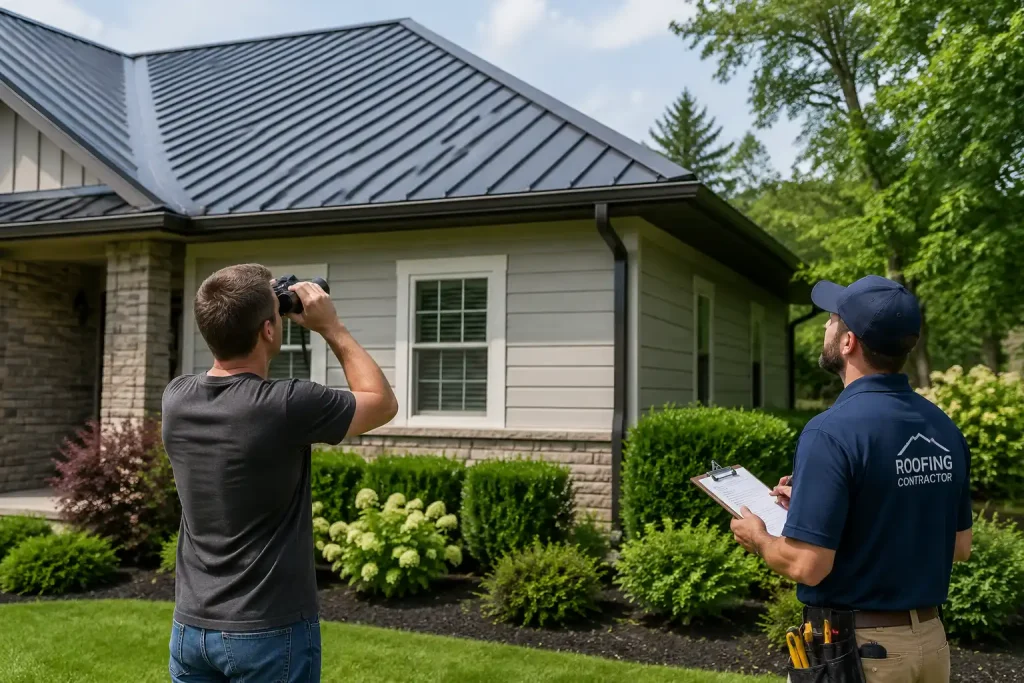
In many cases, you can check roof conditions without stepping onto the roof. This is safer and often enough for a first look.
Try these safer inspection methods:
- Use binoculars from the ground
- Take photos with phone zoom
- Inspect the attic for water stains
- Look for loose metal trim from the yard
- Check gutters from a ladder
- Look for fallen screws or metal pieces
- Watch where water flows during rain
- Use a drone if local rules allow and you can operate it safely
Signs you may see from the ground include loose ridge caps, lifted flashing, missing screws, dented panels, clogged gutters, rust stains, or damaged trim.
Inside the home, look for ceiling stains, peeling paint, musty smells, wet insulation, or daylight showing through roof openings.
Common Warning Signs on a Metal Roof
If you notice these problems, avoid walking on the roof and schedule an inspection:
- Loose or missing screws
- Rust around fasteners
- Lifted flashing
- Bent ridge caps
- Open seams
- Dented panels after hail
- Scratched paint or exposed metal
- Water stains inside the house
- Sagging roof areas
- Loose gutters or fascia
- Sealant that is cracked or missing
- Panels that move or make unusual noise
Some problems look small but can grow quickly. For example, one loose screw may allow water under the washer. Over time, that can lead to leaks, sheathing damage, or insulation problems.
Cost and Damage Considerations
Walking on a metal roof incorrectly can cost more than the task you were trying to complete.
Possible repair costs depend on roof type, roof height, labor rates, and damage severity. Minor fastener replacement may be relatively affordable, while damaged panels, seam repairs, or leak repairs can cost much more.
Homeowners should think about three types of risk:
1. Personal Safety Risk
A fall can cause serious injury. This is the biggest concern and should outweigh any small repair savings.
2. Roof Damage Risk
A metal roof can last for decades, but dents, scratches, and seam damage can reduce its performance and appearance.
3. Warranty Risk
Some roof warranties may have rules about foot traffic, repairs, or improper maintenance. If you damage panels by walking incorrectly, the repair may not be covered.
Before doing anything beyond a simple visual check, review your roof warranty or contact the installer.
When to Call a Roofing Professional
Call a roofing professional when the task involves risk, repair work, or uncertainty. A qualified roofer has the footwear, ladders, fall protection, training, and roof-system knowledge needed to move safely.
You should call a professional if:
- The roof is steep
- The home is two stories or taller
- The metal roof is wet, icy, or dirty
- You see storm or hail damage
- You suspect a leak
- Flashing is loose or damaged
- Screws are backing out
- Panels are dented or lifted
- You need work near skylights or edges
- You do not know the roof type
- You feel unsafe climbing a ladder
A professional inspection can also help you decide whether you need a small repair, maintenance, or a larger roof replacement discussion.
For example, if a roofer finds a few loose fasteners on an exposed-fastener roof, the fix may be straightforward. But if many fasteners are failing, the roof may need more extensive maintenance. If standing seam panels are separating or oil canning is severe, the roofer may need to check clips, seams, and installation quality.
Common Mistakes Homeowners Should Avoid
- Walking on a wet metal roof: Even light dew can make the surface slick.
- Wearing the wrong shoes: Hard soles, sandals, and worn sneakers can increase slipping risk.
- Stepping on unsupported panel areas: This can dent panels or cause sudden flexing.
- Working near roof edges: Edges are high-risk areas and should not be treated casually.
- Ignoring roof pitch: A roof that looks manageable from the ground may feel much steeper once you are on it.
- Carrying tools by hand while climbing: This reduces balance and makes ladder use more dangerous.
- Stepping on screws or seams carelessly: This can damage washers, fasteners, seams, or coatings.
- Assuming all metal roofs are the same: Different systems have different foot-traffic rules.
- Trying repairs without knowing the leak source: Water can travel under panels before showing up inside.
- Skipping professional help to save money: A fall or damaged roof can cost far more than an inspection.
FAQs
Is it safe to walk on a metal roof?
It can be safe for trained professionals using the right equipment, but it is often risky for homeowners. The roof must be dry, stable, and not too steep. If you are unsure, do not walk on it.
What shoes are best for walking on a metal roof?
Clean soft-soled shoes with rubber grip are best. Avoid hard soles, muddy boots, sandals, and worn-out sneakers. Shoes should grip the metal without scratching the roof coating.
Can walking on a metal roof damage it?
Yes, walking in the wrong place can dent panels, scratch paint, loosen fasteners, or damage seams. Damage is more likely on unsupported panel areas or delicate metal shingle profiles.
Where should you step on a metal roof?
Step where the roof has support underneath, and follow the manufacturer’s guidance for your specific panel system. Avoid unsupported panel centers, roof edges, skylights, loose flashing, and fasteners.
Is a standing seam metal roof slippery?
Yes, standing seam metal roofs can be slippery because they often have smooth painted panels. They are especially slick when wet, dusty, icy, or covered with pollen.
Should I clean my metal roof myself?
Light debris may sometimes be removed from a ladder or from the ground using safe tools, but walking on the roof to clean it is risky. For steep roofs, heavy debris, algae, or hard-to-reach areas, hire a professional.
When should I call a roofer instead of walking on the roof?
Call a roofer if the roof is steep, wet, high, damaged, or unfamiliar. You should also call a professional for leak repairs, storm damage inspections, flashing issues, loose seams, and work near roof edges.
Conclusion
Learning how to walk on a metal roof without slipping starts with knowing when not to walk on it at all. Metal roofs are strong and durable, but they can become slick quickly, and one wrong step can cause injury or roof damage.
If roof access is unavoidable, choose dry weather, wear clean soft-soled shoes, use proper ladder safety, move slowly, and step only where the roof is supported. Avoid wet surfaces, steep slopes, roof edges, skylights, loose panels, and damaged areas.
For most homeowners, the smartest next step is a safe ground-level inspection followed by a professional roofing inspection when something looks wrong. Protecting yourself is always more important than saving a few dollars on a risky DIY roof task.