
How Much Is Metal Roofing Per Square? A Homeowner’s Cost Guide

If you are comparing roofing estimates, one question comes up quickly: how much is metal roofing per square? Roofing prices can be confusing because contractors often price by the “square,” not by the room, sheet, or visible roof section.
A roofing square means 100 square feet of roof area. For many U.S. homes, metal roofing can cost about $700 to $1,800 per square installed, depending on the metal type, panel style, roof complexity, labor rates, tear-off needs, and local code requirements. Premium systems, coastal installations, copper, zinc, or complex standing seam roofs can cost more.
This guide explains what “per square” means, what affects the price, how different metal roof types compare, when metal roofing is worth the higher upfront cost, and when to call a roofing professional before spending money.
Quick Answer
How much is metal roofing per square? Most homeowners should budget about $700 to $1,800 per roofing square installed, with one square equaling 100 square feet. Simple exposed-fastener steel panels usually cost less, while standing seam, aluminum, copper, zinc, steep roofs, and complex roof designs cost more.
What Does “Per Square” Mean in Roofing?
In roofing, a “square” is not the same as a square foot. A roofing square equals 100 square feet of roof surface.
So, if your roof has 2,000 square feet of actual roof area, that equals:
2,000 ÷ 100 = 20 roofing squares
This matters because contractors often estimate materials, labor, underlayment, flashing, tear-off, and disposal by the square.
Important: Your roof area is usually larger than your home’s floor area. A 2,000-square-foot house may have more than 2,000 square feet of roof because of roof pitch, overhangs, dormers, garages, valleys, and multiple roof sections.
Average Metal Roofing Cost Per Square
Metal roofing prices vary widely, but these planning ranges can help you understand what to expect before getting quotes.
| Metal Roofing Type | Approx. Installed Cost Per Square | Best For | Main Limitation |
|---|---|---|---|
| Corrugated steel panels | $700–$1,200 | Sheds, barns, budget homes, simple roofs | Exposed screws need maintenance |
| Exposed-fastener metal panels | $800–$1,400 | Lower-cost residential metal roofs | Fasteners can loosen over time |
| Metal shingles | $900–$1,600 | Traditional home appearance | More pieces and labor |
| Standing seam steel | $1,000–$1,800+ | Long-term residential performance | Higher upfront cost |
| Aluminum roofing | $1,200–$2,000+ | Coastal areas, corrosion resistance | Softer metal can dent |
| Copper or zinc | $2,000–$4,000+ | Premium homes, historic style | Very expensive |
For material-only pricing, steel panels are commonly lower than aluminum, copper, or zinc. A manufacturer cost guide from Western States Metal Roofing shows how metal type, gauge, finish, panel profile, trim, and underlayment all change the material price.
Why Metal Roofing Costs More Than Asphalt Shingles
Metal roofing usually costs more upfront than asphalt shingles because the material and installation are more specialized.
A metal roof often needs:
- Custom-cut panels
- Matching trim pieces
- Proper underlayment
- Ice and water protection in vulnerable areas
- Special flashing around chimneys, walls, skylights, and vents
- Correct fasteners or concealed clips
- Skilled installers who understand expansion and contraction
The Metal Roofing Alliance notes that metal roofing is a premium product and often costs more than a typical asphalt roof, but it can last much longer when properly installed.
That longer service life is the main reason many homeowners still choose metal. You may pay more now, but you may avoid one or more future roof replacements.
Main Cost Factors That Affect Metal Roofing Per Square
1. Metal Type
The type of metal has a major impact on cost.
Steel is the most common choice for residential metal roofing. It is strong, widely available, and usually more affordable than premium metals.
Aluminum costs more but resists corrosion well, which can be useful near saltwater.
Copper and zinc are premium materials. They can last a long time and develop a distinctive appearance, but they are expensive and not necessary for most homes.
For most homeowners, painted steel or Galvalume steel offers the best balance of price, performance, and availability.
2. Panel Style
Not all metal roofs are built the same way.
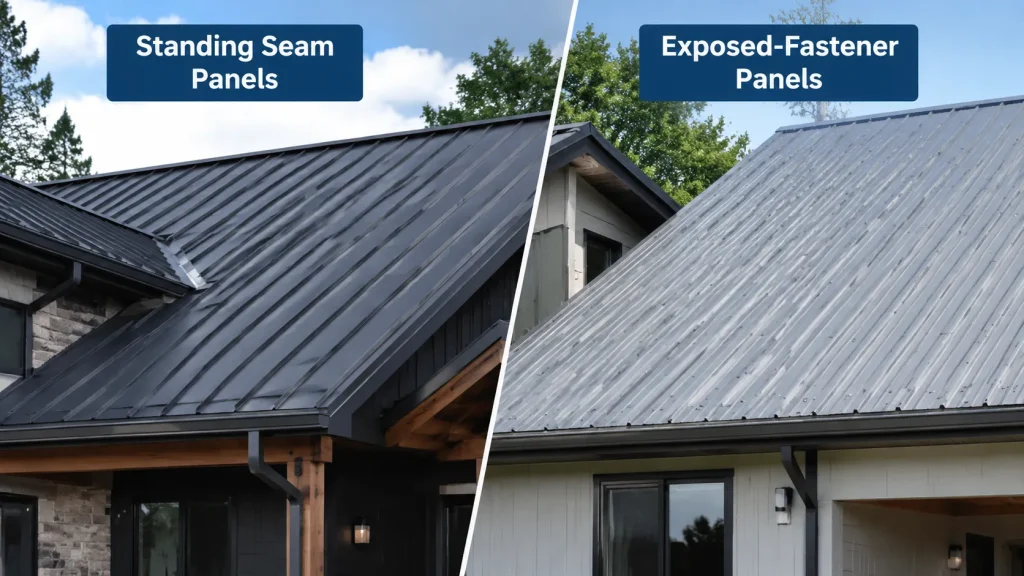
Exposed-Fastener Panels
These panels are attached with visible screws. They are usually less expensive and faster to install.
They work well on:
- Barns
- Workshops
- Simple homes
- Porches
- Garages
- Budget-conscious projects
The downside is that the rubber washers around the screws can age. Over time, screws may loosen from thermal movement. That can lead to leaks if the roof is not maintained.
Standing Seam Panels
Standing seam metal roofing has raised seams and concealed fasteners. The fasteners are hidden under the panel seams, which gives the roof a cleaner look and better long-term weather protection.
Standing seam usually costs more because it requires:
- More precise layout
- More skilled labor
- Specialized equipment or factory-formed panels
- Better flashing details
- Concealed clip systems
For a long-term residential roof, standing seam is often the better system, especially if your budget allows it.
3. Roof Size
Larger roofs cost more overall, but the price per square may be more efficient on bigger projects.
A small porch roof may cost more per square than a full house roof because the contractor still has setup time, ordering, delivery, safety planning, and mobilization costs.
Example:
- A 4-square porch roof may have a high per-square price.
- A 25-square full roof may have a lower per-square price because the fixed costs are spread out.
4. Roof Pitch and Complexity
A simple roof with two flat slopes is easier and cheaper to install than a roof with many angles.
Your cost per square increases if your roof has:
- Steep slopes
- Multiple valleys
- Dormers
- Skylights
- Chimneys
- Wall intersections
- Turrets or curved sections
- Multiple roof levels
- Difficult access
Complexity matters because metal roofing must be cut and flashed carefully. Poor flashing is one of the most common causes of leaks.
5. Tear-Off and Disposal
If your old roof must be removed, the cost goes up.
Tear-off may include:
- Removing old shingles
- Pulling old nails
- Inspecting the roof deck
- Replacing rotten plywood
- Hauling debris away
- Dump fees
Some metal roofs can be installed over existing shingles in certain situations, but this is not always the best choice. Local codes, roof condition, ventilation, weight, and manufacturer requirements must be checked first.
Do not assume installing over shingles is automatically cheaper or better. Hidden deck damage can stay trapped under the new roof.
6. Roof Deck Condition
A metal roof needs a solid, flat, and secure surface. If the roof deck is soft, uneven, rotten, or poorly fastened, it should be repaired before installation.
Warning signs of deck problems include:
- Sagging roof areas
- Soft spots when walked on
- Water stains in the attic
- Moldy or dark sheathing
- Previous leak history
- Uneven roof lines
- Loose or popping nails
Deck repairs can add cost, but they are not optional. A premium roof over a weak deck is a poor investment.
7. Underlayment and Ice Protection
Underlayment is the protective layer between the roof deck and the metal panels. It helps protect the home if wind-driven rain or condensation reaches below the metal.
Cold climates may also need ice and water shield near eaves, valleys, chimneys, skylights, and roof penetrations.
A cheaper quote may use lower-grade underlayment or skip important waterproofing details. That can save money today but create leaks later.
8. Paint Finish and Coating
Metal roofs come with different coatings and paint systems. Higher-quality finishes usually cost more but resist fading and chalking better.
Common finish considerations include:
- Color retention
- Fade resistance
- Chalk resistance
- Scratch resistance
- Warranty length
- Coastal suitability
- Heat reflectivity
A dark metal roof may look beautiful, but it may absorb more heat. A reflective coating can help reduce roof surface temperature in hot climates.
The U.S. Department of Energy explains that cool roofs reflect more sunlight and absorb less solar energy, which can reduce heat transfer into the home and may lower cooling needs in warm regions.
How to Estimate Your Metal Roof Cost Per Square
You can make a rough estimate before calling contractors. This will not replace a professional quote, but it helps you understand the numbers.
Step 1: Estimate Roof Area
Start with your home’s footprint, then adjust for pitch, overhangs, garage areas, porches, and roof complexity.
If your home is 2,000 square feet, your actual roof area may be closer to 2,200 to 2,800 square feet depending on design.
Step 2: Convert Square Feet to Roofing Squares
Use this formula:
Roof square feet ÷ 100 = roofing squares
Example:
2,400 square feet ÷ 100 = 24 roofing squares
Step 3: Multiply by Installed Cost Per Square
If your estimated cost is $1,200 per square:
24 squares × $1,200 = $28,800
This is only a planning estimate. Your final quote may change after roof inspection, code review, material selection, and deck evaluation.
Example Metal Roofing Cost Scenarios
Example 1: Simple Ranch Home
A homeowner has a simple 1,800-square-foot ranch with a basic gable roof. The roof area is about 2,000 square feet, or 20 squares.
If they choose exposed-fastener steel panels at about $900 per square:
20 × $900 = $18,000
This may be a reasonable budget-style metal roof if the roof is simple and the deck is in good condition.
Example 2: Standing Seam Upgrade
Another homeowner has a 2,300-square-foot home with several valleys and dormers. The roof area is about 2,900 square feet, or 29 squares.
If they choose standing seam at about $1,500 per square:
29 × $1,500 = $43,500
The higher price reflects the better panel system, concealed fasteners, more labor, and complex roof design.
Example 3: Coastal Aluminum Roof
A coastal homeowner chooses aluminum because salt air can be tough on some metals. Their roof area is 25 squares.
If the installed cost is about $1,800 per square:
25 × $1,800 = $45,000
The price is higher, but corrosion resistance may be worth it in the right location.
Material Cost vs Installed Cost
Homeowners sometimes see metal roofing panels advertised at a low price and assume the whole roof will be cheap. That is a mistake.
Material cost is only one part of the project.
A complete installed metal roof may include:
- Metal panels
- Trim
- Ridge caps
- Eave flashing
- Valley flashing
- Drip edge
- Underlayment
- Ice and water shield
- Fasteners or clips
- Pipe boots
- Ventilation accessories
- Tear-off labor
- Disposal
- Deck repairs
- Permits
- Contractor overhead
- Warranty support
The panel price alone does not tell you the real roof replacement cost.
A quote that looks cheap may be missing important items. Always ask whether the estimate includes tear-off, decking repairs, ventilation work, flashing replacement, permits, cleanup, and warranty details.
Is Metal Roofing Worth the Cost?
Metal roofing can be worth it if you plan to stay in the home long enough to benefit from its durability.
Metal Roofing Benefits
Metal roofing can offer:
- Long service life
- Strong wind performance when properly installed
- Good fire resistance
- Low maintenance
- Clean appearance
- Recyclability
- Better resistance to rot and insects
- Potential energy benefits with reflective coatings
Metal Roofing Limitations
Metal roofing is not perfect. Homeowners should understand the drawbacks too.
Possible limitations include:
- Higher upfront cost
- More specialized installation
- Denting risk from hail or falling branches
- Oil canning, which is visible waviness in flat metal panels
- Noise concerns if installed over poor insulation
- Fastener maintenance on exposed-fastener systems
- HOA or neighborhood design restrictions
The best roof is not always the most expensive roof. It is the roof that fits your climate, budget, home style, and long-term plans.
Repair vs Replacement: Which Makes More Sense?
If you already have a metal roof, the right choice may be repair, not replacement.
| Situation | Repair May Be Enough | Replacement May Be Better |
|---|---|---|
| Small leak around flashing | Yes, if damage is localized | If leaks are widespread |
| Loose screws on exposed-fastener roof | Yes, if panels are sound | If many fasteners fail repeatedly |
| Minor surface rust | Yes, if caught early | If rust has penetrated panels |
| Storm denting | Sometimes, if cosmetic only | If seams, panels, or flashing are damaged |
| Old roof with repeated leaks | Usually not ideal | Often better long term |
| Poor original installation | Temporary repair may help | Replacement may solve root problem |
If your roof has recurring leaks, widespread corrosion, failing seams, or poor flashing, replacement may be more cost-effective than repeated repairs.
Warning Signs That Your Metal Roof Needs Attention
Call a roofer for inspection if you notice:
- Water stains on ceilings
- Rust around fasteners or seams
- Loose, missing, or backed-out screws
- Bent flashing
- Damaged ridge caps
- Open seams
- Dents after hail
- Panels lifting at edges
- Mold or damp insulation in the attic
- Unexplained increases in heating or cooling bills
Small problems can become expensive if water reaches the roof deck, insulation, or interior walls.
When to Call a Roofing Professional
You should call a roofing professional before choosing metal roofing if:
- Your roof is steep or difficult to access
- You have active leaks
- Your attic shows moisture problems
- Your roof has skylights, chimneys, or many valleys
- You live in a high-wind, hail, wildfire, or coastal zone
- You are considering standing seam
- You are unsure about local code requirements
- Your old roof may need deck repairs
- You want to install over existing shingles
Roofing work can be dangerous. OSHA provides residential fall protection guidance because falls are a serious risk in construction and roofing work.
Do not climb on a steep, wet, icy, or damaged roof to measure it yourself. Use ground measurements, attic observations, photos, or a professional inspection instead.
Expert Tip
Expert Tip:
Before comparing metal roofing prices, ask each contractor for the same scope of work: panel type, metal gauge, finish, underlayment, flashing details, tear-off, deck repair allowance, ventilation work, warranty terms, and cleanup. A lower price is not a better deal if it leaves out critical parts of the roof system.
Questions to Ask Metal Roofing Contractors

Before signing a contract, ask these questions:
- What type of metal roofing system are you quoting?
- Is it exposed-fastener, metal shingle, or standing seam?
- What metal gauge will be used?
- What paint or coating system is included?
- Does the quote include tear-off?
- How will you handle rotten decking?
- What underlayment is included?
- How will valleys, chimneys, skylights, and pipe boots be flashed?
- Is ventilation included or inspected?
- What workmanship warranty do you provide?
- Is the manufacturer warranty transferable?
- Are permits included?
- Are you licensed and insured where required?
- Can I see similar local projects?
A quality contractor should answer clearly. If the answers are vague, that is a warning sign.
Common Mistakes Homeowners Should Avoid
- Comparing quotes without checking the scope. One quote may include tear-off and flashing, while another may not.
- Choosing the cheapest contractor automatically. Metal roofing depends heavily on installation quality.
- Ignoring roof complexity. Valleys, chimneys, skylights, and steep slopes increase labor.
- Assuming panel cost equals roof cost. Trim, underlayment, fasteners, labor, and disposal add a lot.
- Skipping attic ventilation. Poor ventilation can shorten roof system life and cause moisture problems.
- Installing over bad decking. A metal roof needs a solid base.
- Using the wrong metal near the coast. Salt air can affect material choice.
- Forgetting HOA rules. Some neighborhoods restrict metal roof colors or styles.
- Not reading warranty details. Material and workmanship warranties are different.
- Trying risky DIY roof work. Falls, sharp metal edges, and poor flashing can create serious problems.
How to Keep Metal Roofing Costs Under Control
You do not have to choose the cheapest roof to stay on budget. Instead, focus on smart decisions.
Choose the Right System for Your Home
If you want a long-term residential roof, standing seam may be worth the higher price. If your budget is tighter and your roof is simple, exposed-fastener panels may be acceptable with proper maintenance.
Keep the Roof Design Simple When Building New
If you are building or remodeling, a simpler roof shape can save money. Fewer valleys and penetrations mean less flashing, less cutting, and lower leak risk.
Get Multiple Detailed Quotes
Get at least two or three quotes from qualified contractors. Make sure each quote includes the same basic scope.
Ask About Good-Better-Best Options
A contractor may offer:
- A lower-cost exposed-fastener option
- A mid-range metal shingle option
- A premium standing seam option
This helps you compare cost and performance clearly.
Do Not Cut Critical Waterproofing Details
Saving money by using poor flashing, cheap underlayment, or unqualified labor can create expensive leaks later.
Spend money on the parts of the roof that protect the home from water.
FAQs
How much is metal roofing per square on average?
Most homeowners should expect metal roofing to cost about $700 to $1,800 per square installed. One roofing square equals 100 square feet. Simple exposed-fastener steel panels usually cost less, while standing seam, aluminum, copper, zinc, and complex roofs cost more.
Is metal roofing cheaper than shingles?
Usually, no. Metal roofing normally costs more upfront than asphalt shingles. However, metal can last longer and may provide better long-term value if you plan to stay in the home for many years.
How many roofing squares are on a 2,000-square-foot house?
It depends on the roof design. A 2,000-square-foot house may have around 20 to 28 roofing squares of roof area after accounting for pitch, overhangs, garage space, and roof complexity.
Why do metal roof quotes vary so much?
Metal roof quotes vary because of panel type, metal thickness, finish, underlayment, flashing, roof slope, labor rates, tear-off, deck repairs, permits, and warranty coverage. A cheap quote may leave out important work.
Is standing seam worth the higher cost?
Standing seam is often worth it for homeowners who want a cleaner look, concealed fasteners, and better long-term performance. It costs more than exposed-fastener panels but usually requires less fastener maintenance.
Can I install metal roofing over shingles?
Sometimes it is allowed, but it is not always the best choice. The roof deck must be sound, local codes must allow it, and ventilation must be considered. A professional inspection is important before choosing this option.
What is the biggest hidden cost in metal roofing?
Deck repair is one of the biggest hidden costs. Rotten or damaged sheathing may not be fully visible until the old roof is removed. Flashing upgrades and ventilation corrections can also add cost.
Conclusion
So, how much is metal roofing per square? A realistic planning range for many homeowners is about $700 to $1,800 per square installed, with premium systems costing more. The final price depends on the metal type, panel style, roof complexity, underlayment, flashing, tear-off, labor, and local requirements.
Metal roofing can be a smart investment when it is properly selected and installed. It offers long service life, strong performance, and a clean appearance, but it requires careful workmanship.
Before choosing a contractor, compare detailed quotes, ask about the full roof system, and make sure the estimate includes the details that protect your home from leaks. The best next step is to schedule a professional roof inspection and request a clear, itemized metal roofing estimate based on your actual roof.