
Do It Yourself Metal Roofing: A Practical Homeowner Guide
Thinking about do it yourself metal roofing usually starts with one simple question: Can I install a metal roof myself and save money? For some homeowners, the answer may be yes—but only for the right roof, the right material, and the right skill level.
Metal roofing can be durable, energy efficient, and attractive, but it is not a casual weekend project. A small mistake around fasteners, flashing, underlayment, or roof edges can lead to leaks, wind damage, and expensive repairs. This guide explains what DIY metal roofing involves, when it makes sense, when it does not, what materials you may need, and how to decide whether to hire a roofing professional.
Quick Answer
Do it yourself metal roofing can be possible for simple sheds, garages, porches, or low-slope accessory structures. For a full home roof, steep roof, complex roof, or standing seam system, hiring a roofing professional is usually safer and more reliable. Proper measurements, flashing, ventilation, fasteners, and fall protection are critical.
What Is DIY Metal Roofing?
DIY metal roofing means installing metal roof panels yourself instead of hiring a roofing contractor. Most homeowners who attempt this use exposed-fastener metal panels because they are easier to handle than standing seam panels.
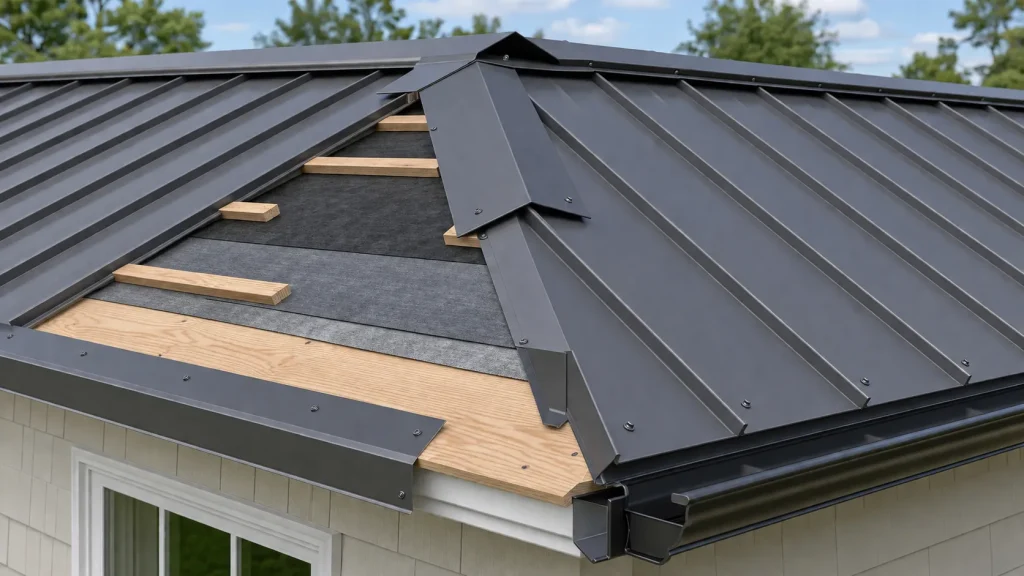
Metal roofing systems usually include:
- Metal panels
- Underlayment
- Drip edge
- Ridge cap
- Closure strips
- Screws or clips
- Flashing around walls, chimneys, vents, and valleys
- Sealant where approved by the manufacturer
- Trim pieces for edges and transitions
A metal roof is not just panels screwed onto a roof deck. It is a complete weather-shedding system. Every overlap, screw, edge, and flashing detail matters.
According to the OSHA residential fall protection guidance, fall hazards are a major concern in residential construction. That matters because even a single-story roof can be dangerous if it is steep, wet, windy, or cluttered with tools.
Is Do It Yourself Metal Roofing a Good Idea?
DIY metal roofing can be a good idea in limited situations. It is usually not the best choice for every home.
DIY May Make Sense If:
- The roof is small and simple
- The roof has a low pitch
- There are no valleys, skylights, chimneys, or complex transitions
- You have basic carpentry and measuring skills
- You can safely work at height
- You understand local building codes and permit requirements
- You are using a manufacturer-approved installation guide
Good examples include a backyard shed, detached garage, small barn, carport, porch cover, or workshop.
DIY Is Risky If:
- The roof is steep
- The home has multiple roof planes
- There are valleys or dormers
- The roof has chimneys, skylights, or several vent pipes
- The existing roof deck may be damaged
- You live in a high-wind, hurricane, snow, or wildfire-prone area
- You are installing standing seam metal roofing
- Your home insurance or warranty requires professional installation
For most full-house metal roof replacements, professional installation is the safer choice.
Types of Metal Roofing Homeowners Should Know
Not all metal roofing is installed the same way. The type of system you choose affects cost, durability, appearance, and DIY difficulty.
Exposed-Fastener Metal Panels
These panels are attached with screws that go through the face of the panel. The screws usually have rubber washers that seal the hole.
This is the most common DIY-friendly metal roofing option.
Pros:
- Lower material cost
- Easier to install than standing seam
- Widely available
- Good for sheds, barns, garages, and simple roofs
Limitations:
- Screws remain visible
- Washers can wear out over time
- Incorrect screw placement can cause leaks
- Panels expand and contract with temperature changes
Standing Seam Metal Roofing
Standing seam systems use raised seams and hidden fasteners. They are cleaner-looking and often more durable than exposed-fastener systems.
Pros:
- Hidden fasteners
- Strong long-term performance
- Modern appearance
- Better weather resistance when properly installed
Limitations:
- More expensive
- Requires special tools
- Less forgiving for beginners
- Usually better installed by trained contractors
The Metal Construction Association’s metal roof installation resources are a useful example of how much technical detail goes into proper metal roof installation.
Metal Shingles and Metal Tiles
Metal shingles and tiles are designed to look like traditional shingles, slate, shake, or clay tile. They can be attractive but are usually more complicated to install than simple panels.
These systems require careful layout, fastening, flashing, and alignment. For most homeowners, they are not ideal for a first DIY roofing project.
DIY Metal Roofing vs Professional Installation
| Factor | DIY Metal Roofing | Professional Installation |
|---|---|---|
| Upfront cost | Lower labor cost | Higher total cost |
| Safety | Higher personal risk | Trained crews and safety systems |
| Quality control | Depends on homeowner skill | Usually more consistent |
| Warranty | May be limited | Often stronger workmanship support |
| Speed | Slower | Faster |
| Best for | Sheds, garages, simple roofs | Homes, steep roofs, complex roofs |
| Risk of leaks | Higher if details are missed | Lower with skilled installers |
DIY may save money at first, but poor installation can erase those savings quickly. A leak around one pipe boot or wall flashing can damage insulation, drywall, sheathing, and framing.
What Does DIY Metal Roofing Cost?
Costs vary by location, roof size, panel type, metal thickness, finish, trim pieces, and waste. DIY homeowners often focus only on panel price, but the full system costs more than the panels alone.
Common cost factors include:
- Metal panels
- Underlayment
- Flashing
- Ridge caps
- Eave trim
- Gable trim
- Valley metal
- Closure strips
- Fasteners
- Sealants
- Pipe boots
- Safety equipment
- Cutting tools
- Delivery fees
- Permits
- Disposal of old roofing
A simple exposed-fastener metal roof on a shed may be manageable. A whole-house roof replacement can become expensive even without labor because trim, waste, safety gear, and specialty pieces add up.
Do not judge the project by panel cost alone. The details are where many homeowners underestimate the budget.
Tools and Materials You May Need
A basic DIY metal roofing project may require:
- Tape measure
- Chalk line
- Roofing square
- Drill or impact driver
- Manufacturer-approved screws
- Metal snips or shears
- Nibblers or panel cutting tools
- Utility knife
- Caulk gun
- Roofing underlayment
- Butyl tape or approved sealant
- Closure strips
- Flashing and trim
- Ladder stabilizer
- Safety harness and anchor system
- Gloves and eye protection
Avoid using abrasive saw blades unless the manufacturer allows it. Hot sparks can damage protective coatings and increase the risk of rust.
Basic Steps for Installing Metal Roofing
The exact process depends on the manufacturer, panel type, roof shape, and local code. Always follow the installation instructions for the specific product you buy.
1. Inspect the Roof Deck
Before installing anything, check the roof deck. Look for:
- Soft or rotten plywood
- Water stains
- Sagging areas
- Mold or mildew
- Loose decking
- Old leak damage
Metal roofing needs a solid base. Installing panels over damaged decking can trap problems under a new roof.
2. Measure Carefully
Measure each roof plane separately. Include length, width, slope, ridge length, eave length, valleys, hips, and penetrations.
Order extra material for waste, cuts, overlaps, and mistakes. Complex roofs need more waste than simple rectangles.
3. Check Local Rules
Some areas require permits for roof replacement. Some homeowners associations also restrict metal roof colors, profiles, or finishes.
Before starting, check:
- Local building department requirements
- HOA rules
- Fire rating requirements
- Wind rating requirements
- Manufacturer warranty rules
4. Install Underlayment
Underlayment is the protective layer between the roof deck and metal panels. It helps protect the home if wind-driven rain or condensation gets under the metal.
Synthetic underlayment is common under metal roofing. Some roofs may also need ice and water shield in valleys, eaves, or cold-climate areas.
5. Install Drip Edge and Trim
Drip edge helps direct water away from the roof deck and fascia. Trim pieces protect edges and give the roof a finished look.
Poor edge details can allow water to run behind gutters or under panels.
6. Place and Fasten Panels
Start square. If the first panel is crooked, the entire roof can drift out of alignment.
Use the correct screw pattern. Do not overdrive screws. Do not underdrive screws. A properly driven screw compresses the washer enough to seal without deforming it.
7. Install Flashing
Flashing protects roof intersections and penetrations. This includes:
- Chimneys
- Sidewalls
- End walls
- Valleys
- Skylights
- Plumbing vents
- Roof transitions
Flashing is one of the most important parts of the job. Many roof leaks are flashing leaks, not panel leaks.
8. Install Ridge Caps and Closures
Ridge caps cover the top peak of the roof. Closure strips help block wind-driven rain, insects, and debris from entering under the metal panels.
Use the closure type recommended for your panel profile.
Safety Considerations Before You Start
Roofing is physically demanding and risky. Metal panels can be sharp, slippery, and difficult to control in wind.
Do not work on a roof during:
- Rain
- Frost
- Snow
- High wind
- Lightning risk
- Extreme heat
- Poor visibility
Also avoid working alone. Even a small fall can become serious if no one is nearby to help.
Important warning: Metal panels can act like sails in windy conditions. A large panel can pull you off balance quickly.
Roof Ventilation Still Matters
A metal roof does not eliminate the need for proper attic ventilation. Good ventilation helps control heat and moisture inside the attic.
Poor ventilation can lead to:
- Condensation under the roof deck
- Mold growth
- Hot attic temperatures
- Shorter roof system life
- Ice dam problems in cold climates
The U.S. Department of Energy explains that cool roofs reflect more sunlight and absorb less solar energy, but roof color and reflectivity are only part of the comfort equation. Attic insulation and ventilation also matter.
Choosing the Right Metal Roof Color and Finish
Color affects appearance, heat absorption, and resale appeal. Light-colored and reflective finishes can help reduce heat gain in sunny climates, while darker colors may suit colder climates or certain home styles.
Consider:
- Climate
- Home exterior color
- Neighborhood appearance
- HOA rules
- Energy goals
- Dirt visibility
- Fade resistance
- Manufacturer coating warranty
Paint finish quality matters. A cheaper panel may fade, chalk, or corrode faster than a higher-quality coated panel.
Common Warning Signs Your Roof Is Not a Good DIY Candidate

Some roofs are too risky or complex for most homeowners.
Watch for these warning signs:
- Multiple valleys
- Steep pitch
- Two or more stories
- Chimney flashing
- Skylights
- Existing leaks
- Sagging roof deck
- Structural damage
- Heavy snow load concerns
- Hurricane or high-wind exposure
- Solar panels already installed
- Old layers of roofing that need removal
If your roof has several of these issues, professional help is usually the smarter investment.
Expert Tip
Expert Tip:
Before ordering materials, sketch each roof plane and mark every ridge, eave, valley, wall, vent, and pipe. If you cannot clearly identify where flashing goes, pause the DIY plan and get a professional roof inspection.
When to Call a Roofing Professional
Call a roofing professional when the job involves safety risk, warranty risk, or complex waterproofing details.
You should strongly consider hiring a contractor if:
- The roof is steep or high
- The project is a full home roof replacement
- You need standing seam metal roofing
- There are skylights, chimneys, or several vents
- The roof deck may need repair
- You are unsure about ventilation
- Local code requires specific installation details
- You want a workmanship warranty
- You are filing an insurance claim
- You live in a storm-prone area
A professional roofer can also check whether your home needs better decking, ventilation, flashing, or gutter adjustments before the new metal roof is installed.
When hiring help, protect yourself. The Federal Trade Commission warns homeowners to be careful of home improvement scams and recommends checking contractors carefully before paying or signing a contract. Their guide on how to avoid a home improvement scam is especially useful after storms, when rushed decisions can lead to poor work or fraud.
How to Choose a Metal Roofing Contractor
If you decide not to DIY the full project, choose carefully. A low price is not always the best value.
Ask the contractor:
- Are you licensed and insured in this state?
- Do you install this specific metal roofing system regularly?
- Will you remove the old roof or install over it?
- What underlayment will you use?
- How will you handle flashing?
- What ventilation changes are needed?
- What warranties apply to materials and labor?
- Who will supervise the crew?
- What is included in the written estimate?
- How will change orders be handled?
Get everything in writing. This includes materials, colors, panel type, trim details, payment schedule, warranty, cleanup, and start date.
Common Mistakes Homeowners Should Avoid
- Choosing panels before checking the roof deck. A weak or rotten deck must be repaired first.
- Ignoring fall protection. Saving money is not worth a serious injury.
- Using the wrong screws. Incorrect fasteners can leak or corrode.
- Overtightening screws. Crushed washers may fail early.
- Undertightening screws. Loose screws allow water under the washer.
- Cutting panels with the wrong blade. Heat and sparks can damage coatings.
- Skipping closure strips. Gaps can allow wind-driven rain, insects, and debris.
- Forgetting ventilation. Metal roofing still needs a healthy attic system.
- Relying only on sealant. Sealant should support proper flashing, not replace it.
- Starting without a layout plan. Small alignment errors grow across the roof.
- Installing in windy weather. Metal panels can be dangerous to handle.
- Assuming all warranties apply to DIY installation. Some warranties may require approved installation methods.
Pros and Cons of Do It Yourself Metal Roofing
Pros
- Can reduce labor costs
- Gives hands-on control over the project
- Works well for small outbuildings
- Materials are widely available
- Metal roofing can last a long time when installed correctly
Cons
- Higher safety risk
- Mistakes can cause leaks
- Complex flashing is difficult
- Special tools may be needed
- Manufacturer warranties may be limited
- Full home projects can take longer than expected
- Poor installation can lower home value
The biggest benefit is potential savings. The biggest risk is water damage from hidden installation errors.
Repair, Replace, or Install New Metal Roofing?
Not every roofing problem requires a full replacement. Sometimes a repair or inspection is the better first step.
| Situation | Best Next Step | Why |
|---|---|---|
| One loose screw or small leak | Repair | A minor issue may not require replacement |
| Rusted fasteners across the roof | Inspection | The roof may need widespread maintenance |
| Multiple active leaks | Professional evaluation | There may be flashing or deck problems |
| Old asphalt roof near end of life | Replacement estimate | Metal may be a long-term upgrade |
| Damaged roof deck | Repair before roofing | New panels need solid support |
| Simple shed roof | Possible DIY project | Lower risk and easier layout |
| Complex home roof | Hire a professional | Flashing and safety risks are higher |
FAQs
Can I install a metal roof myself?
Yes, you can install a metal roof yourself on a simple structure if you have the right tools, safety equipment, and installation instructions. For a full home roof, professional installation is usually safer and more dependable.
What type of metal roofing is easiest for DIY?
Exposed-fastener metal panels are usually the easiest option for DIY projects. They are commonly used on sheds, barns, garages, and simple roof shapes. Standing seam systems are more difficult and usually require professional tools and experience.
Can metal roofing be installed over shingles?
Sometimes, but it depends on local building codes, the condition of the existing roof, manufacturer instructions, and the number of existing layers. If the old roof has leaks, soft decking, or trapped moisture, removal is usually the better choice.
How long does a DIY metal roof last?
A properly installed metal roof can last for decades, but DIY installation quality makes a big difference. Poor fastener placement, weak flashing, damaged coatings, or bad ventilation can shorten the roof’s life.
What is the hardest part of installing metal roofing?
Flashing is often the hardest part. Chimneys, skylights, valleys, walls, and vent pipes need careful waterproofing. Many metal roof leaks happen at these details rather than in the middle of the panels.
Is standing seam metal roofing good for DIY?
Standing seam metal roofing is usually not ideal for beginners. It often requires special tools, careful panel seaming, and precise layout. Homeowners who want standing seam on a house should usually hire a qualified metal roofing contractor.
Do I need a permit for DIY metal roofing?
Many areas require a permit for roof replacement, but rules vary by city, county, and state. Always check with your local building department before starting. Permits help confirm that the work meets local safety and building standards.
Conclusion
Do it yourself metal roofing can be a smart project for a simple shed, garage, porch, or small outbuilding. It can save money and give you control over the work. But for a full home roof, steep roof, standing seam system, or complex roofline, the risks are much higher.
The best decision is not just about saving on labor. It is about protecting your home from leaks, wind damage, poor ventilation, and unsafe installation. Before you start, study the roofing system, check the roof deck, understand the flashing details, plan your safety setup, and confirm local code requirements.
If the roof is simple and you are prepared, DIY may be reasonable. If the roof is complex or safety is uncertain, call a qualified roofing professional and get a written estimate. A properly installed metal roof can protect your home for many years, but only when the details are done right.