Does a Metal Roof Lower Your Insurance? A Homeowner’s Guide

Many homeowners hear that a metal roof can save money, but the insurance part is not always clear. So, does a metal roof lower your insurance, or is that just a roofing sales claim?
The honest answer is: sometimes. A metal roof may help lower your homeowners insurance if it meets your insurer’s requirements for impact resistance, fire resistance, wind resistance, or storm protection. But the discount is not automatic. Your location, insurance company, roof rating, installation quality, and paperwork all matter.
This guide explains when a metal roof can reduce insurance costs, when it may not, what documents you may need, and how to make a smart roofing decision before spending thousands of dollars.
Quick Answer
Does a metal roof lower your insurance? It can, but not always. Some insurance companies offer discounts for metal roofs that are impact-resistant, fire-rated, or installed to stronger storm standards. However, savings depend on your state, insurer, roof rating, installation quality, and whether you submit the required proof.
Why Insurance Companies Care About Your Roof
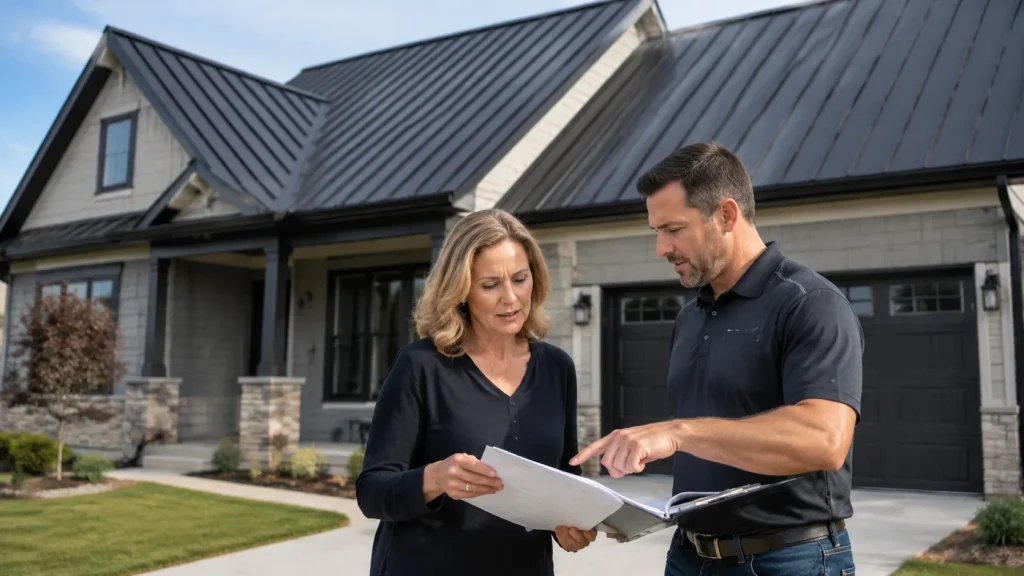
Your roof is one of the most important parts of your home from an insurance point of view. It protects the structure, walls, insulation, attic, electrical systems, and personal belongings from water, wind, hail, and fire.
When a roof fails, the claim can become expensive quickly. A small roof leak can turn into:
- Damaged ceilings
- Wet insulation
- Mold concerns
- Ruined drywall
- Electrical hazards
- Interior water damage
- Full roof replacement costs
That is why many insurers look closely at roof age, material, condition, slope, and storm resistance before pricing a policy.
A metal roof may be attractive to insurers because it can be durable, fire-resistant, and resistant to certain types of storm damage. But insurance companies do not reward the word “metal” by itself. They usually care about tested performance, proper installation, and documented proof.
When a Metal Roof May Lower Homeowners Insurance
A metal roof is more likely to help with insurance savings when it reduces a risk your insurance company already prices into your policy.
1. Impact Resistance in Hail-Prone Areas
If you live in a hail-prone state, your insurer may offer a discount for impact-resistant roofing. This is where metal roofing can sometimes help.
Some metal roofing products are tested for impact resistance. In many insurance programs, Class 4 is the highest impact-resistance rating. The Texas Department of Insurance roofing discount guidance explains that roofing materials such as formed metal panels or sheets may qualify for discounts if they are tested under recognized impact-resistance standards.
This does not mean every metal roof qualifies. A basic exposed-fastener panel, an unrated product, or a roof without proper documentation may not earn a discount.
Key point: Ask your insurer whether the roof must be UL 2218 Class 4, FM-rated, or listed on an approved product list.
2. Fire Resistance in Wildfire or High-Risk Areas
Metal roofing is noncombustible as a material, which may help in areas where fire exposure matters. This can be especially important in wildfire-prone regions.
However, a fire-resistant roof is not just the top panel. The full roof assembly matters, including underlayment, decking, vents, edges, and installation details.
In some areas, insurers may look for a Class A fire-rated roof assembly. A metal panel may be strong, but the roof still needs the right supporting materials to meet the rating.
Important warning: Do not assume a metal roof is automatically accepted as a fire-rated roof by your insurer. Ask for the exact rating and documentation they require.
3. Wind Resistance in Hurricane or High-Wind Areas
In coastal or storm-prone areas, roof performance during high wind can affect insurance. A properly installed metal roof may perform well in strong winds, especially standing seam systems installed with correct clips, fasteners, underlayment, and edge details.
The IBHS FORTIFIED Roof program focuses on strengthening roof systems to help keep wind and rain out during severe weather. FORTIFIED Roof standards can apply to several roof coverings, including metal, shingles, tile, and other systems.
Some states and insurers may offer incentives for homes built or reroofed to stronger storm-resistance standards. But the roof usually must be inspected, documented, and certified.
Key point: A strong metal panel is not enough if the roof deck, edges, flashing, and fasteners are weak.
4. New Roof Age Advantage
Insurance companies often prefer newer roofs because they are less likely to fail than old, worn roofs. Replacing an old roof with a new metal roof may improve your insurability or reduce roof-related concerns.
In some cases, a new roof may help you keep coverage, qualify for better terms, or avoid roof exclusions. This is especially true if your old roof had:
- Missing shingles
- Curling or cracked materials
- Active leaks
- Multiple old roof layers
- Storm damage
- Poor drainage
- Soft decking
However, the savings may come from having a new, documented roof, not simply from choosing metal.
When a Metal Roof May Not Lower Your Insurance
A metal roof can be a smart upgrade, but it does not guarantee lower premiums.
Your Insurer May Not Offer a Metal Roof Discount
Some insurance companies do not offer a specific discount for metal roofing. Others offer discounts only for impact-resistant materials, FORTIFIED certification, fire-resistant assemblies, or wind mitigation features.
The Insurance Information Institute recommends talking with your insurance professional about mitigation steps, such as impact-resistant roofing or stronger building standards, before making improvements.
That advice matters because discount rules vary widely by state and insurance company.
The Roof May Not Have the Right Rating
A metal roof may look strong, but insurance companies usually want proof. If the product is not tested or approved, the discount may be denied.
Your insurer may ask for:
- Manufacturer product name
- Impact-resistance rating
- Fire rating
- Wind rating
- Installation invoice
- Contractor certification
- Product approval number
- Photos after installation
- Roof inspection report
Without the right paperwork, your roof may not qualify even if it performs well.
Poor Installation Can Cancel the Benefit
A metal roof is only as good as its installation. Poor workmanship can create leak risks, wind uplift problems, fastener failures, and flashing issues.
Common installation problems include:
- Incorrect fastener spacing
- Over-tightened or under-tightened screws
- Poor flashing around chimneys and walls
- Missing closures
- Inadequate underlayment
- Bad ridge or eave details
- Panels cut incorrectly
- Mixed incompatible metals
A poorly installed metal roof may increase risk instead of reducing it. Insurance companies may also deny discounts if the installation does not meet the required standard.
Cosmetic Damage Exclusions May Apply
Metal roofs can resist some damage, but hail may still dent panels. Some insurance companies handle cosmetic damage differently from functional damage.
A cosmetic dent may not cause a leak, but it can affect appearance. Some policies exclude cosmetic damage to metal roofs, especially in hail-prone areas.
Before installing a metal roof, ask your insurer:
- Will hail dents be covered?
- Is cosmetic damage excluded?
- Does the policy cover functional damage only?
- Will the roof be insured at replacement cost or actual cash value?
- Is there a separate wind or hail deductible?
This is important because a lower premium is not always better if coverage becomes weaker.
Metal Roof Insurance Discount Factors
The table below shows the main factors that may affect whether a metal roof lowers your insurance.
| Factor | Why It Matters | What Homeowners Should Ask |
|---|---|---|
| Roof rating | Insurers often require tested impact, fire, or wind performance | “What roof rating qualifies for a discount?” |
| State rules | Discounts vary by state and insurer | “Does my state have approved roofing discount forms?” |
| Roof age | Newer roofs may be viewed as lower risk | “Will replacing my old roof change my premium?” |
| Installation quality | Poor installation can cause leaks and wind failure | “Do you require a licensed contractor or inspection?” |
| Documentation | Discounts often require proof | “What paperwork should I submit after installation?” |
| Policy terms | Some policies exclude cosmetic metal roof damage | “How does my policy handle hail dents?” |
| Local hazards | Hail, wildfire, hurricanes, and wind affect pricing | “Which roof upgrades matter most in my ZIP code?” |
How Much Can a Metal Roof Save on Insurance?
There is no single savings amount that applies to every homeowner. Some homeowners may see no discount. Others may receive a small percentage off part of the premium. In higher-risk areas, approved impact-resistant or storm-rated roofing may produce more meaningful savings.
The amount depends on:
- Your insurance company
- Your state
- Your home’s location
- Your roof rating
- Your deductible
- Your claim history
- Your roof age
- Your policy type
- Local hail, wind, or wildfire risk
Do not buy a metal roof based only on a promised insurance discount. The roof should make sense for durability, maintenance, home value, climate, and long-term ownership plans.
A roofing contractor may estimate possible savings, but your insurance agent is the one who can confirm what applies to your policy.
Steps to Check If a Metal Roof Will Lower Your Insurance
Before signing a roofing contract, follow these steps.
1. Call Your Insurance Agent First
Ask your agent directly: “Does a metal roof lower your insurance with my current policy?”
Then ask more specific questions:
- Do you offer discounts for metal roofing?
- Do you require Class 4 impact resistance?
- Do you require a Class A fire rating?
- Do you recognize FORTIFIED Roof certification?
- Do you need a wind mitigation inspection?
- What forms should my contractor complete?
- Will the discount apply to the whole premium or only part of it?
This prevents surprises after installation.
2. Ask for Approved Product Requirements
Your insurer may have a list of approved products or rating standards. Get this information in writing if possible.
Look for details such as:
- Manufacturer name
- Product line
- Panel profile
- Gauge or thickness
- Coating type
- Impact rating
- Fire rating
- Wind uplift rating
- Product approval number
This helps you compare roof quotes more accurately.
3. Choose the Right Metal Roofing System
Not all metal roofs are the same. Common residential options include:
- Standing seam metal roofing
- Exposed-fastener metal panels
- Stone-coated steel roofing
- Metal shingles
- Aluminum roofing
- Steel roofing
- Copper or zinc roofing
Standing seam systems often cost more but hide fasteners and can offer strong long-term performance when properly installed. Exposed-fastener systems may cost less, but fasteners need more maintenance over time.
4. Hire a Qualified Roofing Contractor
Choose a contractor who understands metal roofing details, not just general roofing.
Ask the contractor:
- Are you experienced with this exact metal roof system?
- Can you provide manufacturer installation documents?
- Can you provide insurance discount paperwork?
- Will you inspect the roof deck before installation?
- How will you handle flashing, valleys, ridges, and penetrations?
- What workmanship warranty do you provide?
According to OSHA roofing safety guidance, roofing work involves serious fall hazards, so homeowners should avoid climbing onto steep or high roofs to inspect work themselves.
5. Submit Proof After Installation
After the roof is installed, send your insurer the required documents. This may include the invoice, material certification, photos, contractor statement, permit record, inspection report, or product rating form.
Keep copies in a safe place. You may need them later when renewing your policy, selling your home, or filing a claim.
Expert Tip
Expert Tip:
Before choosing a metal roof, ask your insurance agent for the discount requirements in writing. Then give that list to your roofing contractor before the estimate is finalized. This helps you avoid paying for a roof that looks strong but does not qualify for the insurance credit you expected.
Insurance Benefits vs. Real Roofing Benefits
Even if your metal roof does not lower your insurance, it may still offer practical benefits.
A quality metal roof can provide:
- Long service life
- Strong weather resistance
- Lower maintenance compared with some materials
- Good fire resistance when properly rated
- Better snow shedding in cold climates
- Good performance in many high-wind applications
- Improved curb appeal
But metal roofing also has limitations:
- Higher upfront cost
- Possible hail denting
- Noise concerns if poorly insulated
- Expansion and contraction movement
- Need for skilled installation
- Possible cosmetic damage exclusions
- Fastener maintenance on exposed-fastener systems
The best decision is not only about the insurance discount. It is about total long-term value.
Metal Roof Cost Considerations for Homeowners
Metal roofing usually costs more upfront than standard asphalt shingles. The exact cost depends on the metal type, panel style, roof complexity, labor rates, tear-off needs, and local code requirements.
Common cost factors include:
- Roof size
- Roof pitch
- Number of valleys and dormers
- Chimneys and skylights
- Old roof removal
- Deck repairs
- Underlayment quality
- Flashing details
- Trim and edge metal
- Labor experience
- Local permits
A simple ranch-style home may be easier and cheaper to reroof than a steep, complex roof with multiple penetrations.
Do not compare metal roof quotes by price alone. A cheaper quote may leave out important details such as high-temperature underlayment, proper flashing, snow guards, ventilation improvements, or manufacturer-approved accessories.
Coverage Questions to Ask Before Installing a Metal Roof

Insurance language can be confusing. Ask these questions before you commit:
- Will this roof qualify for a premium discount?
- What exact rating or certification is required?
- Will cosmetic hail damage be covered or excluded?
- Will the roof be covered at replacement cost or actual cash value?
- Is there a separate wind or hail deductible?
- Will my premium change immediately or at renewal?
- Do I need a special inspection after installation?
- Will the discount transfer to a future buyer?
These questions help you understand both savings and coverage quality.
When to Call a Roofing Professional
Call a roofing professional if you are considering a metal roof for insurance, storm protection, or long-term durability.
You should also schedule a professional inspection if you notice:
- Leaks after rain
- Rust or corrosion
- Loose panels
- Missing screws
- Backed-out fasteners
- Bent flashing
- Hail dents
- Water stains on ceilings
- Sagging roof areas
- Loose ridge caps
- Damaged gutters
- Poor attic ventilation signs
A roofer can inspect the roof deck, flashing, ventilation, and existing damage. This matters because installing a metal roof over hidden problems can lead to expensive repairs later.
Do not climb onto a metal roof without proper safety equipment. Metal roofs can be slippery, especially when wet, dusty, icy, or steep. Walking in the wrong place can also dent panels or damage seams.
Common Mistakes Homeowners Should Avoid
- Assuming every metal roof earns an insurance discount. Discounts depend on your insurer’s rules.
- Not calling the insurance company before installation. Always confirm requirements first.
- Choosing the cheapest metal roof quote. Low-cost installation can lead to leaks and denied benefits.
- Forgetting about cosmetic damage exclusions. Hail dents may not always be covered.
- Ignoring roof ventilation. A durable roof still needs a healthy attic system.
- Not saving paperwork. Keep product ratings, invoices, permits, and photos.
- Believing verbal promises only. Get discount requirements and contractor details in writing.
- Installing unrated products. The roof may look good but fail to qualify for a credit.
- Overlooking flashing details. Many roof leaks happen around walls, chimneys, skylights, and valleys.
- Skipping professional inspection. Existing deck damage should be fixed before the new roof goes on.
FAQs
Does a metal roof lower your insurance in every state?
No. A metal roof does not lower insurance in every state or with every insurance company. Some insurers offer discounts for impact-resistant, fire-rated, or wind-rated roofing, while others do not provide a specific metal roof discount.
What type of metal roof is best for insurance discounts?
The best option is usually a metal roof that meets your insurer’s required rating. This may include Class 4 impact resistance, Class A fire rating, approved wind resistance, or FORTIFIED Roof certification. Always ask your insurer before choosing the product.
Can a metal roof increase my insurance?
A metal roof usually does not increase insurance just because it is metal. However, coverage terms may change if the insurer excludes cosmetic hail damage or treats the material differently. Always review the policy details before installation.
Do insurance companies cover hail dents on metal roofs?
Sometimes, but not always. Some policies cover functional damage but exclude cosmetic dents. If you live in a hail-prone area, ask your insurer whether cosmetic metal roof damage is covered before installing the roof.
Is a Class 4 metal roof worth it?
A Class 4 metal roof may be worth it if you live in a hail-prone area and your insurer offers a discount. It can also reduce the risk of certain types of storm damage. But the higher upfront cost should be compared with expected savings and long-term durability.
Do I need proof to get a metal roof insurance discount?
Yes, in most cases. Your insurer may ask for product ratings, invoices, contractor forms, photos, permits, or inspection reports. Without proof, the discount may not be applied.
Should I replace my shingle roof with metal just for insurance savings?
Usually, no. Insurance savings alone may not justify the cost. A metal roof makes more sense when you also value durability, storm resistance, fire resistance, lower maintenance, and long-term home protection.
Conclusion
So, does a metal roof lower your insurance? It can, but only when the roof meets your insurer’s requirements and you provide the right documentation. The biggest insurance advantages usually come from impact resistance, fire resistance, wind resistance, roof age, and certified storm-strengthening programs.
Before replacing your roof, call your insurance agent, ask for written discount requirements, and choose a roofing contractor who understands metal roofing systems. A well-installed metal roof can be a strong long-term investment, but the smartest decision is one based on verified insurance rules, realistic costs, and proper roof performance—not assumptions.
If you are considering a metal roof, start with a professional roof inspection and an insurance review. That gives you the clearest path to better protection, possible savings, and fewer surprises after installation.