
Can You Walk on a Metal Roof? A Homeowner Safety Guide

Many homeowners ask the same question before cleaning gutters, checking storm damage, or looking at a possible leak: can you walk on a metal roof without damaging it or getting hurt?
The honest answer is yes, some metal roofs can be walked on, but it is not always safe or recommended. Metal roofing can be slippery, dent-prone in certain areas, and dangerous without proper footwear, weather conditions, and fall protection. This guide explains when walking on a metal roof may be possible, when you should avoid it, how to reduce risk, and when calling a roofing professional is the smarter choice.
Quick Answer
Yes, you can walk on a metal roof in some situations, but only with proper shoes, dry conditions, careful foot placement, and safety precautions. Avoid walking on steep, wet, icy, or damaged metal roofs. For inspections, repairs, leaks, or high roofs, hiring a roofing professional is usually safer and better for the roof.
Is It Safe to Walk on a Metal Roof?
Walking on a metal roof can be safe only under the right conditions. The roof must be dry, stable, not too steep, and free from loose panels or hidden damage. Even then, the biggest concern is not just roof damage. It is personal safety.
Metal panels have a smoother surface than asphalt shingles. That means they can become very slippery when wet, dusty, icy, or covered with pollen, leaves, or morning dew. A roof that looks dry from the ground may still be slick once you step on it.
According to OSHA residential fall protection guidance, falls are a major danger in residential construction and roofing work. Homeowners should take that seriously. Even a one-story fall can cause severe injury.
Important warning: If you feel unsure, do not climb onto the roof. A quick inspection is not worth a fall.
Can Walking on a Metal Roof Damage It?
Yes, walking on a metal roof can cause damage if you step in the wrong place or use the wrong footwear. Many metal roofs are strong, but they are not meant to be walked on casually like a deck.
Possible damage includes:
- Dents in thinner metal panels
- Scratches in the painted coating
- Bent seams or raised ribs
- Loose fasteners
- Damage around flashing, vents, and skylights
- Oil-canning appearance becoming more noticeable
The risk depends on the roof type, panel thickness, support spacing, roof slope, and installation quality.
A well-installed standing seam metal roof can often handle careful foot traffic better than a poorly installed exposed-fastener roof. However, even strong panels can be scratched or dented if walked on incorrectly.
Different Metal Roof Types and Walkability
Not all metal roofs are the same. The safest walking method depends on the roof style.
Standing Seam Metal Roofs
Standing seam roofs have raised vertical seams that run from the ridge to the edge of the roof. These roofs are popular because they hide fasteners and offer a clean appearance.
On many standing seam roofs, you should avoid stepping directly on the raised seams. Instead, walk on the flat areas near the panel supports when safe to do so. A contractor may know where the roof decking or framing supports the panel underneath.
Standing seam roofs can be slippery because they often have smooth painted surfaces.
Exposed-Fastener Metal Roofs
Exposed-fastener roofs have screws visible on the panel surface. These are common on barns, garages, sheds, and some homes.
If you walk on this type of roof, you usually need to avoid stepping on screws, washers, and panel ribs. Damaging the screw washer can create a future leak.
Loose or backed-out screws are also a warning sign. If the screws are already failing, walking on the roof can make the problem worse.
Metal Shingles or Metal Tiles
Metal shingles and metal tiles may look like slate, shake, or traditional shingles. They can be easier to walk on in some cases because they have more texture, but they can still dent or shift.
Some metal tile profiles have hollow spaces underneath. Stepping in the wrong area can bend the panel. Always follow the manufacturer’s instructions when available.
The Metal Construction Association’s metal roof installation resources show why proper installation methods and panel handling matter. A metal roof is a system, not just a sheet of metal.
When You Should Not Walk on a Metal Roof
There are times when the safest answer is simple: stay off the roof.
Do not walk on a metal roof when:
- The roof is wet, icy, snowy, or covered in dew
- The roof slope is steep
- You do not have proper footwear
- The roof is more than one story high
- Panels look loose, bent, rusted, or damaged
- You see loose screws or missing fasteners
- There are skylights, roof openings, or weak areas nearby
- You are carrying tools that affect your balance
- You do not have fall protection
- You are uncomfortable with heights
A metal roof can also get hot in direct sun. In summer, the surface may become uncomfortable or unsafe to touch. Heat can also make you rush, which increases fall risk.
How to Walk on a Metal Roof More Safely
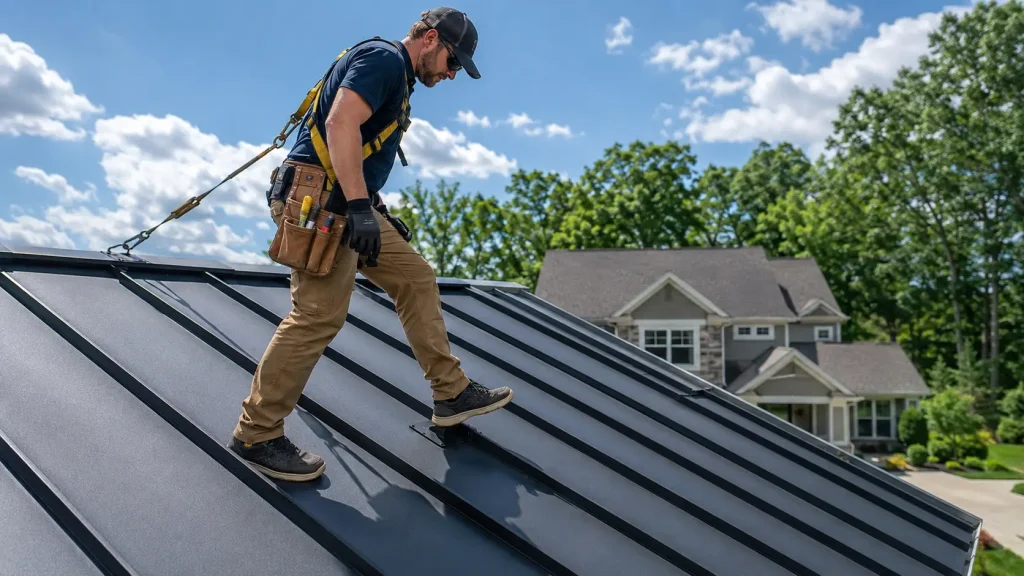
If you must walk on a metal roof for a simple visual check, use extreme caution. These steps are not a replacement for professional safety training, but they can help homeowners understand the risk.
1. Check the Weather First
Only consider walking on the roof when it is completely dry. Avoid early morning, after rain, during high wind, or when frost is possible.
Even light moisture can turn a metal roof into a slick surface.
2. Wear the Right Shoes
Use soft-soled, clean, rubber-grip shoes. Avoid hard soles, worn-out sneakers, sandals, boots with heavy lugs, or shoes with stones stuck in the tread.
Dirty shoes can scratch the roof coating. Scratches may expose metal and increase the chance of corrosion over time.
3. Step Slowly and Keep Your Weight Balanced
Do not run, jump, slide, or twist your feet. Move slowly and keep three points of contact when possible.
Place each step carefully. Avoid sudden turns because twisting can scratch the panel finish.
4. Avoid Panel Ribs, Seams, and Fasteners
Raised seams, ribs, and fasteners are not ideal walking points. Stepping on them can bend metal, loosen fasteners, or damage water-shedding areas.
On many metal roofs, the safer walking area is where the panel is supported underneath. However, this can vary by roof system.
5. Stay Away From Edges and Openings
Roof edges, skylights, vents, and valleys are high-risk areas. Skylights are especially dangerous because some may not support body weight.
OSHA notes in its construction fall protection resources that fall hazards need proper planning and protection. Homeowners should apply the same mindset before climbing.
6. Do Not Work Alone
If someone must go onto a roof, another adult should be present on the ground. They should not stand directly under the work area, but they should be able to call for help if needed.
Again, for most homeowners, the better choice is not to walk the roof at all.
DIY vs Professional Metal Roof Walking
For homeowners, the real question is not only “Can I walk on it?” but “Should I walk on it?”
| Situation | Homeowner Risk Level | Better Option |
|---|---|---|
| Looking at the roof from the ground | Low | Use binoculars or phone zoom |
| Cleaning light debris near a low edge | Medium | Use ladder safety or call a pro |
| Checking storm damage | High | Call a roofing contractor |
| Repairing a leak | High | Call a roofing contractor |
| Walking on a steep metal roof | Very high | Do not DIY |
| Inspecting skylights or flashing | High | Call a roofing contractor |
| Replacing screws or panels | High | Hire a qualified roofer |
In many cases, you can inspect a metal roof without walking on it. You can check from the ground, attic, ladder, or with drone photos. This protects both you and the roof.
Common Warning Signs You Should Check From the Ground
You do not always need to climb onto the roof to notice problems. Many warning signs are visible from a safe distance.
Look for:
- Missing or loose ridge caps
- Bent or lifted panels
- Rust spots or coating damage
- Loose screws on exposed-fastener roofs
- Stains on ceilings or attic decking
- Gutters pulling away from the fascia
- Debris trapped in valleys
- Damaged flashing around chimneys or vents
- Panels that look wavy, buckled, or separated
If you notice these signs, avoid walking on the roof. Walking over damaged areas can make leaks worse.
Will Walking on a Metal Roof Void the Warranty?
It depends on the manufacturer and the roof system. Some warranties may not cover damage caused by improper foot traffic, scratches, dents, or unauthorized repairs.
This is especially important with painted metal roofs. The protective coating helps resist weather, fading, and corrosion. If you scratch that finish with tools or bad footwear, you may create a weak spot.
Before walking on the roof, check:
- Manufacturer care instructions
- Contractor installation paperwork
- Warranty exclusions
- Roof panel type
- Recommended maintenance method
Key point: A metal roof may be durable, but durability does not mean it is impossible to damage.
Cost Considerations: DIY Inspection vs Professional Help
Many homeowners climb onto the roof to save money. That can make sense for simple gutter cleaning on a low, safe area, but it can also become expensive if something goes wrong.
Possible costs from improper roof walking include:
- Panel dent repair
- Repainting scratched areas
- Replacing damaged fasteners
- Repairing leaks around flashing
- Fixing bent seams
- Medical costs after a fall
A professional inspection may cost money upfront, but it can prevent larger repair bills. It can also provide documentation after hail, wind, or storm damage.
If you are planning to sell your home, buy a home, or file an insurance claim, a professional roof inspection is usually more useful than a DIY look.
Quality and Durability Factors That Affect Walkability
Some metal roofs handle foot traffic better than others. Walkability is affected by several factors.
Metal Thickness
Thicker metal panels usually resist denting better than thinner panels. Gauge numbers can be confusing because lower gauge numbers mean thicker metal. For example, 24-gauge steel is thicker than 29-gauge steel.
Roof Decking and Support
A metal roof installed over solid decking often feels more stable than one installed over spaced supports. However, this depends on the system.
If there is no solid support underneath the area where you step, the panel may flex.
Panel Profile
Flat areas, ribs, seams, and stamped shapes all behave differently under weight. Some profiles are more likely to dent if stepped on incorrectly.
Installation Quality
Poor installation can make a roof less safe to walk on. Loose clips, bad fastening, poor flashing, or uneven decking can all create weak points.
Roof Age and Condition
Older metal roofs may have rust, loose screws, fading coatings, or weakened sealants. A roof that was safe to walk on years ago may not be safe now.
Expert Tip:
Before walking on a metal roof, call the installer or check the manufacturer’s care guide. Ask where foot traffic is allowed. This simple step can help you avoid dents, scratches, leaks, and warranty problems.
When to Call a Roofing Professional

You should call a roofing professional when the roof is steep, high, damaged, wet, or difficult to access. You should also call a pro when the task involves repairs, leak tracing, flashing, skylights, or storm damage.
A professional roofer has training, fall protection, proper ladders, roof shoes, and knowledge of where to step. They also know how to inspect without causing damage.
Call a professional if:
- You see water stains inside your home
- Your roof was hit by hail or falling branches
- Panels are lifted, bent, or loose
- Screws or seams appear damaged
- You need a leak repaired
- You are unsure what type of metal roof you have
- Your roof has skylights, solar panels, or multiple levels
- The roof slope feels intimidating
For major roof work, fall protection is not optional. OSHA’s residential construction fall protection directive explains that workers six feet or more above lower levels generally need proper fall protection. Homeowners should treat that as a serious safety benchmark, not just a workplace rule.
Safer Alternatives to Walking on a Metal Roof
Before climbing, consider safer options. Many roof problems can be checked without stepping onto the panels.
Try these methods first:
- Use binoculars from the ground. Look for loose panels, rust, missing trim, or damaged flashing.
- Take photos with phone zoom. Stand in different areas around the house.
- Check the attic. Look for damp insulation, stains, daylight gaps, or moldy smells.
- Inspect gutters from a ladder. Keep the ladder stable and avoid stepping onto the roof.
- Use a drone inspection. Some contractors offer drone photos for steep or tall roofs.
- Schedule a professional inspection. This is best after storms, leaks, or suspected damage.
These options reduce fall risk and protect the roof surface.
Common Mistakes Homeowners Should Avoid
- Walking on a wet metal roof. Even light dew can make metal extremely slippery.
- Wearing the wrong shoes. Hard soles, dirty soles, or worn shoes can cause slips and scratches.
- Stepping on seams or fasteners. This can damage water-shedding parts of the roof.
- Carrying too many tools. Extra weight and poor balance increase fall risk.
- Ignoring roof slope. A roof that looks manageable from the ground may feel much steeper once you are on it.
- Trying to repair leaks without experience. Metal roof leaks often come from seams, flashing, fasteners, or installation details.
- Assuming metal means indestructible. Metal roofs are strong, but they still need careful handling.
- Not checking warranty rules. Improper foot traffic may affect warranty coverage.
- Walking near skylights. Skylights and roof openings can be serious fall hazards.
- Waiting too long after storm damage. Small metal roof issues can become leaks if ignored.
FAQs
Can you walk on a metal roof without damaging it?
Yes, sometimes you can walk on a metal roof without damaging it, but only if you use proper footwear, walk carefully, and step in supported areas. The risk depends on the roof type, metal thickness, panel profile, and condition.
Is a metal roof slippery to walk on?
Yes, metal roofs can be very slippery, especially when wet, icy, dusty, or covered with pollen. Smooth painted metal panels can lose traction quickly. Avoid walking on a metal roof unless it is completely dry.
Where should you step on a metal roof?
The safest place to step depends on the roof system. In general, avoid seams, ribs, fasteners, flashing, and unsupported panel areas. If you do not know where the roof is supported underneath, call a roofing professional.
Can walking on a metal roof cause leaks?
Yes, improper walking can cause leaks if you damage fasteners, seams, flashing, or protective coatings. Scratches can also expose metal and increase corrosion risk over time.
What shoes are best for walking on a metal roof?
Soft-soled rubber shoes with strong grip are best. The soles should be clean and flexible. Avoid heavy boots, hard soles, sandals, or shoes with dirt and stones stuck underneath.
Should I walk on my metal roof to clean gutters?
Not usually. It is safer to clean gutters from a stable ladder or hire a professional. Walking near roof edges is risky, and metal panels can be slippery even when they look dry.
Is it better to hire a roofer for a metal roof inspection?
Yes, in most cases. A roofer can inspect seams, fasteners, flashing, panels, and leak areas safely. This is especially important after storms, for steep roofs, or when you see signs of damage.
Conclusion
So, can you walk on a metal roof? Yes, but only in limited situations and only with the right precautions. The roof must be dry, stable, and safe to access. You need proper footwear, careful foot placement, and a clear understanding of where not to step.
For most homeowners, the smarter choice is to inspect from the ground, use safer tools, or call a roofing professional. Metal roofs are durable, but they can still be dented, scratched, or damaged by careless foot traffic. More importantly, falls from roofs can be life-changing.
If you are unsure, do not climb. Protect yourself, protect your roof, and get a qualified metal roofing contractor to inspect or repair the problem before it becomes more expensive.