
Will Insurance Cover a Metal Roof? What Homeowners Need to Know

If your metal roof was damaged by hail, wind, a fallen tree, or a sudden storm, your first question is probably simple: will insurance cover a metal roof? The answer depends on what caused the damage, what your policy says, how old the roof is, and whether the damage affects the roof’s function or is only cosmetic.
This matters because metal roofs are durable, but they are not damage-proof. A severe storm can loosen panels, bend flashing, damage fasteners, dent seams, or create leaks. Insurance may help pay for repair or replacement, but homeowners need to understand the difference between covered storm damage, normal wear, cosmetic dents, and maintenance problems.
This guide explains when insurance may cover a metal roof, when it may not, what affects your claim, and how to protect yourself before hiring a roofer or filing a claim.
Quick Answer
Insurance may cover a metal roof if the damage comes from a covered event, such as hail, wind, fire, falling debris, or a storm. However, coverage may be denied or reduced for wear and tear, poor maintenance, old age, improper installation, or cosmetic-only dents.
How Home Insurance Usually Treats Metal Roofs
Most homeowners insurance policies do not cover a roof simply because it is metal. They cover the roof based on the cause of damage.
That means the insurance company will usually ask:
- Was the damage sudden and accidental?
- Was it caused by a covered event?
- Was the roof already old or worn out?
- Did the damage affect the roof’s ability to shed water?
- Was the damage cosmetic or functional?
- Was the roof installed and maintained properly?
According to the Insurance Information Institute’s guidance on how roofs influence insurance, roof age, roof condition, and roof material can affect coverage, inspections, and whether a policy pays replacement cost or actual cash value.
For homeowners, this means one important thing: insurance is not a roof maintenance plan. It is designed to help with covered losses, not normal aging.
When Insurance May Cover a Metal Roof
Insurance may cover a metal roof when the damage is caused by a peril listed or allowed under your policy. A “peril” simply means the event that caused the damage.
Common covered events may include:
- Hail damage
- Wind damage
- Fire damage
- Lightning damage
- Falling tree limbs
- Damage from heavy storms
- Certain types of accidental impact
- Weight of ice or snow, depending on the policy
For example, if a strong storm tears loose several standing seam panels and rain enters the attic, that may be a covered claim. If hail dents the roof and also damages seams, flashing, or panel locks, the insurer may consider whether the damage affects performance.
The key issue is whether the damage is functional, not just visible.
Cosmetic Damage vs Functional Damage
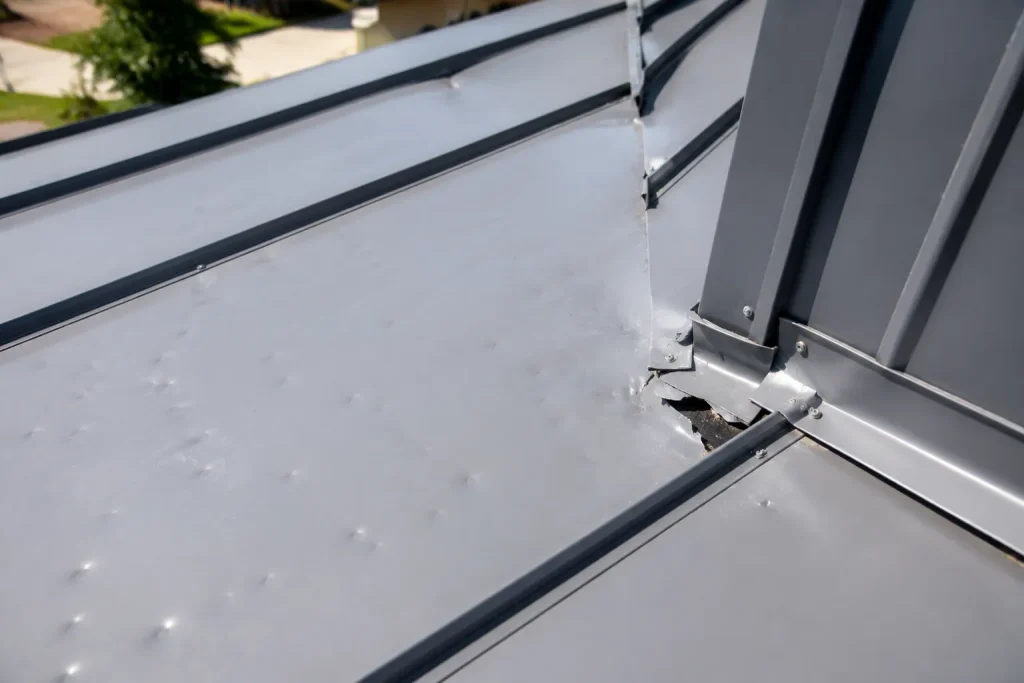
This is one of the most important points for metal roof insurance claims.
Cosmetic Damage
Cosmetic damage means the roof looks damaged, but it still works as intended. For a metal roof, cosmetic damage may include:
- Small dents in flat panel areas
- Surface scuffs
- Minor paint marks
- Shallow hail dimples
- Light scratches that do not expose metal or cause corrosion risk
Some insurance policies include cosmetic damage exclusions, especially for metal roofs. This means the insurer may not pay simply because the roof has visible dents.
Functional Damage
Functional damage means the roof’s ability to protect the home has been reduced. This is more serious.
Functional damage may include:
- Open seams
- Bent or displaced flashing
- Punctures in panels
- Loose fasteners
- Cracked sealant
- Water intrusion
- Damaged ridge caps
- Exposed underlayment
- Panel movement from wind uplift
- Coating damage that may lead to rust
If the damage can lead to leaks, corrosion, structural problems, or failure during the next storm, the claim is usually stronger.
A roof can look dented and still not qualify for replacement. But if the dents, seams, fasteners, or flashing create a leak risk, the situation changes.
Will Insurance Pay for a Full Metal Roof Replacement?
Insurance may pay for a full metal roof replacement, but only in certain situations.
A full replacement is more likely when:
- Damage is widespread across multiple roof slopes
- Matching replacement panels are not available
- The roof system can no longer perform properly
- Hail or wind damaged seams, locks, flashing, or fasteners
- Repairs would not restore the roof to its pre-loss condition
- Local code requires certain upgrades during replacement
However, the insurer may only pay for repairs if the damage is limited. For example, one loose panel near a chimney flashing may be repaired without replacing the whole roof.
The final decision often depends on:
- Your policy language
- The adjuster’s inspection
- Contractor documentation
- State insurance rules
- Roof age and condition
- Whether the policy is replacement cost or actual cash value
Replacement Cost vs Actual Cash Value
Your payout can change a lot depending on how your policy values the roof.
| Policy Type | What It Means | Homeowner Impact |
|---|---|---|
| Replacement Cost Value | Pays based on the cost to replace damaged property with similar materials, minus deductible and subject to policy terms | Usually better for homeowners |
| Actual Cash Value | Pays replacement cost minus depreciation for age and condition | Lower payout, especially for older roofs |
| Cosmetic Damage Exclusion | May exclude dents or appearance-only damage | Common concern with metal roofs |
| Wind or Hail Deductible | Separate deductible for storm damage | May be higher than your standard deductible |
| Roof Schedule Endorsement | Roof payout decreases as the roof gets older | Can reduce claim payment significantly |
If your metal roof is older, your insurer may apply depreciation. That means the payout may not be enough to cover a full new roof.
Before filing a claim, read the roof section of your policy or ask your agent whether your roof is covered at replacement cost or actual cash value.
Common Metal Roof Damage That May Lead to a Claim
Metal roofs are strong, but storms can still damage weak points. Homeowners should watch for both obvious and subtle warning signs.
Hail Damage
Hail can dent metal panels. Small dents may be cosmetic, but larger hail can damage:
- Seams
- Ribbed areas
- Panel locks
- Flashing
- Coatings
- Skylight flashing
- Vent boots
- Gutters and downspouts
If hail breaks the protective paint or coating, exposed metal may become more vulnerable to corrosion.
Wind Damage
High winds can lift panels, loosen clips, pull fasteners, or bend ridge caps. Wind damage may not always be visible from the ground.
The IBHS FORTIFIED Roof program explains that stronger roof systems are designed to help keep wind and rain out during severe weather. This is important because roof failure can quickly lead to interior water damage.
Falling Tree or Debris Damage
A falling limb can puncture panels, dent seams, break gutters, or damage flashing. This type of damage is often easier to document because the cause is visible.
Fire or Lightning Damage
Metal does not burn like wood shingles, but a metal roof can still be damaged by fire, heat, smoke, or lightning-related impact. Electrical systems, underlayment, decking, and nearby structural parts may also be affected.
When Insurance May Not Cover a Metal Roof
A claim may be denied or reduced if the damage is not caused by a covered event.
Insurance usually does not cover:
- Normal aging
- Rust from long-term neglect
- Poor maintenance
- Old sealant failure
- Loose fasteners from age
- Improper installation
- Manufacturer defects
- Pre-existing damage
- Leaks from clogged gutters
- Damage from walking on the roof incorrectly
- Cosmetic-only dents if excluded by the policy
For example, if a 25-year-old exposed-fastener metal roof leaks because rubber washers have dried out over time, the insurer may call that maintenance-related damage. But if a storm tears off panels and causes a leak, that is different.
The cause of damage is often more important than the damage itself.
How Roof Age Affects Metal Roof Insurance Coverage
Metal roofs can last a long time, but insurance companies still care about age.
An older roof may trigger:
- Required inspection before renewal
- Higher premium
- Limited coverage
- Actual cash value settlement
- Exclusion for wind or hail
- Request for repair before policy approval
Even though metal roofs are known for durability, insurers may still look at installation quality, fastener condition, coating condition, roof slope, flashing details, and maintenance history.
A well-installed 12-year-old standing seam roof may be viewed differently from a poorly maintained 20-year-old exposed-fastener roof with rust and loose screws.
What to Do After Storm Damage to a Metal Roof
After a storm, do not climb onto the roof yourself. Metal roofs can be slippery, steep, and dangerous. Wet panels, loose fasteners, and hidden damage can increase the risk of falling.
The OSHA residential fall protection guidance highlights how serious fall risks are in residential construction, including roofing work.
Use this safer process instead:
- Check from the ground first.
Look for loose panels, missing trim, bent gutters, fallen branches, and visible dents. - Take clear photos.
Photograph the roof, gutters, yard debris, hail size if possible, and any interior leaks. - Protect the interior.
Place buckets under active leaks and move furniture away from wet areas. - Avoid temporary DIY roof work unless it is safe.
Do not walk on a steep or wet metal roof. - Call a qualified roofing contractor for inspection.
Ask for photos, written findings, and a repair or replacement estimate. - Contact your insurance company.
Ask about claim steps, deductible, policy limits, and whether an adjuster will inspect the roof. - Keep all records.
Save invoices, inspection reports, photos, emails, and claim documents.
How to Improve Your Chance of a Fair Claim
A strong claim usually depends on good documentation.
Before and after a storm, homeowners should keep:
- Roof installation records
- Contractor invoices
- Maintenance receipts
- Warranty documents
- Photos of the roof before damage
- Photos after the storm
- Inspection reports
- Weather reports or storm dates
- Interior leak photos
- Communication with the insurer
Do not rely only on verbal opinions. Ask your roofing contractor for a written report with photos.
A good inspection report should identify:
- Location of damage
- Type of damage
- Likely cause
- Whether damage is cosmetic or functional
- Repair options
- Replacement concerns
- Safety issues
- Code or manufacturer concerns
Expert Tip
Expert Tip:
Before filing a metal roof claim, ask a qualified roofer to inspect the seams, flashing, fasteners, ridge caps, and penetrations—not just the flat panels. Many serious metal roof problems happen at connection points, not in the middle of the panel.
Metal Roof Insurance Coverage: Repair vs Replacement
| Situation | Repair May Be Enough | Replacement May Be Needed |
|---|---|---|
| A few loose fasteners | Yes, if surrounding panels are sound | No, unless widespread |
| Minor cosmetic dents | Usually no functional repair needed | Usually not, unless policy covers cosmetic damage |
| Punctured panel | Sometimes, if isolated | Yes, if damage affects many panels |
| Hail damage across several slopes | Maybe, if cosmetic only | Possible if seams, coating, or function are damaged |
| Wind-lifted panels | Sometimes, if limited | Possible if roof system is compromised |
| Old roof with worn fasteners | Maintenance repair | Insurance may not cover age-related failure |
| Matching panels unavailable | May be difficult | Possible depending on policy and state rules |
This table is a general guide. Your actual claim depends on your policy, local rules, roof condition, and the insurer’s inspection.
Will a Metal Roof Lower Insurance Costs?

A metal roof may help lower insurance costs in some areas, but it is not guaranteed.
Some insurers may view metal roofing as durable because it can resist fire, wind, and impact better than some materials. However, discounts depend on:
- State
- Insurance company
- Roof type
- Impact rating
- Fire rating
- Wind rating
- Installation method
- Local storm risk
- Whether the roof meets special resilience standards
In some storm-prone areas, insurers may care more about the full roof system than the surface material alone. A strong roof deck, proper fastening, sealed underlayment, and quality flashing can matter as much as the metal panels.
FEMA’s windstorm resilience guidance emphasizes that stronger construction details can help reduce storm damage risk.
A metal roof is only as reliable as its installation. Poor flashing, weak fastening, or bad ventilation can reduce the benefits.
What Insurance Adjusters Look For on a Metal Roof
An insurance adjuster may inspect the roof directly or review photos and reports. They are usually looking for signs that connect the damage to a covered event.
They may check:
- Direction of storm damage
- Hail impact marks
- Damage to gutters and vents
- Panel dents and punctures
- Lifted seams
- Fastener movement
- Flashing damage
- Interior water stains
- Rust or old deterioration
- Prior repairs
- Installation problems
They may also compare roof damage with damage to other parts of the property. For example, hail may also dent gutters, siding, window screens, soft metals, or outdoor equipment.
When to Call a Roofing Professional
Call a roofing professional if you notice any signs that the roof may no longer be watertight or secure.
You should call a roofer when you see:
- Water stains on ceilings
- Dripping after rain
- Loose or lifted metal panels
- Bent flashing
- Missing ridge cap pieces
- Damaged skylight flashing
- Large hail dents
- Punctures or tears
- Rust spreading around fasteners
- Gutters pulled away from the roof edge
- Storm debris on the roof
You should also call a professional before making an insurance decision if the damage is hard to see from the ground.
Do not let an unqualified person walk on your metal roof. Foot traffic can dent panels, damage coatings, or create new leaks if the person does not know where to step.
Choosing a Contractor for a Metal Roof Insurance Claim
Not every roofer is experienced with metal roofing. Metal roofs require different tools, fasteners, flashing details, and repair methods than asphalt shingles.
When choosing a contractor, ask:
- Do you regularly inspect and repair metal roofs?
- Are you licensed and insured in this state?
- Can you provide photos with your inspection report?
- Do you identify cosmetic and functional damage separately?
- Do you work with standing seam, exposed-fastener, or metal shingle systems?
- Will repairs follow manufacturer requirements?
- Can you explain whether repair or replacement is more practical?
- Will you provide a written estimate?
Avoid contractors who pressure you to sign immediately, promise full approval before inspection, or tell you to hide information from your insurer.
A trustworthy contractor explains the damage clearly. They do not create fear or make unrealistic promises.
Common Mistakes Homeowners Should Avoid
- Assuming all dents are covered. Some metal roof dents may be considered cosmetic only.
- Waiting too long after storm damage. Delays can make it harder to prove when the damage happened.
- Walking on the roof without proper training. Metal roofing can be slippery and easy to damage.
- Throwing away repair records. Maintenance history can support your claim.
- Ignoring small leaks. A small leak can lead to insulation, drywall, and mold problems.
- Hiring a roofer with no metal roof experience. Metal roof repair requires specific skills.
- Filing a claim without checking the deductible. If repairs cost less than the deductible, a claim may not make sense.
- Confusing warranty coverage with insurance coverage. A manufacturer warranty and a homeowners insurance policy are different.
- Not reading cosmetic damage exclusions. These exclusions can strongly affect metal roof hail claims.
- Accepting a vague inspection report. Ask for photos, locations, and clear explanations.
FAQs
Will insurance cover a metal roof damaged by hail?
Insurance may cover hail damage if hail is a covered peril under your policy and the damage affects the roof’s function. Cosmetic dents may not be covered if your policy excludes cosmetic damage to metal roofing.
Will insurance cover a metal roof replacement?
Insurance may cover replacement if the roof has significant covered damage and repairs cannot properly restore it. If the damage is limited, the insurer may only pay for repairs.
Does insurance cover rust on a metal roof?
Usually, insurance does not cover rust caused by age, neglect, poor maintenance, or long-term coating failure. However, if a covered event damages the coating and leads to a corrosion risk, the situation may be reviewed differently.
Can an insurance company deny coverage because my metal roof is old?
Yes, age can affect coverage. Older roofs may be covered at actual cash value, require inspection, or have limited roof coverage. Some insurers may refuse new policies for roofs in poor condition.
Are cosmetic dents on a metal roof covered?
Sometimes, but not always. Many policies limit or exclude cosmetic damage to metal roofs. If dents do not affect waterproofing, seams, coatings, or structural performance, the insurer may deny that part of the claim.
Should I call insurance or a roofer first?
If there is active damage or a leak, protect the home and document everything first. Many homeowners call a qualified roofer for an inspection before filing a claim so they understand the damage and repair cost.
Will a metal roof help lower my homeowners insurance premium?
It may, depending on your insurer, location, roof rating, and installation quality. Some companies offer discounts for impact-resistant, fire-resistant, or wind-resistant roofing systems, but discounts are not automatic.
Conclusion
So, will insurance cover a metal roof? In many cases, yes—if the damage was caused by a covered event such as hail, wind, fire, or falling debris. But insurance may not cover normal aging, poor maintenance, installation problems, or cosmetic-only dents.
The smartest next step is to document the damage, review your policy, understand your deductible, and schedule a qualified metal roof inspection. A clear inspection report can help you decide whether repair, replacement, or an insurance claim makes the most sense.
If your roof has storm damage, leaks, loose panels, or damaged flashing, do not wait. Get a professional inspection and make an informed decision before small roof problems become expensive home repairs.