
What Are Snow Guards for Metal Roofs? A Homeowner’s Complete Guide

Introduction
If you live in a snowy climate and have a metal roof, you’ve probably wondered: what are snow guards for metal roofs, and do you really need them? While metal roofing is excellent at shedding snow, that same benefit can become a safety hazard when large sheets of snow and ice suddenly slide off the roof.
Snow guards are designed to control this process. They help reduce the risk of property damage, protect people walking below, and extend the life of roof components such as gutters and landscaping. In this guide, you’ll learn how snow guards work, when they’re necessary, the different types available, typical costs, installation considerations, and how to choose the right option for your home.
Quick Answer
Snow guards for metal roofs are devices installed on the roof to hold or slow snow and ice from sliding off in large sheets. They improve safety by allowing snow to melt gradually, helping protect people, gutters, vehicles, landscaping, and lower roof sections from sudden snow avalanches.
What Are Snow Guards for Metal Roofs?
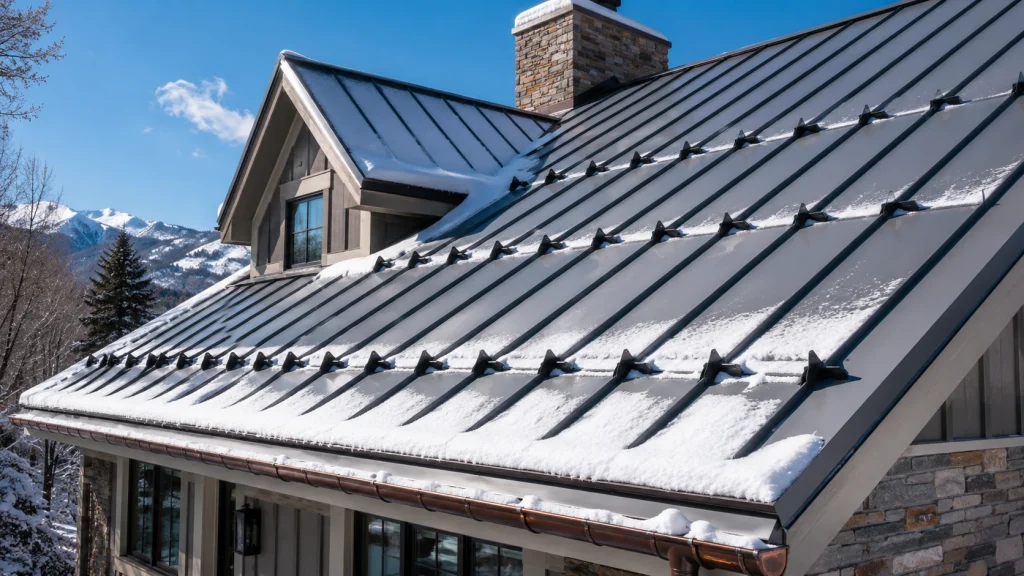
Snow guards are small devices or continuous bar systems attached to metal roofing panels. Their primary purpose is to prevent dangerous roof avalanches by breaking up heavy snow loads into smaller sections that melt more gradually.
Without snow guards, smooth metal roofing can allow accumulated snow to slide off unexpectedly, especially during sunny winter days or rapid temperature changes.
Instead of stopping all snow, snow guards:
- Slow snow movement
- Break up large snow sheets
- Distribute snow evenly across the roof
- Allow controlled melting over time
This makes them an important safety feature in regions that receive regular snowfall.
Why Metal Roofs Need Snow Guards
Metal roofs are naturally slippery compared to asphalt shingles.
As snow warms from sunlight or rising temperatures, it can lose its grip and suddenly slide off all at once. This event is often called a roof avalanche.
Large snow slides can:
- Damage gutters
- Crush landscaping
- Break HVAC equipment
- Damage decks or patios
- Dent parked vehicles
- Injure family members or visitors
The International Building Code (IBC) includes structural snow load requirements that many builders use when designing roofs in snowy regions. Likewise, the National Weather Service frequently warns about roof snow hazards during severe winter weather.
How Snow Guards Work
Rather than acting as a complete barrier, snow guards increase friction across the roof surface.
As snow begins moving downhill, the guards interrupt its path.
Instead of one massive slide, snow:
- Breaks into smaller sections.
- Melts gradually.
- Falls in smaller, safer amounts.
- Places less stress on gutters and nearby property.
This controlled movement greatly improves winter safety.
Types of Snow Guards for Metal Roofs
Individual Pad-Style Snow Guards
These are small individual pieces installed across the roof in a pattern.
Best for:
- Residential homes
- Moderate snowfall
- Decorative appearance
Pros
- Less visible
- Affordable
- Available in many colors
- Blend with metal roofing
Cons
- Require careful layout
- Not ideal for extremely heavy snow regions
Continuous Bar Snow Guards
These systems use one or more horizontal metal bars running across the roof.
Best for:
- Heavy snowfall
- Large roofs
- Commercial buildings
- Mountain homes
Pros
- Excellent snow retention
- Very durable
- Handles heavier snow loads
Cons
- Higher installation cost
- More visible
Fence-Style Snow Guards
Fence systems create a larger barrier to hold significant snow accumulation.
These are commonly installed on:
- Lodges
- Cabins
- High-elevation homes
- Commercial structures
Which Metal Roofs Need Snow Guards?
Snow guards are recommended for nearly every metal roofing style located in snowy climates.
They work with:
- Standing seam metal roofs
- Corrugated metal roofing
- Exposed fastener panels
- Aluminum roofing
- Steel roofing
- Copper roofing
- Zinc roofing
The installation method, however, varies depending on the roof profile.
Benefits of Snow Guards
| Benefit | Why It Matters |
|---|---|
| Improved safety | Reduces the risk of snow avalanches |
| Protects gutters | Less impact from sliding snow |
| Protects vehicles | Prevents falling snow damage |
| Preserves landscaping | Reduces crushed shrubs and plants |
| Better snow control | Allows gradual melting |
| Long-term roof protection | Helps distribute snow more evenly |
Do All Homes Need Snow Guards?
Not necessarily.
Snow guards are usually worth installing if:
- Your area receives frequent snowfall.
- Your roof has a steep slope.
- Walkways are below roof edges.
- Cars park beneath roof overhangs.
- Children regularly play near the home.
- You have expensive landscaping or outdoor equipment.
Homes in warm southern climates with little or no snowfall generally don’t need them.
How Much Do Snow Guards Cost?
Several factors affect the total project cost.
These include:
- Roof size
- Roof pitch
- Roofing material
- Number of guards required
- Type of snow guard
- Installation method
- Local labor costs
Typical homeowner costs include:
| Type | Typical Cost Range |
|---|---|
| Individual snow guards | $3–$10 per guard (material only) |
| Bar-style systems | Higher material cost but fewer components |
| Professional installation | Varies based on roof complexity and accessibility |
Professional installation often provides the best long-term value, especially on steep roofs.
Can You Install Snow Guards Yourself?
Some homeowners choose DIY installation, but it isn’t always recommended.
DIY May Be Possible If:
- Roof access is safe.
- Roof pitch is low.
- Manufacturer-approved clamp-on systems are used.
- You have roofing experience.
Professional Installation Is Better If:
- Roof is steep.
- Home is two stories or taller.
- Snow loads are heavy.
- Specialized layout is required.
- Roof warranty could be affected.
According to the Occupational Safety and Health Administration (OSHA), falls remain one of the leading hazards during roofing work, making proper safety equipment essential.
Never walk on an icy metal roof without proper fall protection.
Expert Tip
Expert Tip: Choose snow guards specifically approved by your metal roof manufacturer. Mixing incompatible mounting systems can reduce performance and may affect your roofing warranty.
Where Should Snow Guards Be Installed?
Correct placement is just as important as choosing the right product.
Snow guards are commonly installed:
- Above entry doors
- Above garages
- Above walkways
- Above decks
- Around chimneys
- Near roof valleys
- Above HVAC equipment
- Over lower roof sections
Manufacturers typically provide layout recommendations based on roof dimensions and expected snow loads.
When to Call a Roofing Professional

While snow guards may seem simple, proper installation requires careful planning.
Contact a qualified roofing contractor if:
- Your roof is steep or difficult to access.
- You are unsure which system fits your roof.
- Snow slides have already caused damage.
- You notice loose panels or roof movement.
- Your roof is still under warranty.
- You live in an area with heavy annual snowfall.
A professional can calculate the proper spacing and quantity needed for your specific roof.
Common Mistakes Homeowners Should Avoid
- Installing too few snow guards.
- Choosing products not designed for your roof profile.
- Ignoring manufacturer spacing recommendations.
- Installing guards only near the roof edge.
- Walking on icy metal roofing without fall protection.
- Using products that require drilling when clamp-on systems are recommended.
- Waiting until after snow damage occurs before adding protection.
FAQs
Do snow guards stop all snow from falling?
No. They slow snow movement and help it melt gradually rather than sliding off in one large sheet.
Are snow guards required by building codes?
Requirements vary by location. Some jurisdictions or specific projects may require snow retention systems, particularly where falling snow could create safety hazards.
Can snow guards damage a metal roof?
When properly selected and professionally installed according to manufacturer instructions, quality snow guards should not damage the roof.
How long do snow guards last?
High-quality aluminum or stainless steel snow guards can last for decades when properly maintained and matched to the roofing system.
Can snow guards be added to an existing metal roof?
Yes. Many systems are designed for retrofit installation without replacing the roof.
Do standing seam roofs need special snow guards?
Yes. Standing seam roofs often use clamp-on snow guards that attach to the seams without penetrating the roofing panels.
How many snow guards does a roof need?
The number depends on roof size, slope, panel type, snow load, and manufacturer recommendations. A roofing professional can determine the proper layout.
Conclusion
Understanding what are snow guards for metal roofs is an important step toward protecting your home during winter. While metal roofs naturally shed snow efficiently, uncontrolled snow slides can damage property and create serious safety risks.
The right snow guard system helps manage snow safely, protects gutters and landscaping, and gives homeowners greater peace of mind throughout the winter season. If you live in a region with regular snowfall, consider having a qualified roofing contractor evaluate your roof and recommend a snow retention system designed for your specific metal roofing profile. Investing in the right solution today can help prevent costly repairs and improve safety for years to come.