
How to Save Money on Roof Replacement Without Cutting Corners

Replacing a roof can be one of the largest home-maintenance expenses you face. When estimates start arriving in the thousands—or tens of thousands—looking for ways to lower the bill is completely reasonable.
The challenge is knowing how to save money on roof replacement without creating bigger problems later. Choosing the cheapest contractor, skipping essential components, or installing the wrong material may reduce the upfront price but lead to leaks, premature failure, warranty problems, and additional repairs.
Fortunately, there are smarter ways to control costs. Comparing detailed quotes, choosing materials based on your actual needs, scheduling strategically, checking insurance coverage, and addressing hidden costs before work begins can all help.
This guide explains practical ways homeowners can reduce roof replacement expenses while protecting the home, warranty, and long-term value.
Quick Answer
The best way to save money on roof replacement is to get several detailed contractor estimates, compare the same scope of work, choose a practical roofing material, check insurance and warranty coverage, avoid unnecessary upgrades, and plan before the roof becomes an emergency. Never sacrifice proper installation, flashing, ventilation, or safety just to lower the price.
1. Get Several Detailed Roofing Estimates
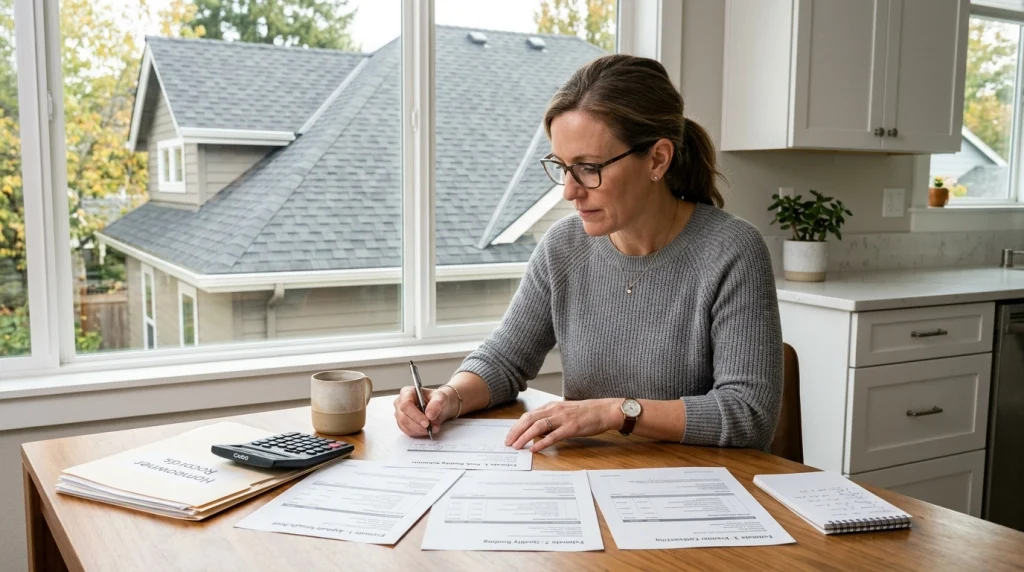
One of the simplest ways to control roof replacement costs is to obtain several written estimates.
However, comparing only the final dollar amount can be misleading.
One contractor might quote $10,000 while another quotes $12,000, but the more expensive proposal could include new flashing, upgraded underlayment, permit fees, disposal, ventilation improvements, and damaged-decking allowances that the cheaper quote excludes.
Ask each contractor to clearly identify:
- Roofing material and product line
- Estimated roof area
- Tear-off and disposal
- Underlayment
- Flashing
- Ice and water protection where required
- Ventilation components
- Decking repair pricing
- Permit costs
- Cleanup
- Material warranty
- Workmanship warranty
- Payment schedule
The Federal Trade Commission recommends getting multiple written estimates and checking contractor licensing and insurance where applicable before hiring someone for home-improvement work. Its home-improvement scam guidance also warns against contractors who pressure homeowners into immediate decisions or demand full payment upfront.
Compare scope against scope—not simply price against price.
2. Replace the Roof Before It Becomes an Emergency
Waiting until water is actively entering your home can make replacement more expensive.
A deteriorating roof can eventually damage:
- Roof decking
- Attic insulation
- Drywall
- Ceilings
- Electrical components
- Interior finishes
- Structural framing
A planned roof replacement gives you time to collect quotes, research materials, check warranties, arrange financing, and choose a reputable contractor.
An emergency leak after a major storm gives you far fewer options.
Roof age alone does not prove replacement is necessary. However, aging shingles combined with repeated leaks, widespread cracking or curling, significant granule loss, storm damage, or deteriorated flashing should be evaluated promptly.
If the roof still has several useful years remaining, a professional repair may be more economical than premature replacement.
3. Do Not Automatically Choose the Cheapest Contractor
The lowest bid is not always the least expensive roof.
Poor installation can result in:
- Leaks around penetrations
- Incorrect flashing
- Wind damage
- Shingle failure
- Moisture problems
- Voided manufacturer warranties
- Premature replacement
The National Roofing Contractors Association’s contractor-selection guidance recommends checking insurance, references, business history, written proposals, warranty terms, and project supervision rather than evaluating a roofer by price alone.
A contractor charging slightly more may save you substantial repair costs if the roof is installed correctly.
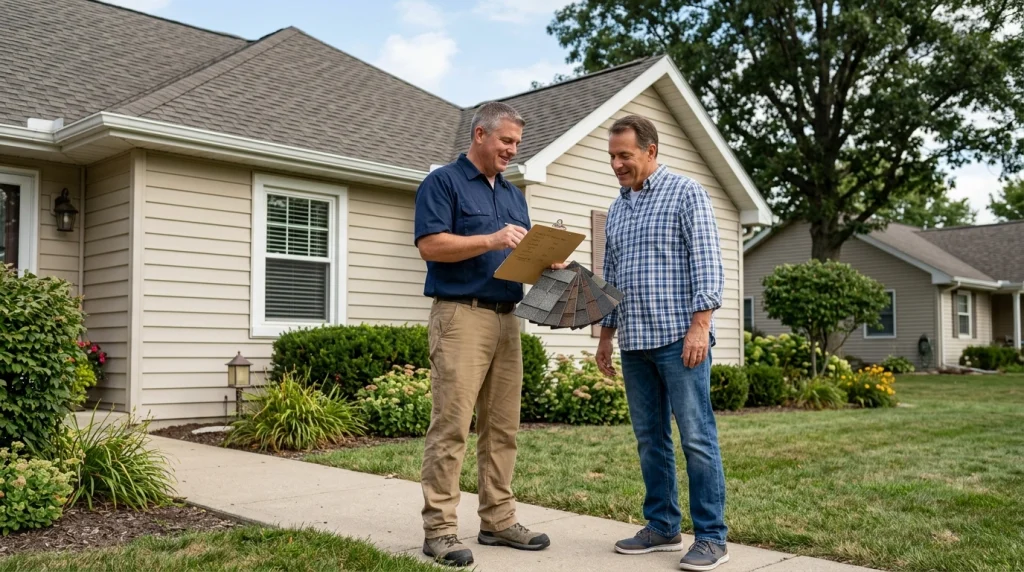
Ask potential contractors how long they have been operating locally, who supervises the installation, what warranty they provide, and exactly what happens if problems appear after completion.
4. Choose Roofing Materials Based on Your Real Needs
Premium roofing materials can be excellent products, but you do not necessarily need the most expensive roof available.
For many homeowners, architectural asphalt shingles provide a practical balance between upfront price, appearance, availability, and expected service life.
Metal, tile, wood, and specialty systems may cost significantly more.
Consider:
- Local climate
- Roof slope
- Structural capacity
- Expected time in the home
- Maintenance requirements
- Insurance considerations
- Neighborhood or HOA requirements
- Manufacturer warranty
- Long-term energy goals
A premium system that lasts substantially longer may make sense if you plan to remain in the home for decades.
If you expect to sell within several years, paying for the highest-priced roofing system may not produce enough additional value to justify the cost.
Roofing Material Cost-Saving Considerations
| Roofing choice | Upfront cost tendency | Potential savings approach | Important limitation |
|---|---|---|---|
| Asphalt shingles | Lower to moderate | Choose a reliable mid-range product | Cheapest shingles may have shorter service life |
| Metal | Moderate to high | Compare long-term ownership cost | Higher initial investment |
| Tile | High | Long potential service life | Heavy; structure must support it |
| Wood shake | Moderate to high | Attractive for certain homes | More maintenance and fire considerations |
| Flat-roof membrane | Varies | Choose the correct system for roof design | Installation quality is critical |
The cheapest material is not automatically the best value, and the most expensive material is not automatically the smartest investment.
5. Ask Whether a Mid-Range Product Is Enough
Roofing manufacturers frequently offer basic, mid-range, and premium product lines.
Homeowners can sometimes spend thousands more because of designer colors, heavier profiles, enhanced cosmetic features, or premium product classifications they do not actually need.
Ask your contractor:
- What is included in the base proposal?
- What does the upgraded product improve?
- Does it provide meaningful additional durability?
- Does it change the warranty?
- Is the upgrade mostly cosmetic?
- Would the standard product be appropriate for my climate and home?
A mid-range roofing material from a reputable manufacturer can often provide better overall value than choosing either the cheapest or most expensive option.
6. Avoid Changing Roofing Materials Without Considering Extra Costs
Changing from asphalt shingles to metal, tile, slate, or another system can involve more than simply paying for different roofing material.
The project might require:
- Structural evaluation
- Additional decking
- Different underlayment
- New flashing details
- Different fasteners
- Specialized labor
- Modified gutters or trim
- Additional permit requirements
Tile and other heavy roofing materials may require confirmation that the structure can safely carry the added load.
If your primary goal is reducing replacement cost, installing an appropriate version of the existing roofing system can sometimes be more economical than making a major material change.
7. Ask About Tear-Off and Hidden Decking Costs
One of the most common budget surprises appears after the old roof is removed.
The wood beneath the roofing material is called roof decking or sheathing. It supports the roofing system.
If contractors discover rotten, delaminated, or structurally damaged decking during tear-off, sections may need replacement before the new roof can be installed.
Before signing a contract, ask what decking replacement costs.
For example:
How much will I be charged per sheet if damaged decking is discovered?
Having this information in writing makes the final bill more predictable.
It is also wise to maintain a contingency fund rather than budgeting only for the quoted base price.
8. Keep the Roof Design Simple When Possible
Complex roofing requires more labor and material.
Valleys, dormers, skylights, chimneys, roof-to-wall intersections, steep slopes, and multiple levels increase installation difficulty.
You obviously cannot simplify the basic shape of an existing home during a normal replacement, but avoid adding unnecessary roof penetrations or decorative roof features at the same time if saving money is the priority.
If you are considering adding skylights, solar equipment, or other rooftop features, discuss the timing with your contractor. Coordinating projects may sometimes reduce duplicated labor, but adding features also raises the immediate project cost.
9. Schedule the Project Before You Are Desperate
Roofing demand can change throughout the year based on climate and region.
Contractors may be especially busy after:
- Hailstorms
- Hurricanes
- Tornadoes
- Windstorms
- Extended rainy periods
During periods of heavy demand, scheduling options can become limited.
If your roof is aging but not actively failing, start obtaining estimates early. Ask local contractors whether they offer different pricing during slower periods.
Do not delay a necessary replacement simply to wait for a discount, especially if moisture is already entering the home.
10. Check Your Homeowners Insurance After Storm Damage
Homeowners insurance may cover certain roof damage caused by covered events such as wind or hail, depending on the policy, roof condition, exclusions, deductible, and circumstances.
It generally should not be treated as a way to pay for ordinary aging or neglected maintenance.
If a storm has recently affected your roof:
- Document visible damage safely from the ground.
- Photograph interior leaks or water stains.
- Review your policy.
- Contact your insurer promptly if significant damage is suspected.
- Keep temporary-repair receipts.
- Avoid signing contracts you do not understand.
Do not climb onto a storm-damaged roof to collect evidence. Damaged decking, wet surfaces, loose shingles, and compromised edges can create serious fall hazards.
11. Check Existing Roofing Warranties
Before paying for replacement or major repairs, locate paperwork from the previous roof installation.
You may have:
- A manufacturer material warranty
- A contractor workmanship warranty
- Enhanced system coverage
Coverage varies significantly.
Manufacturer warranties commonly contain exclusions and specific installation requirements, while workmanship warranties depend on the contractor’s terms.
Contact the manufacturer or original contractor before assuming you must pay the entire cost yourself.
12. Keep Good Roof Maintenance Records
Maintenance will not rescue a roof that has reached the end of its useful life, but catching small problems early can prevent avoidable damage.
Keep records of:
- Inspection dates
- Repairs
- Storm damage
- Leak locations
- Contractor invoices
- Roofing product information
- Warranty documents
Watch for clogged drainage, damaged flashing, missing shingles, damaged pipe boots, deteriorated sealants, and signs of attic moisture.
Regular attention can also help you plan replacement before deterioration becomes severe.
13. Do Not Save Money by Skipping Flashing
Flashing is one area where cutting costs can become very expensive.
Flashing is metal or another waterproof material installed around areas where water is more likely to enter, including:
- Chimneys
- Valleys
- Skylights
- Walls
- Roof penetrations
- Vent pipes
Some contractors may be able to reuse flashing if it is in excellent condition and appropriate for the new system. In other situations, replacement is the safer choice.
Ask the roofer what flashing will be replaced and what will remain.
A roof covered with beautiful new shingles can still leak if critical flashing details are poorly installed.
14. Do Not Ignore Roof Ventilation
Proper attic ventilation can help control heat and moisture.
Poor ventilation may contribute to moisture accumulation, condensation, deteriorated decking, and shortened roofing-system life.
Replacement is a good time to have the ventilation system evaluated.
Saving a small amount by ignoring an obvious ventilation problem may create larger costs later.
However, more ventilation is not automatically better. Intake and exhaust ventilation need to work as a balanced system, and the correct design depends on the roof and attic.
15. Consider Energy Efficiency Carefully
Energy-efficient roofing can provide benefits in certain climates, but evaluate the numbers before paying for an expensive upgrade.
According to ENERGY STAR’s information about cool roofs, reflective roofing materials can reduce roof surface temperatures and heat transfer into a building, with benefits generally greatest in hot, sunny climates.
Before upgrading, consider:
- Local climate
- Existing attic insulation
- Roof color
- Air-conditioning use
- Expected ownership period
- Upgrade price
- Available incentives
An energy upgrade makes the most financial sense when the long-term benefit justifies the additional upfront cost.
16. Ask About Manufacturer and Contractor Promotions
Contractors and manufacturers occasionally offer promotions or financing programs.
You can ask about:
- Seasonal promotions
- Manufacturer rebates
- Financing incentives
- Discounts on specific product lines
- Cash-payment discounts where legally and contractually appropriate
But compare the complete price.
A “$1,000 discount” is not meaningful if the original estimate was inflated by $2,000.
Likewise, low monthly payments can hide a high interest rate or long repayment period.
The FTC advises homeowners to compare financing independently rather than automatically accepting financing arranged through a contractor.
17. Understand Exactly What Your Quote Includes
A cheap estimate can become expensive when important items are treated as extras.
Before accepting a proposal, determine whether the price includes:
- Removal of existing roofing
- Disposal
- Underlayment
- Drip edge
- Flashing
- Pipe boots
- Ridge vents
- Intake ventilation
- Fasteners
- Permits
- Cleanup
- Magnetic nail pickup
- Decking allowance
- Manufacturer registration
- Workmanship warranty
Ask how change orders are approved and documented.
You should know what can increase the price after work begins.
Expert Tip
Expert Tip: Ask every roofer to quote the same material and scope whenever possible. A standardized comparison makes it much easier to identify genuine savings instead of choosing a low bid that simply leaves important work out.
Savings That Are Worth Pursuing vs. Savings That Can Backfire
| Cost-saving strategy | Usually sensible? | Why |
|---|---|---|
| Getting three or more detailed estimates | Yes | Helps reveal local pricing and scope differences |
| Choosing a reliable mid-range shingle | Often | Avoids unnecessary premium upgrades |
| Planning replacement before an emergency | Yes | Gives you more time and contractor choices |
| Checking insurance and warranties | Yes | Existing coverage may apply in qualifying situations |
| Negotiating optional upgrades | Yes | Can remove features you do not need |
| Hiring an uninsured contractor | No | Creates major financial and liability risks |
| Skipping flashing replacement when needed | No | Can lead to expensive leaks |
| Covering rotten decking | No | Hides structural deterioration |
| DIY roof replacement without appropriate skills/equipment | Usually no | Roofing presents serious fall and installation risks |
| Choosing the lowest bid without comparing scope | No | Missing work can increase total cost later |
When to Consult a Licensed Roofing Contractor
Roof replacement should generally be evaluated and performed by an experienced roofing contractor who meets applicable state and local licensing requirements.
Professional assessment is particularly important when:
- Water is entering the home
- Multiple roof areas are failing
- Decking appears rotten or soft
- Rafters or trusses may be damaged
- The roof has extensive hail or wind damage
- Shingles are missing across large sections
- A flat roof has widespread seam failure or ponding
- You are changing to a heavier roofing material
- Insurance coverage is involved
- The roof is steep or difficult to access
Structural concerns may also require a structural engineer or other qualified building professional.
Roof work carries substantial fall risk. OSHA’s fall-protection information for residential roofing illustrates the seriousness of working around elevated roof edges and the need for proper protective systems in professional workplaces.
Homeowners should not assume that owning a ladder makes roof inspection or replacement safe.
Common Mistakes Homeowners Should Avoid
- Choosing solely by price. Compare materials, scope, warranties, insurance, and contractor experience.
- Waiting for severe leaks. Emergency replacement gives you less time to compare options.
- Ignoring hidden costs. Ask about decking, flashing, permits, disposal, and change orders.
- Paying the entire bill upfront. Use a written contract with a clear payment schedule.
- Assuming insurance covers an old roof. Coverage depends on the cause of damage and policy terms.
- Skipping ventilation issues. Existing moisture problems can shorten the life of the new roof.
- Buying unnecessary upgrades. Ask what measurable benefit each upgrade provides.
- Attempting unsafe DIY work. Roof falls can cause severe or fatal injuries.
- Failing to read warranties. Know what is covered and what could void coverage.
- Hiring immediately after a storm without research. Verify credentials and avoid high-pressure sales tactics.
FAQs
What is the cheapest way to replace a roof?
For many homes, a straightforward asphalt-shingle replacement using a dependable mid-range product is among the lower-cost conventional options. The cheapest appropriate solution still depends on roof design, climate, existing materials, decking condition, and local labor costs.
Can I negotiate the price of a roof replacement?
Sometimes. Contractors may have flexibility on optional upgrades, material choices, scheduling, or promotions. Instead of demanding a lower price with the same scope, ask whether there are legitimate ways to reduce cost without compromising necessary components or installation quality.
Is it cheaper to put new shingles over old shingles?
An overlay can sometimes reduce tear-off costs where codes and roof conditions permit it, but it is not always advisable. Existing damage may remain hidden, added weight matters, and manufacturer requirements may affect warranty coverage. Have a qualified contractor evaluate the existing roof before considering an overlay.
What time of year is cheapest to replace a roof?
There is no universal cheapest season. Roofing demand varies by climate and region. Contractors in some areas may offer more scheduling flexibility during slower periods. Ask reputable local companies about seasonal pricing rather than delaying a failing roof for months hoping for a discount.
Does homeowners insurance pay for roof replacement?
It may cover qualifying damage from a covered event such as wind or hail, subject to the policy, exclusions, deductible, roof age, and settlement terms. Insurance generally does not exist to pay for routine aging or deferred maintenance.
Should I finance a roof replacement?
Financing can be useful when replacement cannot safely be delayed, but compare interest rates, fees, repayment periods, and total borrowing costs. Consider independent financing options rather than evaluating a contractor’s monthly payment alone.
How much extra should I budget for unexpected roofing costs?
There is no single percentage that fits every roof. Older roofs and homes with signs of leaks may have a greater chance of hidden decking or structural damage. Ask contractors for unit pricing on common repairs and maintain a reasonable contingency reserve beyond the base estimate.
Conclusion
Learning how to save money on roof replacement is not about finding the absolute cheapest roof. It is about spending money where it protects your home and avoiding expenses that provide little additional value.
Start early, obtain several detailed estimates, compare identical scopes of work, choose materials that match your real needs, investigate warranties and insurance, and ask about potential hidden costs before signing a contract.
Avoid shortcuts involving flashing, damaged decking, ventilation, structural issues, contractor insurance, or installation quality. Those savings can disappear quickly when leaks or premature roof failure occur.
Your next step should be to have qualified local roofing contractors inspect the roof and provide detailed written proposals. Compare those proposals carefully, ask questions about every major cost, and choose the solution that offers sensible long-term value—not merely the smallest number at the bottom of the estimate.