
How to Budget for a Roof Replacement Without Costly Surprises

Replacing a roof is one of the largest home maintenance expenses most homeowners will face. The difficult part is not simply finding enough money for shingles. Your final bill can also include labor, tear-off and disposal, damaged roof decking, flashing, ventilation, permits, warranties, and unexpected repairs discovered after the old roofing comes off.
Learning how to budget for a roof replacement before you sign a contract gives you room to compare estimates, prepare for hidden costs, and choose materials based on long-term value instead of making a rushed decision during a leak or storm emergency.
This guide explains how to build a realistic roof replacement budget, which expenses to expect, how much extra money to reserve, ways to compare contractor quotes, and when professional advice is essential.
Quick Answer
To budget for a roof replacement, start with several detailed contractor estimates, identify the expected material and labor costs, and add roughly 10%–20% as a contingency for hidden damage or upgrades. Also budget for permits, tear-off, decking repairs, flashing, ventilation, cleanup, warranties, and any insurance deductible that applies.
Start With a Realistic Roof Replacement Price Range
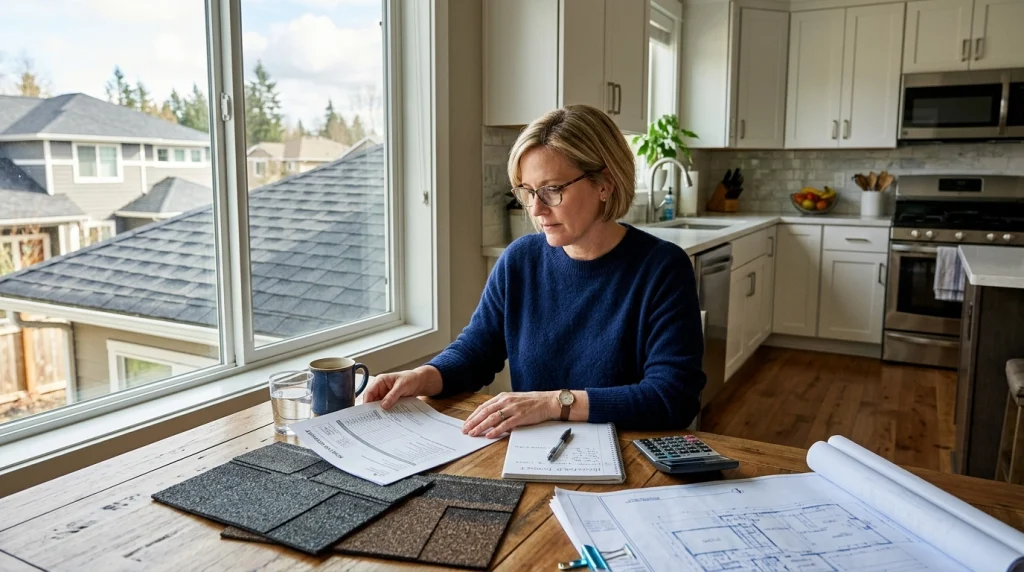
There is no single price that works for every home.
Recent RoofersGazette cost guidance places many standard U.S. roof replacements in roughly the $6,000–$15,000 range, while larger, more complicated, or premium-material projects can cost significantly more.
Several factors determine where your project falls:
- Roof size
- Roofing material
- Roof pitch, or steepness
- Number of valleys, dormers, chimneys, and roof sections
- Local labor rates
- Existing roofing layers
- Roof accessibility
- Decking condition
- Flashing requirements
- Ventilation upgrades
- Permit and disposal fees
- Warranty level
A simple one-story asphalt-shingle roof is generally easier and cheaper to replace than a steep, multi-level roof with several valleys, skylights, and chimneys.
Treat national averages as planning numbers, not quotes. Your local market and the actual condition of your roof matter much more.
Step 1: Estimate the Size of Your Roof
Roofing costs are often discussed by square foot or by a roofing “square.”
One roofing square equals 100 square feet of roof surface.
Your roof area is not necessarily the same as your home’s floor area. A 2,000-square-foot house may have significantly more than 2,000 square feet of roofing because the roof slopes upward and may include garages, porches, additions, dormers, and multiple sections.
RoofersGazette’s current cost-per-square-foot guidance notes that basic asphalt-shingle projects may begin around $3–$6 per square foot, while metal, tile, slate, and specialty systems can cost considerably more.
You do not need to climb onto the roof and measure it yourself. A professional roofer can calculate roof dimensions using field measurements, aerial measurements, building plans, or roofing-estimating software.
Safety warning: Do not walk on a steep, wet, icy, damaged, or unfamiliar roof to save the cost of an inspection. OSHA’s roofing safety resources emphasize the serious fall hazards associated with roof work and the importance of proper equipment and fall protection.
Step 2: Decide Which Roofing Material Fits Your Budget
Material selection can change your project price dramatically.
A useful planning comparison is:
| Roofing Material | Approximate Installed Cost Level | Typical Service-Life Potential* | Budget Consideration |
|---|---|---|---|
| Asphalt shingles | Lower | About 15–30 years | Usually the most accessible upfront price |
| Flat/low-slope membrane | Low to moderate | Varies by system | Installation details and drainage matter greatly |
| Metal | Moderate to high | About 30–80+ years | Higher upfront cost but potentially long service life |
| Tile | High | About 30–100+ years | Heavy material may require structural evaluation |
| Slate | Very high | About 50–100+ years | Premium material and specialized labor required |
*Actual roof life varies with climate, installation quality, product grade, maintenance, ventilation, storm exposure, and other conditions.
Do not automatically assume the cheapest roofing material gives you the lowest long-term cost.
If you expect to stay in the home for decades, a durable material may deserve consideration. If you expect to move in several years, a high-end roof may not provide enough personal benefit to justify its much larger upfront cost.
Your home’s structure matters too. Heavy materials such as tile or slate may require professional verification that the roof framing can safely support them.
Step 3: Separate Material Costs From Labor Costs
Homeowners sometimes focus on the price of shingles and underestimate everything required to install them correctly.
A roof replacement may involve:
- Removing existing roofing
- Protecting landscaping and siding
- Inspecting the roof deck
- Replacing damaged wood
- Installing underlayment
- Installing ice-and-water protection where required
- Replacing flashing
- Installing roofing material
- Replacing or modifying vents
- Installing ridge caps
- Cleaning the property
- Hauling away debris
- Obtaining permits
- Performing final inspections
Labor also changes according to roof difficulty.
A steep roof takes longer and may require more safety equipment. A roof with numerous valleys, walls, chimneys, skylights, and penetrations requires more cutting, flashing, and detailed installation.
That means two houses with similar square footage may receive very different estimates.
Step 4: Budget for Tear-Off and Disposal
Unless your project qualifies for an overlay and local rules allow it, the existing roofing material normally must be removed.
Tear-off gives the contractor an opportunity to inspect the surface underneath the shingles.
It also adds costs for:
- Labor
- Dumpsters or trailers
- Landfill fees
- Disposal fees
- Additional roofing layers
- Heavy materials
Older homes sometimes have two or more roofing layers. Removing those layers takes additional time and creates significantly more debris.
When comparing estimates, check whether tear-off and disposal are included. An inexpensive quote may look attractive simply because important work has been excluded.
Step 5: Create a Contingency Fund for Hidden Roof Damage
One of the most important parts of learning how to budget for a roof replacement is accepting that contractors cannot always see everything before demolition begins.
The roof deck is the wood surface underneath the roofing system. On many homes, it consists of plywood or oriented strand board, commonly called OSB.
Water leaks can cause sections of this decking to become:
- Soft
- Rotten
- Delaminated
- Mold damaged
- Structurally weakened
Damage may remain hidden until shingles and underlayment are removed.
Consider keeping 10%–20% above the expected project cost available as a contingency, particularly if your roof has a history of leaks, storm damage, poor ventilation, or long-term neglect.
For example, if your accepted estimate is $12,000, you might plan access to another $1,200–$2,400 rather than assuming the project cannot exceed exactly $12,000.
That does not mean the contractor will use the extra money. It means an unexpected repair will not immediately create a financial emergency.
Ask How Decking Repairs Are Priced
Before signing the contract, ask:
- How much does replacement decking cost per sheet?
- Is any decking replacement included?
- Who approves additional work?
- Will photographs be provided?
- What happens if extensive structural damage is discovered?
A good contract should explain how unexpected work is handled.
Expert Tip: Ask the roofer to write unit prices for common hidden repairs—especially decking—into the contract before work starts. That makes change orders easier to evaluate when the roof is already open.
Step 6: Account for Flashing, Ventilation, and Other Roofing Components
A roof is a system, not simply a layer of shingles.
Flashing
Flashing is metal or another waterproof material installed where the roof meets chimneys, walls, valleys, vents, skylights, and other vulnerable areas.
Reusing damaged flashing to save money can create leaks later.
Ask whether your proposal includes new:
- Chimney flashing
- Step flashing
- Valley flashing
- Vent flashing
- Drip edge
Ventilation
Poor attic ventilation can contribute to heat and moisture problems and may affect roof performance.
Replacement is a good time for a contractor to evaluate whether the intake and exhaust ventilation work together properly.
Ventilation changes may add to the budget, but ignoring an existing problem simply because it was not part of the original plan can be shortsighted.
Gutters and Drainage
Gutters usually are not automatically included with a new roof.
However, damaged gutters, rotted fascia, or drainage problems may become obvious during the project. Ask whether the roofing crew will remove, protect, reinstall, or replace existing gutters.
Step 7: Get Several Detailed Roofing Estimates
Do not build your entire budget around one contractor’s number.
The National Roofing Contractors Association recommends obtaining multiple proposals because roof prices vary according to materials, contractor, home size, location, local labor rates, and other factors. NRCA also emphasizes that price should be balanced against material and workmanship quality.
Aim to compare at least three detailed written estimates when possible.
Every estimate should make it reasonably clear what you are getting.
Look for information about:
- Roofing manufacturer and product
- Material grade
- Underlayment
- Flashing
- Ventilation
- Tear-off
- Decking replacement
- Waste disposal
- Permits
- Cleanup
- Workmanship warranty
- Manufacturer warranty
- Payment schedule
- Project timeline
Do not compare only the bottom-line number.
A $10,500 proposal that includes tear-off, flashing replacement, upgraded underlayment, permits, disposal, and a strong workmanship warranty may represent a completely different scope than a $9,000 proposal that excludes several of those items.
NRCA’s contractor-selection guidance specifically recommends obtaining a written proposal with a complete description of the work, specifications, dates, and payment procedures.
Step 8: Understand Your Warranty Before Paying More for It
Roof warranties generally fall into two categories.
Manufacturer Warranty
This typically covers qualifying defects in the roofing material.
The length and coverage vary considerably by product and manufacturer. Some warranties are prorated after a certain number of years.
Workmanship Warranty
This comes from the roofing contractor and generally relates to installation.
Ask:
- What exactly is covered?
- How long does coverage last?
- Are labor and materials both included?
- Is the warranty transferable?
- What actions void coverage?
- Who handles warranty claims?
Do not automatically pay thousands more because one estimate advertises a “lifetime warranty.” Read what the term actually means.
Step 9: Check Whether Insurance May Apply
Homeowners insurance generally does not pay to replace a roof simply because it is old.
Coverage may apply when replacement is necessary because of a covered event, such as certain forms of wind, hail, falling-object, or storm damage. Actual coverage depends on your policy, deductible, roof age, cause of damage, and insurer’s assessment.
If you believe a storm damaged your roof:
- Document visible damage safely from the ground.
- Contact your insurer promptly.
- Review your deductible.
- Keep estimates and photographs.
- Avoid signing contracts you do not understand.
Do not assume insurance will cover the entire replacement cost when building your budget.
Your deductible, depreciation rules, coverage limits, exclusions, and upgrades beyond what the policy covers may still leave you with substantial out-of-pocket expenses.
Step 10: Choose a Payment Strategy Before Work Begins
Once you know your likely project cost, decide where the money will come from.
Possible options include:
- Cash savings
- Home-improvement savings fund
- Home equity loan
- Home equity line of credit
- Personal loan
- Contractor financing
- Credit card for a limited portion of the cost
- Insurance proceeds for covered damage
Compare financing based on the total amount repaid, not just the monthly payment.
Review:
- Interest rate
- Annual percentage rate
- Origination fees
- Promotional periods
- Prepayment penalties
- Loan term
- Total interest
- Whether your home secures the debt
The Federal Trade Commission warns homeowners to be cautious when contractors pressure them to make immediate decisions, demand full payment upfront, or push financing through a lender they recommend. The FTC also advises getting multiple written estimates and carefully reviewing financing terms.
Example Roof Replacement Budget
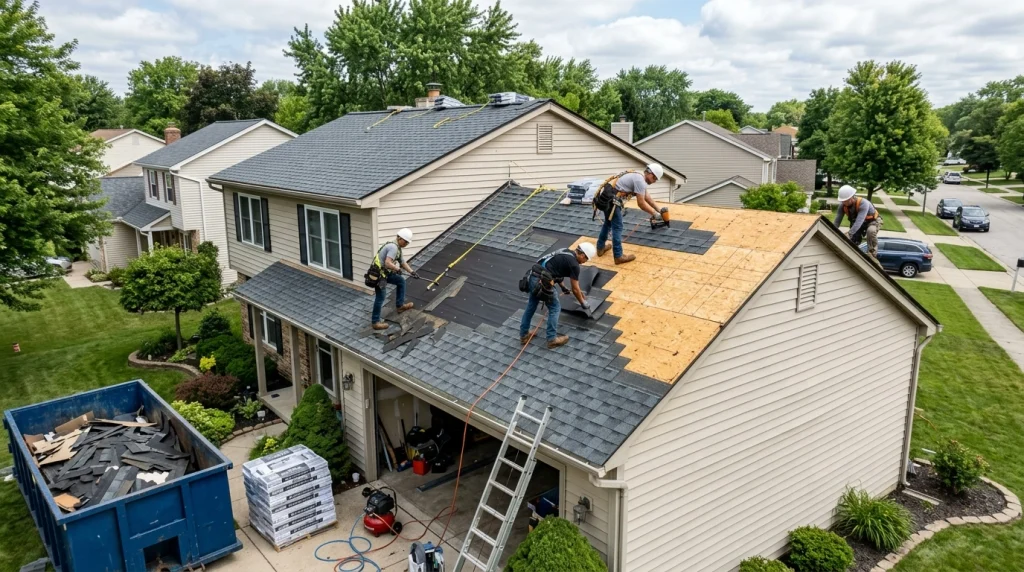
Imagine that you receive a detailed quote for an asphalt-shingle replacement:
| Budget Item | Example Amount |
|---|---|
| Base roofing project | $11,500 |
| Permit/administrative costs | Included |
| Tear-off and disposal | Included |
| Expected decking repairs | $500 |
| Ventilation improvements | $600 |
| Contingency reserve | $1,800 |
| Total amount to have available | $14,400 |
Your contractor may ultimately charge less than $14,400.
The point is to make sure you can handle reasonable surprises without putting an emergency expense on a high-interest credit card.
When to Consult a Licensed Roofing Contractor
Budget research can help you prepare, but several situations require professional evaluation.
Contact a qualified roofing contractor if you notice:
- Recurring roof leaks
- Missing or badly damaged shingles
- Significant hail or wind damage
- Sagging sections of roof
- Soft or rotten decking
- Daylight visible through the attic
- Large areas of deteriorated roofing
- Water stains in several interior rooms
- A roof near the end of its expected lifespan
- Suspected structural damage
- Problems involving chimneys, skylights, or complex flashing
Licensing requirements vary by state and local jurisdiction, so verify whatever credentials are required where you live.
Ask for proof of liability insurance and workers’ compensation coverage where applicable. NRCA recommends confirming insurance coverage, business credentials, references, written proposals, warranty terms, and project supervision before selecting a contractor.
Do not climb onto a damaged roof to diagnose the problem yourself. Wet surfaces, steep slopes, loose materials, hidden weak decking, and roof edges create serious fall hazards.
Common Mistakes Homeowners Should Avoid
- Budgeting only for shingles. Labor, removal, flashing, decking, ventilation, permits, and disposal can represent a substantial part of the project.
- Having no contingency fund. Hidden wood damage is difficult to price until the old roof is removed.
- Automatically choosing the lowest bid. A lower estimate may exclude work included in another contractor’s scope.
- Comparing monthly payments instead of total financing cost. A low payment over a long term can hide significant interest.
- Ignoring ventilation. Replacing the roofing without addressing an existing attic problem can leave an important weakness unresolved.
- Assuming insurance will pay everything. Deductibles, exclusions, depreciation, and uncovered upgrades may leave significant costs.
- Paying the entire project upfront. Review a reasonable written payment schedule instead.
- Making a rushed decision after a storm. FTC consumer guidance warns about contractors who appear after disasters and pressure homeowners to act immediately.
- Inspecting dangerous roofing yourself. Saving an inspection fee is not worth risking a serious fall.
FAQs
How much money should I save for a roof replacement?
The amount depends on your roof size, material, location, complexity, and condition. Many standard projects fall into the five-figure range, so obtain local estimates rather than relying solely on national averages. Consider keeping an additional 10%–20% available for unexpected repairs.
How much extra should I budget beyond the roofing estimate?
A contingency of about 10%–20% is a practical planning target for many homeowners. An older roof with known leaks, damaged decking, or uncertain structural conditions may justify a larger reserve.
What is usually the biggest roof replacement expense?
Materials and professional labor normally make up much of the project cost. Tear-off, disposal, complex flashing, steep roof slopes, premium materials, and damaged decking can substantially increase the total.
Is it cheaper to put new shingles over old shingles?
An overlay may cost less initially because it avoids some removal work, but it is not appropriate for every roof. Existing damage may need to be exposed and repaired, manufacturers and building codes may limit overlays, and multiple roofing layers can complicate future replacement. Have a professional evaluate your roof first.
Can I finance a roof replacement?
Yes. Depending on your financial situation, options may include home equity financing, personal loans, contractor financing, or other credit products. Compare APR, fees, loan length, monthly payments, and total repayment before borrowing.
Does homeowners insurance cover an old roof?
Insurance generally is designed for covered sudden losses, not normal aging and deterioration. A storm-damaged roof may qualify for coverage depending on your policy and circumstances, but a roof that simply reached the end of its service life normally does not qualify for replacement solely because of age.
Should I replace my roof before it starts leaking?
Possibly. A roof approaching the end of its expected service life with widespread deterioration may be better replaced before leaks cause damage to decking, insulation, ceilings, or walls. Age alone does not determine the answer, so have the roof’s actual condition assessed.
Final Thoughts
Understanding how to budget for a roof replacement means planning for more than the advertised price of roofing material.
Start by getting multiple detailed estimates. Compare the complete scope of work, including tear-off, underlayment, flashing, ventilation, decking, cleanup, permits, and warranties. Then maintain a contingency fund so hidden damage does not derail your finances once the old roof is removed.
Most importantly, do not sacrifice installation quality or safety simply to reach the lowest possible number. A roof protects the structure, belongings, and people inside your home.
If your roof is aging, leaking, or showing storm damage, your best next step is to have it professionally evaluated and obtain several written estimates. That gives you the information needed to create a realistic budget before the problem becomes an emergency.