
How Much Does an Emergency Roof Replacement Cost?

A badly damaged roof can turn into an emergency quickly. High winds may remove large sections of shingles, a fallen tree can puncture the roof deck, or a severe leak may allow water into ceilings, insulation, and walls.
When that happens, one of the biggest questions is: how much does an emergency roof replacement cost?
For many U.S. homes, an emergency roof replacement may cost roughly $8,000 to $25,000 or more. A smaller, straightforward asphalt-shingle roof may fall near the lower end, while a large, steep, storm-damaged, or premium-material roof can cost considerably more.
The final amount depends on the roof size, material, labor availability, emergency protection, structural damage, tear-off requirements, permits, decking repairs, and whether crews must work under difficult conditions.
This guide explains what homeowners should budget for, what can increase an emergency replacement bill, when insurance may be involved, and how to avoid making an expensive decision under pressure.
Quick Answer
How much does an emergency roof replacement cost? A practical planning range is about $8,000 to $25,000 or more for many homes. Emergency tarping, after-hours service, damaged decking, steep roofs, premium materials, structural repairs, permits, and high local demand after a storm can all increase the final price.
What Counts as an Emergency Roof Replacement?
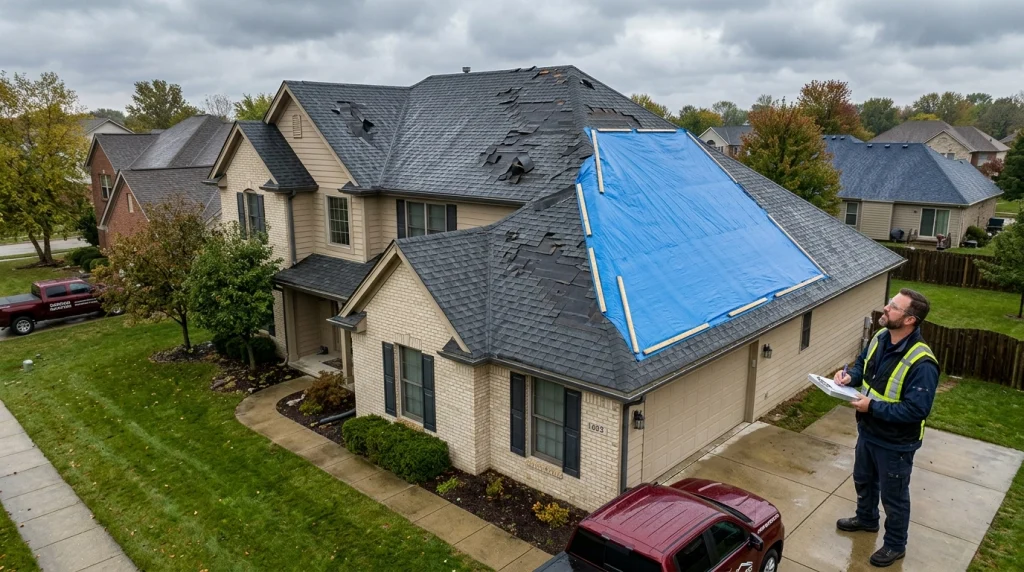
An emergency roof replacement is more than replacing an old roof on a tight schedule.
It usually means roof damage is severe enough that delaying work could allow significant additional damage to the house.
Examples include:
- Large sections of roofing blown away by strong wind
- Major hail damage across most of the roof
- A tree or heavy branch penetrating the roof
- Widespread leaking after a severe storm
- Collapsed or sagging roof areas
- Extensive water-damaged roof decking
- Fire damage affecting the roofing system
- Severe deterioration discovered during an active leak
- Damage that cannot reasonably be stabilized with a normal repair
A few missing shingles or a small flashing leak does not automatically mean the entire roof needs immediate replacement.
A professional inspection is important because temporary weatherproofing or localized repairs may sometimes protect the house until permanent work can be scheduled.
Emergency Roof Replacement Cost at a Glance
There is no universal emergency replacement price because every roof and damage situation is different.
These ranges can be useful for initial budgeting:
| Emergency Roofing Situation | Approximate Planning Range |
|---|---|
| Emergency inspection or service call | $150–$500+ |
| Temporary roof tarp/weatherproofing | $200–$1,500+ |
| Small asphalt-shingle roof replacement | $6,000–$12,000+ |
| Typical emergency asphalt roof replacement | $8,000–$20,000+ |
| Large or complex asphalt roof | $15,000–$30,000+ |
| Metal roof replacement | $10,000–$35,000+ |
| Tile roof replacement | $12,000–$40,000+ |
| Major decking or structural repairs | $2,000–$15,000+ additional |
| Severe storm or structural damage | $20,000–$50,000+ |
These are planning estimates, not contractor quotes.
Regional labor costs, roof dimensions, material prices, code requirements, damage severity, and contractor availability can move the total substantially higher or lower.
Why Emergency Roof Replacement Can Cost More
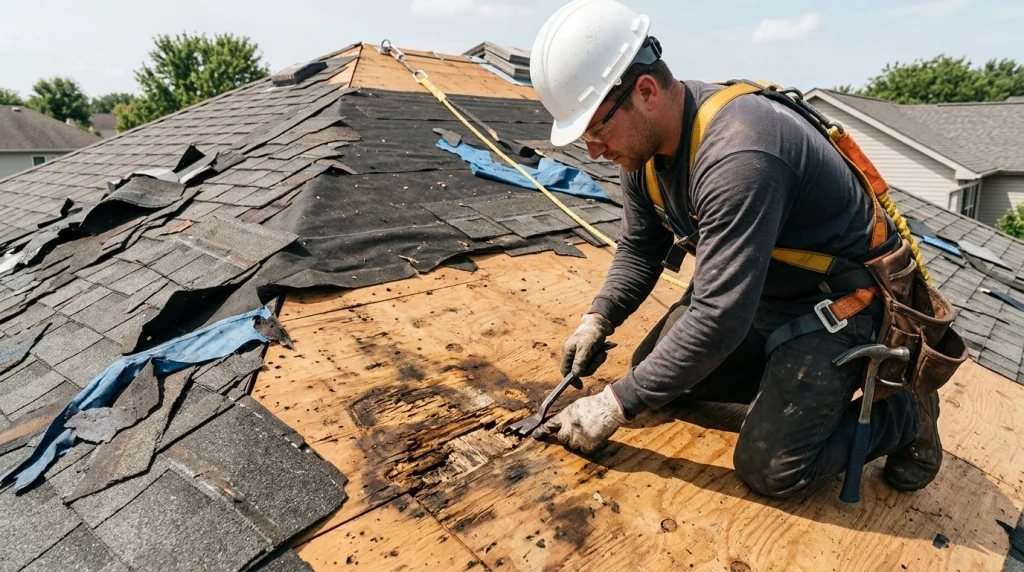
A planned roof replacement gives you time to collect estimates, order materials, schedule a crew, and choose a convenient time of year.
An emergency gives you much less flexibility.
Emergency Service and Rapid Scheduling
Roofing companies may charge more when crews must respond quickly, particularly after hours, on weekends, or during periods of intense storm-related demand.
The contractor may also need to rearrange existing projects.
That urgency does not necessarily mean the entire roof installation carries a special “emergency fee,” but inspection, temporary protection, labor availability, material sourcing, and scheduling can increase costs.
Temporary Protection
A permanent roof cannot always be installed immediately.
Rain may still be falling. Winds may be unsafe. Materials may be unavailable. An insurance adjuster may need to inspect the property.
Temporary protection can include:
- Heavy-duty roof tarps
- Temporary membrane installation
- Plywood covering
- Temporary flashing repairs
- Water diversion
- Emergency removal of loose debris
These measures cost money, but they can help prevent a roof problem from turning into extensive interior water damage.
Hidden Decking Damage
The roof decking is the wood sheathing underneath the roofing material.
If water has been entering the roof for days, weeks, or longer, some decking may be rotten, swollen, delaminated, or structurally weakened.
Contractors often cannot determine the full condition of the deck until the old roofing is removed.
Replacing damaged decking can add hundreds or thousands of dollars to the project.
Roof Size Has a Major Effect on Cost
Roofers commonly measure roofs in squares.
One roofing square equals 100 square feet of roof surface.
That does not mean a 2,000-square-foot house automatically has a 2,000-square-foot roof. Roof pitch, overhangs, attached garages, porches, dormers, valleys, and the shape of the building affect actual roof area.
A larger roof requires:
- More roofing material
- More underlayment
- More flashing
- More fasteners
- More disposal capacity
- More labor
A large roof damaged during an emergency will therefore generally cost more to replace than a simple roof on a small one-story house.
Roofing Material Changes the Price
The roofing material being removed and installed can dramatically affect the emergency replacement budget.
Asphalt Shingles
Asphalt shingles are common on U.S. homes and are generally among the more affordable roofing materials.
They are also widely stocked, which can make materials easier to obtain quickly after localized damage.
However, prices still vary by shingle grade, roof complexity, warranty, and local labor conditions.
Metal Roofing
Metal roofing generally costs more upfront than standard asphalt shingles.
Material type also matters. Exposed-fastener panels, standing-seam systems, and specialty metal roofs have different installation requirements.
Emergency work can become more expensive if matching panels or specialized installers are not immediately available.
Tile Roofing
Clay and concrete tile roofing can be expensive to replace because the material is heavy and installation is labor-intensive.
Structural issues may also need to be evaluated when severe storm or impact damage has occurred.
Flat and Low-Slope Roofing
Low-slope roofs may use EPDM, TPO, modified bitumen, or another membrane system.
Cost depends heavily on the membrane, insulation, drainage, penetrations, number of existing layers, and condition of the underlying deck.
Roof Pitch and Complexity Increase Labor Costs
A steep roof is more difficult and time-consuming to work on than a low-slope, easily accessible roof.
Complex features also increase labor.
These can include:
- Valleys
- Dormers
- Skylights
- Chimneys
- Multiple roof levels
- Plumbing vents
- HVAC penetrations
- Complicated flashing details
- Restricted access around the house
More complicated roofs require extra cutting, flashing, staging, and safety precautions.
That becomes especially important after storm damage, when surfaces may already be loose, wet, or unstable.
Structural Damage Can Change the Entire Project
Some emergencies affect much more than shingles.
A falling tree, fire, major wind event, or long-term leak may damage rafters, trusses, sheathing, fascia, or other structural components.
A roofing contractor may recommend further evaluation when there are signs such as:
- Significant roof sagging
- Broken rafters or trusses
- Large areas of collapsed decking
- Visible movement in the roof structure
- Major impact damage
- Ceiling movement below the damaged area
Do not enter an area where the ceiling or roof appears at risk of collapse.
Structural repair can add significantly to the project cost and may require a qualified structural professional depending on the damage and local requirements.
Does Homeowners Insurance Cover Emergency Roof Replacement?
Sometimes—but coverage depends on why the roof was damaged and the terms of your policy.
Sudden events such as wind, hail, fire, or falling trees may potentially qualify for coverage under a homeowners policy.
Normal aging, neglected maintenance, long-term leakage, and ordinary wear are usually treated differently.
Your policy may also include:
- A deductible
- Actual cash value coverage
- Replacement cost coverage
- Separate wind or hurricane deductibles
- Cosmetic damage limitations
- Roof-age restrictions
After major weather damage, photograph visible damage from a safe location and contact your insurance carrier promptly.
The Insurance Institute for Business & Home Safety notes that roof coverings are a major defense against weather and that roofing performance can substantially affect wind and hail damage. Its research on asphalt-shingle durability also highlights the importance of roofing products designed to resist severe weather.
Avoid authorizing unnecessary full replacement work simply because someone says insurance will pay for it. Coverage decisions ultimately depend on your policy and the insurer’s assessment.
Should You Replace the Roof Immediately?
Not every damaged roof needs to be torn off immediately.
Sometimes the safest sequence is:
- Protect people and belongings inside the house.
- Stop or reduce active water entry if this can be done safely from inside.
- Contact a qualified roofing contractor.
- Document damage from the ground.
- Install professional temporary weatherproofing if needed.
- Notify your insurer when the loss may be covered.
- Determine whether repair or full replacement is appropriate.
- Schedule permanent work when weather and site conditions are safe.
According to the National Roofing Contractors Association’s storm guidance, professional contractors are better equipped to assess storm-damaged roof systems, and property owners should use caution when considering unsolicited repair offers after severe weather.
When Repair May Be Enough
Replacement is not always the most economical solution.
Repair may be reasonable when:
- Damage is limited to a small area
- Most of the roof remains in good condition
- Decking damage is localized
- Flashing caused the leak
- Only a small section of shingles was lost
- The roof has substantial useful life remaining
A repair could cost far less than replacement while safely restoring the roof.
However, repeated repairs on a roof already approaching the end of its service life may become poor value.
When Full Replacement Makes More Sense
A contractor may recommend replacement when:
- Damage affects a large percentage of the roof
- Shingles are already severely aged
- Leaks occur in several areas
- Extensive decking has deteriorated
- Repair materials cannot integrate properly with the existing system
- Previous repairs are repeatedly failing
- The roof no longer provides reliable weather protection
Roof lifespan varies considerably by material, product quality, climate, installation, ventilation, maintenance, and storm exposure.
Age alone should therefore not be the only reason for emergency replacement.
Expert Tip
Expert Tip: Before signing an emergency roof replacement contract, ask for a written estimate separating temporary protection, tear-off, materials, decking allowances, flashing, ventilation, permits, disposal, warranties, and potential change-order costs. This makes competing bids much easier to compare.
Get More Than One Estimate When Possible
An emergency creates pressure, but do not confuse urgency with the need to accept the first proposal placed in front of you.
If the building can be temporarily weatherproofed safely, try to obtain multiple estimates.
The NRCA’s contractor selection guidance recommends checking contractor insurance, references, business information, written proposals, project supervision procedures, and warranty terms.
Compare what each estimate actually includes.
One contractor’s $12,000 quote may include new flashing, ventilation, permits, debris disposal, and a decking allowance. Another $10,000 proposal may exclude several of those items.
The lower bid is not necessarily the lower final cost.
Watch for Storm-Chaser Roofing Scams
Major storms can create a sudden influx of roofing salespeople.
Some are legitimate contractors. Others may use high-pressure tactics or provide incomplete information.
Warning signs include:
- Pressure to sign immediately
- Large cash payments requested upfront
- No proof of insurance
- No verifiable business location
- Vague written estimates
- Promises that insurance will definitely cover everything
- Requests to sign over insurance benefits without understanding the agreement
- Unsolicited claims that your entire roof must be replaced without a proper inspection
A roof emergency is stressful, but you still have the right to understand the contract before signing.
Safety Comes Before Saving Money
Roof inspection and repair can be dangerous, especially immediately after a storm.
Wet roofing, loose shingles, weakened decking, fallen branches, damaged power lines, and high winds create serious hazards.
OSHA’s residential fall-protection guidance demonstrates the extensive precautions professionals use to reduce fall hazards during roofing and other residential construction work.
Homeowners generally should inspect damage from the ground or another safe location rather than climbing onto the roof.
Never climb onto a roof during rain, strong winds, lightning, icy conditions, or when structural damage may be present.
When to Consult a Licensed Roofing Contractor
Contact a qualified roofing contractor promptly when you have:
- An active leak during or after a storm
- Multiple missing shingles
- Exposed roof decking
- Large hail impacts
- Fallen tree damage
- Sagging roof areas
- Water entering several rooms
- Damaged flashing around major penetrations
- A roof nearing the end of its expected service life
- Uncertainty about whether repair or replacement is appropriate
Licensing requirements vary by state and locality, so verify whatever licensing, registration, insurance, and permit requirements apply where you live.
For major structural damage, the contractor may also recommend evaluation by another qualified professional.
Common Mistakes Homeowners Should Avoid
Emergency roofing decisions are easier to get wrong because homeowners are often dealing with water damage, insurance calls, bad weather, and time pressure simultaneously.
Avoid these common mistakes:
- Climbing onto a storm-damaged roof yourself. Hidden decking damage can make apparently solid areas unsafe.
- Assuming every leak requires replacement. Some serious-looking leaks originate from repairable flashing or localized damage.
- Waiting too long to stop water intrusion. Temporary professional weatherproofing can help limit additional damage.
- Choosing only by price. Compare materials, scope, warranties, flashing, ventilation, cleanup, permits, and contractor qualifications.
- Ignoring decking allowances. Ask how damaged wood discovered after tear-off will be priced.
- Failing to document storm damage. Take safe photos and keep invoices, estimates, receipts, and communications.
- Assuming insurance automatically covers the roof. Review your policy and speak directly with your insurer.
- Paying for unnecessary upgrades under pressure. Separate urgent work from optional improvements.
FAQs
How much does an emergency roof replacement cost for an average house?
A reasonable planning range is approximately $8,000 to $25,000 or more, although smaller asphalt roofs may cost less and large, complex, structural, metal, tile, or severe storm-damage projects can cost considerably more.
Is an emergency roof replacement more expensive than a planned replacement?
It can be. Rapid scheduling, temporary tarping, after-hours service, material availability, storm-related labor demand, hidden damage, and difficult working conditions can increase the total.
Can I tarp an emergency roof myself?
Tarping a roof requires working at height, often on a wet or damaged surface. Because falls and unstable decking can cause severe injuries, professional temporary weatherproofing is generally safer.
Will insurance pay for an emergency roof replacement?
It depends on the cause of the damage and your policy. Sudden covered events such as wind or hail may qualify, while normal aging, wear, maintenance problems, or long-term deterioration may not.
How quickly should a damaged roof be replaced?
The immediate priority is making the property safe and preventing further water entry. A permanent replacement may occur shortly afterward, but weather, insurance inspections, permits, materials, and contractor availability can affect scheduling.
Can only part of a roof be replaced?
Sometimes. Localized damage may be repaired or a roof section may be replaceable depending on the roofing system, age, material compatibility, code requirements, and extent of damage. A professional inspection is needed to determine the appropriate approach.
Should I accept the first emergency roofing estimate?
Not necessarily. If temporary protection has stabilized the house, obtaining two or three detailed proposals can help you compare scope, materials, warranties, contractor qualifications, and potential additional charges.
Conclusion
So, how much does an emergency roof replacement cost? For many U.S. homeowners, budgeting approximately $8,000 to $25,000 or more is a reasonable starting point, but severe structural damage, large roofs, premium materials, steep slopes, and storm-driven labor demand can push the price substantially higher.
Do not assume replacement is required simply because the situation feels urgent. First protect the home, document the damage, contact your insurer when appropriate, and have a qualified roofing professional determine whether temporary weatherproofing, repair, or full replacement is actually needed.
Most importantly, never risk climbing onto an unstable or storm-damaged roof to save the cost of a professional inspection. Stabilize the situation safely, obtain a detailed written scope, and compare qualified contractors before committing to a major replacement whenever circumstances allow.