
How Much More Is a Metal Roof Than Shingles?

Many homeowners like the idea of a metal roof, but the price difference can feel confusing. You may hear that metal lasts longer, handles weather better, and can improve curb appeal. Then you get a quote and wonder: how much more is a metal roof than shingles, really?
In most cases, a metal roof costs noticeably more upfront than an asphalt shingle roof. But the better question is not only “Which roof is cheaper today?” It is also “Which roof makes more sense over the next 20, 30, or 50 years?”
This guide explains the real cost gap, what drives the price difference, when metal roofing may be worth it, and when shingles may still be the smarter choice for your home.
Quick Answer
A metal roof usually costs about 1.5 to 3 times more than asphalt shingles upfront. Basic asphalt shingles may cost less to install, while metal roofing costs more because of the material, labor, accessories, and installation skill required. However, metal can last longer and may reduce future replacement needs.
Metal Roof vs Shingles: Basic Cost Difference
For a typical U.S. home, asphalt shingles are usually the lower-cost roofing option. Metal roofing is a premium system, especially if you choose standing seam panels, heavier-gauge steel, aluminum, copper, or special coatings.
A simple way to understand the difference is this:
| Roofing Type | Typical Installed Cost Level | Common Lifespan | Best For |
|---|---|---|---|
| Basic asphalt shingles | Lowest | 15–25 years | Budget-friendly replacement |
| Architectural asphalt shingles | Moderate | 20–30 years | Better curb appeal and durability |
| Exposed-fastener metal roof | Moderate to high | 30–45 years | Lower-cost metal option |
| Standing seam metal roof | High | 40–70 years | Long-term performance and clean appearance |
| Premium metal, such as copper or zinc | Very high | 60+ years | Historic, luxury, or custom homes |
These ranges are general. Your actual price depends on roof size, slope, location, contractor labor, tear-off needs, roof complexity, and material quality.
The key point: shingles usually win on upfront price, while metal often competes better on long-term value.
Why Is a Metal Roof More Expensive Than Shingles?
Metal roofing is not just a different surface material. It is often a more involved roof system. The panels, trim, fasteners, clips, flashing, underlayment, and labor all affect the final quote.
1. Metal Roofing Materials Cost More
Asphalt shingles are mass-produced, easy to transport, and familiar to most roofers. Metal roofing panels are more specialized.
A metal roof may include:
- Steel, aluminum, copper, or zinc panels
- Protective coatings
- Custom trim pieces
- Ridge caps
- Valley metal
- Eave and rake flashing
- Hidden clips or exposed screws
- Closure strips
- High-temperature underlayment
Standing seam metal roofs cost more because the seams are raised and usually use concealed fasteners. That means the screws are not exposed on the roof surface, which can improve long-term weather protection.
2. Metal Roof Installation Requires More Skill
Many roofing crews install asphalt shingles every day. Metal roofing requires more layout planning, careful cutting, precise fastening, and proper flashing details.
Small mistakes can cause big problems later. For example, panels can oil-can, fasteners can be overdriven, seams can leak, or flashing can fail around chimneys and skylights.
The Metal Construction Association’s metal roof installation resources highlight how detailed proper metal roof installation can be. For homeowners, this means labor quality matters just as much as the metal panel itself.
3. Roof Shape and Complexity Raise the Price
A simple gable roof is cheaper to cover than a roof with many valleys, dormers, skylights, chimneys, and steep sections.
Metal panels are more sensitive to layout. Complex roof shapes may require more cuts, more flashing, and more waste.
Your cost may increase if the roof has:
- Multiple valleys
- Steep pitch
- Two or more stories
- Chimneys
- Skylights
- Existing leaks
- Damaged roof decking
- Poor attic ventilation
- Difficult access for crews
A metal roof on a simple ranch home may be much more affordable than a metal roof on a large custom home with many roof sections.
Example: How Much More Could Metal Cost?
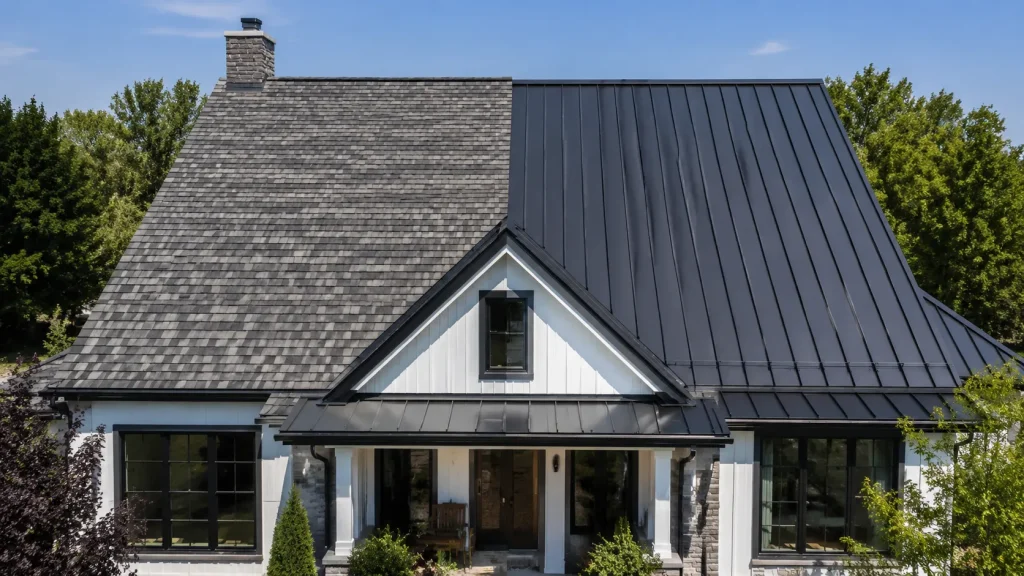
Here is a practical example.
Suppose your home needs about 2,000 square feet of roofing surface. Roofing is often measured in “squares,” and one roofing square equals 100 square feet. So this roof is about 20 squares.
A shingle roof might cost far less upfront, while a standing seam metal roof may cost significantly more.
For example:
- Asphalt shingle roof: lower upfront cost
- Exposed-fastener metal roof: moderate upgrade cost
- Standing seam metal roof: premium upgrade cost
If shingles cost $12,000 for a certain home, a metal roof on the same home might cost $20,000 to $36,000 or more depending on the system. That does not mean every metal roof is overpriced. It means the roof system, labor, and expected lifespan are different.
Never compare only the total number on the quote. Compare the materials, warranty, installation details, underlayment, flashing, ventilation work, and cleanup.
Is a Metal Roof Worth the Extra Cost?
A metal roof can be worth the extra cost if you plan to stay in the home long enough, live in a harsh weather area, or want a lower-maintenance roof with a longer service life.
But metal is not automatically the best choice for every homeowner.
Metal Roofing May Be Worth It If:
- You plan to stay in the home for many years
- Your area gets heavy rain, snow, wind, or hail
- You want a long-lasting roof
- You want a clean, modern look
- You are replacing the roof on a forever home
- You want better fire resistance from the roof covering
- You want a roof that may reduce future replacement cycles
Metal roofing can also help with heat control when it uses reflective finishes. The U.S. Department of Energy explains that cool roofs reflect more sunlight and absorb less solar energy, which can help lower roof surface temperatures.
That does not mean every metal roof will dramatically reduce energy bills. Color, coating, attic insulation, ventilation, climate, and home design all matter.
Shingles May Be Better If:
- You need the lowest upfront price
- You plan to sell the home soon
- Your roof has a simple replacement need
- Your neighborhood or HOA limits metal roof styles
- You prefer a traditional look
- Your budget does not allow a premium roof system
A good shingle roof is not a bad roof. Many homeowners choose architectural shingles because they offer a practical balance of cost, appearance, and performance.
Upfront Cost vs Long-Term Cost
The biggest mistake is judging the roof only by the installation price. A roof is a long-term investment. You need to think about the cost per year of service.
For example, if shingles last 20 years and metal lasts 50 years, the metal roof may spread its cost over a much longer period. It may also help you avoid paying for another full replacement sooner.
However, this only works if the metal roof is installed correctly.
A poorly installed metal roof can leak, dent, loosen, or fail earlier than expected. A well-installed asphalt shingle roof can outperform a badly installed metal roof.
Installation quality is more important than marketing claims.
What Type of Metal Roof Costs More?
Not all metal roofs are priced the same. Some are closer to premium shingles, while others are much more expensive.
Exposed-Fastener Metal Roof
This is usually the lower-cost metal option. The panels are attached with screws that go through the metal and remain visible.
It can be a practical choice for barns, cabins, workshops, and some homes. However, the exposed screws and washers may need maintenance over time.
Standing Seam Metal Roof
This is the premium residential metal roof many homeowners picture. The seams are raised, and fasteners are usually hidden.
Standing seam roofs often cost more because they require skilled installation and more specialized materials. They are popular for modern homes, coastal homes, mountain homes, and homeowners who want long-term durability.
Metal Shingles
Metal shingles are designed to look more like traditional roofing. They may resemble slate, shake, tile, or asphalt shingles.
They can be a good option if you want metal performance without the strong vertical lines of standing seam panels. Cost depends heavily on the product style and installation complexity.
Other Cost Factors Homeowners Forget
The visible roof material is only one part of your quote. Many hidden factors can change the final price.
Tear-Off and Disposal
Removing old shingles adds labor and disposal cost. If there are multiple old layers, the price can go up.
Some metal systems may be installed over existing shingles in certain situations, but this depends on local code, roof condition, ventilation, and manufacturer requirements. It is not always the best choice.
Roof Deck Repair
If the wood deck under your shingles is soft, rotten, or damaged, it must be repaired before the new roof goes on.
A metal roof should not be installed over weak decking. The roof may look fine at first, but hidden structural problems can cause future failure.
Flashing and Penetrations
Areas around chimneys, skylights, vent pipes, walls, and valleys are common leak points.
Metal roofing often needs careful custom flashing. This adds cost, but it is not a place to cut corners.
Ventilation
Roof replacement is a good time to check attic ventilation. Poor ventilation can trap heat and moisture, shorten roof life, and contribute to mold or deck damage.
A contractor should inspect intake vents, ridge vents, soffits, and attic airflow before recommending a final roof system.
Safety Matters: Do Not Treat Metal Roofing as a DIY Shortcut
Metal roofing may look simple because panels are large. But installing it can be dangerous and technically demanding.
Roof work involves fall risk, sharp metal edges, power tools, ladders, and weather exposure. OSHA’s residential fall protection guidance is a reminder that roofing work can be hazardous even for trained workers.
Homeowners should not climb on a steep, wet, icy, or high metal roof. Metal can be slippery, and one mistake can cause serious injury.
DIY may be reasonable for a small shed or low-risk accessory structure. For a home, hiring an experienced roofing professional is usually the safer and smarter choice.
Expert Tip:
Before choosing metal or shingles, ask each contractor for a written quote that separates material, labor, tear-off, decking repair, flashing, ventilation, warranty, and cleanup. This makes it easier to compare real value instead of just picking the lowest number.
Metal Roof vs Shingles: Pros and Cons
| Option | Pros | Cons |
|---|---|---|
| Asphalt shingles | Lower upfront cost, familiar look, widely available contractors, easier repairs | Shorter lifespan, more vulnerable to some weather conditions, may need replacement sooner |
| Metal roofing | Longer lifespan, strong weather performance, modern appearance, lower replacement frequency | Higher upfront cost, requires skilled installation, can dent depending on metal type and hail size |
| Standing seam metal | Concealed fasteners, clean look, strong long-term option | Expensive, not every contractor installs it well |
| Exposed-fastener metal | Lower-cost metal option, faster installation | Screws and washers need maintenance, not as refined visually |
How Weather Affects the Value of Metal Roofing
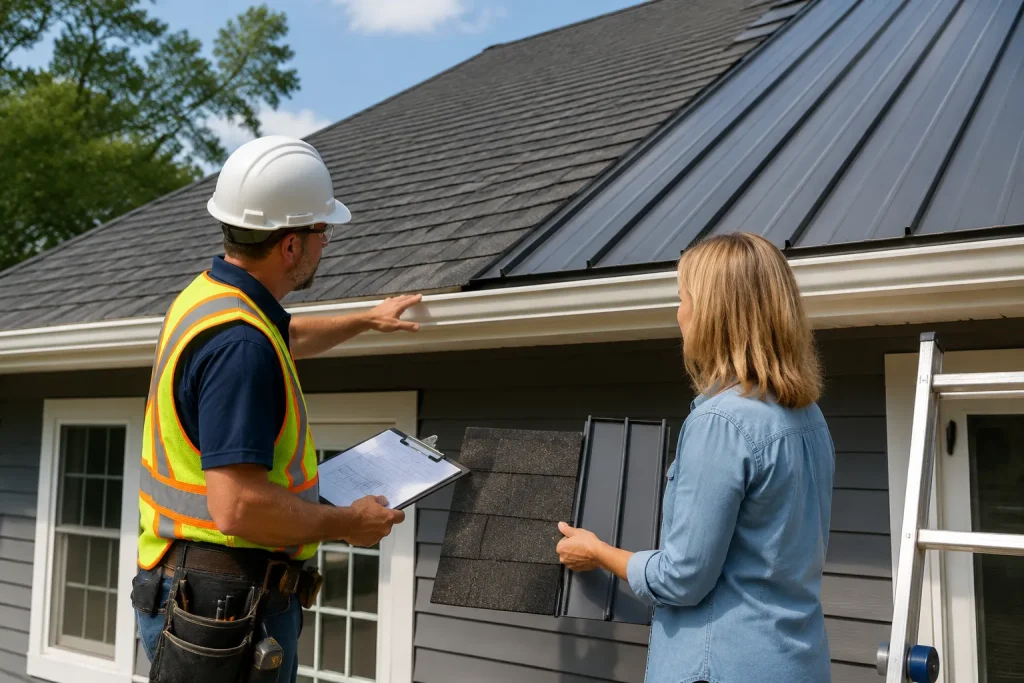
Your local climate matters.
In areas with heavy rain, high winds, snow, wildfire risk, or intense sun, a strong roof system may be worth more. The Insurance Institute for Business & Home Safety explains through its FORTIFIED Roof program that a stronger roof system can help keep wind and rain out during severe weather.
This does not mean metal is always the only answer. A properly installed asphalt shingle roof with sealed decking, strong flashing, and correct fastening can also perform well.
The best roof is not just the most expensive one. It is the roof system that fits your home, climate, budget, and installation quality.
When to Call a Roofing Professional
You should call a roofing professional before choosing between metal and shingles if you notice any warning signs or if your roof is older.
Call a contractor if you see:
- Missing shingles
- Rusted metal panels
- Loose or backed-out screws
- Water stains on ceilings
- Sagging roof sections
- Granules collecting in gutters
- Cracked flashing
- Soft or rotted decking
- Leaks around skylights or chimneys
- Moldy attic sheathing
- Poor attic ventilation
- Storm or hail damage
A professional inspection can help answer three important questions:
- Does the roof need repair or full replacement?
- Is the roof structure suitable for metal?
- Which roofing system gives the best value for this home?
Do not rely only on a quick visual look from the ground. Some roof problems are hidden under old shingles, around flashing, or inside the attic.
Questions to Ask Before Choosing Metal or Shingles
Before signing a roofing contract, ask practical questions.
- How long do I plan to stay in this home?
- Is my current roof deck in good condition?
- Does my HOA allow metal roofing?
- Which metal type and gauge are included?
- Are fasteners exposed or concealed?
- What underlayment will be used?
- Is ventilation included in the quote?
- What flashing details are included?
- Who handles permits?
- What does the workmanship warranty cover?
- Is the crew experienced with this exact roof system?
A cheap metal roof quote can become expensive if the installation is poor. A higher quote may be fair if it includes better materials, better flashing, and stronger workmanship protection.
Common Mistakes Homeowners Should Avoid
- Comparing only the final price: A low quote may leave out tear-off, decking repair, ventilation, or proper flashing.
- Assuming all metal roofs are the same: Exposed-fastener panels and standing seam systems are very different.
- Ignoring contractor experience: Metal roofing requires skill. Ask for recent local examples.
- Skipping attic ventilation: Poor ventilation can shorten the life of any roof system.
- Choosing based only on appearance: A roof should match your climate, home structure, and budget.
- Overlooking HOA rules: Some neighborhoods restrict metal roof colors, profiles, or finishes.
- Trying risky DIY work: Roof work can be dangerous, especially on steep or slick surfaces.
- Not reading the warranty: Material warranties and workmanship warranties are not the same.
- Forgetting future maintenance: Even metal roofs need inspections, cleaning, and occasional maintenance.
FAQs
How much more is a metal roof than shingles on average?
A metal roof is often about 1.5 to 3 times more expensive than asphalt shingles upfront. The exact difference depends on roof size, metal type, labor rates, roof complexity, and whether you choose exposed-fastener panels or standing seam metal roofing.
Is a metal roof cheaper in the long run?
A metal roof can be cheaper in the long run if it lasts much longer than shingles and avoids one or more future replacements. However, this depends on proper installation, climate, maintenance, and how long you stay in the home.
Does a metal roof increase home value?
A metal roof may improve resale appeal for some buyers, especially in areas where durability, energy performance, or storm resistance matters. However, resale value depends on the local market, roof style, color, installation quality, and buyer preferences.
Is standing seam metal worth the extra cost?
Standing seam metal can be worth the extra cost if you want concealed fasteners, a clean modern appearance, and strong long-term performance. It is usually more expensive than exposed-fastener metal, but it is often considered a higher-quality residential option.
Are asphalt shingles still a good choice?
Yes. Asphalt shingles are still a good choice for many homeowners because they are affordable, widely available, and familiar to contractors. Architectural shingles can offer a good balance of cost, appearance, and durability.
Can I install a metal roof over shingles?
Sometimes, but it depends on local building code, roof condition, number of existing layers, ventilation, decking quality, and manufacturer instructions. A roofing professional should inspect the roof before recommending this approach.
What is the biggest hidden cost in a roof replacement?
Deck repair, flashing work, tear-off, disposal, and ventilation upgrades are common hidden costs. These items can affect both metal and shingle roof quotes, so homeowners should ask for detailed written estimates.
Conclusion
So, how much more is a metal roof than shingles? In many cases, expect metal roofing to cost about 1.5 to 3 times more upfront than asphalt shingles. That price difference comes from higher material costs, specialized labor, more detailed flashing, and the long-term nature of the system.
Shingles are often the best choice when budget is the main concern. Metal roofing may be the better choice when you want a longer-lasting roof, plan to stay in the home, or need stronger performance in a demanding climate.
The smartest next step is to get detailed quotes for both options from qualified local roofing contractors. Compare the full roof system, not just the price. A well-installed roof—whether metal or shingles—protects your home, your budget, and your peace of mind.