
Do Metal Roofs Reflect Heat? A Homeowner’s Guide to Cooler Roofing

If your home gets hot in summer, your roof may be part of the problem. Many homeowners ask, do metal roofs reflect heat, or do they make a house hotter because metal itself gets warm in the sun?
The simple answer is that metal roofing can reflect a meaningful amount of solar heat, especially when it has a light color or a heat-reflective coating. But the full story depends on the roof color, finish, insulation, attic ventilation, roof design, and climate.
This guide explains how metal roofs handle heat, when they can help lower cooling demand, what limitations to understand, and what homeowners should ask before choosing a metal roof.
Quick Answer
Yes, metal roofs can reflect heat, especially when they use light colors or cool-roof coatings. A reflective metal roof can absorb less solar energy than many dark roofing materials, helping the roof surface stay cooler and reducing heat transfer into the home. However, insulation, ventilation, color, and installation quality still matter.
How Metal Roofs Reflect Heat
Metal roofs reflect heat by bouncing part of the sun’s energy away from the roof surface. This is called solar reflectance. In plain English, it means the roof sends some sunlight back instead of absorbing it as heat.
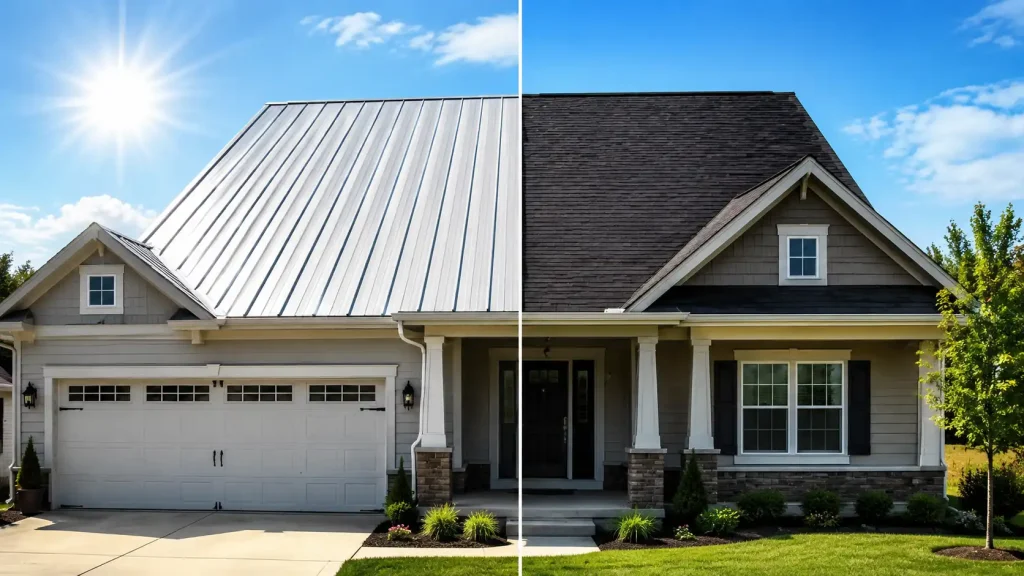
A roof that absorbs more sunlight gets hotter. A roof that reflects more sunlight stays cooler. The U.S. Department of Energy explains that a cool roof is designed to reflect more sunlight and absorb less solar energy, which can reduce roof temperature and heat transfer into the building.
Metal roofing is often a good candidate for reflective performance because it can be finished with durable paint systems, special pigments, and coatings that improve heat reflection.
However, not every metal roof performs the same way. A bright white standing seam roof and a dark bronze metal roof will not handle heat equally.
Reflectance vs. Emittance: Two Terms Homeowners Should Know
When comparing roofing materials, contractors may mention two technical terms: solar reflectance and thermal emittance. These sound complicated, but they are easy to understand.
Solar Reflectance
Solar reflectance measures how much sunlight a roof reflects.
A higher reflectance number usually means the roof absorbs less heat. Light-colored metal roofs often have better solar reflectance than dark-colored roofs.
Thermal Emittance
Thermal emittance measures how well a roof releases heat after it absorbs it.
A roof with good thermal emittance can cool down more effectively after being heated by the sun. This matters because a roof is exposed to direct sunlight for hours during the day.
The Cool Roof Rating Council provides a roof product directory with solar reflectance, thermal emittance, and SRI ratings, which can help homeowners compare products using measured data instead of marketing claims.
Do Metal Roofs Keep Houses Cooler?
A reflective metal roof can help keep a home cooler, but it does not work alone. The roof is only one part of the home’s heat-control system.
A metal roof may help reduce indoor heat when:
- The roof has a reflective finish
- The color is light or uses cool pigments
- The attic has proper ventilation
- The home has enough insulation
- The roof is installed over the right underlayment
- Air leaks in the attic are sealed
Important point: A metal roof can reduce heat gain from the sun, but it cannot fix poor attic insulation, blocked vents, or major air leaks by itself.
For example, a homeowner in Texas with a light-colored standing seam metal roof, proper attic ventilation, and good insulation may notice a more comfortable attic and lower cooling strain. A homeowner with a dark metal roof over a poorly ventilated attic may see much less benefit.
Does Roof Color Matter?
Yes. Roof color is one of the biggest factors in how much heat a metal roof reflects.
Light colors usually reflect more sunlight. Dark colors usually absorb more heat. This is true for metal roofs, asphalt shingles, tile, and other roofing materials.
Common reflective metal roof colors include:
- White
- Light gray
- Beige
- Light tan
- Galvalume or light metallic finishes
- Some “cool color” finishes with reflective pigments
Dark colors can still perform better if they use special cool-roof pigments, but they usually do not reflect as much sunlight as lighter colors.
Best homeowner takeaway: If heat reduction is a major goal, ask your contractor for the roof’s tested reflectance or SRI rating, not just the color name.
Metal Roof Heat Performance by Color and Finish
| Metal Roof Type | Heat Reflection Potential | Best For | Homeowner Note |
|---|---|---|---|
| White painted metal roof | Very high | Hot climates, sunny regions | Often one of the best options for heat reflection |
| Light gray or light tan metal roof | High | Homes needing curb appeal and cooling help | Good balance of appearance and performance |
| Bare Galvalume-style metal | Moderate to high | Utility buildings, modern homes, some residential roofs | Performance depends on finish and surface aging |
| Dark painted metal roof | Low to moderate | Design-focused homes, colder climates | May absorb more heat unless it uses cool pigments |
| Cool-color metal roof | Moderate to high | Homeowners who want darker colors with better performance | Ask for actual product ratings |
Are Metal Roofs Better Than Asphalt Shingles for Reflecting Heat?
In many cases, metal roofs can reflect more heat than traditional dark asphalt shingles, especially when the metal roof is light-colored or has a cool-roof coating.
Standard dark asphalt shingles often absorb a lot of solar heat. Metal roofing can be designed with reflective coatings that improve performance. ENERGY STAR notes that cool roof materials can lower roof surface temperature and reduce heat transferred into a building.
That does not mean every metal roof is automatically cooler than every shingle roof. A dark metal roof may absorb more heat than a light-colored cool-rated asphalt shingle. Product rating matters more than material name alone.
What Is Solar Reflectance Index?
Solar Reflectance Index, often called SRI, combines reflectance and emittance into one number. It helps show how cool a roofing surface is likely to stay in the sun.
A higher SRI usually means better cool-roof performance.
For homeowners, SRI is useful because it makes product comparison easier. Instead of guessing whether a color or coating is “energy efficient,” you can ask for the SRI rating.
When shopping for a metal roof, ask:
- What is the initial solar reflectance?
- What is the aged solar reflectance?
- What is the thermal emittance?
- What is the SRI?
- Is the roof listed in a third-party rating directory?
The aged rating matters because roofing surfaces can lose reflectivity over time due to dirt, oxidation, weathering, and surface wear.
Do Metal Roofs Make Attics Hotter?
A metal roof can get hot on the surface, just like other roofing materials. The key question is how much of that heat moves into the attic and living space.
A properly installed metal roof can help reduce attic heat when it includes:
- Quality underlayment
- Correct fastening or panel attachment
- Proper attic ventilation
- Adequate insulation
- Good air sealing
- A reflective finish
In some roof assemblies, metal panels may also create a small air space or be installed over battens. This can help reduce direct heat transfer, depending on the design.
But if the attic has poor ventilation, missing insulation, or blocked soffit vents, the house may still feel hot even with a reflective metal roof.
The Role of Attic Ventilation
Attic ventilation helps remove hot, humid air from the roof cavity. This is important because heat can build up under any roofing material.
Good ventilation usually includes both intake and exhaust:
- Intake vents bring cooler outside air into the attic, often through soffit vents.
- Exhaust vents let hot air escape, often through ridge vents, roof vents, or gable vents.
A reflective roof reduces heat absorption at the surface. Ventilation helps manage the heat and moisture that still enter the attic.
Warning: Do not block attic vents with insulation. Blocked vents can trap heat and moisture, which may shorten roof life and increase comfort problems.
The Role of Insulation
Insulation slows heat movement between the attic and living space. Even if a metal roof reflects heat well, poor insulation can allow unwanted heat to move into the rooms below.
For homeowners, insulation is often just as important as the roofing material.
Signs your insulation may need attention include:
- Upstairs rooms are much hotter than downstairs rooms
- Air conditioning runs constantly
- Attic feels extremely hot
- Energy bills rise sharply in summer
- Some rooms are difficult to cool
- Ice dams appear in winter climates
A metal roof can improve performance, but insulation helps protect comfort inside the home.
Do Reflective Metal Roofs Lower Energy Bills?
A reflective metal roof can help lower cooling demand, especially in hot and sunny climates. However, energy savings vary from house to house.
Savings depend on:
- Local climate
- Roof color
- Roof slope and sun exposure
- Attic insulation
- Ventilation
- Air sealing
- HVAC efficiency
- Electricity rates
- Shade from trees or nearby buildings
A homeowner in Arizona, Florida, Texas, or Georgia may benefit more from a reflective roof than a homeowner in a colder northern climate. In mixed or cold climates, the decision should balance summer cooling benefits with winter heating needs.
The EPA notes that cool roofs can reduce solar heat gain but may slightly increase winter heating energy use in some cold climates. This does not mean cool roofs are bad in colder areas, but it does mean climate should be part of the decision.
Benefits of Reflective Metal Roofs
Reflective metal roofing can offer several practical homeowner benefits.
Lower Roof Surface Temperature
A reflective finish can keep the roof surface cooler on sunny days. This may reduce heat moving into the attic.
Better Summer Comfort
Homes with good insulation and ventilation may feel more comfortable during hot weather.
Reduced Cooling Load
If less heat enters the home, the air conditioner may not have to work as hard.
Long Service Life
Metal roofs are known for durability when installed correctly. A quality reflective coating can also help protect the roof surface.
Good Performance With Solar Panels
Standing seam metal roofs often work well with solar mounting systems because many systems can attach to seams without penetrating the roof surface.
Fire and Weather Resistance
Metal roofing can offer strong resistance to fire, wind, and impact depending on product type, gauge, coating, and installation method.
Limitations Homeowners Should Understand
Metal roofs are not magic cooling systems. They can help, but they do not solve every comfort or energy issue.
Important limitations include:
- Dark metal roofs can still get hot
- Poor attic ventilation can reduce benefits
- Bad installation can cause leaks or noise issues
- Low-quality coatings may fade or chalk sooner
- Reflectivity can decline if the roof gets dirty
- Energy savings are not the same in every climate
- Metal roofs usually cost more upfront than asphalt shingles
Do not choose a metal roof based only on a promise of lower energy bills. Look at total value, durability, warranty, installation quality, and local climate.
How Much Does a Reflective Metal Roof Cost?
Metal roofing usually costs more than basic asphalt shingles. Prices vary widely by region, roof complexity, metal type, finish, labor rates, tear-off needs, and contractor experience.
Cost factors include:
- Roof size
- Roof pitch
- Number of valleys, dormers, skylights, and chimneys
- Standing seam vs. exposed fastener panels
- Steel, aluminum, copper, or zinc
- Paint system and coating quality
- Underlayment type
- Ventilation upgrades
- Old roof removal
- Local code requirements
A reflective coating or premium cool-roof finish may increase material cost, but it can be worthwhile in hot climates or on homes with strong sun exposure.
For most homeowners, the better question is not only “What is the cheapest roof?” The better question is: Which roof gives the best long-term performance for my home, climate, and budget?
Standing Seam vs. Exposed Fastener Metal Roofs
There are two common residential metal roof styles: standing seam and exposed fastener.
Standing Seam Metal Roofs
Standing seam roofs have raised seams and hidden fasteners. They often look clean and modern. They are usually more expensive, but they can offer strong weather resistance when installed correctly.
Exposed Fastener Metal Roofs
Exposed fastener roofs use screws through the panel surface. They are usually cheaper, but fasteners and washers may need more maintenance over time.
For heat reflection, both styles can perform well if the color and coating are reflective. The bigger differences are usually cost, appearance, leak risk, maintenance, and durability.
Expert Tip
Expert Tip:
Before choosing a metal roof color, ask your contractor for the product’s aged solar reflectance and SRI rating. A color that looks light in a brochure may not perform as well as a tested cool-roof finish.
Warning Signs Your Current Roof Is Holding Too Much Heat
A hot roof does not always mean you need replacement, but some signs deserve attention.
Look for:
- Very hot upstairs rooms
- High summer cooling bills
- Attic temperatures that feel extreme
- Curling or aging shingles on nearby roof sections
- Poor airflow from soffit or ridge vents
- Dark roof color in a hot climate
- HVAC system struggling on sunny afternoons
- Moisture or musty smells in the attic
- Uneven indoor temperatures
If you see several of these signs, a roofing professional or energy auditor can help determine whether the issue is the roof surface, insulation, ventilation, air sealing, or HVAC system.
When to Call a Roofing Professional
Call a roofing professional when you are comparing metal roof options, dealing with heat problems, or planning a full roof replacement.
A qualified contractor can inspect:
- Roof decking condition
- Existing roof layers
- Attic ventilation
- Flashing around chimneys and skylights
- Fastener quality
- Underlayment needs
- Roof slope and drainage
- Code requirements
- Whether your home is a good fit for metal roofing
You should also call a professional if you notice leaks, loose panels, rust, damaged flashing, missing fasteners, or storm damage.
Safety warning: Do not climb on a metal roof to inspect heat, coatings, panels, or fasteners unless you have proper fall protection and roofing experience. OSHA’s residential fall protection guidance explains why fall hazards are a serious concern in roofing work.
DIY vs. Professional Metal Roof Decisions
| Task | DIY-Friendly? | Better Handled by a Professional? | Why It Matters |
|---|---|---|---|
| Comparing roof colors | Yes | Sometimes | Homeowners can review colors, but ratings should be verified |
| Checking attic heat from inside | Yes | Sometimes | You can look for obvious issues, but avoid unsafe areas |
| Inspecting roof panels from the ground | Yes | Sometimes | Binoculars can help without climbing |
| Walking on a metal roof | No | Yes | Metal roofs can be slippery and dangerous |
| Installing metal panels | No | Yes | Incorrect installation can cause leaks and warranty issues |
| Upgrading ventilation | Sometimes | Yes | Ventilation must be balanced and code-compliant |
| Repairing flashing | No | Yes | Flashing errors are a common source of leaks |
How to Choose a Metal Roof That Reflects Heat Well
Choosing a reflective metal roof is not just about picking a color. Use a practical process.
1. Start With Your Climate
If you live in a hot, sunny region, reflectivity may be a top priority. If you live in a cold climate, durability, snow shedding, insulation, and ice management may matter more.
2. Ask for Product Ratings
Ask for solar reflectance, thermal emittance, and SRI. Do not rely only on general claims like “energy efficient” or “cool roof.”
3. Compare Light and Cool-Color Options
White and light gray often perform well. If you prefer a darker color, ask whether cool pigments are available.
4. Review the Paint System
High-quality factory-applied finishes usually last longer than cheap coatings. Ask about fade resistance, chalk resistance, and warranty terms.
5. Check Attic Ventilation
A reflective roof works better when the attic can breathe properly.
6. Review Insulation
Insulation helps keep outdoor heat from reaching the rooms below.
7. Hire an Experienced Metal Roofing Contractor
Metal roofing requires careful detailing. Poor installation can reduce performance and cause leaks.
Common Mistakes Homeowners Should Avoid

- Assuming all metal roofs reflect heat equally. Color, coating, and rating make a big difference.
- Choosing the darkest color in a hot climate without checking SRI. Dark roofs can absorb more heat.
- Ignoring attic ventilation. A reflective roof cannot fully overcome a poorly ventilated attic.
- Skipping insulation improvements. Roofing and insulation work together.
- Only comparing upfront price. A cheaper roof may cost more later if it performs poorly.
- Hiring a contractor with little metal roofing experience. Metal roof installation is not the same as shingle installation.
- Believing every “energy-saving” claim. Ask for tested product data.
- Walking on the roof yourself. Metal panels can be slippery and unsafe.
- Forgetting maintenance. Dirt, debris, and clogged gutters can affect performance and drainage.
- Ignoring local codes and HOA rules. Some areas have color, material, or reflectivity requirements.
Maintenance Tips for Better Heat Performance
A reflective metal roof needs basic care to keep performing well.
Helpful maintenance steps include:
- Keep gutters clean
- Remove leaves and branches from roof valleys
- Trim overhanging trees when needed
- Rinse dirt from safe ground-level areas if recommended by the manufacturer
- Check for coating damage after storms
- Watch for rust on exposed edges or scratches
- Have fasteners and flashing inspected regularly
- Keep attic vents clear
Do not use harsh chemicals or pressure washing unless the roof manufacturer allows it. Aggressive cleaning can damage coatings.
Repair or Replace: What Makes Sense?
If your current roof is hot but still in good condition, you may not need replacement right away. Sometimes ventilation or insulation upgrades provide better value.
Consider repair or improvement when:
- The roof is relatively new
- There are no major leaks
- Heat problems seem attic-related
- Ventilation is blocked or unbalanced
- Insulation is missing or thin
Consider replacement when:
- The roof is near the end of its life
- Leaks are recurring
- Storm damage is widespread
- Decking is damaged
- You want a long-term roofing upgrade
- You are already planning solar panels or major exterior improvements
A roofing contractor and energy professional can help you decide whether the best next step is roof replacement, ventilation work, insulation, or a combination.
FAQs
Do metal roofs reflect heat better than shingles?
Many metal roofs can reflect heat better than traditional dark asphalt shingles, especially when they have light colors or cool-roof coatings. However, the actual performance depends on the product’s reflectance, emittance, SRI rating, color, and installation.
Do dark metal roofs reflect heat?
Dark metal roofs reflect less heat than light-colored metal roofs. Some dark metal roofs use special cool pigments that improve performance, but they usually still absorb more heat than white or light gray options.
Will a metal roof make my house cooler?
A reflective metal roof can help reduce heat entering the attic, especially in hot sunny climates. But indoor comfort also depends on insulation, ventilation, air sealing, windows, shade, and HVAC performance.
Are white metal roofs the best for heat reflection?
White metal roofs are often among the best choices for heat reflection because white surfaces usually reflect more sunlight. Light gray, tan, and cool-color finishes can also perform well if they have strong tested ratings.
Do metal roofs get hot to the touch?
Yes, metal roofs can get hot in direct sun. The important issue is not just surface temperature, but how much heat transfers into the attic and home. Reflective coatings, ventilation, and insulation help control that transfer.
Is a reflective metal roof worth the cost?
A reflective metal roof can be worth it if you live in a hot climate, plan to stay in the home, want long-term durability, and need a roof replacement anyway. The value is strongest when installation quality, ventilation, and insulation are also addressed.
Can I add a reflective coating to an existing metal roof?
Sometimes, yes. Some existing metal roofs can be cleaned, prepared, and coated with a reflective roof coating. However, the roof must be inspected first. Coating over rust, leaks, loose fasteners, or bad flashing can hide problems instead of solving them.
Conclusion
So, do metal roofs reflect heat? Yes, they can—especially when they are light-colored, properly coated, and installed as part of a well-designed roofing system. A reflective metal roof can reduce solar heat absorption, help lower attic heat, and support better summer comfort.
But the best results come from the full system: roof color, coating quality, attic ventilation, insulation, underlayment, and professional installation. Before choosing a metal roof, ask for tested product ratings and get a thorough inspection of your current roof and attic.
For homeowners, the smartest next step is to compare real product data, choose a qualified metal roofing contractor, and make a decision based on your climate, budget, comfort goals, and long-term roof performance.