
Do Metal Roofs Attract Lightning? A Homeowner’s Guide to Roof Safety
If you are thinking about installing a metal roof, one question may worry you: do metal roofs attract lightning? It is a common concern because metal conducts electricity. Many homeowners assume a metal roof makes a house more likely to be struck during a thunderstorm.
The good news is simple: a metal roof does not attract lightning. Lightning is more influenced by height, location, storm conditions, and the path of least resistance than by roofing material alone.
Still, lightning safety matters. A strike can damage wiring, electronics, roof components, gutters, appliances, and even start a fire if the home is not properly protected. This guide explains what metal roofs really do during lightning storms, when lightning protection may be worth considering, and what homeowners should ask before hiring a contractor.
Quick Answer
Metal roofs do not attract lightning. A metal roof is no more likely to be struck than asphalt shingles, tile, or wood. However, metal conducts electricity, so if lightning does strike, the roof and home should be properly grounded or protected by a professionally installed lightning protection system.
Why Homeowners Think Metal Roofs Attract Lightning
The confusion usually comes from one basic fact: metal conducts electricity.
That part is true. Metal can carry electrical current. But conducting electricity is not the same as attracting lightning.
Lightning does not “look for” metal roofs. It usually strikes objects based on factors such as:
- Height above nearby objects
- Location on open land or a hill
- Storm intensity
- Nearby trees, poles, towers, or chimneys
- The electrical charge between the cloud and ground
A metal roof on a low one-story home surrounded by taller trees is not automatically a lightning target. A tall chimney, tree, antenna, or rooftop equipment may be more important to the strike path than the roofing material itself.
The Metal Construction Association explains that metal roofing is no more or less likely to be struck by lightning than any other roofing material. This is why homeowners should focus less on the myth and more on proper installation, grounding, surge protection, and overall storm safety.
What Actually Happens If Lightning Hits a Metal Roof?
If lightning strikes a home, the energy tries to move toward the ground. A metal roof can conduct that energy across its surface. That sounds scary, but it can also be helpful when the roof system is properly installed.
Metal is noncombustible, meaning it does not catch fire the way wood shingles or some combustible materials can. This is one reason metal roofing is often considered a strong option for fire resistance.
However, a lightning strike can still cause damage through:
- Electrical wiring
- Plumbing
- Appliances
- Solar panels
- Satellite dishes
- HVAC equipment
- Gutters and downspouts
- Poorly grounded metal components
The real issue is not whether the roof is metal. The bigger issue is whether the home has a safe path for lightning energy to reach the ground.
Does a Metal Roof Make a House Safer During Lightning?
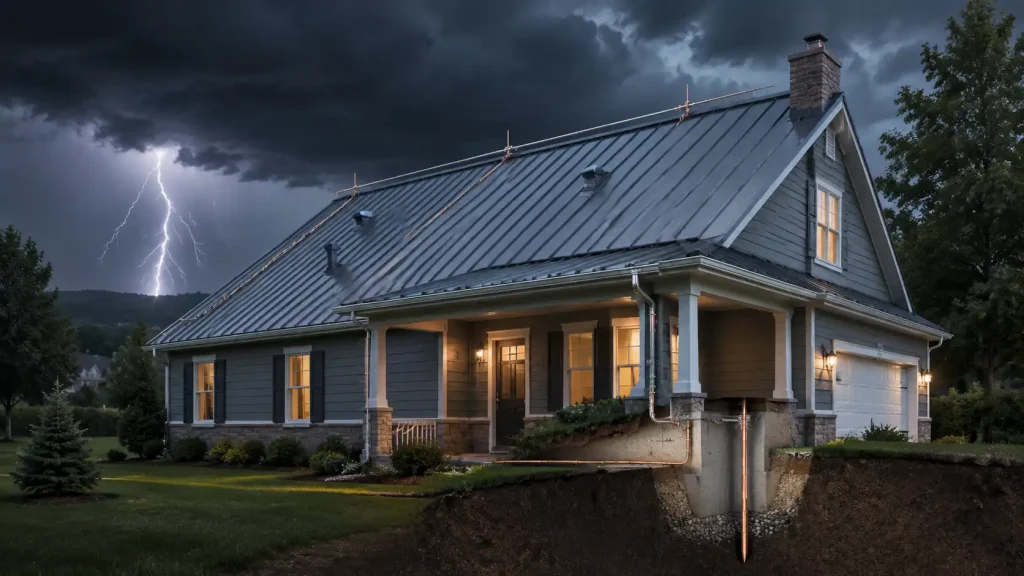
A metal roof can be part of a safer roofing system, but it is not a complete lightning protection system by itself.
Benefits of Metal Roofing During Storms
Metal roofing has several storm-related advantages:
- It is noncombustible.
- It is durable in high winds when properly fastened.
- It sheds rain and snow efficiently.
- It may resist some impact better than weaker materials.
- It can last for decades with proper installation and maintenance.
These benefits do not mean a metal roof prevents lightning damage. They simply mean the material itself is strong and less likely to ignite than combustible roofing.
Limitations Homeowners Should Understand
A metal roof alone does not protect your entire home from lightning. It does not automatically protect:
- Interior wiring
- Electronics
- Smart home systems
- Electrical panels
- Plumbing lines
- Internet and cable connections
- Appliances
- People inside the home who use wired devices during storms
According to NOAA lightning safety guidance, homeowners should go indoors during thunder and stay inside until 30 minutes after the last thunderclap. Even inside a home, it is smart to avoid plumbing, wired electronics, and exterior openings during a storm.
What Makes a Home More Likely to Be Struck by Lightning?
Roofing material is not usually the main factor. Lightning risk depends more on the home’s surroundings and structure.
Higher-Risk Home Conditions
Your home may have higher lightning exposure if it:
- Sits on a hill or ridge
- Is the tallest structure nearby
- Is in an open field or rural area
- Has tall chimneys, antennas, or rooftop equipment
- Is near water
- Is located in a high-lightning region
- Has large trees very close to the home
Homes in Florida, Texas, the Gulf Coast, mountain regions, and open rural areas may need more serious lightning protection planning than homes in lower-risk areas.
Nearby Objects Matter Too
Lightning can hit a tree, pole, or nearby structure and still affect your home. This is called a nearby or indirect strike. It may send energy through the ground, utility lines, cable lines, or plumbing.
That is why surge protection, grounding, and electrical safety matter even if the roof itself is never directly hit.
Metal Roofs, Grounding, and Lightning Protection Systems
A metal roof is not automatically a lightning protection system. A real lightning protection system is a designed network of components that safely directs lightning energy into the ground.
A complete system may include:
- Air terminals, often called lightning rods
- Conductors that carry current
- Ground rods or grounding electrodes
- Bonding between metal systems
- Surge protection
- Professional inspection and certification
The Lightning Protection Institute describes lightning protection as part of a complete grounding and structure protection approach, and homeowners can learn more from the Lightning Protection Institute’s homeowner resources.
Do You Need Lightning Rods on a Metal Roof?
Not every metal roof needs lightning rods. The decision depends on risk.
Lightning protection may be worth discussing with a qualified professional if:
- Your home is tall or exposed
- You live in a high-lightning area
- You have expensive electronics or smart home systems
- You have solar panels
- Your home has a steep metal roof with tall roof features
- Your insurance company recommends it
- You want extra protection for peace of mind
Important: Do not install lightning rods as a DIY project. A poorly installed system can create new risks instead of reducing them.
Helpful Homeowner Table: Metal Roof Lightning Risk Checklist
| Homeowner Question | What It Means | Best Next Step |
|---|---|---|
| Is my home the tallest structure nearby? | Taller structures are more exposed to lightning. | Ask about lightning protection. |
| Do I live in a storm-prone area? | Some regions have more frequent lightning activity. | Consider surge protection and inspection. |
| Does my roof have antennas, solar panels, or tall vents? | Rooftop equipment may need bonding or grounding. | Have a professional evaluate it. |
| Is my electrical panel protected? | Lightning can damage wiring and appliances. | Ask an electrician about whole-house surge protection. |
| Is my metal roof properly installed? | Loose panels or poor fastening can create other storm problems. | Schedule a roof inspection. |
| Are gutters and metal components bonded correctly? | Metal parts should not create unsafe electrical paths. | Ask a lightning protection specialist. |
Can Lightning Damage a Metal Roof?
Yes, lightning can damage any roof system, including metal. Even though metal roofing is durable, a direct strike may leave visible or hidden damage.
Possible damage includes:
- Burn marks
- Small holes or punctures
- Damaged coatings
- Loose fasteners
- Melted sealants
- Damaged flashing
- Gutter or downspout damage
- Electrical damage inside the home
After a serious storm, homeowners should not climb onto the roof. Metal roofs can be slippery, especially when wet. Also, hidden electrical hazards may remain after a strike.
For roofing work, OSHA’s residential fall protection guidance highlights why fall protection is important on residential construction and roofing jobs. Homeowners should treat roof access as a serious safety risk, not a quick inspection task.
Warning Signs After a Lightning Storm
After a strong thunderstorm, walk around your home from the ground and look for obvious problems.
Call for an inspection if you notice:
- Burn marks on the roof, gutters, siding, or chimney
- Tripped breakers
- Flickering lights
- A burning smell
- Damaged electronics
- New roof leaks
- Loose metal panels
- Dented or damaged roof areas
- Melted cable, satellite, or solar components
- Cracked masonry around the chimney
Do not touch damaged metal, wires, panels, or rooftop equipment after a suspected strike. Call a roofing contractor, electrician, or lightning protection specialist depending on the damage.
Expert Tip:
If you are installing a new metal roof, ask the contractor how roof penetrations, gutters, solar mounts, antennas, and metal accessories will be handled. These details matter for long-term storm performance, water protection, and electrical safety.
Cost Considerations for Lightning Protection
Lightning protection costs vary because every home is different. A small one-story home with a simple roof is usually less complex than a large home with steep slopes, dormers, chimneys, solar panels, and multiple rooflines.
Cost depends on:
- Roof size
- Roof height and pitch
- Number of air terminals
- Grounding requirements
- Home layout
- Electrical system complexity
- Local labor rates
- Inspection or certification needs
A homeowner should not choose based only on the lowest price. Poorly installed lightning protection may fail when needed and may damage the roof if mounted incorrectly.
When comparing estimates, ask:
- Is the system designed for my specific home?
- Will it follow recognized lightning protection standards?
- Will the roof warranty be protected?
- Will metal roofing panels be penetrated or clamped?
- Will surge protection be included?
- Will the system be inspected after installation?
Metal Roofs and Fire Safety
Metal roofing is often valued because it is noncombustible. If lightning strikes, the roof material itself is less likely to ignite than wood shakes or other combustible materials.
However, fire can still start inside the home if lightning travels through wiring, appliances, or other conductive paths. This is why metal roofing should not be treated as a complete fire-prevention system.
Homeowners should also consider:
- Smoke alarms
- Surge protection
- Electrical inspections
- Proper attic ventilation
- Safe roof penetrations
- Correct flashing around chimneys and vents
The emergency preparedness guidance at Ready.gov on thunderstorms and lightning also recommends considering surge protectors, lightning rods, or a lightning protection system to help protect homes and devices.
Should Lightning Concerns Stop You From Choosing a Metal Roof?

For most homeowners, lightning should not be the reason to avoid metal roofing.
A properly installed metal roof can be a strong choice because it offers:
- Long service life
- Good wind resistance
- Fire resistance
- Low maintenance
- Strong rain shedding
- Energy efficiency potential
- Good performance in many climates
The bigger decision should be whether metal roofing fits your budget, home style, local climate, and contractor quality.
When Metal Roofing May Be a Smart Choice
Metal roofing may be a good option if:
- You plan to stay in the home long-term
- You want a durable roof
- You live in an area with heavy rain or snow
- You want a fire-resistant roofing material
- You are willing to pay more upfront for longer service life
- You can hire an experienced metal roofing installer
When You Should Be More Careful
Be cautious if:
- The contractor has little metal roofing experience
- The estimate is much lower than others
- The roof has many complex details
- The contractor cannot explain flashing
- The roof warranty is unclear
- You are adding solar panels or rooftop equipment
- You live in a high-lightning area but nobody discusses grounding or surge protection
A metal roof is only as good as its installation. Poor fastening, poor flashing, and careless penetrations can create leaks and storm problems.
When to Call a Roofing Professional
Call a roofing professional if you have a metal roof and notice storm damage, leaks, loose panels, or damaged flashing. Also call if you are planning to install a metal roof and want to understand how the roof system will work with gutters, vents, chimneys, skylights, or solar panels.
You should call a roofing professional when:
- You see damage after a thunderstorm
- Water appears inside after heavy rain
- Panels look lifted, loose, or shifted
- Fasteners appear backed out
- Flashing is bent or separated
- A tree or branch hit the roof
- You are adding rooftop equipment
- You are replacing asphalt shingles with metal
- You need documentation for insurance
For lightning protection, you may also need an electrician or certified lightning protection specialist. A roofing contractor can inspect the roof surface, but electrical grounding and lightning protection require specific training.
DIY Limitations Homeowners Should Know
Homeowners can safely inspect from the ground, take photos, and note visible changes. But roof climbing is risky, especially on metal.
Avoid DIY work if:
- The roof is steep
- The surface is wet
- The home is two stories or higher
- There are electrical concerns
- You suspect lightning damage
- You need to touch wires, solar equipment, or metal components
- You do not have fall protection equipment
Never climb onto a roof during or right after a lightning storm. Wait until the storm has fully passed and call qualified help if damage is suspected.
Common Mistakes Homeowners Should Avoid
- Assuming metal roofs attract lightning. They do not. Risk depends more on height, location, and storm conditions.
- Ignoring surge protection. Lightning damage often enters through electrical and utility lines.
- Hiring an inexperienced metal roof installer. Metal roofing requires correct fastening, flashing, and detailing.
- Installing lightning rods yourself. Lightning protection must be designed and grounded correctly.
- Touching damaged metal after a storm. Electrical hazards may still exist.
- Forgetting about rooftop equipment. Antennas, solar panels, and satellite dishes may need proper bonding and grounding.
- Choosing only by price. Cheap work can lead to leaks, poor protection, and warranty problems.
- Skipping inspections after severe storms. Some damage is not obvious from the ground.
FAQs
Do metal roofs attract lightning more than shingles?
No. Metal roofs do not attract lightning more than asphalt shingles, tile, or wood. Lightning is more affected by height, location, and storm conditions than by the roof material.
Is a metal roof safe during a thunderstorm?
Yes, a properly installed metal roof is generally safe during a thunderstorm. The roof does not make your home a lightning target. Still, you should stay indoors, avoid plumbing, and avoid wired electronics during lightning.
Do I need lightning rods with a metal roof?
Not always. Some homes benefit from lightning protection, especially tall, exposed, rural, or high-value homes. A professional can evaluate your home’s risk and recommend whether a system is worthwhile.
Can lightning cause a metal roof to leak?
Yes, a direct strike can damage panels, flashing, fasteners, sealants, or roof penetrations. If you notice leaks after a storm, schedule a roof inspection.
Will a metal roof protect my electronics from lightning?
No. A metal roof does not protect electronics by itself. Whole-house surge protection and proper grounding are better ways to reduce the risk of damage to appliances and electronics.
Can I inspect my metal roof myself after lightning?
You can inspect from the ground, but avoid climbing onto the roof. Metal roofs can be slippery, and lightning-related damage may involve electrical hazards. Call a roofing professional if you suspect damage.
Is metal roofing a good choice in storm-prone areas?
Often, yes. Metal roofing can perform well in storm-prone areas when installed correctly. It is durable, noncombustible, and long-lasting, but it still needs proper flashing, fastening, maintenance, and storm protection planning.
Conclusion
So, do metal roofs attract lightning? No. A metal roof does not make your home more likely to be struck. Lightning is guided more by height, exposure, storm conditions, and grounding paths than by roofing material.
Metal roofing can be a durable, fire-resistant, and long-lasting choice for many homeowners. But it should be installed by an experienced contractor, inspected after severe storms, and paired with proper electrical safety measures when needed.
If you are considering a metal roof, do not let the lightning myth stop you. Instead, ask better questions: Is the roof installed correctly? Is the home properly grounded? Do I need surge protection? Should a lightning protection specialist evaluate my home?
The smartest next step is to speak with a qualified roofing contractor who understands metal roofing and can explain the best storm-safety options for your home.