
Roof Estimating Tools: How to Choose the Right Setup for Faster, More Accurate Bids

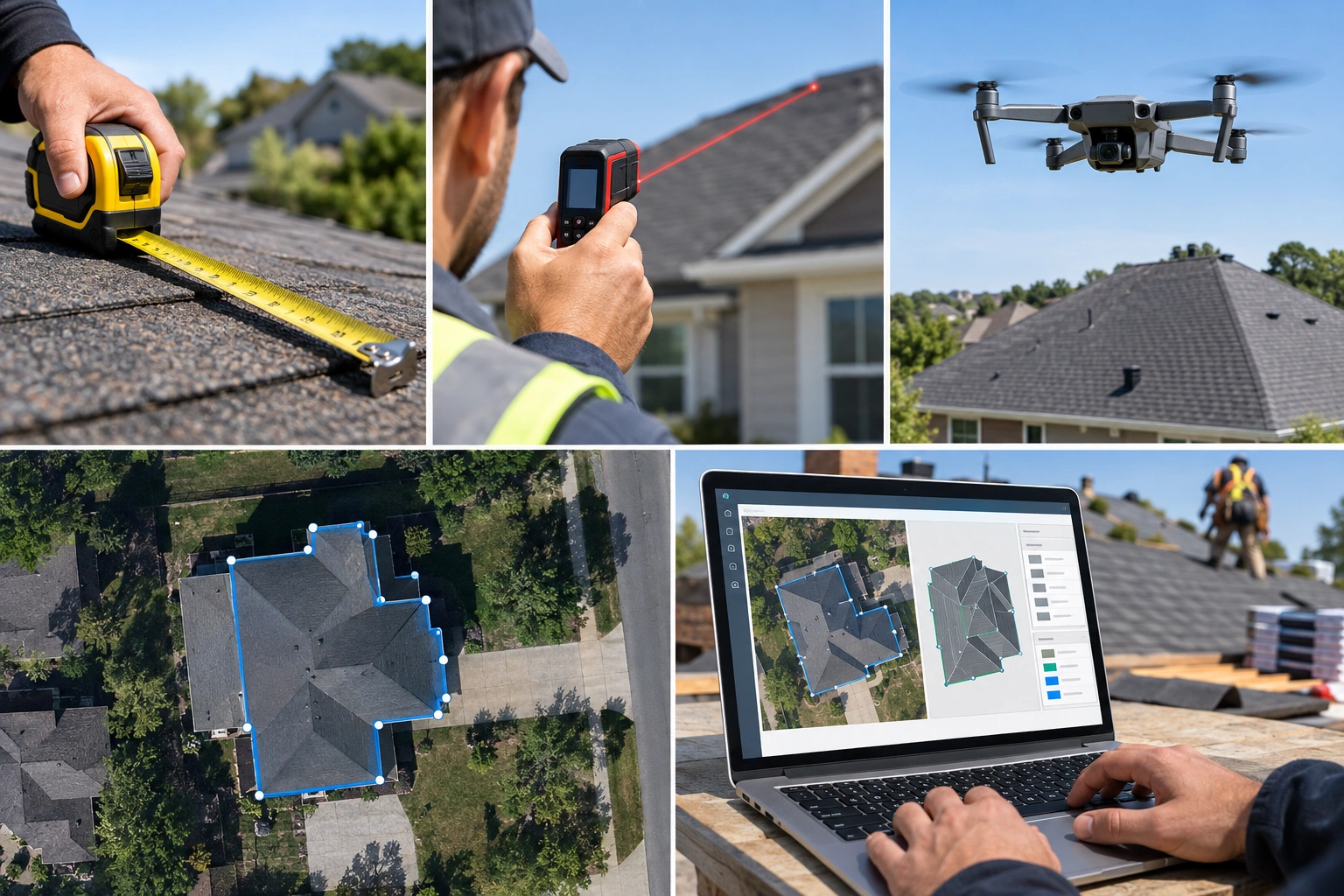
Roof estimating tools are not just one product type. They cover everything from a tape measure and pitch gauge to drone mapping, satellite measurements, and full roofing estimating software. If you price roofs for a living, the goal is the same every time: get the roof area right, translate it into materials and labor, and send a bid that holds up in the real world.
For a DIY homeowner, the job is simpler. You may only need enough accuracy to buy the right amount of shingles, underlayment, and flashing for a single roof repair or small replacement. For a contractor, the tool has to do more: save time, reduce rework, and produce a clean estimate your crew and customer can trust.
A simple ranch roof does not need the same workflow as a steep, multi-slope roof with dormers, valleys, and trim details. Once you match the tool to the roof, the budget, and the frequency of use, the choice gets much easier.
What Roof Estimating Tools Actually Do
At the core, roof estimating tools help you answer four questions:
- How big is the roof?
- What is the pitch?
- How much material does that roof need?
- What will the job cost in materials, labor, and overhead?
That sounds simple, but each step can be handled in different ways. A tape measure and pitch gauge can get you there manually. A laser measurer can speed up part of the process. Aerial measurement services can give you a roof model without climbing up. Roofing estimating software can turn the numbers into a takeoff, proposal, and sometimes a full bid package.
The important distinction is this: measurement accuracy is not the same as estimate accuracy. You can measure a roof correctly and still underbid it if you forget waste, starter, ridge, flashing, steep-slope labor, or disposal. The best tool is the one that helps you measure and estimate in the same workflow.
If you want a deeper breakdown of the measuring side only, this companion guide on roof measuring tools is worth reading alongside this one.
Best Roof Estimating Tool Types at a Glance
Here is the fast comparison I’d give a new estimator standing in the yard with a clipboard.
| Tool type | Accuracy potential | Speed | Cost model | Ease of use | Best fit |
|---|---|---|---|---|---|
| Tape measure + pitch tool | Good on simple roofs | Slow | One-time purchase | Easy to learn | DIY jobs, small repairs, low-volume use |
| Measuring wheel | Fair for ground-level dimensions | Moderate | One-time purchase | Easy | Simple footprints, rough checks |
| Laser distance measurer | Good for accessible points | Fast | One-time purchase | Moderate | Quick verification, small crews, interior/exterior checks |
| Drone measurement | Good on complex roofs when flown well | Fast once set up | Equipment purchase or service fee | Moderate to advanced | Steep, large, or hard-to-access roofs |
| Satellite/aerial service | Good for many standard roofs | Very fast | Per-report or subscription | Easy | Contractors who need speed and repeatability |
| Roofing estimating software | Depends on input quality | Fast after setup | Subscription or license | Moderate | Contractors who need takeoff, pricing, and proposals |
The right category usually comes down to the roof and the user. For a simple ranch roof, a manual or light digital setup may be enough. For a steep or cut-up roof, aerial measurement or software can reduce repeat work. For a high-volume contractor, the best setup is often the one that gets from measurement to bid with the fewest handoffs.
Manual vs digital vs app-based: which fits the same roof?
For the same roof scenario, the best tool changes with complexity:
- Simple ranch roof: manual tools are often enough if you only need a material count or a quick bid.
- Small repair or replacement: a laser measurer plus a mobile app can be a practical middle ground.
- Steep or complex roof: aerial measurement or drone capture is usually more efficient than repeated roof access.
- High-volume bidding workflow: software with takeoff and proposal features is usually the better fit because it reduces duplicate entry.
That does not mean every complex roof requires the most expensive tool. It means the more the roof geometry, safety risk, or bid volume increases, the more a digital workflow tends to make sense.
Manual Roof Estimating Tools: Tape Measures, Measuring Wheels, and Pitch Tools
Manual tools still have a place, and for good reason. They are cheap, simple, and reliable when the roof is straightforward.
A tape measure is still the baseline for checking edges, penetrations, and short distances. A pitch tool or pitch gauge helps you convert slope into the actual roof surface area. A measuring wheel can help on the ground when you need a quick footprint estimate for a basic structure.
The upside is obvious: no subscription, no app learning curve, and no dependency on signal or battery life. The downside is time and exposure. If you are climbing a steep roof to measure everything by hand, the job slows down and the risk goes up.
Manual tools make the most sense when:
– the roof is simple,
– the job is small,
– the budget is tight,
– or you only estimate occasionally.
They are less efficient when the roof has multiple slopes, hips, valleys, dormers, or hard-to-reach sections. In those cases, the manual method often turns into a rough check rather than the main measuring workflow.
Typical price ranges and pricing model
– Tape measure: about $10 to $40 for basic models; specialty versions can cost more.
– Pitch gauge or pitch tool: often $10 to $50.
– Measuring wheel: roughly $30 to $150 depending on build quality.
– Best pricing model: one-time purchase.
Digital On-Site Tools: Laser Measurers, Tablets, and Mobile Apps
Digital on-site tools are where many contractors start to save real time. A laser distance measurer can speed up wall-to-wall and edge-to-edge checks. A tablet or phone app can store notes, calculate areas, and keep photos tied to the estimate.
The value here is not guaranteed accuracy by itself. It is speed, consistency, and fewer math mistakes. A good laser tool can often reduce repeated tape pulls. A mobile app can keep you from losing numbers in a notebook or rebuilding the same takeoff twice.
That said, digital tools still need judgment. A laser measurer only works on what it can see and hit cleanly. Roof geometry, obstructions, and pitch still matter. On a steep roof, you may still need manual verification for edges, overhangs, and anything hidden by the roof shape.
Use digital on-site tools when you want:
– quicker field measurements,
– cleaner documentation,
– and less back-and-forth between the roof and the office.
They are especially useful for repair work, punch-list measurements, and smaller jobs where a full aerial report would be more tool than you need.
Typical price ranges and pricing model
– Laser distance measurer: about $50 to $300+ depending on range and features.
– Tablet or phone apps: often free to low monthly cost, though more specialized apps may charge a subscription.
– Best pricing model: usually a one-time device purchase plus optional app subscription if needed.
Aerial Measurement Options: Satellite Imagery, Drone Measurements, and Outsourced Services
Aerial measurement is the biggest time-saver for contractors who estimate a lot of roofs. Instead of climbing every roof, you can use satellite imagery, drone capture, or a third-party measurement service to generate roof dimensions and slope data.
Satellite and aerial services are attractive because they are fast and repeatable. You can often get a report without sending someone to the site. That is a major advantage when you are bidding multiple homes in a day or dealing with steep roofs that are awkward to access.
Drone roof measurement gives you more control, but it also brings more moving parts. You need the equipment, the operator skill, and the time to capture usable images. For some crews, that is a smart investment. For others, outsourcing is the better move because it avoids the learning curve and keeps the office focused on selling and estimating.
Here is the practical rule:
– If you measure roofs occasionally, a one-time purchase or a per-report service may be the better fit than a subscription.
– If you measure roofs constantly, compare the cost of a service against the time you spend doing it yourself.
– If the roof is complex, steep, or unsafe to access, remote measurement often makes more sense than sending someone up first.
Aerial measurement is not a free pass to skip site verification. Flashing conditions, decking damage, hidden additions, and unusual roof details still need eyes on site before the final bid goes out.
Typical price ranges and pricing model
– Drone setup: roughly several hundred dollars to several thousand dollars depending on camera, software, and workflow needs.
– Aerial/satellite report: often per-report pricing, commonly in the tens of dollars per roof or more depending on service level.
– Aerial software or platform subscriptions: often monthly or annual pricing.
– Best pricing model: per-report for occasional use, subscription for frequent use, or equipment purchase if you plan to run the workflow in-house.
Roof Estimating Software: Features That Matter Most
Roof estimating software is where measurements turn into a usable estimate. The better platforms help you move from roof dimensions to material takeoff, pricing, and proposal output without rebuilding the job in a spreadsheet.
The features that matter most are the ones that save time in the real workflow:
- Accuracy controls: look for clear ways to verify measurements, apply pitch, and account for waste.
- Material takeoff: converts roof area into shingles, underlayment, ridge, starter, and accessory quantities.
- Pitch handling: accounts for slope so you do not estimate a flat footprint when the actual roof surface is larger.
- Reporting: creates a clean summary for the customer or your office.
- Bid output: produces a quote or proposal you can send without manual formatting.
- Plan measurement support: some platforms can measure roof areas and materials directly from digital plans and turn them into bids, which is especially useful on plan-based commercial or new-build work.
- Integrations: connections to CRM, invoicing, scheduling, or job management can reduce duplicate entry.
- Ease of use: a powerful tool is less useful if your team will not adopt it.
- Subscription terms: check whether pricing is monthly, annual, per-user, or tied to report volume.
On Center describes roofing estimating software as a way to measure roof areas and materials from digital plans and turn those quantities into complete bids, using On-Screen Takeoff and Quick Bid in one workflow. That is the kind of integration that matters when you want fewer handoffs and less spreadsheet work. You can see that workflow described on On Center’s roofing estimating software page.
AppliCad’s Roof Wizard is another example of software built around the estimating workflow, with roof modelling, estimating, and 3D presentation across slopes. It also says the software can produce reports such as client quotations, material lists, order forms, and wall elevation drawings. That matters if your jobs need more than a basic material count. See AppliCad’s Roof Wizard overview.
If you need a full business platform, some estimating tools also connect to scheduling, invoicing, and job tracking. JobNimbus describes its estimating feature as part of a broader system tied to those functions, which is useful if your sales and production teams need one place to work from. Their guide is here: JobNimbus roofing estimating software guide.
How to Compare Accuracy, Speed, and Ease of Use
Do not rank tools by accuracy alone. A highly accurate method that takes too long can still lose money if it slows down your sales cycle.
Use this decision framework instead:
Choose accuracy first when:
- the roof is steep or complex,
- the job is expensive,
- or a small measurement error would create a big material shortage.
Choose speed first when:
- you are bidding many roofs each week,
- the homes are fairly standard,
- and you need fast turnaround to win work.
Choose ease of use first when:
- the estimator is a homeowner,
- a new salesperson,
- or a small contractor without a dedicated takeoff person.
A simple ranch roof may be fine with a tape measure, pitch tool, and a calculator. A multi-slope roof with valleys and dormers is a better candidate for aerial measurement or software. The more complex the roof, the more a digital workflow tends to pay off in time saved and fewer mistakes.
Pricing and Total Cost of Ownership
Sticker price is only part of the cost.
A one-time purchase like a tape measure, pitch gauge, or laser measurer is easy to understand. You pay once and use it until it wears out or becomes outdated. That works well for low-volume users and DIY homeowners.
Subscriptions are different. Roofing estimating software and aerial report platforms often charge monthly or yearly fees. That can be worth it if the tool saves enough time, improves close rates, or reduces rework. It can also become expensive if you only use it a few times a year.
When comparing cost, include:
– subscription or license fees,
– per-report measurement charges,
– training time,
– user seats,
– and any extra cost for reporting, proposals, or integrations.
A cheap tool that forces you to rebuild every estimate manually is not really cheap.
Typical cost examples by category
– Manual tools: generally under $150 for a basic setup, depending on what you buy.
– Laser measurer + app workflow: often under $400 to start, before any optional software fees.
– Drone workflow: can range from hundreds to several thousand dollars upfront, plus any software or training costs.
– Aerial reports: often per-report pricing, which may make sense for occasional use.
– Roofing estimating software: commonly subscription-based, so the total cost depends on seats, features, and usage volume.
Which Roof Estimating Tools Fit Contractors vs DIY Homeowners
For DIY homeowners, the best fit is usually a manual or light digital setup:
– tape measure,
– pitch tool,
– basic calculator or app,
– and maybe a laser measurer if the roof is simple and accessible.
That is enough for a repair or a small replacement when you mainly need material quantities.
For roofing contractors, the better choice is usually a workflow tool:
– aerial measurement or digital plan takeoff,
– estimating software,
– and a proposal system that produces a clean bid.
If you are bidding multiple roofs every week, software is often worth the recurring cost because it reduces time spent on repetitive math and document formatting. That is especially true if your estimate needs to feed into scheduling or invoicing later.
The bigger and more complex the business, the less sense it makes to rely on a standalone measuring tool alone.
How Roof Measurements Turn Into Material Takeoffs and Bids
A roof estimate should follow a clear chain:
- Measure the roof area.
- Apply pitch and waste.
- Convert the total into roof squares.
- Turn squares into shingles, underlayment, starter, ridge, and flashing quantities.
- Add labor, disposal, overhead, and profit.
- Present the result in a bid or proposal.
That chain matters because a roof square is only a starting point. A 20-square roof does not automatically mean 20 squares of shingles and nothing else. Valleys, hips, steep slopes, and cut-up layouts usually increase waste and labor. If the software or tool does not help you account for those items, the estimate will look neat but fail in the field.
That is why the best roof estimating tools are not just measurement tools. They are takeoff tools that help you convert geometry into a job cost.
Buyer Checklist: What to Look for Before You Buy
Before you choose a roof estimating tool, check these items:
- Accuracy: can it measure the roof type you actually work on?
- Reporting: does it create a clear report or proposal your customer can understand?
- Takeoff capability: can it convert measurements into material quantities?
- Integrations: will it connect with your CRM, invoicing, scheduling, or accounting tools?
- Ease of use: will your team actually use it consistently?
- Total cost of ownership: what is the real cost after subscriptions, per-report fees, training, and add-ons?
If a tool is strong in only one area but weak in the others, it may still be the right choice for a narrow use case. The key is to buy for the workflow you have, not the workflow you wish you had.
Common Mistakes When Choosing a Roof Estimating Tool
The biggest mistakes are predictable:
- Buying on price alone: cheap tools can cost more later if they slow you down.
- Assuming digital means perfect: software still depends on good inputs.
- Ignoring subscriptions: monthly fees add up fast.
- Choosing a tool that is too advanced: homeowners do not need contractor-grade software for one roof.
- Skipping reporting features: a measurement is not a bid until it is organized.
- Treating aerial measurement as a full site inspection: it is not.
If you avoid those mistakes, you will usually end up with a tool that fits the job instead of fighting it.
Real-World Recommendations by Scenario
Here is the practical version of the decision:
DIY small repair
If you are patching a small area or replacing a few shingles, a tape measure, pitch tool, and calculator are usually enough. A basic laser measurer can help if the roof is easy to access and you want cleaner numbers.
Simple ranch roof
For a straightforward ranch roof, manual tools or a light digital setup often make the most sense. If you only need a material count or a quick bid, paying for a full software stack may not be necessary.
Steep or complex roof
If the roof is steep, cut up, or difficult to access safely, remote measurement or software is often the better option. Drone capture or an aerial report can reduce time on the roof, but the final choice should still account for safety, accuracy, and whether the job volume justifies the cost.
High-volume contractor workflow
If you estimate roofs every week, a recurring software subscription or a per-report aerial service can be worth it. The best setup is usually the one that connects measurement, takeoff, reporting, and proposals with the fewest manual steps.
How to Choose the Right Roof Estimating Tool
Use this simple filter:
- Simple roof, low budget, occasional use: manual tools are usually enough.
- Small contractor, moderate volume, quick field checks: add a laser measurer and a mobile app.
- High-volume contractor or steep/complex roofs: use aerial measurement or software.
- Need proposals, material lists, and office workflow: choose roofing estimating software.
- Need to avoid climbing unsafe roofs: favor remote measurement or outsourced reports.
If you are still undecided, ask one final question: what will save more time over the next 20 jobs — a cheaper measuring tool, or a workflow that gets you from roof dimensions to a bid without redoing the math?
For many contractors, that answer decides the purchase.
When to Call a Roofing Pro
If the roof is steep, damaged, structurally questionable, or difficult to access safely, bring in a roofing professional or measurement service. The cost of a bad measurement is usually lower than the cost of a fall, a missed slope, or a bid that is too low to cover the job.
For homeowners, that is especially true when the roof is large, cut up, or close to the end of its life. A pro can confirm the measurement method, check the roof condition, and help you avoid buying the wrong amount of material.
FAQ
What is the best roof estimating tool for a simple roof?
For a simple roof, a tape measure, pitch tool, and calculator are often enough. A laser measurer or basic app can help if you want faster field checks.
Are drone roof measurements better than satellite reports?
Not always. Drone measurements can offer more control, but they also require equipment and operator skill. Satellite or aerial reports are often easier for fast, repeatable estimates.
Do I need roofing estimating software to make accurate bids?
Not necessarily. You can make accurate bids without it, especially on simple jobs. Software becomes more useful when you need takeoff, reporting, proposals, or workflow integration.
Is outsourcing roof measurements always the best choice?
No. Outsourcing can be a good option for occasional use or complex roofs, but a one-time purchase or in-house workflow may be better if you work that way more often.
What matters most when comparing roof estimating tools?
Accuracy, reporting, takeoff capability, integrations, ease of use, and total cost of ownership are usually the biggest factors.
