
How to Pressure Wash a Metal Roof Safely Without Damaging It

A dirty metal roof can develop dark streaks, pollen buildup, bird droppings, mildew, and debris around seams or valleys. Pressure washing may seem like the fastest solution, but using too much force can damage the roof coating, force water beneath the panels, or loosen aging fasteners.
Learning how to pressure wash a metal roof correctly means using the least pressure necessary, following the panel manufacturer’s cleaning instructions, and treating fall protection as the first priority. This guide explains when pressure washing is appropriate, what equipment to use, how to avoid damaging the roof, and when hiring a professional is the smarter decision.
Quick Answer
To pressure wash a metal roof, confirm the manufacturer allows it, use the lowest effective pressure with a wide fan tip, and spray downward in the direction of water flow. Never spray upward beneath seams or flashing. Test a small area first, avoid harsh chemicals, and hire a professional if roof access is required.
Should You Pressure Wash a Metal Roof?
You can pressure wash some metal roofs, but it is not always necessary. Plain water from a garden hose may remove loose dust, pollen, and light dirt without exposing the roof to concentrated pressure.
Pressure washing may be appropriate when the roof has:
- Heavy dirt that does not rinse away
- Bird droppings or tree residue
- Light mildew or algae
- Stains approved for pressure cleaning by the manufacturer
- Hard-to-reach buildup on a structurally sound roof
The Sherwin-Williams guidance for maintaining coated metal exteriors explains that water from a garden hose or pressure-spray equipment can remove many surface deposits. It also recommends mild soap and a plastic-bristle brush when water alone is insufficient. (Sherwin-Williams Industrial)
Pressure washing is a poor choice when the roof has loose paint, significant rust, failed seams, missing fasteners, open flashing, or an unknown coating. Water pressure can worsen these problems rather than solve them.
Understand the Risks Before Starting
Metal roofs are durable, but their protective finishes are not indestructible. A pressure washer concentrates water into a powerful stream that can cause damage when the nozzle is too close or the pressure is too high.
Water Can Be Forced Under the Panels
Metal roofing is designed to shed rain flowing down the slope. It is not necessarily designed to resist concentrated water sprayed upward.
Spraying against panel overlaps, ridge caps, vents, flashing, or exposed fasteners can push water beneath the roof covering. That moisture may wet the underlayment, insulation, roof deck, or attic without producing an immediate visible leak.
The Factory Finish Can Be Damaged
Painted metal panels commonly have a factory-applied protective finish. Aggressive pressure, narrow nozzles, abrasive brushes, and incompatible chemicals can scratch, dull, discolor, or remove that finish.
Damage to the coating may leave the underlying metal more vulnerable to corrosion. Cleaning methods that violate the manufacturer’s maintenance instructions may also affect warranty coverage.
Wet Metal Is Extremely Slippery
A dry metal roof can already be difficult to walk on. Once soap, algae, or water is added, the surface becomes considerably more hazardous.
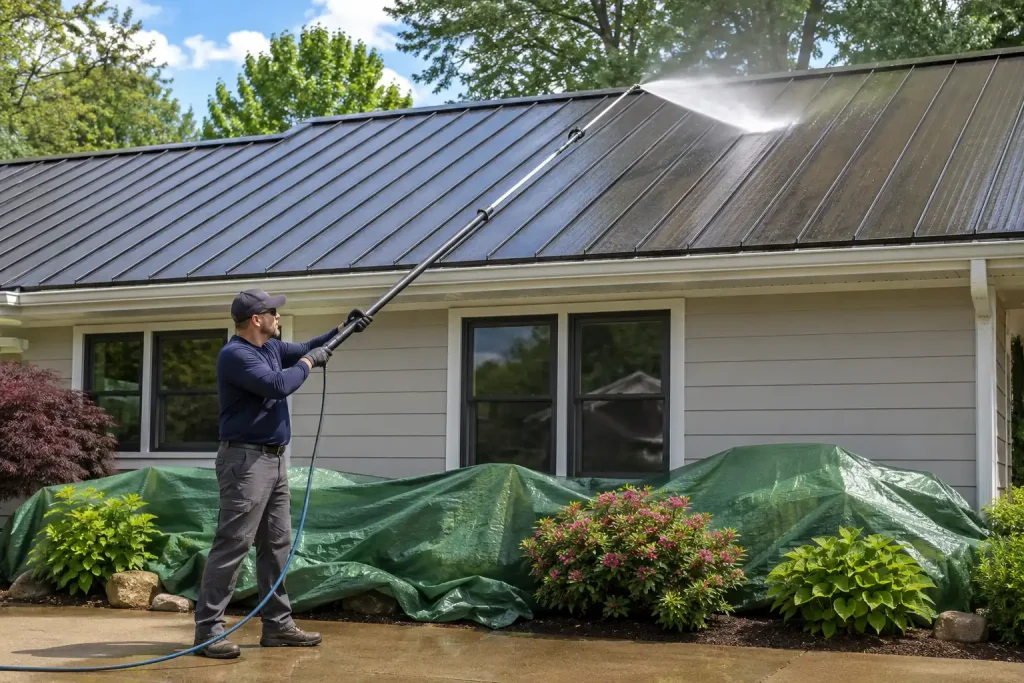
The safest homeowner approach is to perform cleaning from the ground using appropriate extension equipment. Do not operate a pressure washer while standing on a ladder. The recoil from the wand, a moving hose, and the need to control the trigger can cause a loss of balance.
Roofing contractors working at height must use appropriate fall protection. The OSHA residential fall-protection guidance explains the importance of protecting workers from falls during residential roofing work. (OSHA)
Pressure Washing Versus Other Cleaning Methods
Use the gentlest method that will remove the contamination. More pressure does not automatically produce a better or longer-lasting result.
| Roof condition | Preferred cleaning method | Pressure washing decision |
|---|---|---|
| Loose dust or pollen | Garden hose with clean water | Usually unnecessary |
| Leaves and small debris | Soft brush or low-powered blower from a safe position | Not needed |
| General dirt film | Water and manufacturer-approved mild detergent | Low pressure may be acceptable |
| Light mildew or algae | Coating-approved cleaning solution | Consider soft washing or professional cleaning |
| Heavy moss or lichen | Professional assessment and treatment | Do not blast it away |
| Loose paint or coating failure | Roof inspection and coating repair | Avoid pressure washing |
| Rust around fasteners or seams | Repair and corrosion evaluation | Clean only after professional advice |
| Active roof leak | Locate and repair the leak first | Do not pressure wash |
Pressure washing should be a controlled rinsing method, not a way to strip stubborn growth from the panels.
What You Need
The exact equipment will depend on the roof height, panel type, and cleaning method. Typical supplies include:
- Pressure washer with adjustable pressure
- Wide fan-spray tip
- Telescoping extension wand rated for the machine
- Garden hose
- Manufacturer-approved mild detergent
- Plastic or soft-bristle brush
- Protective glasses
- Chemical-resistant gloves
- Slip-resistant footwear
- Plastic sheeting for sensitive plants
- Buckets or barriers for managing runoff
A 40-degree fan tip is often recommended for cleaning metal panels because it spreads the water over a wider area than a narrow, concentrated nozzle. MBCI’s metal-panel cleaning guidance identifies pressure washing with a 40-degree tip as an option for appropriate panel-cleaning work. However, the roof manufacturer’s instructions should always take priority. (MBCI)
Never use a zero-degree nozzle, turbo nozzle, or concentrated cutting tip on a coated metal roof.
How to Pressure Wash a Metal Roof Step by Step
1. Find the Roof Manufacturer’s Cleaning Instructions
Before connecting the pressure washer, identify the roofing manufacturer, panel type, coating system, and warranty requirements.
Look through:
- Installation records
- Warranty documents
- Previous contractor invoices
- Product labels stored with home records
- Manufacturer maintenance manuals
Cleaning recommendations vary between bare metal, galvanized steel, Galvalume, aluminum, copper, and painted panels. They may also differ between PVDF and silicone-modified polyester coatings.
Some coating instructions permit diluted cleaning solutions that other manufacturers prohibit. Do not assume that a cleaner is safe simply because it is labeled for roofs.
2. Inspect the Roof Before Washing
Examine the roof from the ground with binoculars or arrange a professional inspection. Look for conditions that water pressure could worsen.
Warning signs include:
- Loose or missing screws
- Cracked sealing washers
- Lifted panel edges
- Open seams
- Damaged ridge caps
- Loose vent flashing
- Peeling paint
- Exposed metal
- Rust stains
- Dents or punctures
- Water marks in the attic
Repair defects before cleaning. If you spray water over a damaged penetration or open seam, you may create an interior leak.
3. Choose a Cool, Calm Day
Clean the roof during mild, dry weather. Avoid strong wind, freezing conditions, thunderstorms, and extreme heat.
Direct sunlight can cause cleaning solution to dry before it is rinsed. Wind can push spray toward electrical equipment, neighboring property, open windows, or the operator.
Close windows and doors before beginning. Disconnect or protect exterior electrical equipment where appropriate.
4. Protect Gutters, Plants, Siding, and Runoff Areas
Remove patio furniture and vehicles from the work zone. Cover delicate plants only temporarily, allowing air circulation and rinsing them with clean water before and after cleaning.
Direct roof runoff away from:
- Storm drains
- Ponds and streams
- Vegetable gardens
- Rainwater collection tanks
- Unprotected electrical equipment
- Areas where pets may drink
Pressure washing can carry dirt, coating particles, chemicals, and organic material into drainage systems. The EPA stormwater program notes that runoff can collect chemicals, oils, sediment, and other pollutants before entering waterways. Follow local wastewater and stormwater rules when using detergents. (US EPA)
5. Remove Loose Debris First
Remove leaves, twigs, pine needles, and other loose material before introducing water.
Debris commonly collects:
- In valleys
- Behind chimneys
- Around skylights
- Near roof-to-wall intersections
- Behind plumbing vents
- Inside gutters
- Around snow guards
Use a soft tool that will not scratch the coating. Do not use a metal rake, wire brush, shovel, or sharp scraper.
6. Test Plain Water
Begin with a garden hose or the pressure washer at its lowest setting. Test an inconspicuous section of the roof.
Allow the area to dry and inspect it for:
- Color changes
- Loss of gloss
- Chalky residue
- Scratches
- Water intrusion
- Loose coating
If plain water removes the dirt, stop there. There is no benefit in adding stronger pressure or chemicals unnecessarily.
7. Use the Lowest Effective Pressure
There is no universal pressure setting that is safe for every metal roof. Panel thickness, coating condition, age, seams, and fastener design all affect what the roof can tolerate.
Start with:
- The machine’s lowest practical setting
- A wide fan tip
- The nozzle held well away from the panel
- A brief test pass
Increase cleaning force only when the manufacturer permits it and the test area shows no damage.
Never move the nozzle close to the roof to compensate for poor cleaning. A concentrated stream can mark the finish, damage sealant, and force water into panel joints.
8. Spray in the Direction the Roof Sheds Water
Direct the spray down the slope, from the upper area toward the eave. Keep the spray moving and use overlapping passes.
Avoid spraying directly into:
- Side laps
- Horizontal end laps
- Ridge-cap openings
- Flashing edges
- Vent openings
- Skylight joints
- Screw penetrations
- Sealant joints
On exposed-fastener roofs, take extra care around screws and rubber washers. On standing-seam roofs, avoid directing water across or upward into raised seams.
9. Apply an Approved Cleaning Solution Only When Needed
When water alone is not enough, use a product specifically approved for the roof coating. Apply it according to the cleaner and panel manufacturer’s directions.
Do not allow detergent to dry on the roof. Work in small sections and rinse each section completely.
Avoid mixing cleaners. In particular, never mix bleach with ammonia, acids, or other household products.
Because manufacturers provide different chemical recommendations, do not use chlorine bleach, strong solvents, acids, or degreasers unless the coating manufacturer specifically approves the exact product and dilution.
10. Rinse Thoroughly
Rinse from the upper portion of the cleaning area toward the gutter. Continue until the runoff is free of foam and loosened debris.
Pay attention to panel ribs, seams, flashing edges, and areas behind roof penetrations where cleaner can remain trapped.
Rinse gutters and downspouts as well. Remaining detergent can leave streaks or affect nearby surfaces when the next rain arrives.
11. Inspect the Roof After It Dries
After the roof is completely dry, examine the cleaned area from a safe location.
Check for:
- New leaks in the attic
- Finish discoloration
- Loose sealant
- Exposed scratches
- Fasteners that appear lifted
- Rust previously hidden by dirt
- Water trapped around penetrations
- Clogged gutters or downspouts
Pressure washing is not a substitute for maintenance. Cleaning may reveal repair needs that were hidden beneath dirt or organic growth.
Expert Tip: Photograph the roof before and after cleaning. Close-up photos of seams, fasteners, flashing, and stained areas make it easier to track changes and explain concerns to a roofing contractor.
Cleaning Common Metal Roof Stains

Dirt and Pollen
Start with clean water. A normal hose rinse is often enough, especially when the roof has a smooth factory finish.
For remaining film, use a diluted, manufacturer-approved detergent with a soft brush. Avoid aggressive scrubbing.
Mildew and Algae
Dark organic staining may need a coating-compatible treatment rather than stronger water pressure. High pressure can remove the visible growth while leaving spores in seams and shaded areas.
A professional soft-wash service may be more appropriate, particularly when growth covers a large area.
Tree Sap and Grease
Sap, tar, grease, and adhesive residue may require a specialized cleaner. Do not use gasoline, paint thinner, or an unapproved solvent.
Test the cleaner on a small area and rinse according to the manufacturer’s instructions.
Rust Stains
Pressure washing does not repair corrosion. It may clean the surrounding panel, but the source of rust must still be identified.
Rust can result from:
- Damaged coating
- Incompatible fasteners
- Metal debris left after installation
- Scratches
- Standing water
- Contact between dissimilar metals
Have widespread or recurring corrosion evaluated before applying paint or roof coating.
How Often Should a Metal Roof Be Cleaned?
There is no single schedule for every home. Inspect the roof at least periodically and after severe weather, nearby construction, heavy pollen seasons, or falling branches.
Cleaning frequency depends on:
- Tree coverage
- Shade and moisture
- Coastal salt exposure
- Industrial pollution
- Roof slope
- Panel finish
- Local humidity
- Bird activity
- Debris accumulation
Many roofs need only occasional rinsing and debris removal. Frequent pressure washing can create unnecessary wear when normal rainfall and a garden hose already keep the panels clean.
DIY Versus Professional Metal Roof Cleaning
DIY cleaning may be reasonable when the entire job can be completed from the ground and the roof is in good condition. Professional service is safer when access, chemicals, or existing damage complicates the work.
| Consideration | DIY cleaning | Professional cleaning |
|---|---|---|
| Single-story roof reachable from ground | May be practical | Optional |
| Steep or two-story roof | Not recommended | Preferred |
| Unknown roof coating | Higher risk of damage | Contractor can identify materials |
| Heavy algae or moss | Difficult to treat correctly | Specialized treatment available |
| Loose seams or active leak | Do not wash | Inspection and repair needed |
| Fall-protection requirements | Often unavailable to homeowners | Trained crews should be equipped |
| Warranty concerns | Homeowner must verify instructions | Request warranty-compliant methods |
When comparing estimates, ask whether the contractor carries liability insurance, has experience with your panel system, and follows the manufacturer’s cleaning requirements.
A low price is not valuable if the crew uses excessive pressure, walks carelessly on unsupported panels, or damages the coating.
Common Mistakes Homeowners Should Avoid
- Using maximum pressure: High pressure can damage the finish and drive water beneath the roofing.
- Using a narrow nozzle: Concentrated spray can cut through sealants and mark painted panels.
- Spraying upward: This forces water against the roof’s normal drainage design.
- Walking on a wet roof: Soap, algae, and water make metal panels dangerously slippery.
- Pressure washing from a ladder: Wand recoil and hose movement can cause a fall.
- Using unapproved bleach or solvents: Incompatible chemicals may discolor or weaken the coating.
- Ignoring the warranty: Improper cleaning may affect coverage for the damaged area.
- Cleaning over loose fasteners: Water may enter through worn washers or open holes.
- Letting detergent dry: Dried cleaner can cause streaking and residue.
- Using wire brushes: Metal bristles can scratch the protective finish.
- Treating rust as dirt: Corrosion requires repair, not simply more pressure.
- Allowing runoff into storm drains: Cleaning chemicals and debris may violate local runoff rules.
When to Call a Roofing Professional
Call a qualified metal roofing contractor when:
- The roof is too high or steep to clean from the ground
- Walking on the panels would be necessary
- You do not have proper fall-protection equipment
- The roof has active leaks
- Fasteners or seams appear loose
- Paint is peeling or chalking heavily
- Rust covers more than a small isolated spot
- Moss or lichen is firmly attached
- The coating or manufacturer is unknown
- Solar panels, skylights, or complex flashing limit access
- The roof is under warranty and approved cleaning methods are unclear
- You are considering repainting or applying a roof coating
Choose a company with metal-roof experience rather than a general pressure-washing service. Ask for the proposed pressure level, nozzle type, cleaning solution, runoff plan, safety system, and process for protecting seams and flashing.
FAQs
Can a pressure washer damage a metal roof?
Yes. Excessive pressure can strip or dull the finish, damage sealants, loosen aging components, and force water beneath seams or flashing. Use the lowest effective pressure and follow the roof manufacturer’s instructions.
What pressure setting should I use on a metal roof?
There is no universal safe setting. Start at the machine’s lowest practical pressure with a wide fan tip and test a small area. Never exceed the roofing or coating manufacturer’s recommendation.
What nozzle is best for pressure washing a metal roof?
A wide fan tip, commonly a 40-degree tip, is generally safer than a narrow nozzle. Do not use a zero-degree, cutting, or turbo nozzle on painted metal panels.
Can I use bleach to clean a metal roof?
Only when the panel or coating manufacturer specifically approves it and provides a dilution method. Some finishes tolerate certain diluted solutions, while others may discolor or lose warranty protection. Never improvise a bleach mixture.
Is soft washing better than pressure washing?
Soft washing may be better for algae, mildew, and other organic growth because it relies on an approved cleaning solution rather than strong mechanical pressure. The solution must still be compatible with the metal roof coating.
Can I pressure wash a rusty metal roof?
Pressure washing may remove loose dirt around rust, but it will not stop corrosion. Have the rust source evaluated and repair damaged coating, fasteners, seams, or panels before aggressive cleaning.
Can I pressure wash my metal roof from a ladder?
No. Operating a pressure washer from a ladder is dangerous because the wand produces recoil and the hose can pull or shift. Clean from a secure ground-level position or hire a contractor with appropriate access and fall protection.
Conclusion
Knowing how to pressure wash a metal roof begins with understanding that gentle cleaning is usually better than aggressive pressure. Check the manufacturer’s instructions, inspect the roof for damage, use a wide fan spray, and keep water moving down the slope rather than into seams or flashing.
Start with plain water and use a coating-approved detergent only when necessary. Most importantly, do not climb onto a wet roof or operate a pressure washer from a ladder. When the roof is steep, damaged, heavily stained, or difficult to reach, schedule an inspection with an experienced metal roofing contractor before cleaning.