Can You Switch From Shingles to Metal Roofing? A Homeowner’s Guide

Many homeowners start asking “can you switch from shingles to metal roofing?” when their asphalt roof begins curling, leaking, losing granules, or reaching the end of its life. Metal roofing can be a smart upgrade, but it is not a simple material swap in every home.
Before spending thousands of dollars, you need to understand whether your roof deck is strong enough, whether the old shingles should be removed, how ventilation works, what the cost factors are, and when a roofing contractor should inspect the structure first.
This guide explains the practical side of switching from asphalt shingles to metal roofing so you can make a safer, smarter roofing decision.
Quick Answer
Yes, you can switch from shingles to metal roofing in many homes, but the roof must be inspected first. Some metal roofs can be installed over one layer of shingles, while others need a full tear-off. The best choice depends on roof condition, local code, ventilation, weight, leaks, and contractor recommendations.
Is It Possible to Switch From Shingles to Metal Roofing?
Yes, switching from shingles to metal roofing is common in the U.S. A qualified roofer can remove the asphalt shingles and install a new metal roof system, or in some cases install metal roofing over the existing shingles.
The important point is this: metal roofing is a complete roof system, not just panels placed over old shingles. It includes underlayment, flashing, fasteners, trim, ventilation details, ridge caps, drip edge, and proper panel layout.
A successful switch depends on:
- The condition of your existing roof deck
- The number of shingle layers already installed
- Local building code requirements
- Roof slope and shape
- Moisture or leak history
- Attic ventilation
- The type of metal roofing chosen
- Contractor skill and installation quality
If your current shingle roof has hidden rot, trapped moisture, or poor ventilation, covering it with metal can hide the problem instead of fixing it.
Tear-Off vs Installing Metal Over Shingles
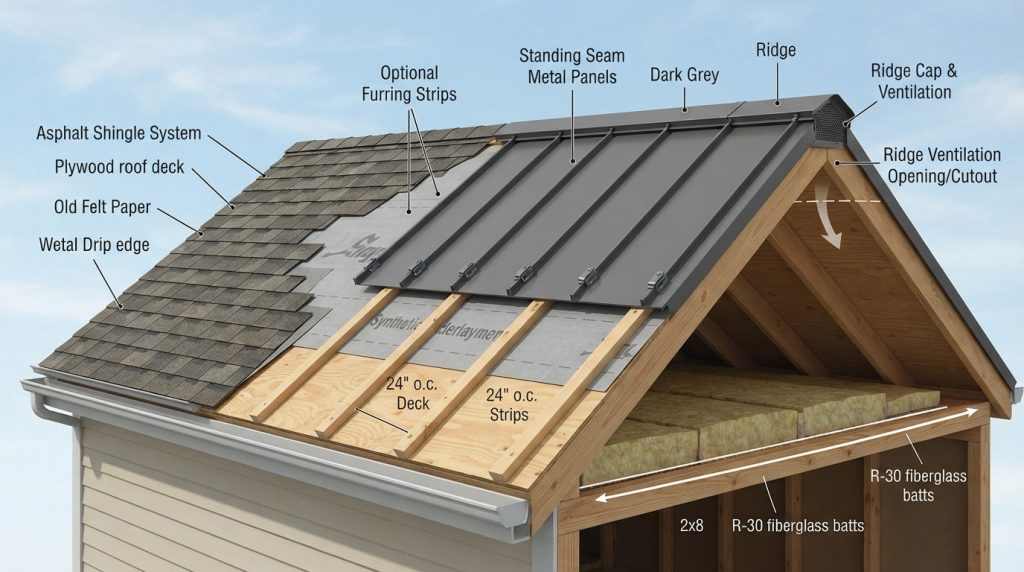
One of the biggest decisions is whether to remove the shingles first or install metal roofing over them.
Both approaches can work, but they are not equal in every situation.
Option 1: Full Tear-Off
A full tear-off means the contractor removes the existing asphalt shingles down to the roof deck. This allows the roofer to inspect the plywood or OSB sheathing underneath.
This is often the better choice when:
- Your roof has leaks
- Shingles are badly curled or uneven
- There are soft spots in the decking
- You have more than one shingle layer
- There is mold, rot, or moisture damage
- You want the cleanest long-term installation
A tear-off usually costs more upfront because of labor and disposal. However, it gives the contractor a clear view of the roof structure. That can prevent expensive surprises later.
Option 2: Metal Roofing Over Existing Shingles
In some homes, metal roofing can be installed over one layer of asphalt shingles. This may reduce tear-off labor and disposal costs.
However, the existing roof must be flat, dry, and structurally sound. The roofer may install underlayment and sometimes furring strips or a vented batten system between the shingles and metal panels.
This option may not be suitable if the shingles are uneven, wet, deteriorated, or hiding deck damage. Local codes also matter. The International Residential Code roof assembly rules include requirements for roof coverings, underlayment, flashing, and reroofing conditions, so your contractor should verify what applies in your area.
Best rule for homeowners: if your shingle roof has active leaks or soft decking, do not cover it. Fix the roof deck first.
Key Benefits of Switching to Metal Roofing
Metal roofing is popular because it can offer long-term value, especially for homeowners planning to stay in their home for many years.
Longer Service Life
A properly installed metal roof can last longer than a typical asphalt shingle roof. Lifespan still depends on the metal type, coating, local weather, maintenance, and installation quality.
Standing seam metal roofs often perform better than exposed-fastener systems because the fasteners are hidden and less exposed to weather.
Better Weather Resistance
Metal roofing can perform well against wind, rain, snow shedding, and fire exposure when installed correctly. In storm-prone regions, roof edge details, fastener patterns, underlayment, and decking attachment are just as important as the visible panels.
The Insurance Institute for Business & Home Safety explains that stronger roof systems, including improved edge design and sealed roof decks, are part of its FORTIFIED construction standards for wind resistance. This matters because the roof is one of the most exposed parts of the home during severe weather.
Energy Efficiency Potential
Metal roofs can reflect solar heat, especially when they use lighter colors or reflective coatings. This can help reduce attic heat gain in hot climates.
The U.S. Department of Energy explains that cool roofs reflect more sunlight and absorb less solar energy, which can help keep buildings cooler. For homeowners in warm states, roof color and coating choice can make a noticeable difference.
Lower Maintenance Needs
Metal roofs still need inspections, but they usually do not lose granules like asphalt shingles. You also do not deal with curling tabs or missing shingles in the same way.
Maintenance usually focuses on:
- Checking fasteners
- Inspecting flashing
- Cleaning valleys and gutters
- Looking for coating damage
- Removing debris
- Checking sealants around penetrations
Limitations and Trade-Offs to Consider
Metal roofing has strong benefits, but it is not perfect for every home or budget.
Higher Upfront Cost
Metal roofing usually costs more upfront than asphalt shingles. The final price depends on panel type, roof size, slope, tear-off needs, deck repairs, trim details, coating, labor rates, and local market conditions.
Standing seam metal roofing is usually more expensive than exposed-fastener panels, but it often provides a cleaner appearance and stronger long-term performance.
Installation Quality Matters More
Metal roofing is less forgiving than shingles. Poor panel alignment, wrong fasteners, bad flashing, or incorrect expansion gaps can lead to leaks and noise issues.
A good metal roof depends heavily on the installer’s skill.
Noise Concerns
A properly installed metal roof over solid decking and underlayment is not usually as loud as homeowners imagine. Noise is more noticeable on poorly insulated structures, barns, sheds, or open framing.
For a typical home with attic insulation and solid decking, rain noise is usually manageable.
Denting and Cosmetic Damage
Some metal roofs can dent from large hail, falling branches, or foot traffic. Steel is generally more dent-resistant than softer metals like aluminum or copper, but product thickness and panel profile matter.
If you live in a hail-prone area, ask about impact ratings and coating warranties.
Shingles to Metal Roofing: Comparison Table
| Factor | Asphalt Shingles | Metal Roofing |
|---|---|---|
| Upfront cost | Usually lower | Usually higher |
| Lifespan | Shorter than many metal systems | Often longer with proper installation |
| Maintenance | Granule loss, curling, missing shingles | Fastener, flashing, sealant, and coating checks |
| Energy performance | Depends on color and product | Can be strong with reflective finishes |
| Storm performance | Varies by shingle rating and installation | Strong when installed with proper fastening and flashing |
| Appearance | Traditional and common | Modern, farmhouse, coastal, or premium look |
| Installation difficulty | Familiar to many roofers | Requires metal roofing experience |
| Best for | Budget-focused replacement | Long-term durability and lower maintenance goals |
What Must Be Inspected Before Switching?
Before you approve a metal roof conversion, the contractor should inspect more than the visible shingles.
Roof Deck Condition
The roof deck is the plywood or OSB layer under your shingles. It must be dry, solid, and properly fastened.
Warning signs of deck problems include:
- Soft spots when walking on the roof
- Sagging roof areas
- Brown stains on ceilings
- Musty attic smells
- Visible rot in the attic
- Long-term leak history
Do not install metal over a damaged roof deck. The metal panels may look new, but the structure underneath can continue to fail.
Roof Slope
Different metal roofing products have different minimum slope requirements. A low-slope roof may need a specific panel system, sealant detail, or waterproofing approach.
Never assume every metal panel works on every roof pitch.
Ventilation
Ventilation helps control heat and moisture in the attic. Poor ventilation can shorten the life of roofing materials and contribute to condensation problems.
A roofing contractor should check intake vents, ridge vents, soffits, attic airflow, and whether the new metal roof system changes air movement.
Flashing and Penetrations
Flashing protects the vulnerable areas where the roof meets walls, chimneys, skylights, valleys, vents, and pipes.
When switching from shingles to metal roofing, flashing details often need to be replaced or upgraded. Reusing old flashing may save money upfront but can create leaks later.
Expert Tip:
Before choosing a metal roof, ask the contractor to price both options: full tear-off with deck inspection and metal-over-shingle installation if allowed. Compare the savings against the risk of hidden damage. The cheapest bid is not always the best value if it skips inspection, flashing, or ventilation details.
Types of Metal Roofing for Shingle Replacement
The right metal roof depends on your budget, home style, climate, and performance goals.
Standing Seam Metal Roofing
Standing seam panels have raised seams and hidden fasteners. This gives the roof a clean look and reduces direct fastener exposure.
This is often the premium choice for homeowners who want durability and curb appeal.
Exposed-Fastener Metal Panels
These panels are commonly used on barns, cabins, garages, and some homes. They cost less than standing seam but have visible screws with washers.
The main concern is long-term fastener maintenance. Screws can loosen or washers can wear over time.
Metal Shingles or Metal Tiles
Metal shingles are designed to look more like traditional roofing. They may resemble slate, shake, tile, or asphalt shingles.
This can be a good option when you want metal performance but a less industrial appearance.
Safety and DIY Concerns
Switching from shingles to metal roofing is usually not a DIY project for homeowners. Roofing work involves fall risk, sharp metal edges, specialized tools, and detailed flashing work.
OSHA’s residential fall protection guidance highlights the importance of fall protection in residential construction. For homeowners, the practical takeaway is simple: roof work can be dangerous, even on a one-story home.
DIY mistakes can also void warranties or create leaks around penetrations, valleys, and roof edges.
When to Call a Roofing Professional

Call a roofing professional before switching to metal roofing if:
- Your current roof is leaking
- The roof is sagging or uneven
- You see water stains inside the home
- Your attic smells damp or musty
- You have more than one layer of shingles
- Your home is in a high-wind or hail-prone area
- You have skylights, chimneys, dormers, or complex valleys
- You are unsure about local code requirements
- You want to compare roof-over vs tear-off options
A professional inspection is especially important if your roof has had repeated repairs. Frequent patching may mean the roof system is failing, not just one small area.
Cost Factors Homeowners Should Understand
The cost to switch from shingles to metal roofing can vary widely. Instead of focusing only on the price per square foot, look at what the bid includes.
Important cost factors include:
- Tear-off or roof-over method
Removing shingles adds labor and disposal costs, but it allows deck inspection. - Metal roof type
Standing seam usually costs more than exposed-fastener panels. - Roof complexity
Valleys, dormers, skylights, chimneys, and steep slopes increase labor. - Deck repairs
Rotten or damaged sheathing must be replaced before installation. - Underlayment quality
Synthetic underlayment or ice-and-water protection may be needed in certain areas. - Flashing and trim details
Proper metal roof flashing is essential for leak prevention. - Ventilation improvements
Ridge vents, soffit vents, or attic corrections may be part of the project. - Local permits and code requirements
Some areas require permits, inspections, or specific wind-rated assemblies.
A low bid that skips underlayment, deck repairs, or flashing can cost more in the long run.
Common Mistakes Homeowners Should Avoid
- Choosing metal roofing only because it looks good
Appearance matters, but installation quality, ventilation, and flashing matter more. - Installing metal over damaged shingles
Covering moisture problems can trap damage underneath the new roof. - Ignoring attic ventilation
A new roof will not fix poor airflow by itself. - Assuming all metal roofs are the same
Standing seam, exposed-fastener panels, and metal shingles perform differently. - Hiring a contractor without metal roofing experience
A good shingle installer is not automatically a skilled metal roof installer. - Not asking about warranties
Understand the difference between material warranties, coating warranties, and workmanship warranties. - Skipping a written scope of work
Your estimate should clearly list tear-off, underlayment, flashing, fasteners, trim, ventilation, and cleanup. - Focusing only on the lowest price
Metal roofing is a long-term system. Poor installation can erase the benefits.
Questions to Ask Before Hiring a Contractor
Before signing a contract, ask:
- Will you remove the shingles or install over them?
- How will you inspect the roof deck?
- What underlayment will you use?
- What type of metal panels are included?
- Are the fasteners hidden or exposed?
- How will you handle chimneys, valleys, skylights, and vents?
- Will old flashing be replaced?
- Does the estimate include permits?
- What workmanship warranty do you provide?
- Can you show examples of similar metal roof installations?
A trustworthy contractor should answer clearly and explain why they recommend a specific method.
FAQs
Can you switch from shingles to metal roofing without removing the shingles?
Yes, sometimes. If there is only one layer of shingles and the roof is dry, flat, and structurally sound, metal may be installed over shingles. However, roofs with leaks, rot, or uneven surfaces usually need a full tear-off.
Is it better to remove shingles before installing a metal roof?
In many cases, yes. Removing shingles allows the contractor to inspect the roof deck, replace damaged wood, install proper underlayment, and start with a clean surface. It usually costs more but may reduce long-term risk.
Does a metal roof add too much weight?
Metal roofing is generally lightweight compared with many other roofing materials. However, the full roof system still needs to be evaluated, especially if old shingles are being left in place. A contractor should confirm the structure can handle the assembly.
Will a metal roof make my house hotter?
Not necessarily. Metal roofs can reflect solar heat, especially with light colors or reflective coatings. Attic insulation and ventilation also play a major role in indoor comfort.
Is a metal roof noisy when it rains?
On a typical home with solid decking, underlayment, and attic insulation, a metal roof is usually not extremely noisy. Noise is more noticeable on open-frame buildings or poorly insulated spaces.
How long does it take to switch from shingles to metal roofing?
The timeline depends on roof size, weather, tear-off needs, repairs, and roof complexity. A simple roof may take only a few days, while a complex roof with deck repairs can take longer.
Is switching to metal roofing worth it?
It can be worth it if you want long-term durability, lower maintenance, better weather performance, and improved curb appeal. It may not be the best choice if you need the lowest upfront cost or plan to move very soon.
Conclusion
So, can you switch from shingles to metal roofing? Yes, many homeowners can. But the right method depends on the condition of the existing roof, the roof deck, local code, ventilation, budget, and the type of metal roofing system.
For the best result, do not treat this as a simple cover-up project. Start with a professional inspection, compare tear-off versus roof-over options, review the full scope of work, and choose a contractor with proven metal roofing experience.
A metal roof can be a strong long-term investment, but only when the system underneath is sound. Before you approve the project, make sure the roof is inspected, the details are clear, and the installation plan protects your home for years to come.