How Long Does It Take to Install a Metal Roof?

If you are planning a roof replacement, one of the first questions you may ask is: how long does it take to install a metal roof? The answer matters because roofing work affects your schedule, your home protection, your driveway access, and sometimes your daily routine.
For most homes, a metal roof installation takes 2 to 5 days once the crew begins work. However, the full timeline can be longer when you include inspection, material ordering, permits, tear-off, deck repairs, weather delays, and final cleanup.
This guide explains what affects the installation timeline, what homeowners should expect each day, when delays are normal, and how to choose a contractor who can install your metal roof safely and correctly.
Quick Answer
Most residential metal roof installations take 2 to 5 days after work begins. A simple one-story home may take 1–3 days, while a larger or more complex roof can take a week or longer. The exact answer to how long does it take to install a metal roof depends on roof size, weather, material type, repairs, and crew experience.
What Affects How Long Metal Roof Installation Takes?
Metal roofing is not installed the same way as asphalt shingles. Panels, fasteners, trim, flashing, underlayment, ventilation, and seams all need careful layout. A rushed job can lead to leaks, wind damage, oil canning, or poor curb appeal.
Here are the biggest factors that affect the timeline.
1. Roof Size
The larger the roof, the longer the job will take. A small ranch-style home may be completed quickly because the roof has fewer sections and easier access.
A large two-story home may take longer because the crew must move more materials, set up more safety equipment, and install more flashing details.
As a rough guide:
| Roof Type | Typical Installation Time | Why It Takes This Long |
|---|---|---|
| Small simple roof | 1–3 days | Fewer cuts, fewer penetrations, easier access |
| Average single-family home | 2–5 days | Normal tear-off, underlayment, panels, flashing, cleanup |
| Large or steep roof | 5–10+ days | More safety setup, more detail work, slower movement |
| Complex custom roof | 1–2 weeks or more | Valleys, dormers, skylights, chimneys, custom trim |
These are general timelines. Your contractor should give you a project-specific estimate after inspecting your home.
2. Roof Complexity
A simple roof with two large slopes is much faster to install than a roof with many corners and rooflines.
Installation takes longer when your roof has:
- Dormers
- Valleys
- Skylights
- Chimneys
- Multiple roof levels
- Steep slopes
- Low-slope sections
- Porches or additions
- Solar mounts or satellite equipment
Each detail requires cutting, flashing, sealing, and checking. Flashing is one of the most important leak-prevention parts of the roof. It is the metal or waterproofing detail used around chimneys, walls, valleys, vents, and roof edges.
3. Type of Metal Roofing
Not all metal roofing systems install at the same speed.
Exposed-fastener metal panels usually install faster because screws go through the panel into the roof deck or framing. Standing seam metal roofing usually takes longer because the panels lock together and may use hidden clips or seams.
Metal shingles can also take longer because they are installed in smaller sections and require more individual alignment.
The Metal Construction Association metal roof installation manual explains that proper installation methods matter because metal roofing depends on correct panel layout, fastening, flashing, and movement control.
4. Tear-Off vs. Installing Over Existing Shingles
Some metal roofs can be installed over existing asphalt shingles, depending on local code, roof condition, and manufacturer requirements. However, many contractors recommend removing the old roofing first.
A tear-off adds time, but it allows the contractor to inspect the roof deck underneath.
Tear-off is often the better choice when:
- Shingles are curling, soft, or badly damaged
- There are already two roofing layers
- The roof deck may have rot
- The home has leak history
- The roof needs ventilation improvements
- Local code requires removal
Installing over bad roofing can hide problems instead of solving them. If there is rotten decking under the old shingles, the new metal roof may not hold fasteners properly.
5. Roof Deck Repairs
The roof deck is the wood surface under your roofing material. If it is damaged, soft, or rotten, it must be repaired before the metal panels go on.
Deck repairs can add a few hours or several days, depending on the damage.
Warning signs that deck repair may be needed include:
- Sagging roof areas
- Soft spots
- Stains in the attic
- Previous leaks
- Mold or musty odors
- Loose or uneven roof sheathing
- Water-damaged fascia or eaves
A good contractor will not simply cover these problems. They should show you photos, explain the issue, and provide repair options.
6. Weather Conditions
Weather can easily change the metal roof installation timeline. Roofing crews need safe working conditions, and metal panels can be slippery when wet.
Rain, high wind, snow, extreme heat, and lightning can delay work. Cold weather may also affect sealants and underlayment handling.
According to OSHA residential fall protection guidance, fall protection is a major safety issue in residential construction, including roofing. Homeowners should never pressure a crew to work in unsafe weather just to finish faster.
A safe delay is better than a rushed installation.
7. Permits and Inspections
Some areas require roofing permits and inspections. This can affect the total project timeline, even if the actual installation only takes a few days.
Your contractor should know the local requirements and explain:
- Whether a permit is needed
- Who pulls the permit
- When inspections happen
- Whether work must pause for approval
- How code requirements affect installation
Permit delays are usually outside the crew’s control, but a prepared contractor can reduce scheduling problems.
Typical Metal Roof Installation Timeline
Every project is different, but many metal roof installations follow a similar process.
Step 1: Roof Inspection and Estimate
Before installation begins, the contractor inspects the roof. They measure the roof, check the slope, look for problem areas, and discuss material choices.
This step may include:
- Measuring roof sections
- Checking attic ventilation
- Looking for leak signs
- Inspecting decking if possible
- Reviewing gutters, fascia, and roof penetrations
- Explaining metal roofing options
This stage usually happens days or weeks before installation.
Step 2: Material Ordering and Scheduling
Metal roofing materials may need to be ordered in advance, especially standing seam panels, custom colors, trim, and accessories.
This part can take a few days to several weeks depending on supplier availability, panel type, color, and contractor schedule.
If you choose a specialty color or custom panel profile, expect a longer lead time.
Step 3: Site Preparation
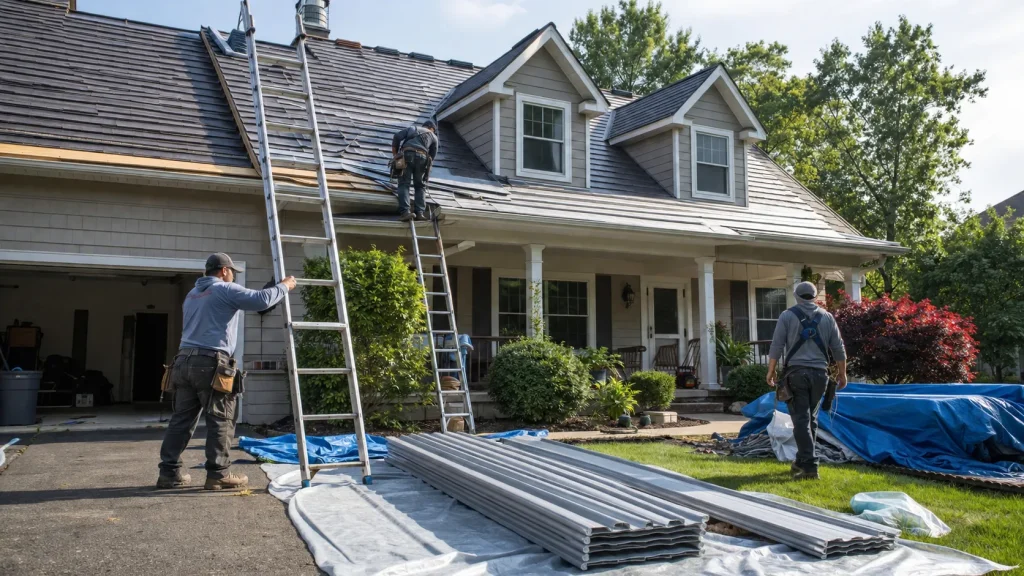
On the first workday, the crew protects your property and prepares the job site.
They may:
- Move materials into position
- Cover landscaping
- Protect siding and windows
- Set up ladders and safety equipment
- Place dumpsters or trailers
- Create a cleanup area for debris
Good preparation helps prevent property damage and keeps the project organized.
Step 4: Old Roof Removal
If the old roof is being removed, the crew tears off the existing shingles or roofing material. This can take half a day to two days depending on roof size and layers.
Once the old material is removed, the contractor can see the roof deck clearly.
This is when hidden problems are often found.
Step 5: Deck Repair and Underlayment
After tear-off, the crew repairs damaged decking and installs underlayment. Underlayment is a protective layer between the roof deck and metal panels.
In vulnerable areas, contractors may use ice and water shield around eaves, valleys, and penetrations.
This stage matters because metal panels shed water, but the full roof system protects the home. Underlayment, flashing, fasteners, and ventilation all work together.
Step 6: Metal Panel Installation
This is the most visible part of the project. The crew installs panels, trims, fasteners, clips, and seams.
For exposed-fastener systems, screws must be placed correctly and not overdriven. For standing seam systems, panels must be aligned carefully and allowed to expand and contract.
Metal expands and contracts with temperature changes. If the system is not installed correctly, movement can stress fasteners, seams, and trim.
Step 7: Flashing, Ridge Caps, Vents, and Details
Roof details can take more time than homeowners expect.
The crew must properly install:
- Ridge caps
- Gable trim
- Eave trim
- Valley flashing
- Pipe boots
- Chimney flashing
- Wall flashing
- Skylight flashing
- Ventilation components
This work is not just cosmetic. It helps prevent leaks and wind-driven rain intrusion.
In storm-prone regions, roof edge details and attachment quality matter. FEMA’s hurricane recovery resources emphasize that roof edges, flashing, fasteners, and wind resistance are important parts of roof performance in severe weather. Homeowners in coastal or high-wind areas should ask their contractor how the roof system meets local wind requirements.
Step 8: Cleanup and Final Inspection
After installation, the contractor should clean the site and inspect the finished roof.
Cleanup should include:
- Removing old roofing debris
- Picking up loose screws and metal scraps
- Checking gutters
- Inspecting flashing
- Reviewing panel alignment
- Removing protective films if applicable
- Walking the homeowner through the finished work
Ask for photos of areas you cannot easily see from the ground.
Can a Metal Roof Be Installed in One Day?
Sometimes, yes. A very small, simple roof may be completed in one day by an experienced crew.
But for most homes, one-day installation is not the standard expectation for a full metal roof replacement. Metal roofing requires careful measuring, cutting, fastening, flashing, and cleanup.
Be cautious if a contractor promises an extremely fast installation without inspecting the roof. Speed is useful only when quality is protected.
The goal is not the fastest roof. The goal is a roof that is installed correctly and lasts.
Does Standing Seam Metal Roofing Take Longer?
Yes, standing seam metal roofing often takes longer than exposed-fastener panels.
Standing seam systems usually cost more and require more precision. However, they also offer a clean appearance and hidden fasteners, which can improve long-term leak resistance when properly installed.
Standing seam may be a good choice if you want:
- A modern look
- Hidden fasteners
- Strong durability
- Better long-term performance
- Fewer exposed screw maintenance concerns
The tradeoff is that installation may take longer and require a more skilled contractor.
How Weather and Season Affect Installation Time
Spring, summer, and fall are often busy roofing seasons. Contractors may have longer schedules during these months.
Summer heat can slow work because metal panels become hot and crews need safe working conditions. Winter can also create challenges because of snow, ice, shorter daylight, and cold-sensitive materials.
If you live in a hot sunny climate, you may also want to ask about reflective metal roof finishes. The ENERGY STAR cool roofs guidance explains that cool roofs can reflect more sunlight and may be especially helpful in hot, sunny regions.
A reflective roof color will not shorten the installation time, but it may affect long-term comfort and energy performance.
Expert Tip:
Before signing a contract, ask the contractor to explain the installation sequence in plain English: tear-off, deck inspection, underlayment, panels, flashing, ventilation, cleanup, and final inspection. If they cannot explain the process clearly, that is a warning sign.
Questions to Ask Your Contractor About Timeline
Before work begins, ask direct questions. A reliable contractor should answer without pressure or confusion.
Use these questions:
- How many days do you expect my metal roof installation to take?
- What could delay the project?
- Will you remove the old roof or install over it?
- How will you protect my landscaping and driveway?
- What happens if you find rotten decking?
- Who handles permits and inspections?
- What type of underlayment will you use?
- How will you handle ventilation?
- How will you flash chimneys, valleys, and skylights?
- What does final cleanup include?
These questions help you compare contractors beyond price.
When to Call a Roofing Professional

Metal roofing is not a beginner-friendly DIY project for most homeowners. Small repairs may look simple, but full installation involves safety risks, waterproofing details, metal cutting, ventilation, and manufacturer requirements.
Call a roofing professional if:
- Your roof is steep or two stories high
- You have active leaks
- There is visible sagging
- You see rotten decking
- Your roof has chimneys, skylights, or complex valleys
- You need a standing seam system
- You live in a high-wind, snow, or hurricane-prone area
- You are unsure about local building codes
- You want warranty protection
DIY mistakes can void warranties, cause leaks, and create dangerous fall risks. A professional installation is usually the safer and smarter choice for a full metal roof replacement.
Common Mistakes Homeowners Should Avoid
Avoid these mistakes when planning a metal roof installation:
- Choosing only by lowest price: A cheap installation can become expensive if it leaks or fails early.
- Ignoring roof deck condition: Metal panels need a solid, dry, stable surface.
- Skipping ventilation review: Poor attic ventilation can trap heat and moisture.
- Assuming all metal roofs are the same: Standing seam, exposed-fastener panels, and metal shingles have different timelines and maintenance needs.
- Not asking about flashing details: Flashing is critical around chimneys, walls, valleys, and vents.
- Rushing the contractor: Safe weather delays are better than unsafe roof work.
- Not checking permits: Local rules may affect installation and resale.
- Forgetting about cleanup: Metal scraps and screws should not be left around your home.
- Installing over bad shingles: Covering damaged roofing can hide rot and moisture problems.
- Not reviewing the warranty: Ask what is covered by the manufacturer and what is covered by the installer.
Signs Your Metal Roof Installation May Take Longer
Some delays are normal. Others may point to poor planning.
Your project may take longer if:
- The roof deck has hidden damage
- Bad weather interrupts work
- Materials arrive late
- Custom trim is needed
- The home has complex rooflines
- Permit inspections are delayed
- The crew finds ventilation problems
- Previous roof layers are harder to remove than expected
These delays do not always mean something is wrong. However, your contractor should communicate clearly and keep the worksite protected.
How to Prepare Your Home Before Installation
A little preparation can make the project smoother.
Before the crew arrives:
- Move vehicles away from the driveway.
- Clear patio furniture near the house.
- Protect fragile items in the attic.
- Take wall decorations down if your home may vibrate during tear-off.
- Keep children and pets away from the work area.
- Tell the contractor about sprinkler lines, landscape lighting, or delicate plants.
- Confirm where materials and dumpsters will be placed.
- Ask who your daily contact person will be.
Metal roofing work can be noisy. If you work from home, plan for noise during tear-off and fastening.
Is Metal Roofing Worth the Longer Installation Time?
For many homeowners, yes. Metal roofing can offer strong durability, long service life, fire resistance, and good performance in harsh weather when installed correctly.
However, metal roofing is not the cheapest option upfront. It usually costs more than basic asphalt shingles. The value depends on how long you plan to stay in the home, your climate, your budget, and the quality of installation.
Metal roofing may be worth it if you want:
- Long-term durability
- Lower maintenance than some roofing types
- Strong curb appeal
- Better performance in certain climates
- Reflective color options
- A roof system that may last for decades
It may not be the best fit if you need the lowest upfront cost or if your roof structure needs major repairs that make the total project too expensive.
FAQs
How long does it take to install a metal roof on an average house?
Most average homes take 2 to 5 days once installation begins. Larger, steeper, or more complex roofs may take a week or longer.
Can a metal roof be installed over shingles?
Sometimes it can, but it depends on local code, roof condition, and manufacturer requirements. Many contractors prefer removing old shingles so they can inspect the roof deck.
Does a standing seam metal roof take longer to install?
Yes. Standing seam usually takes longer than exposed-fastener metal panels because it requires more precise layout, hidden clips, seams, and custom trim work.
What causes delays during metal roof installation?
Common delays include rain, high winds, rotten decking, late materials, permit inspections, complex flashing details, and unsafe working conditions.
Is metal roof installation noisy?
Yes. Tear-off, fastening, cutting, and panel handling can be noisy. The loudest parts usually happen during old roof removal and panel installation.
Should I stay home during metal roof installation?
You can stay home, but expect noise, vibration, and limited access around the work area. Keep children, pets, and vehicles away from the job site.
How do I know if my contractor is installing the metal roof correctly?
Ask about underlayment, fastener placement, flashing, ventilation, permits, cleanup, and warranty coverage. A good contractor should explain the process clearly and provide photos when needed.
Conclusion
So, how long does it take to install a metal roof? For most U.S. homes, the installation itself takes about 2 to 5 days, but the full project timeline can be longer when you include inspection, permits, material ordering, weather delays, and possible roof deck repairs.
The most important thing is not just speed. A good metal roof depends on proper preparation, safe working conditions, correct flashing, solid decking, good ventilation, and skilled installation.
Before you choose a contractor, ask for a clear timeline, confirm what is included, and make sure they explain how they will protect your home. A well-installed metal roof can be a strong long-term investment, but only when the work is done carefully from start to finish.