
How Long Do Metal Roofs Last in Florida?

Florida homeowners often choose metal roofing because it promises long life, strong storm performance, and lower maintenance than many traditional roofing materials. But the real question is simple: how long do metal roofs last in Florida when they face heat, salt air, heavy rain, humidity, and hurricane-season winds?
In most cases, a properly installed metal roof in Florida can last several decades. However, lifespan depends on the metal type, coating quality, roof design, ventilation, fasteners, installation skill, and how close the home is to the coast. This guide explains what homeowners should realistically expect, what can shorten a metal roof’s life, and when to call a roofing professional.
Quick Answer
A metal roof in Florida usually lasts 40 to 70 years when it is properly installed and maintained. Standing seam metal roofs often last longer than exposed-fastener systems. Coastal salt air, poor installation, storm damage, trapped moisture, and neglected fasteners can shorten the lifespan.
Average Metal Roof Lifespan in Florida
Metal roofs are known for long service life, but Florida is not an easy roofing environment. The sun is intense. Rain can be heavy. Humidity is high. Coastal areas deal with salt exposure. Hurricanes and tropical storms can test the roof system.
For many Florida homes, a realistic lifespan is:
| Metal Roof Type | Typical Florida Lifespan | Best For | Main Concern |
|---|---|---|---|
| Standing seam steel roof | 40–60 years | Long-term durability and clean appearance | Higher upfront cost |
| Aluminum metal roof | 40–70 years | Coastal homes and salt-air areas | Can dent more easily |
| Exposed-fastener metal roof | 25–40 years | Budget-friendly installations | Fastener wear and leaks |
| Metal shingles | 40–60 years | Traditional curb appeal | Requires careful flashing |
| Copper or zinc roofing | 60+ years | Premium homes and specialty roofs | Very high cost |
The roof panel is only part of the story. A metal roof can fail early if the underlayment, flashing, fasteners, ventilation, or installation details are poor.
Why Florida Is Hard on Metal Roofs
Metal roofing can perform very well in Florida, but the climate creates special challenges.
Heat and UV Exposure
Florida roofs absorb intense sunlight for much of the year. Over time, UV rays can fade paint, dry out sealants, and stress roof coatings.
A good painted metal roof uses a durable coating system to protect the panel. Lighter colors and reflective coatings can also help reduce heat absorption. The U.S. Department of Energy explains that cool roofs reflect more sunlight and absorb less solar energy, which can be useful in hot climates like Florida.
Salt Air Near the Coast
Homes near the ocean face a bigger corrosion risk. Salt particles can settle on roof panels, fasteners, flashing, and gutters.
This does not mean metal roofing is a bad choice near the coast. It means the material selection matters more. Aluminum is often a strong choice for coastal Florida homes because it resists rust better than many steel products.
Heavy Rain and Humidity
Florida’s frequent rain can expose weak roof details quickly. If water gets under panels, around flashing, or into poorly sealed penetrations, the roof may develop hidden damage.
Metal panels shed water well, but they still need proper slope, underlayment, flashing, and drainage.
Hurricanes and High Winds
Florida metal roofs must be chosen and installed with wind performance in mind. NOAA’s Saffir-Simpson Hurricane Wind Scale shows how hurricane winds can damage roofs, siding, gutters, and trees.
For homeowners, the key point is this: a metal roof is not automatically hurricane-proof. It must be installed as a complete tested system that matches the home, location, and local code requirements.
Standing Seam vs Exposed-Fastener Metal Roofs
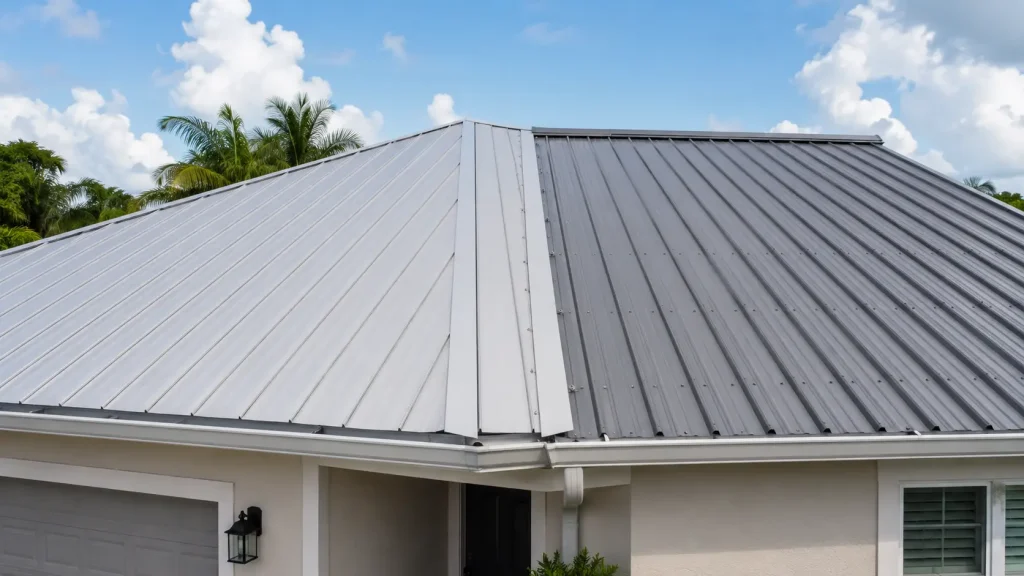
One of the biggest lifespan differences comes from the roof system type.
Standing Seam Metal Roofs
Standing seam roofs use raised seams with concealed fasteners. The screws are usually hidden below the panels or clips, which helps protect them from direct sun and rain.
This system often lasts longer because:
- Fewer fasteners are exposed to weather
- Panels can expand and contract more freely
- Leak points are reduced
- The roof has a clean, durable appearance
For Florida homeowners planning to stay in the home long term, standing seam is usually the stronger lifetime-value choice.
Exposed-Fastener Metal Roofs
Exposed-fastener systems use screws through the face of the panels. These roofs can perform well when installed correctly, but the washers around the screws can age over time.
The main issue is that Florida sun and rain can wear down the rubber washer. When that happens, water can seep around the screw.
Exposed-fastener metal roofs may still be a good option for sheds, workshops, barns, and budget-conscious homes. But they usually require more maintenance than standing seam roofs.
What Affects How Long a Metal Roof Lasts in Florida?
Several details can add years to a metal roof’s life—or cause early problems.
1. Material Quality
Not all metal roofing panels are the same. Thickness, coating type, paint quality, and corrosion resistance all matter.
For Florida homes, ask your contractor about:
- Panel metal type
- Paint or coating system
- Corrosion warranty
- Wind approval
- Salt-air limitations
- Manufacturer installation requirements
A cheaper panel may save money upfront, but it may not hold up as well in coastal or high-wind areas.
2. Proper Installation
Installation quality is one of the biggest factors in roof lifespan. Even premium metal panels can leak if the roof is installed poorly.
Common installation problems include:
- Incorrect fastener spacing
- Overdriven or underdriven screws
- Poor flashing around chimneys and skylights
- Wrong underlayment
- Inadequate ventilation
- Panels not matched to roof slope
- Missing or incorrect closures at ridges and eaves
Before hiring a contractor, ask whether the roof system has Florida approval. Homeowners can use the official Florida Product Approval search to verify approved roofing products and systems.
3. Roof Design and Slope
A simple roof with fewer valleys, penetrations, and wall intersections usually has fewer leak-prone areas.
Complex roofs can still use metal successfully, but they need more careful detailing. Areas around skylights, dormers, valleys, chimneys, and wall flashing should be inspected closely.
4. Ventilation and Moisture Control
Good attic ventilation helps reduce heat and moisture buildup under the roof deck. Without proper ventilation, trapped heat and humidity can damage underlayment, decking, insulation, and interior finishes.
A metal roof may look fine from outside while moisture problems develop underneath. This is why roof inspections should include attic checks when possible.
5. Maintenance
Metal roofs are often called low-maintenance, but that does not mean no maintenance.
In Florida, homeowners should check for:
- Loose or missing fasteners
- Damaged flashing
- Debris in valleys
- Clogged gutters
- Scratched panels
- Sealant failure
- Rust around cut edges or penetrations
- Storm damage after high winds
Small problems are usually easier and cheaper to fix early.
Maintenance Checklist for Florida Metal Roofs
| Task | How Often | Why It Matters |
|---|---|---|
| Clean gutters and downspouts | 2–4 times per year | Prevents overflow and fascia damage |
| Inspect after major storms | After each severe storm | Finds lifted panels, dents, or flashing damage |
| Check fasteners on exposed-fastener roofs | Every 1–2 years | Prevents washer-related leaks |
| Remove leaves and branches | As needed | Reduces trapped moisture |
| Check attic for leaks or moisture | Twice per year | Finds hidden problems early |
| Schedule professional roof inspection | Every 1–3 years | Confirms roof condition and repair needs |
Do not walk on a metal roof without proper safety equipment and experience. Metal panels can be slippery, especially when wet, dusty, or covered with morning dew.
Can a Metal Roof Last Through Hurricanes?
A properly installed metal roof can perform very well during hurricanes, but no roof is guaranteed to survive every storm without damage.
The roof’s storm performance depends on:
- Approved panel system
- Correct fastener pattern
- Proper deck attachment
- Secure flashing
- Roof shape and slope
- Local wind exposure
- Quality of installation
- Age and condition of the roof
A newer standing seam metal roof installed to Florida code will usually be more storm-resistant than an older, poorly maintained roof. However, flying debris, fallen trees, and extreme uplift forces can still cause damage.
After a hurricane or tropical storm, homeowners should look from the ground for visible problems. Do not climb onto the roof. Roofing work involves fall hazards, and OSHA’s residential fall protection guidance highlights the importance of fall prevention during roofing work.
Warning Signs Your Metal Roof May Not Last as Long as Expected
Call a roofing professional if you notice any of these signs:
- Water stains on ceilings or walls
- Rust spots or corrosion
- Loose, missing, or backed-out screws
- Lifted panels or open seams
- Dented or damaged flashing
- Peeling paint or coating failure
- Moldy attic smell
- Soft roof decking
- Loose ridge caps
- Gutters pulling away from the fascia
A small leak should never be ignored in Florida. Heavy rain can turn a minor flashing issue into decking damage, insulation damage, and interior repairs.
Repair vs Replacement: How to Decide
Not every metal roof problem means the whole roof needs replacement. Many issues can be repaired if the roof is otherwise in good condition.
Repair May Be Enough If:
- The roof is less than 20–30 years old
- Damage is limited to one area
- Flashing needs resealing or replacement
- A few fasteners need correction
- Panels are still structurally sound
- There is no widespread corrosion
Replacement May Be Smarter If:
- The roof has repeated leaks
- Many fasteners are failing
- There is widespread rust
- The coating is badly deteriorated
- Storm damage affects large sections
- The roof was installed poorly
- The roof is near the end of its expected life
Decision point: If repair costs keep adding up, replacement may be more practical than repeatedly patching an aging system.
Expert Tip
Expert Tip:
Before choosing a metal roof in Florida, ask the contractor for the exact panel profile, manufacturer, coating type, Florida Product Approval number, and written installation details. A good metal roof is not just a material—it is a complete tested system.
When to Call a Roofing Professional
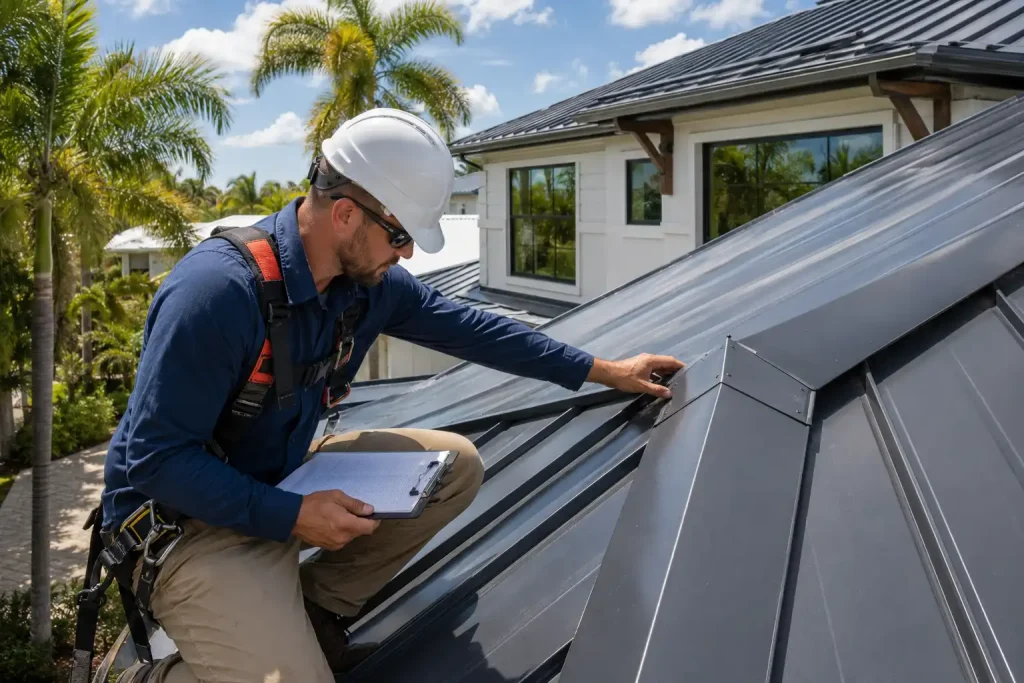
Metal roof repairs can look simple from the ground, but many problems involve hidden details. Flashing, fasteners, sealants, underlayment, decking, and ventilation all work together.
Call a licensed roofing professional when:
- You see leaks or water stains inside the home.
- Panels appear lifted after a storm.
- Fasteners are loose or missing.
- Flashing is cracked, bent, or separated.
- Rust is spreading across panels or edges.
- You are buying a Florida home with an older metal roof.
- You need documentation for insurance or wind mitigation.
- You are unsure whether repair or replacement makes more sense.
A professional inspection can help determine whether the issue is cosmetic, minor, or urgent.
Common Mistakes Homeowners Should Avoid
- Choosing the cheapest bid without checking the roof system. Low price can mean thinner panels, weak coatings, or poor installation details.
- Ignoring coastal exposure. Homes near salt air may need aluminum or a coating system suitable for coastal environments.
- Assuming all metal roofs are hurricane-proof. Wind performance depends on product approval, installation, and roof condition.
- Skipping attic ventilation. Moisture and heat problems can shorten the life of the entire roof assembly.
- Walking on the roof to inspect it. Metal roofing can be slippery and dangerous.
- Neglecting exposed fasteners. Washer failure can lead to leaks if not corrected.
- Letting gutters stay clogged. Overflowing gutters can damage fascia, soffits, siding, and landscaping.
- Waiting too long after storm damage. Small openings can allow water intrusion during the next rainstorm.
Is a Metal Roof Worth It in Florida?
For many Florida homeowners, metal roofing is worth considering because it can offer long life, strong wind performance, energy benefits, and good curb appeal.
The biggest downside is cost. Metal roofing usually costs more upfront than asphalt shingles. Standing seam systems cost even more than exposed-fastener systems.
However, the long-term value can be strong if:
- You plan to stay in the home for many years
- You live in a storm-prone area
- You want fewer roof replacements over time
- You choose a properly approved system
- You hire an experienced metal roofing contractor
- You maintain the roof regularly
A metal roof is not automatically the best choice for every home. But in Florida, a well-installed metal roof can be a smart investment when durability and storm readiness are priorities.
FAQs
How long do metal roofs last in Florida?
Most metal roofs in Florida last about 40 to 70 years, depending on the material, coating, installation quality, maintenance, and coastal exposure. Exposed-fastener systems may last closer to 25–40 years, while standing seam and aluminum systems can last longer.
Do metal roofs rust in Florida?
Some metal roofs can rust if the coating is damaged, the wrong material is used, or the home is exposed to salt air. Aluminum is often preferred for coastal areas because it resists rust better than steel.
Are metal roofs good for Florida hurricanes?
Metal roofs can perform well in hurricanes when they are properly approved, designed, and installed. However, no roof is completely hurricane-proof. Flying debris, poor installation, old fasteners, or weak decking can still cause damage.
What type of metal roof lasts the longest in Florida?
Standing seam metal roofs and aluminum roofing systems often provide the best long-term performance in Florida. For coastal homes, aluminum may be especially useful because it handles salt-air exposure better than many steel products.
How often should a Florida metal roof be inspected?
A Florida metal roof should be inspected every 1–3 years and after major storms. Exposed-fastener roofs may need more frequent checks because screws and washers can wear out over time.
Can I pressure wash a metal roof?
Pressure washing is not always recommended because it can damage coatings, force water under panels, or loosen sealants if done incorrectly. Use manufacturer-approved cleaning methods or ask a roofing professional before cleaning the roof.
Does a metal roof increase home value in Florida?
A quality metal roof can improve curb appeal and may help buyers feel more confident about durability and storm readiness. The value depends on the roof type, age, warranty, installation quality, and local market expectations.
Conclusion
So, how long do metal roofs last in Florida? A well-installed metal roof can often last 40 to 70 years, but the final lifespan depends on material quality, coastal exposure, ventilation, maintenance, and contractor workmanship.
For the best results, choose the right metal roof system for your location, verify product approval, keep gutters clear, inspect the roof after storms, and call a qualified roofing professional when warning signs appear. A metal roof is a major investment, but with the right choices, it can protect a Florida home for decades.