Do Metal Roofs Make Your House Hotter?

Many homeowners worry that a metal roof will turn their home into an oven during summer. It is a fair question because metal surfaces can feel very hot in direct sunlight. But the real answer is more practical: do metal roofs make your house hotter? Usually, no. A properly installed metal roof can often help keep a home cooler, especially when it has reflective paint, good attic ventilation, proper insulation, and a solid roof deck.
In this guide, you will learn how metal roofs handle heat, when they can make a home feel warmer, how they compare with asphalt shingles, and what homeowners should check before choosing a metal roof.
Quick Answer
Do metal roofs make your house hotter? In most homes, no. A metal roof does not automatically make your house hotter. The roof color, coating, attic insulation, ventilation, and installation quality matter more than the material alone. Light-colored or reflective metal roofing can even reduce heat absorption compared with darker roofing materials.
Why Metal Roofs Feel Hot but May Not Heat Your House
Metal gets hot quickly in direct sunlight. That is why a metal car hood or metal railing can feel very warm on a sunny day. But your roof is not sitting directly on your ceiling.
A residential metal roof is usually part of a full roof system. That system may include:
- Metal panels or shingles
- Underlayment
- Roof decking
- Attic space
- Insulation
- Ventilation
- Ceiling materials
The heat must pass through several layers before it affects your living space. If your attic is well insulated and ventilated, the metal roof surface temperature alone does not decide how hot your home feels.
According to the U.S. Department of Energy’s guidance on cool roofs, roofs that reflect more sunlight absorb less solar energy. This can lower roof temperature and reduce heat transfer into the building.
How Metal Roofs Handle Heat
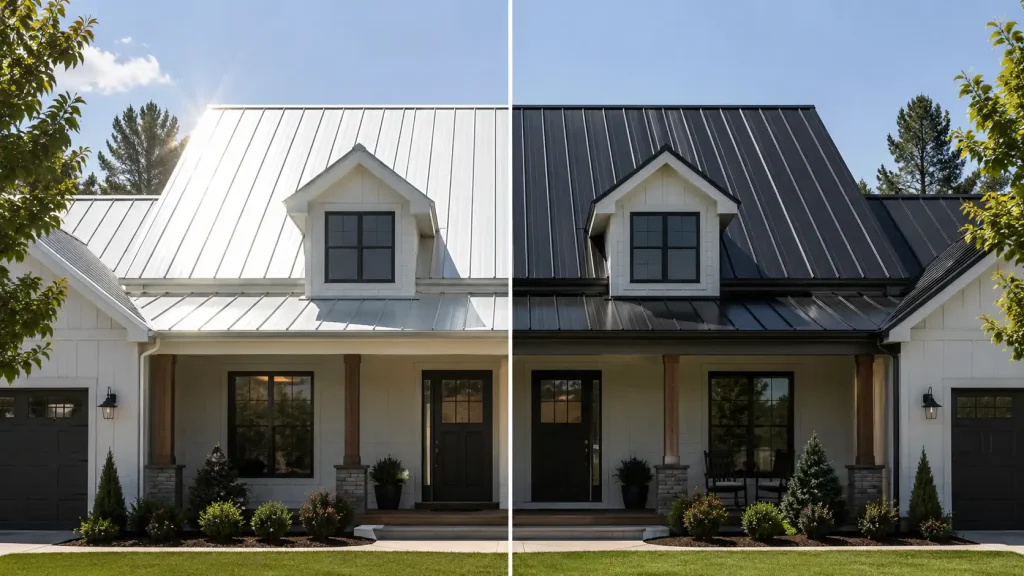
Metal roofing handles heat differently from many traditional roofing materials. It can heat up fast, but it can also cool down fast when the sun goes away.
Metal Reflects Solar Energy
Many modern metal roofs are painted or coated with reflective finishes. These coatings help reflect sunlight instead of absorbing all of it.
This is one reason metal roofing is often used in energy-efficient roof designs. A lighter metal roof with a reflective coating can perform much better in hot weather than a dark asphalt shingle roof.
ENERGY STAR explains that an ideal cool roof has both high solar reflectance and high thermal emittance, meaning it reflects sunlight and releases absorbed heat effectively through cool roof performance principles.
Metal Releases Heat Quickly
Metal does not hold heat the same way some thicker roofing materials can. After sunset, a metal roof often cools down faster than asphalt shingles or tile.
This can help reduce evening heat buildup in the attic, especially in warm climates. However, the results depend on the entire roof assembly, not just the metal panels.
Color Still Matters
A dark metal roof will absorb more heat than a light metal roof. This is true for almost any roofing material.
For example:
- A black metal roof can get very hot in the sun.
- A white, silver, beige, or light gray metal roof usually reflects more sunlight.
- A reflective painted finish can improve heat performance.
- A dull or damaged finish may not perform as well over time.
The best metal roof for heat control is usually a lighter color with a high-quality reflective coating.
Metal Roof vs Asphalt Shingles: Which Is Hotter?
Many homeowners compare metal roofs with asphalt shingles because shingles are still common on U.S. homes. The answer depends on the color and product type, but metal roofing often has an advantage when it comes to reflecting heat.
| Feature | Metal Roof | Asphalt Shingles |
|---|---|---|
| Heat absorption | Lower with reflective coating | Often higher, especially dark shingles |
| Cooling speed after sunset | Usually cools faster | Can hold heat longer |
| Color options | Many reflective colors available | Many colors, but dark shades are common |
| Energy efficiency | Can be strong with proper coating and ventilation | Depends on shingle type and attic condition |
| Durability | Often long-lasting when installed correctly | Usually shorter lifespan than quality metal |
| Maintenance needs | Periodic inspection of seams, fasteners, flashing, coating | Periodic inspection for curling, granule loss, leaks |
A dark metal roof can still be hotter than a light asphalt shingle roof. So the comparison is not simply “metal vs shingles.” It is really about roof color, solar reflectance, installation quality, insulation, and ventilation.
The Real Reasons a House Gets Hot Under Any Roof
Sometimes homeowners blame the roofing material when the real problem is the attic or roof system. A home can feel hot under metal, shingles, tile, or slate if the roof assembly is not working properly.
Poor Attic Ventilation
Attic ventilation allows hot air and moisture to escape. Without enough ventilation, heat can collect under the roof and push down into the living space.
Common ventilation problems include:
- Blocked soffit vents
- Too few intake vents
- Poor ridge vent installation
- Bathroom fans venting into the attic
- Insulation covering air pathways
- Mixed vent types that fight each other
A metal roof may get blamed, but the real issue may be trapped attic heat.
Weak or Missing Insulation
Insulation slows heat transfer between the attic and your living area. If insulation is thin, uneven, compressed, or missing, your home may feel hotter in summer and colder in winter.
A new metal roof will not fix poor attic insulation by itself. If your attic insulation is weak, heat can still move into your rooms.
Dark Roof Color
Dark roofs absorb more solar heat. This includes dark metal roofs, dark shingles, and dark tiles.
If you live in a hot climate, a lighter metal roof may be a smarter choice. If you live in a colder climate, a darker roof may not be a major problem and may even provide some winter warming benefit.
Poor Installation
Metal roofing must be installed correctly. Poor installation can create gaps, leaks, moisture problems, and ventilation issues.
Important installation details include:
- Proper underlayment
- Correct fastener placement
- Good flashing around chimneys and vents
- Proper panel alignment
- Correct ridge and edge details
- Manufacturer-approved accessories
A quality roof system performs better than a roof installed only to look good from the street.
Can a Metal Roof Lower Cooling Costs?
A metal roof can help reduce cooling demand in some homes, especially in hot, sunny regions. But savings are not guaranteed for every homeowner.
Cooling benefits are usually stronger when the roof has:
- A light or reflective finish
- Good attic insulation
- Balanced attic ventilation
- Proper installation over solid decking
- No major air leaks between attic and living space
If your roof is dark, your attic is poorly ventilated, or your insulation is weak, the benefit may be smaller.
Think of metal roofing as one part of an energy system, not a magic fix. The roof, attic, HVAC system, windows, insulation, and air sealing all affect indoor comfort.
Does a Metal Roof Make the Attic Hotter?
Not automatically. A metal roof can keep attic temperatures lower when it reflects sunlight and is paired with proper ventilation.
However, your attic may still get hot if the roof system is not designed well. This is common in older homes where insulation and ventilation were not built to modern expectations.
Signs your attic may be overheating include:
- Upstairs rooms feel much hotter than downstairs rooms
- Air conditioner runs constantly in summer
- Ceiling feels warm in the afternoon
- Musty attic smell
- Moisture or condensation in the attic
- High energy bills after roof replacement
- Uneven room temperatures
If these signs appear after installing any roof, ask a roofing professional to check ventilation, insulation, and roof assembly details.
Expert Tip:
Before choosing a metal roof color, ask your contractor for the product’s solar reflectance and coating information. Do not choose by appearance only. A color that looks attractive may not be the best choice for heat control in a hot climate.
Cost Factors That Affect Heat Performance
The cost of a metal roof can vary widely, but heat performance is not only about buying the most expensive product. It is about choosing the right combination of materials and installation details.
Important cost factors include:
- Metal panel type
- Paint or coating quality
- Roof color
- Underlayment type
- Ventilation improvements
- Attic insulation upgrades
- Roof complexity
- Labor quality
- Flashing and trim details
A cheaper metal roof with poor ventilation may perform worse than a properly designed roof system. On the other hand, a well-installed mid-range metal roof with good attic improvements can be a strong long-term investment.
When Metal Roofs May Make a House Feel Hotter
Metal roofs usually do not make a house hotter when installed correctly. But there are situations where a homeowner may notice more heat.
The Roof Is Very Dark
A black or dark bronze metal roof can absorb more heat than a lighter roof. In hot climates, this may increase attic temperature if ventilation and insulation are weak.
The Attic Was Already a Problem
If the old roof was replaced but the attic problems were ignored, the home may still feel hot. Sometimes homeowners notice the issue more after investing in a new roof because they expect a major comfort improvement.
The Roof Was Installed Without Proper Ventilation Planning
A metal roof should not block or reduce airflow. If soffit vents, ridge vents, or attic pathways are covered or poorly installed, heat may build up.
The Home Has Little Ceiling Insulation
Without enough insulation, heat can pass from the attic into the home. In this case, the roofing material is only part of the problem.
Safety Warning: Do Not Climb on a Hot Metal Roof

A metal roof can become slippery, steep, and dangerously hot. Walking on it without training can damage panels and cause serious injury.
Roofing work involves fall hazards. OSHA’s residential fall protection guidance highlights the importance of fall protection during residential construction and roofing work.
Do not climb onto your roof to check heat, seams, vents, or fasteners unless you have proper training and safety equipment. Use binoculars from the ground when possible and call a professional for roof-level inspections.
When to Call a Roofing Professional
Call a roofing professional if your home feels hotter after a metal roof installation or if you are planning a replacement and want to avoid heat problems.
A professional can check:
- Whether your attic has enough intake and exhaust ventilation
- Whether soffit vents are blocked
- Whether ridge vents are installed correctly
- Whether the roof panels and flashing are sealed properly
- Whether the underlayment is appropriate
- Whether attic insulation needs improvement
- Whether the roof color and coating match your climate
- Whether there are leaks, moisture stains, or condensation issues
You should also call a professional if you notice:
- Water stains on ceilings
- Rust or corrosion
- Loose panels
- Missing fasteners
- Bent flashing
- Condensation in the attic
- Moldy or musty smells
- Sudden increases in energy bills
The Insurance Institute for Business & Home Safety provides detailed guidance on steep-slope metal roofing systems, including installation considerations, underlayment, flashing, and support materials. This is a useful reminder that metal roofing performance depends on the full system, not just the visible panels.
How to Choose a Metal Roof That Does Not Overheat Your Home
Use this simple decision process before choosing a metal roof.
1. Consider Your Climate
If you live in a hot, sunny area, prioritize reflectivity and ventilation. If you live in a colder region, heat absorption may be less of a concern, but insulation and snow performance may matter more.
2. Choose the Right Color
Lighter colors usually perform better in hot climates. Common heat-friendly choices include:
- White
- Light gray
- Beige
- Light bronze
- Galvalume-style finishes
- Light green or muted earth tones
Dark colors can still work, but they need stronger attic ventilation and insulation support.
3. Ask About Reflective Coatings
Do not assume every metal roof is energy efficient. Ask the contractor or manufacturer for coating details.
Look for information about:
- Solar reflectance
- Thermal emittance
- Paint system
- Warranty
- Fade resistance
- Finish durability
4. Inspect the Attic Before Installation
A roof replacement is a good time to evaluate the attic. Check insulation depth, air leaks, and ventilation pathways before the new roof goes on.
5. Hire a Contractor Who Understands Roof Systems
A metal roof is not just a panel installation. It requires proper planning around ventilation, flashing, fasteners, expansion, contraction, and moisture control.
The lowest bid is not always the best value. Poor installation can reduce comfort, shorten roof life, and create expensive repair problems later.
Common Mistakes Homeowners Should Avoid
- Choosing a dark metal roof in a hot climate without asking about heat performance.
- Ignoring attic ventilation during roof replacement.
- Assuming all metal roofs are automatically energy efficient.
- Focusing only on panel price instead of the full roof system.
- Hiring a contractor with little metal roofing experience.
- Skipping underlayment and flashing questions.
- Walking on the roof to inspect it without safety equipment.
- Believing a new roof will fix poor insulation by itself.
- Not asking for warranty details on the coating and installation.
- Comparing metal and shingles without considering color and ventilation.
FAQs
Do metal roofs make your house hotter in summer?
No, not usually. A properly installed metal roof with a reflective coating can help reduce heat absorption. The roof color, attic ventilation, and insulation matter more than the metal itself.
Is a black metal roof too hot for a house?
A black metal roof absorbs more heat than a light-colored roof. It can still work, but it is not usually the best choice for hot climates unless the attic has strong ventilation and insulation.
Are metal roofs cooler than shingles?
They can be. Light-colored or reflective metal roofs often stay cooler than dark asphalt shingles. However, a dark metal roof may absorb more heat than a light shingle roof.
Does a metal roof help lower air conditioning bills?
It may help, especially in sunny climates. Savings depend on the roof color, coating, attic ventilation, insulation, and the overall energy efficiency of the home.
Will a metal roof make upstairs rooms hotter?
Not if the roof system is designed correctly. Hot upstairs rooms are often caused by poor attic ventilation, weak insulation, air leaks, or HVAC issues rather than the metal roof alone.
What color metal roof is best for heat?
Light colors are usually best for reducing heat. White, light gray, beige, and other reflective finishes are common choices for hot climates.
Should I add insulation before installing a metal roof?
If your attic insulation is weak, upgrading it before or during roof replacement can improve comfort. A roofing contractor or insulation specialist can inspect the attic and recommend the right solution.
Conclusion
So, do metal roofs make your house hotter? In most cases, no. A metal roof does not automatically increase indoor heat. In fact, the right metal roof can help reflect sunlight, cool down quickly, and support better energy performance.
The key is to choose the right color, ask about reflective coatings, protect attic ventilation, and make sure the roof is installed by an experienced contractor. If your home already feels hot, do not blame the roofing material too quickly. Have the attic, insulation, ventilation, and roof assembly checked before making a final decision.
For the best result, get a professional roof inspection and ask clear questions about heat performance before signing a metal roof contract.