Are Metal Roofs Energy Efficient? A Homeowner’s Guide

If your cooling bills keep rising, your roof may be part of the problem. Many homeowners ask, “are metal roofs energy efficient?” because metal roofing costs more upfront than asphalt shingles, and they want to know whether the energy savings are real.
The short answer is yes, metal roofs can be energy efficient, especially when they use reflective coatings, proper attic ventilation, and good insulation. But the results depend on your climate, roof color, installation quality, and the condition of the rest of your home.
This guide explains how metal roofs help with energy performance, where they work best, what limits their savings, and when you should call a roofing professional before making a major decision.
Quick Answer
Yes, metal roofs are energy efficient when they reflect sunlight, release heat quickly, and work with proper attic ventilation and insulation. They can help lower cooling demand in hot climates, but energy savings depend on roof color, coating quality, installation quality, attic condition, and local weather.
How Metal Roofs Improve Energy Efficiency
Metal roofing can help a home use less energy mainly by controlling heat. During hot weather, a dark or poorly ventilated roof can absorb heat and transfer it into the attic. That makes your air conditioner work harder.
A properly designed metal roof can reduce that heat gain.
The U.S. Department of Energy explains that a cool roof reflects more sunlight and absorbs less solar energy than a standard roof. Many metal roofs can be designed as cool roofs because they can use reflective paint systems and coatings.
Metal roofing helps in three main ways:
- It can reflect solar heat away from the home.
- It can release absorbed heat faster than some other materials.
- It can work well with ventilation, radiant barriers, and insulation.
This does not mean every metal roof automatically saves money. A dark metal roof installed over a poorly insulated attic may not perform as well as a lighter, reflective roof installed as part of a complete roofing system.
Why Reflectivity Matters
Reflectivity means how much sunlight the roof surface sends back instead of absorbing. A roof with higher reflectivity stays cooler under direct sun.
This is especially important in:
- Hot Southern climates
- Sunny Western states
- Homes with high summer air conditioning costs
- Houses with poor attic ventilation
- Homes with dark old asphalt shingles
The EPA notes that cool roofs can absorb and transfer less heat into a building compared with conventional roofs. For homeowners, that means less heat may enter the attic and living space.
Light-Colored Metal Roofs Usually Perform Better
Color matters. A white, light gray, beige, or light bronze metal roof usually reflects more sunlight than a black or dark brown roof.
That does not mean dark metal roofs are always bad. Some dark metal roofs use special “cool pigment” coatings that reflect more infrared heat than regular dark paint. However, in most cases, lighter colors are the safer choice for energy performance.
If energy savings are your priority, ask your contractor about solar reflectance and thermal emittance ratings before choosing the color.
What Is Thermal Emittance?
Thermal emittance is a roofing material’s ability to release heat after it absorbs it. In plain English, it means how well the roof “lets go” of heat.
A roof can be reflective, but it also needs to release heat efficiently. Metal roofing with the right painted finish can do both.
This matters because a roof is exposed to sunlight for hours. If it holds heat too long, that heat can move into the attic. If it releases heat faster, the roof surface can cool down more quickly after peak sun exposure.
Painted Metal Roofs vs Bare Metal Roofs
Not all metal roofs perform the same.
A painted metal roof with a quality coating is usually more energy efficient than bare, unpainted metal. The Department of Energy’s federal purchasing guidance notes that for metal roofs, a light-colored painted finish can support better cool roof performance.
Here is the simple homeowner version:
| Metal Roof Type | Energy Efficiency Potential | Best Use |
|---|---|---|
| Light-colored painted metal | High | Hot and sunny climates |
| Cool-pigment dark metal | Moderate to high | Homeowners who want a darker look |
| Bare metal | Mixed | Not always ideal for heat control |
| Dark standard painted metal | Lower | Aesthetic-focused choices |
| Metal roof with good ventilation | Higher | Most homes in warm regions |
Are Metal Roofs More Energy Efficient Than Asphalt Shingles?
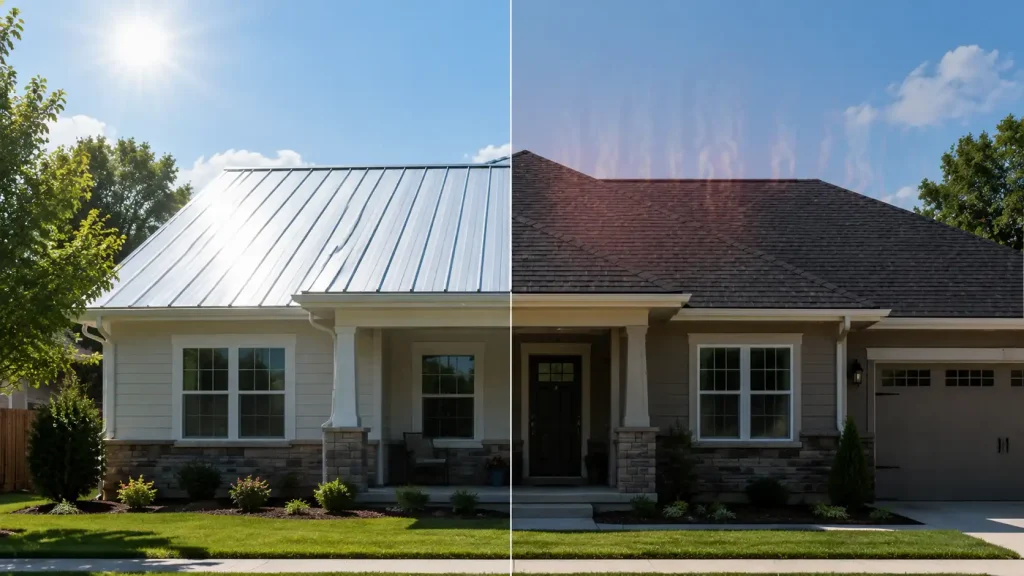
In many hot climates, yes. Metal roofs can often outperform traditional dark asphalt shingles because they reflect more sunlight and cool down faster.
Asphalt shingles tend to absorb and hold heat. This can make the attic hotter during the day. A hot attic can increase indoor temperatures and make your cooling system run longer.
Metal roofing can be a better option when:
- Your current shingles are dark and heat-absorbing
- Your attic becomes extremely hot in summer
- Your air conditioner runs constantly
- You plan to stay in the home long-term
- You are replacing the roof anyway
However, asphalt shingles can still work well if paired with good insulation and ventilation.
The full roofing system matters more than the material alone.
Energy Savings Depend on Your Climate
Metal roofs usually provide the biggest energy benefit in hot, sunny areas.
In colder climates, benefits are smaller, but metal roofing still offers durability, snow shedding, and long service life.
The Role of Attic Ventilation

Metal roofs cannot perform well alone. Attic ventilation is essential for moving hot air out of the attic space.
Good ventilation systems include:
- Ridge vents
- Soffit vents
- Gable vents
Poor ventilation can trap heat and reduce any roof-related energy benefit.
Why Ventilation Balance Matters
If intake (soffit vents) and exhaust (ridge vents) are not balanced, hot air can get stuck in the attic. This can raise indoor temperatures even with a reflective roof.
Insulation Matters Just as Much
Insulation slows heat transfer into the living space. Without proper insulation, energy savings from a metal roof will be limited.
A complete system includes:
- Roof surface (metal panels)
- Underlayment
- Ventilation
- Insulation
- Air sealing
Standing Seam vs Exposed Fastener Metal Roofs
Standing seam systems are generally more durable and lower maintenance than exposed fastener systems, especially over long periods.
Can a Metal Roof Lower Cooling Costs?
Yes, but savings vary. The biggest influence factors are:
- Roof color
- Attic insulation
- Ventilation quality
- Climate
- Installation quality
Durability and Energy Efficiency Go Together
A leaking or poorly installed roof can reduce insulation performance and increase energy loss.
Maintenance Helps Keep the Roof Efficient
Keep gutters clean and check for debris or loose fasteners to maintain performance.
Expert Tip:
Ask for solar reflectance and thermal emittance ratings before choosing a metal roof. These numbers matter more than color alone.
Common Mistakes Homeowners Should Avoid
- Choosing roof color without checking reflectivity
- Ignoring attic ventilation
- Skipping insulation upgrades
- Hiring inexperienced installers
- Believing guaranteed energy savings claims
When to Call a Roofing Professional
Call a professional if your roof is old, leaking, or if you are planning a full replacement.
FAQs
(kept unchanged for readability)
Conclusion
Metal roofs can be energy efficient when designed as part of a full system including reflective surfaces, proper ventilation, and insulation. The best results come from smart material choice and correct installation, not just the roofing material itself.