What Color Metal Roof Reflects Most Heat? A Homeowner’s Guide

If you are choosing a new metal roof, color is not just about curb appeal. It can affect how much sunlight your roof absorbs, how hot your attic feels, and how hard your air conditioner works during summer. Many homeowners ask, what color metal roof reflects most heat, especially in hot, sunny climates where cooling costs matter.
The simple answer is that white and very light-colored metal roofs usually reflect the most heat. But there is more to the decision than picking the brightest color sample. Paint finish, solar reflectance, thermal emittance, attic ventilation, insulation, roof slope, and local climate all play a role.
This guide explains how metal roof color affects heat, which colors perform best, when darker colors can still work, and what homeowners should ask before hiring a roofing contractor.
Quick Answer
A white metal roof reflects the most heat because it reflects more sunlight than darker colors. Light gray, beige, cream, and other pale “cool roof” colors also perform well. For best results, choose a factory-painted metal roof with a high solar reflectance rating and good attic ventilation.
How Roof Color Affects Heat
Roof color affects how much solar energy your roof absorbs. Light colors reflect more sunlight. Dark colors absorb more sunlight and usually become hotter during the day.
Think of it like wearing a white shirt versus a black shirt in the sun. The white shirt feels cooler because it reflects more sunlight. A roof works in a similar way, although roofing materials also have coatings, finishes, insulation, and ventilation behind them.
According to the U.S. Department of Energy’s guidance on cool roofs, a cool roof is designed to reflect more sunlight and absorb less solar energy than a conventional roof. That can help reduce roof surface temperature and cooling demand in some homes.
For metal roofs, color matters, but it is not the only factor. A light-colored metal roof with a poor coating may not perform as well as a properly rated cool roof product. That is why homeowners should look beyond the color name and ask for performance data.
What Color Metal Roof Reflects Most Heat?
White metal roofing reflects the most heat in most cases. It has the highest natural ability to reflect sunlight, especially when paired with a reflective factory coating.
Other strong heat-reflecting metal roof colors include:
- White
- Off-white
- Light gray
- Cream
- Beige
- Light tan
- Pale blue-gray
- Light stone or sand colors
These colors are often better choices for homes in hot climates, homes with large attic spaces, and houses that get full sun most of the day.
Best Metal Roof Colors for Hot Climates
If your home is in a warm region such as Texas, Florida, Arizona, Georgia, California, or the Carolinas, roof color can make a noticeable difference.
The best heat-reflecting choices are usually:
| Metal Roof Color | Heat Reflection Level | Best For | Main Consideration |
|---|---|---|---|
| White | Excellent | Very hot, sunny climates | May show dirt faster |
| Light gray | Very good | Modern homes, mixed climates | Slightly less reflective than white |
| Cream or beige | Very good | Traditional homes | Warmer appearance than white |
| Light tan | Good to very good | Desert, ranch, and coastal homes | Check coating rating |
| Medium gray | Moderate | Balanced curb appeal | Can absorb more heat |
| Charcoal or black | Low | Style-focused homes | Needs strong ventilation and insulation |
A white or light gray metal roof is usually the safest choice when heat reflection is the main goal. Beige and light tan are good alternatives if you want a softer, warmer look.
Solar Reflectance and Thermal Emittance Explained
Homeowners often hear terms like “cool roof,” “reflective coating,” or “energy-efficient metal roofing.” The two main terms to understand are solar reflectance and thermal emittance.
Solar Reflectance
Solar reflectance means how much sunlight a roofing surface reflects away. A higher number means the roof reflects more solar energy.
For example:
- A roof with low solar reflectance absorbs more sunlight.
- A roof with high solar reflectance sends more sunlight away from the home.
This is the main reason light-colored metal roofs usually stay cooler than dark ones.
Thermal Emittance
Thermal emittance means how well a roof releases heat after it absorbs it. A roof can still heat up, but if it releases that heat efficiently, it may cool faster.
The EPA explains that high solar reflectance and thermal emittance are key features of cool roofs, especially in warm and sunny climates.
For homeowners, this means you should not rely only on a color sample. Ask for the product’s reflectance and emittance values if energy performance is important to you.
Is a White Metal Roof Always the Best Choice?
A white metal roof reflects the most heat, but it is not always the best choice for every home.
White roofing can be excellent for cooling performance. However, it may not match every home style. It may also show dirt, pollen, mildew streaks, or tree debris faster than darker colors.
In some neighborhoods, homeowners associations may limit roof colors. In colder climates, a very reflective roof may offer less winter heat gain, although this is usually less important than summer cooling in many parts of the U.S.
Best decision: choose the lightest color that fits your home’s design, local climate, and maintenance expectations.
Do Dark Metal Roofs Get Hotter?
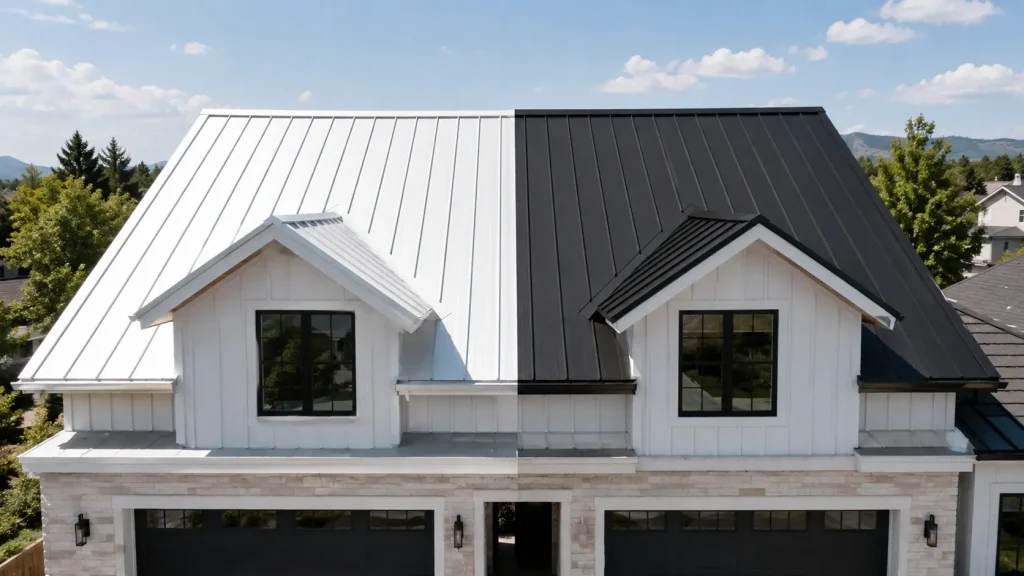
Yes, dark metal roofs usually get hotter than light metal roofs. Black, charcoal, dark bronze, dark brown, and deep green absorb more sunlight.
That does not mean dark metal roofs are always bad. Many homeowners choose dark standing seam metal roofs because they look clean, modern, and high-end.
A dark metal roof can still perform well when the roofing system includes:
- A quality reflective paint finish
- Proper attic ventilation
- Good attic insulation
- Correct underlayment
- Professional installation
- Balanced intake and exhaust vents
The roof surface may still be hotter, but the living space below can remain comfortable if the full roof assembly is designed well.
Metal Roof Color vs Coating Quality
Color is important, but coating quality can be just as important. Many modern metal roofs use factory-applied paint systems designed to resist fading, chalking, corrosion, and heat absorption.
A light roof with a weak coating may fade faster or lose performance sooner. A darker roof with a high-quality “cool pigment” coating may perform better than expected.
When comparing metal roof products, ask your contractor about:
- Paint system type
- Fade resistance
- Chalking resistance
- Solar reflectance rating
- Thermal emittance rating
- Warranty length
- Whether the finish is rated by an independent source
The Cool Roof Rating Council maintains a rated roof products directory where homeowners and contractors can compare solar reflectance and thermal emittance information for many roofing products.
Does a Reflective Metal Roof Lower Energy Bills?
A reflective metal roof can help lower cooling demand, especially in hot, sunny climates. The biggest benefit is usually seen in homes with:
- Poor attic insulation
- Weak attic ventilation
- Large roof areas exposed to direct sun
- High summer air-conditioning use
- Older roofing materials that absorb heat
- Rooms directly under the roofline
However, roof color alone will not fix every comfort problem. If your attic is poorly ventilated or insulation is missing, even a reflective roof may not solve hot upstairs rooms.
Important: A cool roof works best as part of a complete roofing system, not as a single magic feature.
How Attic Ventilation Changes the Result
A reflective roof helps reduce heat at the roof surface. Ventilation helps remove heat and moisture from the attic.
Both matter.
Good attic ventilation usually includes intake vents near the lower roof edge and exhaust vents near the top. This helps air move through the attic instead of trapping heat under the roof deck.
Common ventilation problems include:
- Blocked soffit vents
- Not enough intake ventilation
- Too many exhaust vents without intake
- Bathroom fans venting into the attic
- Ridge vents installed incorrectly
- Insulation covering airflow paths
If you install a light metal roof but ignore ventilation, your home may still feel hot. A contractor should inspect the attic before recommending roof color or roof replacement options.
Climate Matters: Hot, Mixed, and Cold Regions
The best metal roof color depends partly on where you live.
Hot and Sunny Climates
White, light gray, cream, beige, and tan are usually the best choices. These colors help reflect sunlight and reduce heat absorption.
They are especially useful for homes with high cooling costs.
Mixed Climates
Light gray, medium gray, beige, bronze, or muted colors can be good options. You may want a balance between summer performance and year-round appearance.
Cold Climates
Darker colors may help absorb some sunlight during cold months, but they can still increase summer heat. Snow coverage, insulation, roof pitch, and attic design often matter more than color alone.
In cold regions, durability, snow shedding, condensation control, and proper underlayment may be bigger priorities than heat reflection.
Cost Considerations for Reflective Metal Roof Colors
In many cases, standard metal roof colors cost about the same within the same product line. However, premium finishes or specialty cool roof coatings may cost more.
Cost can vary based on:
- Metal type
- Panel profile
- Paint finish
- Gauge thickness
- Roof complexity
- Labor rates
- Tear-off needs
- Flashing and trim details
- Local code requirements
A reflective white standing seam metal roof may cost more than basic exposed-fastener panels, but that cost difference is often due to the panel system, not just the color.
When comparing quotes, make sure each contractor is pricing the same roof type, finish quality, underlayment, flashing, ventilation work, and warranty coverage.
Durability and Maintenance of Light Metal Roofs
Light-colored metal roofs can be durable, but they may show dirt more easily. White roofs can reveal pollen, dust, leaves, mildew stains, and runoff marks from nearby trees.
That does not mean they are hard to maintain. It simply means homeowners should understand the tradeoff.
Basic maintenance may include:
- Inspecting the roof after major storms.
- Keeping gutters clear.
- Removing branches that rub against panels.
- Checking for scratches or damaged coating.
- Having a professional inspect flashing and fasteners.
- Cleaning only with manufacturer-approved methods.
Never use harsh chemicals or pressure washing without checking the manufacturer’s instructions. Aggressive cleaning can damage the finish and may affect warranty coverage.
Safety Warning: Do Not Choose Roof Color from the Roof Surface
Some homeowners want to climb onto the roof to compare color samples or inspect heat. This is risky.
Roofing work involves fall hazards, especially on metal roofs because they can be slippery. OSHA’s residential fall protection guidance highlights the importance of fall protection during residential construction and roofing work.
For homeowners, the safest approach is simple: review samples from the ground, ask for installed project photos, and let a qualified roofing professional handle roof access.
Expert Tip
Expert Tip:
Before choosing a metal roof color, ask your contractor for the actual solar reflectance rating, not just the color name. Two “light gray” roofs can perform differently depending on the paint system and coating technology.
How to Choose the Right Heat-Reflecting Metal Roof Color

Use a practical decision process instead of choosing based only on a showroom sample.
1. Start With Your Climate
If summers are long and hot, prioritize white, light gray, cream, or beige. If you live in a mixed climate, you may have more flexibility.
2. Consider Your Home Style
A bright white roof may look excellent on coastal, farmhouse, and modern homes. Light gray may work better on brick, stone, and contemporary exteriors.
3. Check the Product Rating
Ask for solar reflectance and thermal emittance numbers. A rated cool roof product gives you more confidence than a color name alone.
4. Review the Warranty
Look for coverage on fading, chalking, peeling, and corrosion. A strong finish warranty matters for long-term appearance.
5. Inspect Ventilation and Insulation
A reflective roof helps, but attic problems can still make your home uncomfortable.
6. Compare Full Quotes
Do not choose the cheapest bid without reviewing materials, underlayment, flashing, ventilation, and workmanship.
When to Call a Roofing Professional
You should call a roofing professional before choosing a metal roof color if comfort, energy performance, or roof condition is a concern.
Professional help is especially important when:
- Your attic gets extremely hot.
- Upstairs rooms are uncomfortable.
- Your current roof has leaks.
- You see rust, loose panels, or damaged flashing.
- Your roof has poor ventilation.
- You are replacing asphalt shingles with metal.
- Your home has complex valleys, dormers, skylights, or chimneys.
- You are unsure whether your roof deck is in good condition.
- You want a standing seam system installed correctly.
A good contractor should not only ask, “What color do you want?” They should also inspect the roof structure, ventilation, attic condition, flashing areas, and drainage details.
Common Mistakes Homeowners Should Avoid
- Choosing color only from a tiny sample. Always view samples outdoors in natural light.
- Assuming all white roofs perform the same. Coating quality and ratings matter.
- Ignoring attic ventilation. A reflective roof cannot fully overcome trapped attic heat.
- Choosing black only for style in a very hot climate. It may increase roof surface temperature.
- Comparing quotes without checking materials. A cheaper quote may use thinner panels or lower-grade finishes.
- Forgetting about dirt and maintenance. Very light colors can show debris faster.
- Climbing on a metal roof for inspection. Metal panels can be slippery and dangerous.
- Skipping manufacturer instructions. Cleaning, fastener, and coating rules can affect warranty coverage.
- Not checking HOA rules. Some communities restrict roof colors and finishes.
- Overlooking trim and gutter colors. Roof color should work with the whole exterior.
FAQs
What color metal roof reflects most heat?
White metal roofing reflects the most heat in most cases. Light gray, cream, beige, and light tan also reflect heat well, especially when they use a high-quality cool roof coating.
Is a white metal roof better than a gray metal roof?
White usually reflects more sunlight than gray. However, a light gray metal roof can still perform well and may hide dirt better than white. Check the product’s solar reflectance rating before deciding.
Do black metal roofs make a house hotter?
Black metal roofs usually absorb more sunlight and become hotter than light-colored roofs. With proper insulation and ventilation, the home can still be comfortable, but black is not the best choice for maximum heat reflection.
Are cool roof coatings worth it on metal roofs?
Cool roof coatings can be worth it in hot, sunny areas, especially if your home has high cooling costs. For a new roof, factory-applied reflective finishes are often better than relying on a coating later.
Does metal roof color affect air-conditioning bills?
It can. A light, reflective metal roof may reduce cooling demand, especially in hot climates. The actual savings depend on insulation, attic ventilation, roof exposure, home design, and local energy costs.
What is the best metal roof color for resale?
Neutral colors usually appeal to more buyers. Light gray, medium gray, beige, bronze, and charcoal are popular. If heat reflection is a priority, light gray or beige may offer a good balance between energy performance and curb appeal.
Should I choose a light roof if I live in a cold climate?
Not always. In cold climates, insulation, snow control, moisture management, and roof durability may matter more. A light roof can still be a good choice, but the energy benefit may be smaller than in hot climates.
Conclusion
So, what color metal roof reflects most heat? White is usually the best heat-reflecting metal roof color, followed by light gray, cream, beige, and other pale colors. These shades reflect more sunlight and can help reduce roof surface temperature, especially when paired with a quality cool roof coating.
Still, color is only one part of the roofing system. The best result comes from combining a reflective finish with proper attic ventilation, good insulation, durable panels, correct flashing, and skilled installation.
Before choosing your final color, compare product ratings, review real samples in daylight, check your warranty, and ask a qualified roofing contractor to inspect your roof and attic. A smart color choice today can improve comfort, protect your home, and help you get better long-term value from your metal roof.