
Is 29 Gauge Metal Roofing Good? A Homeowner’s Guide to Pros, Cons, and Real-World Performance

Introduction
If you’re comparing metal roofing options, one question often comes up: is 29 gauge metal roofing good enough for your home? The answer depends on your budget, climate, roof design, and long-term expectations.
Many homeowners see lower prices on 29-gauge metal panels and wonder whether they are sacrificing quality. Others hear contractors recommend thicker metal and aren’t sure if the added cost is worth it.
In this guide, you’ll learn what 29-gauge metal roofing is, how it compares to thicker gauges, where it performs well, and when it may not be the best choice. We’ll also cover durability, cost, weather resistance, maintenance, and how to decide whether it’s right for your home.
Quick Answer
Yes, 29 gauge metal roofing is good for many residential applications, especially when budget is a priority and weather conditions are moderate. However, it is thinner than 26-gauge and 24-gauge metal roofing, making it more susceptible to dents, impact damage, and long-term wear in areas with severe weather. For many homeowners, it offers a reasonable balance between affordability and performance.
What Does 29 Gauge Mean in Metal Roofing?
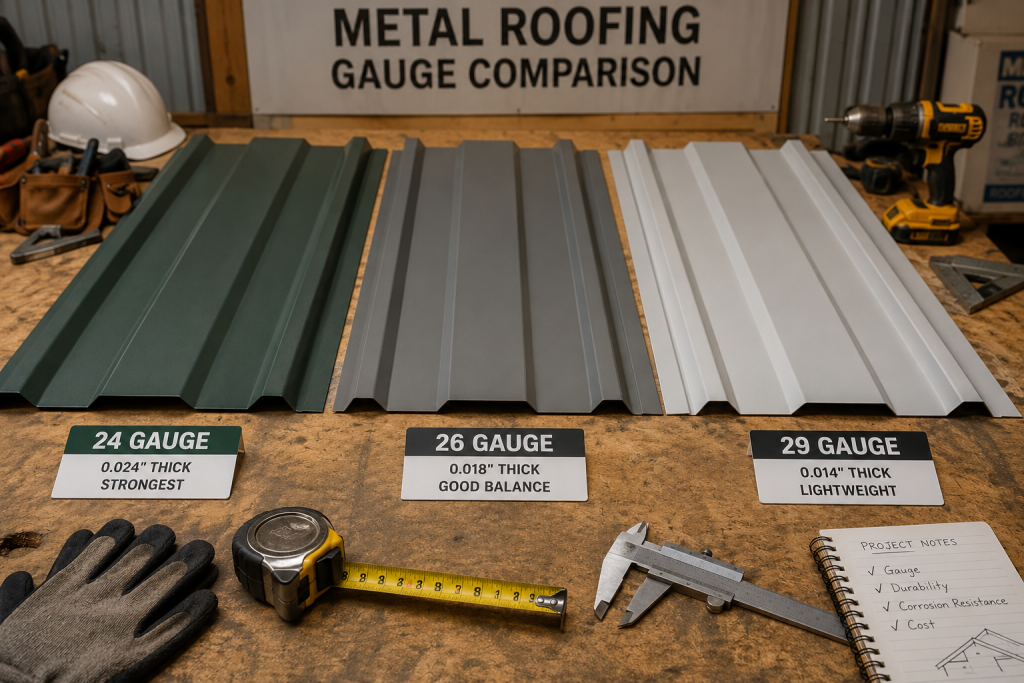
The term “gauge” refers to the thickness of the metal.
A common point of confusion is that lower gauge numbers indicate thicker metal. That means:
| Metal Roofing Gauge | Relative Thickness | Typical Strength |
|---|---|---|
| 24 Gauge | Thickest | Highest |
| 26 Gauge | Medium | Very Good |
| 29 Gauge | Thinnest of the three | Good |
| 30 Gauge | Even thinner | Lower |
Most residential metal roofs use 24, 26, or 29-gauge steel.
Although the difference may appear small, thickness can significantly affect:
- Impact resistance
- Wind performance
- Noise levels
- Dent resistance
- Longevity
- Overall durability
Advantages of 29 Gauge Metal Roofing
Lower Upfront Cost
One of the biggest reasons homeowners choose 29-gauge metal roofing is affordability.
Because less steel is used during manufacturing, material costs are lower. This can reduce the total project price, especially for large roof areas.
For homeowners balancing roofing needs with a limited budget, this can make metal roofing more accessible.
Lightweight Construction
29-gauge panels are lighter than thicker metal roofing products.
Benefits include:
- Easier transportation
- Faster installation
- Reduced structural load
- Potential labor savings
In some retrofit situations, lighter roofing materials may simplify the installation process.
Good Performance in Moderate Climates
In many parts of the United States, 29-gauge roofing performs well for years when properly installed.
It can be a practical choice in areas with:
- Mild winters
- Limited hail activity
- Moderate wind exposure
- Typical residential conditions
According to the Metal Construction Association roofing resources, proper installation and panel design often play a major role in roof performance, regardless of gauge.
Long Lifespan Compared to Asphalt Shingles
Even thinner metal roofing generally lasts longer than traditional asphalt shingles.
A properly installed metal roof can often provide decades of service with routine maintenance and inspections.
Disadvantages of 29 Gauge Metal Roofing
More Vulnerable to Dents
The biggest drawback of 29-gauge metal roofing is reduced dent resistance.
This becomes especially important in areas prone to:
- Hailstorms
- Falling tree branches
- Wind-driven debris
- Heavy snow sliding from upper roof sections
If hail is common in your region, thicker gauges often provide better protection.
Lower Impact Resistance
Thinner steel naturally absorbs less impact energy.
Although a 29-gauge roof can withstand normal weather conditions, severe impacts may leave visible dents or cosmetic damage.
Potentially Shorter Lifespan in Harsh Conditions
The roofing system’s lifespan depends on many factors, including:
- Climate
- Installation quality
- Protective coatings
- Maintenance
In demanding environments, thicker roofing materials may retain their appearance and structural integrity longer.
Can Feel Less Rigid
Some homeowners notice that thinner panels may appear less solid during installation or maintenance work.
While this does not automatically mean failure, thicker panels generally offer greater rigidity and strength.
29 Gauge vs 26 Gauge Metal Roofing
Many homeowners compare these two options before making a decision.
| Feature | 29 Gauge | 26 Gauge |
|---|---|---|
| Cost | Lower | Higher |
| Weight | Lighter | Slightly heavier |
| Dent Resistance | Moderate | Better |
| Wind Resistance | Good | Better |
| Longevity | Good | Excellent |
| Structural Strength | Lower | Higher |
| Best For | Budget-conscious homeowners | Long-term durability |
For many residential projects, 26-gauge roofing is often considered the “sweet spot” between cost and performance.
Is 29 Gauge Metal Roofing Strong Enough for Residential Homes?
In many cases, yes.
A properly installed 29-gauge metal roof can successfully protect a home for many years.
However, strength depends on several factors:
Roof Design
Simple roof designs generally perform better because there are fewer vulnerable areas.
Fastener Quality
High-quality screws and proper fastening techniques are critical.
Poor installation can cause failures regardless of gauge thickness.
Underlayment
A durable underlayment provides additional protection against moisture intrusion.
The National Roofing Contractors Association emphasizes that roofing systems work best when all components are installed correctly, not just the visible roofing material.
Local Weather Conditions
A roof that performs well in Georgia may not be ideal for parts of Texas, Colorado, or Oklahoma where hail and severe storms are more common.
How Does 29 Gauge Roofing Handle Wind?
Wind resistance depends on more than metal thickness alone.
Important factors include:
- Panel profile
- Fastener spacing
- Roof pitch
- Edge detailing
- Installation quality
According to the Federal Emergency Management Agency’s wind-resistant roofing guidance, proper attachment methods are essential for improving roof performance during severe weather events.
Even thicker metal can fail if installed incorrectly.
Is 29 Gauge Metal Roofing Good for Hail-Prone Areas?
Generally, it is not the first choice.
While 29-gauge roofing can survive many hail events without leaks, it is more likely to experience cosmetic denting.
Homeowners in hail-prone regions may benefit from:
- 26-gauge steel roofing
- 24-gauge standing seam roofing
- Impact-resistant roofing systems
If maintaining appearance is important, investing in thicker panels often makes sense.
Typical Cost Considerations
Although pricing varies by location and market conditions, 29-gauge roofing is usually the most affordable steel roofing option.
Factors affecting cost include:
- Roof size
- Roof complexity
- Metal coating type
- Color selection
- Labor costs
- Regional demand
Remember that the cheapest option isn’t always the best long-term value.
Sometimes spending slightly more upfront can reduce future repair expenses.
Expert Tip
Expert Tip: Ask your contractor to explain why they recommend a specific gauge rather than simply choosing the cheapest option. A reputable roofer should consider your local weather, roof design, and long-term goals before recommending 29-gauge, 26-gauge, or 24-gauge metal roofing.
When to Call a Roofing Professional
While homeowners can learn a lot through research, certain situations require professional evaluation.
Call a roofing contractor if you notice:
- Storm damage
- Large dents
- Loose panels
- Water stains in the attic
- Rust or corrosion
- Fastener failures
- Flashing problems around chimneys or skylights
Avoid walking on a metal roof unless you understand proper safety procedures.
Roof work involves serious fall hazards. The OSHA residential roofing safety guidance explains why professional safety measures are critical during roofing work.
Signs You May Need a Thicker Metal Roof
A thicker gauge may be worth the investment if:
- You live in a hail-prone area.
- Your region experiences severe windstorms.
- You plan to stay in the home long term.
- You want maximum dent resistance.
- Your roof has a low slope and requires enhanced durability.
In these situations, 26-gauge or 24-gauge roofing may provide better long-term value.
Common Mistakes Homeowners Should Avoid
- Choosing roofing solely based on price.
- Assuming all metal roofing products are identical.
- Ignoring local weather risks.
- Hiring contractors without verifying experience.
- Overlooking manufacturer warranty details.
- Failing to inspect underlayment quality.
- Not comparing multiple contractor estimates.
- Assuming thicker metal automatically guarantees better installation.
FAQs
Is 29 gauge metal roofing good for residential homes?
Yes. It is a common residential roofing option that offers a balance between affordability and durability when installed correctly.
How long does 29 gauge metal roofing last?
Lifespan varies based on climate, maintenance, coating quality, and installation, but many systems can provide decades of service.
Is 29 gauge roofing too thin?
Not necessarily. It is thinner than 26-gauge and 24-gauge roofing but remains suitable for many homes in moderate climates.
Which is better, 26 gauge or 29 gauge metal roofing?
26-gauge roofing generally provides better strength, dent resistance, and long-term durability, while 29-gauge roofing is usually more affordable.
Can 29 gauge metal roofing withstand strong winds?
Yes, when properly installed and engineered for local building requirements. Installation quality is often just as important as gauge thickness.
Does 29 gauge metal roofing dent easily?
It is more susceptible to denting than thicker metal roofing, especially during hailstorms or impacts from debris.
Is 29 gauge metal roofing worth the money?
For homeowners seeking an affordable metal roofing solution in areas with moderate weather conditions, it can provide excellent value.
Conclusion
So, is 29 gauge metal roofing good? For many homeowners, the answer is yes. It offers an affordable entry point into metal roofing while delivering better longevity and durability than many traditional roofing materials.
However, the right choice depends on your local weather, budget, and long-term plans. If your area experiences frequent hail, severe storms, or high winds, investing in 26-gauge or even 24-gauge roofing may provide greater peace of mind.
Before making a final decision, schedule a professional roof inspection and discuss gauge options with a qualified contractor. Taking the time to match the roofing material to your home’s needs can help you make a smarter, longer-lasting roofing investment.