How to Install 5V Metal Roofing: A Homeowner-Friendly Guide
Installing a metal roof can feel confusing if you are used to asphalt shingles. The panels are larger, the fasteners matter more, and small mistakes around overlaps or flashing can lead to leaks later. If you are wondering how to install 5V metal roofing, the most important thing to understand is that this is not just a “screw panels to the roof” project.
5V metal roofing is popular on homes, porches, barns, sheds, coastal houses, and farmhouse-style roofs because it has a clean, traditional ribbed look. It can last a long time when installed correctly, but it needs the right roof slope, underlayment, fastener spacing, trim, and safety planning.
This guide explains what 5V metal roofing is, how the installation process works, what homeowners should check before starting, when DIY may be realistic, and when calling a roofing professional is the smarter move.
Quick Answer
To install 5V metal roofing, prepare a clean roof deck, install underlayment, add drip edge and trim, place panels square to the eave, overlap side laps correctly, fasten with approved screws, and seal edges, ridges, valleys, and penetrations. Always follow the panel manufacturer’s instructions and local building codes.
What Is 5V Metal Roofing?
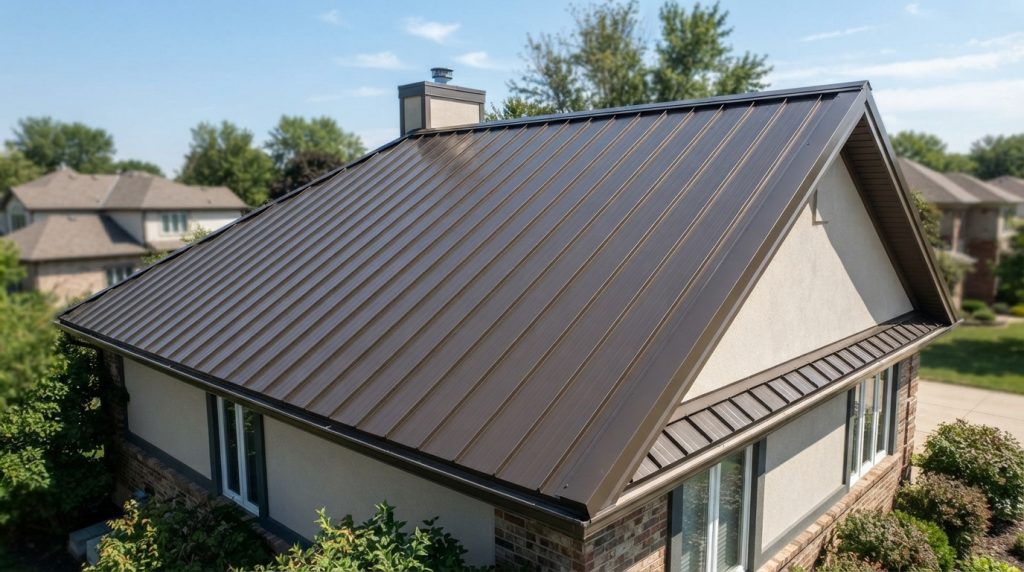
5V metal roofing is a type of exposed-fastener metal panel. It gets its name from the five raised “V” ribs across each panel. These ribs add strength, help channel rainwater, and give the roof its classic look.
Unlike standing seam metal roofing, 5V panels are usually attached with visible screws. The screws go through the metal panel and into the roof deck or framing below. Each screw has a washer that seals the hole.
That simple design makes 5V roofing more affordable than many premium metal systems. It is also easier to understand for homeowners. However, exposed fasteners require careful installation and future maintenance because the washers can age over time.
Is 5V Metal Roofing Right for Your Home?
5V metal roofing works best on simple roof shapes with clear slopes. It is commonly used on:
- Porches
- Garages
- Cabins
- Farmhouse-style homes
- Coastal homes
- Utility buildings
- Additions and sheds
It may not be ideal for every house. If your roof has many valleys, skylights, dormers, chimneys, or unusual angles, installation becomes more complicated. More cuts and flashing details mean more chances for leaks.
Good 5V metal roofing installation depends on three things: a sound roof deck, correct panel alignment, and watertight flashing. If any of these are weak, the roof may fail earlier than expected.
Before You Install: Important Checks
Before learning how to install 5V metal roofing step by step, check whether your roof is ready for it.
Check the Roof Slope
Metal panels need enough slope to shed water. A low-slope roof can allow water to move slowly, collect at laps, or push under panels during wind-driven rain.
Always check the manufacturer’s minimum slope requirement. Some 5V systems may require a steeper slope than other metal panels because the side laps and exposed fasteners need good drainage.
Inspect the Roof Deck
The roof deck is the plywood or boards under the roofing. It must be solid, dry, and flat.
Look for:
- Soft spots
- Rotten plywood
- Sagging areas
- Mold or moisture stains
- Loose decking
- Uneven framing
Do not install metal panels over a weak deck. Metal roofing can last for decades, but only if the structure below it is reliable.
Check Local Building Codes
Roofing rules vary by city, county, and state. Some areas require permits, inspections, specific underlayment, wind-rated fasteners, or special installation details.
This is especially important in hurricane, wildfire, snow, and hail-prone regions. FEMA’s Home Builder’s Guide to Coastal Construction is a useful reference for homeowners in coastal and high-wind areas because it explains why roof attachment and underlayment details matter.
Plan for Safety
Roofing work is dangerous. Metal panels can be slippery, sharp, and hard to control in wind. According to OSHA’s residential fall protection guidance, fall protection is a major concern in residential construction, including roofing work.
Do not work on a wet, icy, windy, or steep roof. If you are not comfortable with ladders, harnesses, roof edges, or cutting metal panels, hire a professional.
Tools and Materials Needed
A 5V metal roofing project usually requires:
- 5V metal roofing panels
- Synthetic roofing underlayment or approved felt
- Drip edge
- Eave trim
- Rake trim
- Ridge cap
- Foam closure strips, if required
- Butyl tape or approved sealant
- Metal roofing screws with washers
- Tin snips or metal shears
- Screw gun with depth control
- Chalk line
- Tape measure
- Square
- Utility knife
- Ladder and roof safety equipment
- Gloves and eye protection
Do not use random screws from a general hardware bin. Use fasteners approved for metal roofing and compatible with your panel material. Wrong fasteners can rust, loosen, or damage the panel coating.
Step-by-Step: How to Install 5V Metal Roofing

The exact details depend on the manufacturer, panel width, roof slope, local code, and roof layout. Many manufacturers provide detailed instructions, such as this 5V-Crimp installation guide from Metal Sales, and those instructions should always take priority over general guidance.
1. Remove Old Roofing or Prepare the Existing Surface
Some metal roofs can be installed over existing shingles if local code allows it and the roof is in good condition. However, many contractors prefer removing the old roof first.
Removing old shingles allows you to:
- Inspect the decking
- Replace rotten wood
- Correct uneven areas
- Improve underlayment installation
- Avoid trapping moisture
For a long-lasting roof, a clean deck is usually the better choice.
2. Repair and Clean the Roof Deck
Replace damaged plywood or boards. Secure loose decking. Sweep away nails, dust, shingle granules, and debris.
The deck should be flat because metal panels can show uneven areas more clearly than shingles. A wavy roof deck can make the finished roof look poor and may affect how panels overlap.
3. Install Underlayment
Underlayment is the protective layer between the roof deck and metal panels. It helps protect the home if wind-driven rain gets under the roof panels.
Synthetic underlayment is common under metal roofing because it is strong and resists tearing. In colder climates, ice and water shield may be required at eaves, valleys, and other leak-prone areas.
Never skip underlayment. Metal panels are the main water-shedding layer, but underlayment is an important backup.
4. Install Drip Edge and Eave Trim
Drip edge and eave trim help direct water away from the fascia and roof deck edge. They also create a clean starting point for the panels.
Install these pieces straight and secure. If the eave trim is crooked, the panels may start crooked too.
5. Square the First Panel
The first panel controls the rest of the roof. Take your time here.
Measure carefully and snap a chalk line if needed. The panel should be square to the eave and aligned with the roof edge. If the first panel is off by even a small amount, the mistake can grow across the roof.
A good rule for homeowners: slow down on the first panel and speed up only after the layout is proven straight.
6. Place Panels With Correct Overlap
5V panels have side laps where one panel overlaps the next. These laps must face the correct direction and follow the manufacturer’s recommendation.
If laps are installed poorly, rain can enter the seam. Wind-driven rain makes this risk worse.
Common lap details may include:
- Overlapping the correct rib
- Using sealant or butyl tape where required
- Keeping panels aligned at the eave
- Avoiding gaps at side laps
- Checking that the panel ribs nest properly
Do not guess on overlap direction. Follow the panel instructions.
7. Fasten the Panels Correctly
Fastener placement is one of the most important parts of 5V metal roofing installation.
Use the correct screws, spacing, and pattern. Screws should be driven straight, not at an angle. The washer should compress enough to seal, but not so much that it bulges or breaks.
A properly driven screw looks snug and flat. An overdriven screw can damage the washer. An underdriven screw can leave a gap where water enters.
Fastener mistake to avoid: Do not overtighten screws. This is one of the most common causes of leaks on exposed-fastener metal roofs.
8. Cut Panels Carefully
Use proper metal-cutting tools. Avoid rough cuts that damage the panel coating.
Cut edges should be clean. Remove metal shavings after cutting because they can rust and stain the roof surface.
Do not use tools that create excessive heat unless the manufacturer allows it. Heat can damage paint coatings and shorten the life of the panel finish.
9. Install Flashing Around Roof Features
Flashing is the metal or sealed detail that protects transitions and openings. It is needed around:
- Chimneys
- Skylights
- Plumbing vents
- Valleys
- Sidewalls
- End walls
- Roof-to-wall connections
Flashing is where many DIY roofs fail. Water naturally moves toward valleys and penetrations, so these areas need extra care.
If your roof has several penetrations or complex flashing points, this is a strong reason to hire a roofing professional.
10. Install Ridge Cap and Closures
The ridge cap covers the peak of the roof. It protects the top opening where panels meet.
Foam closures may be used under ridge caps or at eaves to block wind-driven rain, insects, and debris. Some roofs also need ridge ventilation, depending on the attic design.
Good attic ventilation helps reduce heat and moisture problems. A reflective or light-colored metal roof may also help reduce heat gain. The U.S. Department of Energy explains that cool roofs reflect more sunlight and absorb less solar energy, which can be helpful in hot sunny climates.
11. Inspect the Finished Roof
After installation, inspect the whole roof before cleanup.
Check for:
- Crooked panels
- Loose screws
- Overdriven screws
- Missing closures
- Gaps at flashing
- Scratched panel coating
- Metal shavings
- Unsealed penetrations
- Poor ridge cap alignment
A final inspection can prevent small mistakes from becoming expensive leaks.
DIY vs Professional Installation
Some homeowners can install 5V metal roofing on a small shed, detached garage, or simple porch roof. A full house roof is different.
| Factor | DIY May Be Reasonable | Professional Is Better |
|---|---|---|
| Roof size | Small shed or porch | Full home or large garage |
| Roof shape | Simple gable roof | Valleys, dormers, skylights, chimneys |
| Slope | Low to moderate and safe | Steep or high roof |
| Experience | Comfortable with roofing tools | Limited construction experience |
| Safety risk | Easy ladder access | Fall risk, wind exposure, difficult access |
| Warranty needs | Basic utility structure | Long-term home protection |
For many homeowners, the best compromise is to learn the process so they can speak confidently with contractors, compare bids, and inspect the work intelligently.
Cost Factors Homeowners Should Understand
The cost of installing 5V metal roofing varies by region, roof size, panel gauge, coating quality, labor rates, and roof complexity.
The biggest cost factors include:
- Panel thickness: Heavier-gauge metal usually costs more but may perform better.
- Paint finish: Better coatings usually improve fade and corrosion resistance.
- Tear-off: Removing old roofing adds labor and disposal cost.
- Deck repairs: Rotten plywood or framing increases project cost.
- Flashing complexity: Chimneys, skylights, valleys, and wall transitions add labor.
- Wind or coastal requirements: High-wind areas may require stronger fastening and underlayment.
- Contractor quality: Skilled installation may cost more upfront but can reduce leak risk.
The cheapest bid is not always the best value. With exposed-fastener metal roofing, installation quality directly affects performance.
Benefits and Limitations of 5V Metal Roofing
Benefits
5V metal roofing can be a smart choice because it offers:
- Classic ribbed appearance
- Good rain-shedding performance
- Lower cost than many standing seam systems
- Strong durability when properly installed
- Good fit for porches, barns, cabins, and coastal homes
- Lighter weight than many tile roofing systems
Limitations
It also has trade-offs:
- Exposed screws require periodic inspection
- Washers can age over time
- Poor fastener placement can cause leaks
- Complex roofs require skilled flashing
- Panels can dent from severe hail
- Installation can be dangerous for DIY homeowners
The system is simple, but it is not mistake-proof. Most failures come from poor fastening, bad flashing, wrong overlap, or skipped underlayment.
Expert Tip
Expert Tip: Before approving a 5V metal roofing estimate, ask the contractor which underlayment, screw type, fastener pattern, closure strips, and flashing details they plan to use. A good contractor should answer clearly without guessing.
When to Call a Roofing Professional
Call a roofing professional if your roof has:
- A steep slope
- More than one story
- Valleys or dormers
- Skylights or chimneys
- Signs of rotten decking
- Active leaks
- Structural sagging
- Storm damage
- Local high-wind requirements
- Permit or inspection requirements
You should also call a professional if you are unsure about fall protection, panel cutting, flashing, or ventilation.
A professional roofer can inspect the deck, confirm the roof slope, install panels safely, and handle details that are difficult for homeowners to get right. This is especially important if the roof protects living space, not just a shed or small outbuilding.
Common Mistakes Homeowners Should Avoid
- Starting with a crooked first panel: This can throw off the entire roof.
- Using the wrong screws: Non-roofing fasteners may rust, leak, or loosen.
- Overtightening screws: Crushed washers can fail early.
- Undertightening screws: Loose washers can let water in.
- Skipping underlayment: This removes a major backup layer of protection.
- Ignoring roof slope: Low-slope roofs need special attention.
- Poor flashing around penetrations: Chimneys, vents, and skylights are common leak points.
- Leaving metal shavings on the roof: Shavings can rust and stain the panels.
- Working in unsafe weather: Wind can lift panels and wet metal can be slippery.
- Choosing the lowest bid without checking details: A cheap installation can become expensive if leaks appear later.
Maintenance After Installation
A 5V metal roof does not need heavy maintenance, but it should not be ignored.
Check the roof at least once or twice a year from the ground or with safe access. Look for loose fasteners, backed-out screws, cracked washers, damaged flashing, rust spots, clogged gutters, and debris buildup.
After strong storms, inspect for dents, lifted trim, missing screws, and damage around roof edges. Do not walk on the roof unless you know where it is safe to step and have proper protection.
A simple maintenance routine can help extend the life of the roof and catch small problems early.
FAQs
Can I install 5V metal roofing over shingles?
Sometimes, but it depends on local code, roof condition, and manufacturer guidance. Many roofers prefer removing old shingles so they can inspect the deck and install underlayment properly.
What roof slope is needed for 5V metal roofing?
The required slope depends on the specific panel system and manufacturer. Always check the product instructions before installation. Low-slope roofs may need a different metal roofing system or special waterproofing details.
Are screws supposed to go on the ribs or flat areas?
Fastener placement depends on the manufacturer’s instructions. Some systems specify fastening through certain flat areas, while others may have different patterns. Follow the approved fastening guide for your panel.
How long does 5V metal roofing last?
A properly installed 5V metal roof can last for many years, especially with good coating, correct fasteners, and regular maintenance. Exposed fastener washers may need inspection or replacement over time.
Is 5V metal roofing good for coastal homes?
It can be, but coastal homes need corrosion-resistant materials, proper fasteners, strong attachment, and careful underlayment. Salt air and high winds make product selection and installation quality very important.
Can a homeowner install 5V metal roofing alone?
A small shed or porch may be manageable for an experienced DIY homeowner. A full home roof is usually better left to professionals because of safety risks, flashing details, code requirements, and warranty concerns.
Why does 5V metal roofing leak?
Common causes include overdriven screws, loose screws, failed washers, poor panel overlap, missing closures, bad flashing, low roof slope, or incorrect installation around vents and chimneys.
Conclusion
Learning how to install 5V metal roofing helps homeowners understand what makes this roof system durable, attractive, and cost-effective. The basic process includes preparing the roof deck, installing underlayment, aligning panels carefully, fastening correctly, and sealing all trim, ridge, valley, and penetration details.
For small, simple structures, a skilled DIY homeowner may be able to handle the work with the right tools and safety setup. For full homes, steep roofs, coastal areas, or roofs with complex flashing, hiring a qualified roofing professional is usually the smarter decision.
Before spending money, compare materials, ask about installation details, check local code requirements, and make sure the roof system is suitable for your home. A well-installed 5V metal roof can protect your home for years, but the quality of the installation matters just as much as the metal panels themselves.