
How to Prevent Water From Entering Your Roof: Metal Roof Leak Prevention Guide

Water entering through a metal roof can start as a small drip and end with damaged insulation, stained drywall, rotten decking, mold, or costly structural repairs. The difficult part is that the place where you see water indoors may not be where the roof is actually leaking.
Learning how to prevent water from entering your roof means protecting the entire roofing system—not simply applying sealant wherever you see a gap. Metal panels, seams, fasteners, flashing, underlayment, penetrations, valleys, gutters, and ventilation all have to work together.
This guide explains the most common water-entry points on metal roofs, how to prevent leaks before they begin, what homeowners can safely inspect, and when professional repair or replacement is the smarter choice.
Quick Answer
To prevent water from entering your roof, keep metal roof seams, flashing, fasteners, penetrations, valleys, and drainage systems in good condition. Inspect the roof regularly and after severe weather, repair loose or damaged components promptly, use compatible roofing sealants, and have unsafe or complicated leaks evaluated by a qualified roofing contractor.
Why Water Gets Into Metal Roofs
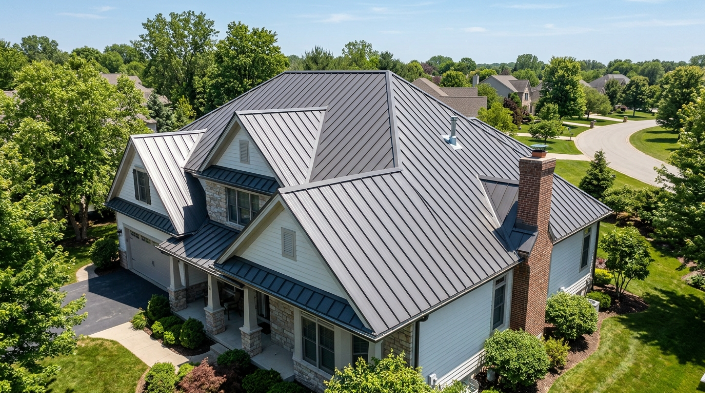
A properly installed metal roof is designed to shed rain efficiently. The metal panel itself is often not the weakest point. Water usually finds its way through places where components meet or where something passes through the roof.
Common vulnerable locations include:
- Panel seams and end laps
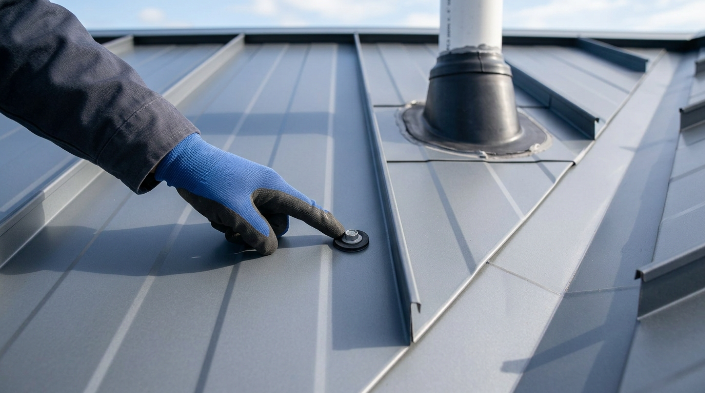
- Exposed screws and sealing washers
- Chimney and wall flashing
- Plumbing vents and exhaust penetrations
- Skylights
- Ridge caps
- Roof valleys
- Eaves and drip edges
- Gutters and drainage paths
- Rusted, punctured, or storm-damaged panels
Metal also expands and contracts as temperatures change. That movement can stress seams, fasteners, clips, sealants, and flashing over time. IBHS guidance on metal roof flashing and water control explains that flashing must be detailed so it directs water away while still accommodating thermal movement.
That is why preventing a metal roof leak is an ongoing maintenance issue rather than a one-time sealing job.
1. Inspect Your Roof Before a Leak Becomes Obvious
Preventive inspection is one of the most effective ways to stop water intrusion.
The National Roofing Contractors Association’s homeowner roofing resources recommend periodic inspections because loose seams, deteriorated flashing, and other visible problems can often be detected before serious leaking develops.
A practical schedule is to look over the roof in the spring and fall and check again after major wind, hail, or severe rain events.
What Homeowners Can Check Safely
From the ground, attic, or another protected location, look for:
- Bent or lifted metal panels
- Missing trim or ridge-cap sections
- Rust around fasteners
- Backed-out screws
- Cracked or deteriorated sealing washers
- Loose flashing
- Open seams
- Damaged vent boots
- Debris collecting in valleys
- Sagging or overflowing gutters
- Water stains on ceilings
- Damp or compressed attic insulation
- Dark staining on decking or rafters
- Peeling interior paint
- Musty odors
Water stains deserve attention even when they appear dry. They may indicate an intermittent leak that occurs only during heavy rain or when wind pushes water beneath a roof detail.
2. Keep Metal Roof Fasteners Watertight
Many exposed-fastener metal roofs use screws with rubber or synthetic sealing washers. When properly installed, the washer compresses against the panel and seals the screw opening.
Problems develop when a fastener is:
- Loose
- Overtightened
- Installed at an angle
- Corroded
- Missing
- Backing out
- Paired with a cracked or deteriorated washer
Temperature-driven roof movement can also loosen fasteners gradually.
IBHS guidance for metal roofing warns that exposed fasteners need properly installed sealing washers and that both over-tightening and under-tightening can compromise the seal.
Do not simply tighten every visible screw. Driving a screw too far can crush or split its washer and deform the panel.
A roofing professional can determine whether an individual fastener should be tightened, replaced with an approved fastener, or addressed as part of a larger fastener-maintenance project.
3. Protect Roof Seams and Panel Connections
Seams are the joints where sections of metal roofing meet. Depending on the roof system, they may be mechanically seamed, overlapped, clipped, sealed with butyl material, or constructed using another manufacturer-specific detail.
Water may penetrate when:
- An overlapping seam separates
- Sealant deteriorates
- An end lap opens
- A standing seam becomes damaged
- Panels shift because of thermal movement
- Installation was incorrect from the beginning
Do not assume that covering the outside of every seam with caulk will solve the problem. Some metal roof systems are designed to move, and inappropriate surface sealant may interfere with that movement or simply hide the actual defect.
The Metal Construction Association’s sealant guidance emphasizes selecting sealants appropriate for the specific metal assembly and following the roof or panel manufacturer’s recommendations.
Expert Tip: Before applying any sealant to a metal roof, identify the panel manufacturer or roofing system when possible. The correct product and location matter more than applying a large amount of sealant.
4. Maintain Flashing Around Roof Transitions
Flashing is thin material installed where the roof changes direction or meets another surface. Its purpose is to direct water safely over and away from vulnerable joints.
Metal roof flashing may be found around:
- Chimneys
- Walls
- Valleys
- Roof edges
- Dormers
- Skylights
- Plumbing stacks
- Mechanical equipment
Flashing problems are especially important because heavy or wind-driven rain can push water into openings that appear harmless during ordinary weather.
Watch for flashing that is:
- Loose
- Bent
- Corroded
- Separated from a wall
- Missing fasteners
- Poorly sealed
- Pulling away from another roof component
Replacing flashing correctly may require removing panels, siding, trim, or nearby roofing components. For that reason, flashing repair often belongs in professional hands.
5. Pay Special Attention to Roof Penetrations
Every hole through a roof creates another place where water must be controlled.
Typical penetrations include:
- Plumbing vents
- Chimneys
- Exhaust ducts
- Skylights
- Satellite or antenna mounts
- HVAC curbs
- Solar mounting components
Boots, collars, flashing, gaskets, and sealants around these openings can deteriorate before the metal panels themselves do.
IBHS metal-roof guidance recommends minimizing penetrations and notes that penetrations through panel seams create greater potential for water infiltration.
When new equipment must be installed, ask both the equipment installer and your roofer how the penetration will be flashed without damaging the roof system or affecting warranty coverage.
6. Keep Valleys, Gutters, and Downspouts Clear
Stopping leaks also requires getting rainwater off the roof quickly.
A valley is the V-shaped area where two sloping roof sections meet. Valleys carry a large amount of runoff during storms. Leaves, branches, pine needles, and other debris can slow the water and hold moisture against seams or flashing.
Gutters create similar problems when clogged. Water may back up against the roof edge, fascia, or flashing instead of flowing into the downspout.
Inspect drainage areas for:
- Leaves and roof debris
- Standing water
- Bent gutter sections
- Loose gutter fasteners
- Clogged downspouts
- Overflow marks
- Corrosion
- Water draining toward the foundation
Correct drainage protects more than the roof. It also helps reduce water exposure around siding, walls, windows, and the home’s foundation.
7. Make Sure Underlayment and Decking Remain Sound
The visible metal is only one layer of the roof.
Decking is the structural surface beneath the roof covering, commonly made from plywood or oriented strand board on residential homes. Underlayment is a protective layer installed between the decking and exterior roofing.
Depending on the roof design, underlayment may provide an important secondary defense if rain passes a metal roof component.
If repeated leaks have soaked the decking, simply sealing the exterior opening may not be enough. Wet decking can soften, swell, rot, or lose its ability to hold fasteners securely.
Signs that a deeper inspection may be necessary include:
- Sagging roof areas
- Soft decking
- Large interior stains
- Repeated leaks in the same area
- Multiple leak locations
- Visible wood deterioration
- Persistent attic moisture
Structural deterioration should be evaluated before anyone walks on the affected roof.
8. Do Not Confuse Condensation With a Roof Leak
Not every drop of water beneath a metal roof came through the exterior panels.
Warm, humid indoor air can reach a cold roof surface and condense into liquid water. Poor attic ventilation, inadequate insulation, disconnected bathroom exhaust ducts, or high indoor humidity can make the problem worse.
Possible condensation clues include:
- Moisture when it has not rained
- Widespread dampness rather than one leak trail
- Droplets on the underside of metal
- Damp insulation in several areas
- Mold or mildew across broad attic surfaces
If moisture appears during dry weather, have the roof assembly, ventilation, insulation, and indoor humidity evaluated before paying for an exterior leak repair.
Metal Roof Leak Prevention Checklist
| Area | What to Look For | Recommended Action |
|---|---|---|
| Fasteners | Loose screws, rust, failed washers | Have defective fasteners corrected |
| Seams | Open laps, separation, failed sealant | Use system-compatible repair methods |
| Flashing | Gaps, corrosion, movement | Repair or replace damaged flashing |
| Penetrations | Cracked boots, loose collars | Reseal or reflash correctly |
| Valleys | Leaves, debris, corrosion | Keep drainage path clear |
| Gutters | Overflow, clogs, sagging | Clean and repair drainage |
| Panels | Rust, holes, dents, lifted edges | Evaluate repair or panel replacement |
| Attic | Stains, damp insulation, mold | Trace moisture and find the source |
| Ventilation | Persistent humidity or condensation | Correct airflow or insulation problems |
9. Repair Storm Damage Promptly
Metal roofs can tolerate severe weather, but high winds, falling branches, hail, and flying debris can damage seams, flashing, fasteners, or panels.
After a major storm, inspect from a safe location and document suspected damage with photographs.
Look for:
- Lifted panel edges
- Bent flashing
- Loose ridge caps
- Punctures
- Branch impacts
- Displaced gutters
- Interior water stains
- Newly exposed fasteners
If an insurance claim may be necessary, avoid making permanent changes before documenting the condition unless emergency work is needed to prevent additional damage.
A licensed roofer can also provide a written assessment explaining whether the problem appears repairable or whether more extensive restoration is necessary.
10. Understand Repair Costs and Replacement Decisions
There is no single price for preventing or repairing a metal roof leak.
Cost depends on:
- Roof height and pitch
- Type of metal roofing
- Accessibility
- Leak location
- Number of damaged areas
- Required flashing work
- Fastener condition
- Corrosion
- Underlayment or decking damage
- Local labor rates
- Fall-protection requirements
- Warranty restrictions
A minor accessible fastener or flashing repair may require relatively little material. A concealed seam failure, deteriorated roof deck, or widespread installation problem can involve much more labor.
Metal roof systems can provide service lives measured in decades when properly installed and maintained, but age alone should not determine replacement. IBHS notes that some metal panel roof systems can remain in service for 40 years or longer, depending on the system and conditions.
Replacement becomes more reasonable when leaks are widespread, panels or structural components are badly deteriorated, previous repairs repeatedly fail, or correcting the original installation would require rebuilding large portions of the roof.
Warranty Coverage Matters
Before repairing a newer roof, review:
- Manufacturer material warranty
- Contractor workmanship warranty
- Coating warranty, if applicable
- Previous repair records
Using an incompatible sealant, drilling unnecessary holes, installing equipment incorrectly, or allowing an unapproved contractor to alter the system could affect warranty coverage.
Ask for repair methods and materials in writing before authorizing major work.
Common Mistakes Homeowners Should Avoid
- Coating everything with sealant. More caulk does not automatically create a better repair.
- Assuming the ceiling stain is directly below the leak. Water may travel along panels, framing, or insulation.
- Overtightening roof screws. Excess pressure can destroy sealing washers.
- Ignoring small rust spots. Corrosion can eventually create openings or weaken fasteners.
- Letting debris remain in valleys. Trapped moisture can accelerate deterioration.
- Installing equipment without roofing coordination. Solar, HVAC, satellite, and vent penetrations require proper waterproofing.
- Ignoring condensation. Moisture may originate inside the home rather than through the exterior roof.
- Walking on a wet metal roof. Smooth metal can become extremely slippery.
- Making undocumented repairs before an insurance inspection. Preserve photographs and records when storm damage may be covered.
Roof Safety: Know When Not to Climb
Roof work presents a serious fall hazard. Wet metal roofing can be especially slippery, and apparently solid panels may be unsafe if underlying decking or structural components are damaged.
OSHA’s residential roofing fall-protection guidance illustrates the level of planning and protective equipment professional roofing work may require.
Homeowners should generally limit inspection to the ground, attic, windows, or another protected location unless they have appropriate roofing experience and safety equipment.
Never climb onto a roof during rain, lightning, high winds, ice, frost, or when structural damage is suspected.
When to Consult a Licensed Roofing Contractor
Call a qualified roofing contractor when:
- Water is actively entering the home
- You cannot identify the leak source safely
- Flashing must be removed or rebuilt
- Standing seams or concealed clips are damaged
- Multiple fasteners or seams are failing
- The roof has extensive corrosion
- Panels are loose after a storm
- Decking appears soft or deteriorated
- A leak repeatedly returns after repairs
- Skylights or complicated penetrations are involved
- Insurance documentation is needed
- Warranty coverage could be affected
- You are considering coating or replacing the roof
- Access requires working on a steep, high, or slippery roof
Ask the contractor to explain where the water is entering, why the failure occurred, what repair method will be used, which materials are compatible with the roof, and how the repair affects existing warranties.
A detailed diagnosis is more useful than a proposal that simply says “seal roof leaks.”
FAQs
How do I stop rain from getting under a metal roof?
Find the actual entry point and repair the affected flashing, seam, fastener, penetration, or panel using a method compatible with the roof system. Also make sure valleys and gutters drain freely. Covering random areas with sealant may hide the problem without solving it.
What is the most common place for a metal roof to leak?
Fasteners, seams, flashing, penetrations, and roof transitions are common leak locations because they involve joints or openings rather than uninterrupted metal panels.
Can I seal a leaking metal roof myself?
Some simple ground-accessible maintenance may be manageable, but rooftop leak repairs involve fall hazards and can damage the roofing system when performed incorrectly. Complex flashing, seams, penetrations, corrosion, or recurring leaks should be evaluated professionally.
Does a metal roof need regular maintenance?
Yes. Metal roofing is durable, but fasteners, sealants, flashing, gutters, penetrations, and accessories can deteriorate or move over time. Regular inspection helps identify these issues before they create interior water damage.
Can clogged gutters cause a metal roof leak?
They can contribute to water problems. Clogged or damaged gutters may cause water to overflow or back up around roof edges, flashing, fascia, and nearby building components.
Why does my metal roof leak only during heavy rain?
Heavy or wind-driven rain can expose small weaknesses around flashing, seams, valleys, ridge details, or penetrations that do not leak during light rain. Note the wind direction and affected interior area to help a roofer narrow down the source.
Should I replace my entire metal roof because of one leak?
Usually not automatically. A localized failed fastener, flashing detail, seam, or damaged panel may be repairable. Replacement becomes more likely when deterioration is widespread, leaks occur in many areas, structural materials are damaged, or the original installation has systemic defects.
Conclusion
Knowing how to prevent water from entering your roof starts with understanding that a metal roof is a complete water-management system.
Keep seams, fasteners, flashing, penetrations, valleys, gutters, and roof edges in good condition. Watch the attic and interior for early moisture signs. Address storm damage promptly, maintain proper drainage, and use only repair materials compatible with the existing roof.
Most importantly, do not let a small leak become a dangerous DIY roofing project. When the leak source is uncertain, the roof is steep or damaged, or repairs affect structural components or warranties, arrange an inspection from a qualified roofing contractor.
A careful inspection now can often prevent a much more expensive water-damage repair later.