
How to Prevent Roof Leaks From Aging: A Metal Roof Homeowner Guide

An older metal roof can look perfectly fine from the driveway while small problems are developing around screws, seams, flashing, and roof penetrations. Then one heavy rain arrives, and a brown ceiling stain suddenly appears.
Knowing how to prevent roof leaks from aging can help you catch these problems before water reaches your insulation, roof decking, drywall, or framing.
The key is not covering an old roof with more sealant. Good prevention means regular inspections, keeping drainage paths clear, watching vulnerable roof details, fixing small defects promptly, and knowing when the roof has reached the point where repairs are no longer economical.
This guide explains what happens as a metal roof ages, which warning signs matter most, what maintenance homeowners can safely handle, and when professional repair or replacement makes more sense.
Quick Answer
To prevent roof leaks from aging, inspect your metal roof regularly, keep gutters and roof surfaces clear, repair loose fasteners and damaged flashing promptly, watch seams and penetrations, and address rust or coating failure early. Older roofs should also receive professional inspections so hidden deterioration can be found before it causes interior water damage.
Why Aging Metal Roofs Begin to Leak
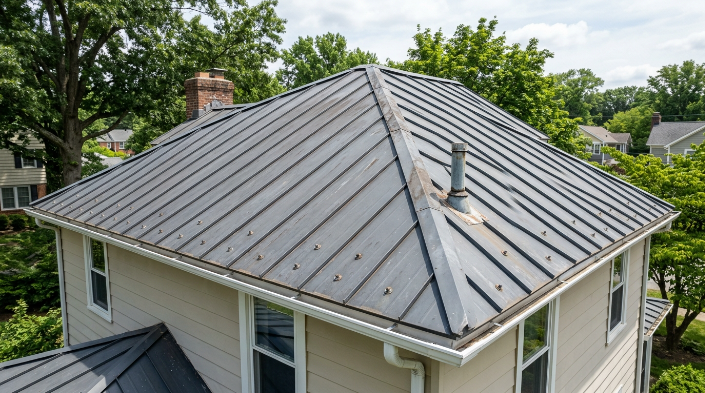
Metal roofing can provide decades of service, but the roof is more than the visible metal panels.
A typical system also includes:
- Fasteners or concealed clips
- Seams and panel joints
- Flashing
- Sealants
- Underlayment
- Ridge and edge details
- Pipe and vent penetrations
- Gutters and drainage components
- Roof decking beneath the metal
These parts age at different rates.
Metal panels may remain strong while a rubber washer around a screw becomes brittle. Flashing may loosen even though the nearby panel is undamaged. Sealant around a penetration may crack long before the metal itself fails.
Repeated heating and cooling also causes metal to expand and contract. A properly designed roof accommodates this movement, but decades of movement can place stress on fasteners, seams, sealants, and flashing.
That is why preventing an aging metal roof leak requires attention to the whole roofing system, not just the panels.
What Aging Does to the Most Vulnerable Roof Areas
| Roof Area | What Can Happen With Age | Possible Leak Warning | Preventive Action |
|---|---|---|---|
| Exposed fasteners | Washers crack or screws loosen | Rust, lifted screws, moisture | Have damaged fasteners evaluated and replaced correctly |
| Panel seams | Movement weakens joints or seals | Open seam, staining, intermittent leak | Inspect and repair failed seam details |
| Flashing | Metal shifts or sealant fails | Leaks near walls, chimneys or valleys | Repair loose or damaged flashing early |
| Roof penetrations | Boots and seals deteriorate | Water near vents or pipes | Inspect seals and surrounding flashing |
| Protective coating | UV and weather exposure wear it down | Fading, chalking, exposed metal | Evaluate recoating before corrosion spreads |
| Gutters and drainage | Debris slows water removal | Overflow, staining, backed-up water | Clean gutters and drainage paths |
| Metal panels | Scratches or corrosion progress | Rust, holes, thinning metal | Treat localized corrosion or replace damaged panels |
1. Inspect the Roof Before a Leak Appears
The biggest mistake is waiting for water to drip through the ceiling.
By that point, moisture may already have reached insulation, decking, or framing.
The National Roofing Contractors Association recommends periodic roof inspections and notes that inspections can reveal problems such as deteriorated flashing and damaged roofing before serious leaking develops. Its residential maintenance guidance recommends inspections twice a year, typically in spring and fall, along with additional checks after severe weather. NRCA residential roof maintenance guidance
For an aging metal roof, pay particular attention to:
- Loose or missing fasteners
- Rust around screws
- Separated seams
- Damaged flashing
- Failed sealant
- Bent or lifted panels
- Corrosion
- Debris trapped in valleys
- Damaged ridge caps
- Deteriorated vent boots
- Water marks inside the attic
You do not necessarily need to walk on the roof to perform a basic check.
Binoculars, photographs taken from the ground, attic observations, and a safely positioned ladder at the roof edge can reveal many warning signs.
Do not climb onto a wet, steep, rusty, storm-damaged, or structurally questionable metal roof.
2. Pay Special Attention to Fasteners
Exposed-fastener metal roofs depend on screws and sealing washers to keep water out.
As the roof ages, screws can loosen or back out. Rubber or neoprene washers can harden, crack, split, or lose their seal.
Look for:
- Raised screw heads
- Missing fasteners
- Cracked washers
- Rust around screw heads
- Screws installed at an angle
- Deformed metal around fasteners
However, tightening every visible screw is not a good maintenance strategy.
A screw that is overtightened can crush its sealing washer or deform the panel. A loose screw may also have an enlarged hole underneath it, meaning simply tightening it may not restore a reliable seal.
Older fastener problems are best evaluated individually.
3. Watch Seams and Joints for Movement
Metal roofs constantly react to temperature.
The panels warm during the day and cool at night. Seasonal changes add even larger temperature swings.
Over many years, this repeated movement may affect seams and joints.
Warning signs include:
- Visible gaps
- Distorted seams
- Loose trim
- Cracked sealant
- Water entering only during wind-driven rain
- Leaks that appear during certain seasons
A seam problem should not automatically be covered with a thick layer of generic caulk.
Metal roofing systems need materials that can tolerate movement and that are compatible with the existing panels and coatings.
An improper repair can trap water, fail quickly, or make a future professional repair more difficult.
4. Inspect Flashing Before It Fails Completely
Flashing is the shaped material used to direct water around places where the roof changes direction or meets another surface.
You may find flashing around:
- Chimneys
- Sidewalls
- Valleys
- Skylights
- Vent pipes
- Roof edges
- Dormers
- HVAC or exhaust penetrations
These areas deserve extra attention because they involve joints and transitions rather than one uninterrupted metal surface.
Check from a safe location for loose edges, gaps, corrosion, missing pieces, damaged sealant, or flashing that appears to have shifted.
A leak near a chimney does not necessarily mean the metal panel itself is bad. The flashing detail may be the real problem.
5. Keep Water Moving Off the Roof
Even a strong roof can develop problems when water cannot drain properly.
Leaves, pine needles, dirt, seed pods, and other debris can collect in gutters, roof valleys, behind penetrations, or along low areas.
Debris can:
- Slow drainage
- Hold moisture against metal
- Encourage corrosion
- Cause gutter overflow
- Direct water toward vulnerable seams
- Create ice-related problems in cold climates
NRCA maintenance guidance specifically recommends clearing debris from roof surfaces, valleys, gutters, and drains so water can move away properly.
Clean accessible gutters regularly, especially after heavy leaf fall or storms.
If roof-level debris cannot be reached safely, have it removed professionally rather than walking across an unfamiliar metal roof.
6. Deal With Corrosion Early
A small rust spot does not always mean your metal roof needs replacement.
It does mean the area deserves attention.
Corrosion can begin where:
- Protective coatings are scratched
- Cut panel edges are exposed
- Water remains trapped
- Dissimilar metals react with each other
- Fasteners deteriorate
- Debris holds moisture
- Previous repairs damaged the finish
Surface rust may be repairable when discovered early.
Deep corrosion, perforation, widespread panel thinning, or corrosion involving structural components is more serious.
Do not simply paint over active corrosion without determining why it developed.
If moisture continues reaching the area, the problem may keep spreading underneath the coating.
7. Check Inside the Attic
One of the safest places to look for an aging roof leak is inside your home.
During daylight or shortly after rain, inspect accessible attic areas for:
- Damp insulation
- Dark water stains
- Rust marks
- Wet decking
- Moist rafters
- Musty smells
- Mold-like growth
- Dripping around penetrations
- Daylight through unexpected openings
Remember that the interior stain may not sit directly below the exterior defect.
Water can run along the underside of metal, framing, underlayment, or other building materials before dripping.
Marking or photographing where you find moisture can give a roofing contractor useful clues.
8. Do Not Confuse Condensation With a Roof Leak
Water inside a metal-roofed building does not always mean rain is entering from outside.
Condensation can form when warm, moisture-filled indoor air reaches a cold surface.
This problem can be influenced by:
- Poor attic ventilation
- High indoor humidity
- Bathroom exhaust
- Kitchen moisture
- Missing or poorly installed air barriers
- Insulation problems
- HVAC duct condensation
A leak often appears after rain.
Condensation may be more closely related to temperature and indoor humidity.
Because the symptoms can overlap, persistent attic moisture deserves proper diagnosis before anyone starts sealing random roof areas.
9. Watch How the Roof Changes as It Ages
Natural weather exposure gradually changes roofing materials.
The Insurance Institute for Business & Home Safety notes several age-related changes in asphalt shingles, including curling, exposed fasteners, buckling, and staining, illustrating how years of weather exposure can change roof-system performance. IBHS research on natural roof weathering
Metal ages differently, but the same general lesson applies: age alone is less useful than the condition of the roof’s critical components.
A 25-year-old metal roof that was well installed and maintained may still perform well. A much newer roof with poor flashing, installation defects, storm damage, or incompatible repairs may leak repeatedly.
Do not replace a roof simply because it reached a certain birthday. Have its actual condition evaluated.
10. Schedule Professional Maintenance Before Problems Multiply
As a metal roof gets older, professional inspection becomes more valuable.
A roofer may be able to examine details that cannot be evaluated accurately from the driveway, including:
- Seam engagement
- Concealed flashing
- Fastener condition
- Sealant adhesion
- Panel movement
- Corrosion severity
- Roof penetrations
- Decking condition
- Previous repairs
- Underlayment exposure
A small repair performed at the right time can prevent damage from spreading into the interior structure.
Expert Tip: Keep a simple roof history containing inspection dates, storm events, photographs, repair invoices, warranty documents, and notes about where leaks appeared. A good maintenance record helps contractors identify recurring problems instead of treating every leak as a new mystery.
Roof Maintenance Checklist for an Aging Metal Roof
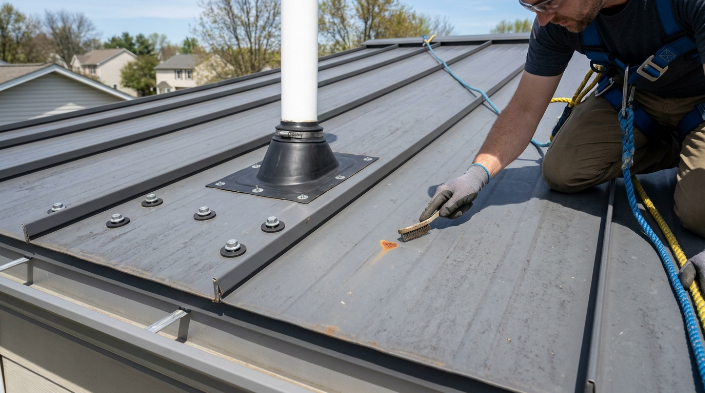
A practical maintenance routine can look like this:
- Inspect from the ground in spring and fall.
- Check again after severe wind, hail, or falling branches.
- Look inside the attic after heavy rain.
- Keep gutters and downspouts clear.
- Remove debris from roof drainage areas when it can be done safely.
- Watch fasteners, seams, flashing, and penetrations closely.
- Document new rust or coating damage with photos.
- Repair small defects before they spread.
- Review your roof warranty before altering panels, fasteners, or coatings.
- Schedule a professional inspection when the roof’s condition becomes difficult to judge safely.
Repair or Replacement: Which Makes More Sense?
Not every aging roof leak requires replacement.
A repair may be reasonable when:
- Damage is localized
- Most panels remain sound
- Only a few fasteners or flashing details have failed
- Corrosion is limited
- The roof has not developed repeated leaks
- The underlying decking remains solid
Replacement becomes more reasonable when:
- Corrosion is widespread
- Multiple panels have deteriorated
- Leaks occur repeatedly in different locations
- Decking has significant moisture damage
- Earlier repairs keep failing
- The roof system has major installation defects
- Repair labor is becoming disproportionately expensive
The decision should consider more than roof age.
Condition, repair history, remaining service life, labor cost, warranty implications, and the extent of hidden damage all matter.
For example, replacing one damaged flashing detail is very different from repeatedly repairing dozens of aging fasteners across a large exposed-fastener roof.
Cost and Labor Considerations
Preventive maintenance usually costs less than repairing damage after water has entered the house.
Once a leak reaches the interior, expenses may involve more than roofing work. You could also need:
- Wet insulation replacement
- Decking repairs
- Drywall work
- Painting
- Electrical inspection
- Mold remediation
- Structural repairs
Metal roof labor can also be specialized.
Standing-seam systems, concealed clips, custom flashing, coated steel, aluminum, copper, and exposed-fastener panels do not all use the same repair methods.
Getting two or three detailed estimates can be useful when a major repair or replacement is recommended.
Ask each contractor to separate the diagnosis, roofing work, damaged decking, flashing, coatings, and other major cost items so you can compare proposals fairly.
Check the Warranty Before Making Repairs
Roof warranties vary widely.
Some cover roofing material defects. Others may include workmanship for a certain period. Conditions and exclusions also differ between manufacturers and installers.
Before modifying an older metal roof, check:
- Manufacturer warranty documents
- Contractor workmanship warranty
- Required maintenance
- Approved repair products
- Transfer requirements
- Exclusions
- Documentation requirements
Using an incompatible coating, sealant, fastener, or unauthorized repair method could potentially affect coverage depending on the warranty terms.
Never assume that a “lifetime” warranty means every future leak or repair is covered.
Roof Safety Matters More Than DIY Savings
Metal roofing can become extremely slippery because of rain, morning dew, frost, dust, algae, or its surface finish.
Falls from roofs can cause severe injuries.
OSHA’s residential roofing safety guidance emphasizes the importance of appropriate fall-protection systems for professional roof work. OSHA residential fall-protection guidance OSHA also provides detailed guidance on safe portable-ladder positioning and use. OSHA ladder safety guidance
For homeowners, the practical lesson is simple:
Do not climb onto a roof merely because the repair looks small.
Ground-level observations, attic inspections, and professional roof inspections are safer alternatives.
When to Consult a Licensed Roofing Contractor
Contact a qualified or licensed roofing contractor when required in your area if:
- Water is actively entering the home
- You cannot identify the leak source safely
- Several areas are leaking
- Panels are loose or lifted
- Seams have separated
- Flashing needs reconstruction
- Rust has created holes
- Roof decking appears soft or damaged
- Storm damage is extensive
- Insurance documentation may be needed
- The roof is steep, high, wet, or difficult to access
- Repairs keep failing
You may also need a structural professional if prolonged moisture has damaged rafters, trusses, decking, or other load-bearing components.
If water is near wiring, fixtures, electrical panels, or energized equipment, avoid the wet area and involve an appropriate electrical professional as well.
Common Mistakes Homeowners Should Avoid
- Waiting for an active drip. Small stains, rust, or damp insulation can warn you much earlier.
- Coating everything with sealant. Random sealant may hide the real defect rather than repair it.
- Overtightening screws. This can damage washers and deform panels.
- Ignoring gutters. Poor drainage can keep water near vulnerable roof areas.
- Walking on a wet metal roof. The fall risk is not worth the potential savings.
- Assuming every roof stain is a leak. Condensation may produce similar symptoms.
- Ignoring recurring repairs. Repeated failures may mean the roof needs a broader evaluation.
- Using incompatible repair products. Some materials can damage coatings or fail to accommodate metal movement.
- Forgetting the warranty. Check coverage and maintenance requirements before altering an older roof.
- Replacing the roof based only on age. Condition and repair history are more useful than age by itself.
FAQs
Can regular maintenance really prevent an old metal roof from leaking?
Maintenance cannot stop every age-related problem, but it can catch loose fasteners, damaged flashing, debris, corrosion, and seal failures before they become larger leaks. Regular inspections are especially valuable as the roof gets older.
How often should an aging metal roof be inspected?
A useful starting point is twice per year and after severe weather. Older roofs, roofs with previous leaks, and roofs in harsh climates may benefit from more frequent professional attention.
Should I replace all the screws on an old metal roof?
Not automatically. Some fasteners may still be performing correctly, while others may have damaged washers, enlarged holes, or surrounding panel problems. Have the fastener system evaluated before replacing or tightening large numbers of screws.
Can I use roof sealant to prevent future leaks?
Sealant is useful only when it is the correct product applied to an appropriate roof detail. Covering every seam or fastener with generic sealant is not a substitute for diagnosis and may make future repairs harder.
Does rust mean my metal roof needs replacement?
Not always. Small areas of surface corrosion may be repairable. Widespread corrosion, perforated panels, structural deterioration, or recurring leaks deserve professional evaluation and may justify panel or roof replacement.
How do I know whether an aging roof leak is actually condensation?
Consider when the moisture appears. Rain-related water suggests an exterior leak, while moisture connected to cold weather and indoor humidity may point toward condensation. Because the two can look similar, persistent moisture should be professionally diagnosed.
Is an old metal roof automatically near the end of its life?
No. Metal roofs can provide decades of service, but actual lifespan depends on the metal, coating, installation quality, climate, maintenance, storm exposure, and roof design. Condition is a better decision tool than age alone.
Conclusion
Learning how to prevent roof leaks from aging comes down to finding small problems before water turns them into expensive ones.
Inspect the roof regularly. Keep drainage paths clear. Pay attention to fasteners, seams, flashing, penetrations, coatings, and corrosion. Check the attic after heavy rain, and document changes as the roof gets older.
Most importantly, know where DIY maintenance should stop. A minor visible issue may be connected to a larger flashing, moisture, structural, or installation problem that requires professional diagnosis.
If your metal roof is aging or has already shown signs of leakage, schedule a qualified roofing inspection and ask for a written assessment of what needs repair now, what can be monitored, and whether replacement is likely in the near future.