
How to Prevent Roof Leaks During Heavy Rain: A Metal Roof Homeowner Guide

Heavy rain has a way of finding the smallest weakness in a roof. A loose screw, aging sealant, clogged gutter, or damaged piece of flashing may cause no obvious trouble during light rain. Then a strong storm arrives, and suddenly there is a brown ceiling stain or water dripping into the attic.
Knowing how to prevent roof leaks during heavy rain is especially important with metal roofing. Metal roofs are durable, but their seams, fasteners, penetrations, flashing, and drainage systems still need attention.
The best approach is simple: find weak areas before the storm, keep water moving off the roof, and repair small defects before they turn into expensive interior damage.
Quick Answer
To prevent roof leaks during heavy rain, keep gutters and drains clear, inspect metal roof seams and fasteners, maintain flashing around vents and chimneys, repair damaged sealant, address corrosion, and check the roof after major storms. Have unsafe, recurring, or difficult-to-find leaks inspected by a qualified roofing contractor.
Why Heavy Rain Exposes Metal Roof Leaks
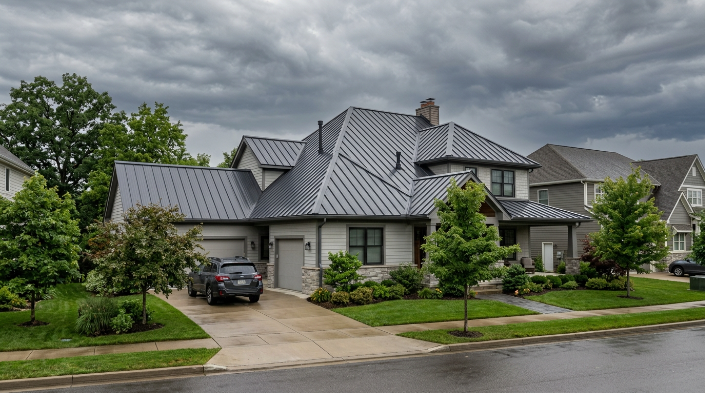
Your roof does more than keep falling rain from entering the house. It must collect water and move it safely toward the edges, gutters, and downspouts.
Heavy rain increases that workload.
Wind can also push rain sideways or upward beneath vulnerable roof details. This is known as wind-driven rain. A roof defect that stays dry during an ordinary shower may begin leaking when water is forced against it for hours.
Common weak points on a metal roof include:
- Panel seams
- Exposed fasteners and washers
- Chimney flashing
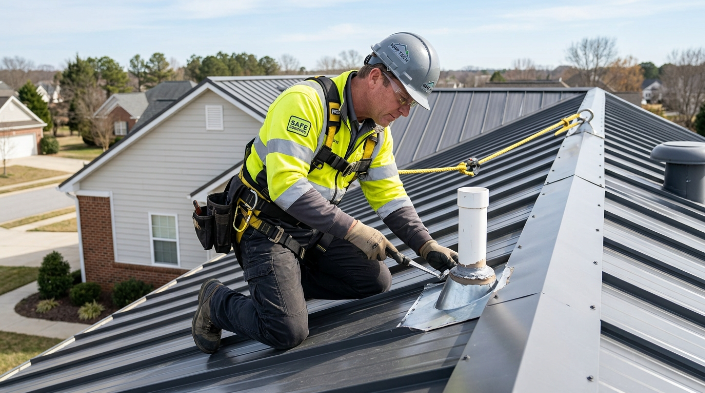
- Plumbing vent flashing
- Skylights
- Roof valleys
- Ridge caps
- Wall-to-roof transitions
- Rusted or punctured panels
- Clogged gutters and roof drains
Water may also travel after it gets beneath the metal. The wet ceiling spot inside your house is not always directly below the actual roof opening.
That is why covering the area above a ceiling stain with sealant is often ineffective.
Metal Roof Leak Prevention Checklist
| Area to Check | What Can Go Wrong | Preventive Action |
|---|---|---|
| Metal seams | Sealant separates or joints move | Have loose or failed seams properly resealed |
| Fasteners | Screws loosen or washers deteriorate | Replace damaged fasteners with compatible parts |
| Flashing | Flashing bends, separates, or corrodes | Repair or replace damaged flashing |
| Gutters | Leaves and debris block drainage | Clean gutters and confirm downspouts flow |
| Roof valleys | Debris slows water movement | Keep valleys clear |
| Vents and pipes | Boots or seals crack | Replace deteriorated seals or flashing |
| Metal panels | Rust, punctures, or storm damage develop | Repair damaged areas before corrosion spreads |
| Attic | Moisture remains hidden | Check for stains, wet insulation, and damp decking |
Preventive maintenance is usually easier than finding a leak in the middle of a storm.
1. Keep Gutters and Drainage Systems Clear
Start with drainage.
A roof can be in good condition and still have water problems if rain cannot leave the roof quickly enough.
Leaves, pine needles, seed pods, dirt, and roofing debris can block gutters and downspouts. During heavy rainfall, water may back up against the roof edge or overflow onto fascia, siding, windows, and the foundation.
Low-slope roof sections can face an additional problem. Slow drainage may allow water to collect around vulnerable seams or penetrations.
FEMA’s roof mitigation guidance notes that gutters and downspouts can become overwhelmed or clogged during extreme rainfall and identifies improved roof drainage as an important way to reduce water intrusion. FEMA roof and drainage guidance
Before a rainy season:
- Remove visible gutter debris.
- Make sure downspouts are open.
- Look for sagging gutter sections.
- Check whether water is draining away from the foundation.
- Keep roof valleys clear of leaves and branches.
- Have undersized or repeatedly overflowing drainage systems evaluated.
Do not climb onto a wet roof to clear a blockage during a storm.
Wait for safe conditions or call a professional.
2. Inspect Metal Roof Fasteners Before They Leak
Exposed-fastener metal roofs often rely on screws fitted with sealing washers.
Those connections can change over time. Metal expands when it gets hot and contracts when temperatures fall. Years of movement can stress fasteners and washers.
Look from a safe location for signs such as:
- Missing screws
- Fasteners sitting noticeably high
- Damaged washers
- Rust around screw heads
- Panels that appear loose
- Previous repair areas that have opened again
Do not automatically tighten every screw you see.
Overtightening can damage the washer. Using the wrong replacement fastener can create another leak. A contractor familiar with the specific metal roof system can determine whether individual screws need replacement or whether the problem involves panel movement or installation.
3. Pay Special Attention to Roof Seams
Metal panels connect through seams, overlaps, clips, or mechanically formed joints, depending on the roofing system.
These areas must remain watertight while still allowing the roof to handle normal movement.
Problems may develop from:
- Old sealant
- Poor installation
- Loose panel connections
- Thermal expansion and contraction
- Wind uplift
- Previous improper repairs
A recurring leak near a standing seam should not simply be covered with a thick layer of generic caulk.
The correct repair depends on how that particular roof system was designed.
Repeated sealant patches can hide the real defect without correcting it.
4. Maintain Flashing Around Roof Penetrations
Flashing is the shaped material that directs water away from roof joints and penetrations.
It is especially important around:
- Chimneys
- Skylights
- Plumbing vents
- Exhaust vents
- Dormers
- Walls
- Roof edges
- HVAC curbs
Flashing must direct rain over the roofing system rather than allowing it underneath.
The Insurance Institute for Business & Home Safety explains that flashing is intended to shed or direct water away from roof edges and penetrations to help prevent water infiltration. IBHS metal flashing guidance
Watch for flashing that looks:
- Bent
- Lifted
- Rusted
- Separated from a wall
- Loose around a vent
- Surrounded by cracked sealant
Flashing leaks can be difficult to diagnose because water often travels before becoming visible indoors.
5. Repair Rust and Coating Damage Early
Metal roofing is protected by coatings and finishes designed to resist weathering and corrosion.
Damage to that protective surface should not be ignored.
Small scratches or isolated surface corrosion may remain manageable when found early. Deep corrosion, holes, widespread rust, or deteriorated panel edges require more attention.
Inspect accessible areas for:
- Rust around fasteners
- Scratched coatings
- Corrosion near roof edges
- Rust around penetrations
- Holes or punctures
- Deteriorated previous patches
The correct repair material must be compatible with the existing metal and coating.
Mixing incompatible materials can cause premature deterioration or affect warranty coverage.
6. Check the Attic Before the Next Big Storm
You do not always have to get on the roof to discover a problem.
An attic inspection can reveal moisture much earlier.
During dry weather, use a flashlight and look for:
- Dark stains on roof decking
- Rusted nail or fastener points
- Damp insulation
- Mold-like growth
- Water marks on rafters
- Wet areas around vents
- Daylight entering through unexpected openings
Decking is the structural surface beneath the roof covering. On many homes, it is plywood or oriented strand board.
If decking remains wet, it may deteriorate and eventually become soft or rotten.
Be careful not to confuse a roof leak with condensation. Poor attic ventilation can allow moisture to collect beneath metal roofing during temperature changes.
Recurring attic moisture deserves investigation even when rain is not falling.
7. Protect the Secondary Water Barrier
The metal panels are your roof’s primary weather surface, but many roofs also have underlayment beneath them.
Underlayment acts as another layer of protection between the roof covering and decking.
It is not a substitute for a properly installed roof, but it can reduce water intrusion when the outer roofing is damaged.
FEMA guidance highlights the value of a properly installed secondary water barrier in reducing rain intrusion when the primary roof covering is compromised.
You normally cannot inspect underlayment without removing roofing materials.
If a contractor opens part of the roof for repair, ask whether the underlayment beneath the damaged area is still intact.
Expert Tip
Expert Tip: When you find an indoor water stain, photograph and mark its location before everything dries. Give those photos to your roofer. They can help trace the path of water and prevent unnecessary sealant from being applied to the wrong part of the roof.
What to Do During Heavy Rain if the Roof Starts Leaking
If water begins entering the home during a storm, focus on controlling interior damage.
Do not go onto the roof.
- Move people and valuables away from the wet area.
- Place a bucket or container beneath active drips.
- Photograph visible damage when it is safe.
- Watch for bulging ceiling drywall.
- Keep clear of wet electrical fixtures, wiring, or outlets.
- Contact an emergency roofer if water intrusion is severe.
- Notify your insurer promptly when storm damage may be involved.
If water is entering near a light fixture or other electrical equipment, treat the situation seriously. Do not touch wet electrical components.
A ceiling that is sagging under trapped water can also collapse.
Keep people away from the area until it can be evaluated safely.
Never Inspect a Metal Roof While It Is Wet
Metal roofing can become extremely slippery.
Even a low roof can cause serious injury if you fall.
The National Roofing Contractors Association recommends assessing storm damage from ground level and having closer roof inspections and repairs performed by professional roofing contractors. NRCA storm roof repair guidance
Professional roof work may also require proper fall-protection systems. OSHA’s residential roofing guidance illustrates the importance of fall protection when workers are exposed to roof-edge hazards. OSHA fall-protection information
For homeowners, the practical rule is simple:
Do not climb onto a steep, wet, icy, storm-damaged, or unfamiliar roof to investigate a leak.
Inspect Again After the Storm
Once the weather clears, check your home from the ground and from safe interior locations.
Look for:
- Newly displaced panels
- Loose ridge pieces
- Tree impact damage
- Bent flashing
- Gutter damage
- New ceiling stains
- Damp attic insulation
- Debris piled in valleys
- Water marks around roof penetrations
Do not assume everything is fine because there is no active dripping.
Storm damage can create an opening that leaks during the next rain.
Photographs taken shortly after a storm may also be useful if you later need to discuss the damage with an insurance company.
Avoid throwing away damaged roofing materials or making unnecessary permanent alterations before understanding any documentation requirements in your policy.
Emergency steps to prevent additional damage may still be necessary.
Consider Roof Age, Material, Labor, and Warranty Coverage
Metal roofing can often protect a home for several decades, but lifespan varies widely.
Climate, installation quality, coating type, panel system, maintenance, storm exposure, and corrosion all matter.
A single loose fastener on an otherwise healthy roof may justify a small repair.
The decision changes if you have:
- Widespread corrosion
- Repeated seam failures
- Numerous loose panels
- Wet or deteriorated decking
- Multiple active leaks
- Extensive storm damage
- Previous repairs that keep failing
Repair cost also depends heavily on access and labor.
An isolated seal or fastener problem may be relatively inexpensive. Costs can rise quickly when a contractor must remove panels, replace flashing, repair decking, replace wet insulation, or investigate several possible leak sources.
Before approving a repair, ask for a written estimate showing:
- The suspected leak source
- Materials being replaced
- Whether panels must be removed
- Whether decking or insulation is damaged
- Labor charges
- Cleanup costs
- Repair warranty
- Any effect on the existing roof warranty
The lowest estimate is not automatically the least expensive long-term choice.
A cheap patch that fails during the next storm can cost more than a correct repair the first time.
When to Consult a Licensed Roofing Contractor
Contact a qualified roofing contractor when the leak involves more than a simple, safely accessible maintenance issue.
Use a contractor who is licensed where licensing is required, properly insured, and experienced with your type of metal roof.
Professional evaluation is especially important when:
- The roof is steep or high.
- The surface is wet or damaged.
- A leak keeps returning.
- You cannot locate the source.
- Multiple rooms show moisture.
- Standing seams are involved.
- Panels are lifting or buckling.
- Flashing has separated.
- Significant corrosion is present.
- Decking feels or appears deteriorated.
- Water is near electrical systems.
- Wind, hail, or fallen trees caused damage.
- An insurance claim may be necessary.
A structural assessment may also be needed if the roof deck is sagging, framing is damaged, or a heavy object has struck the roof.
For an older metal roof with widespread deterioration, full replacement may make more financial sense than repeatedly paying for isolated repairs.
Common Mistakes Homeowners Should Avoid
- Waiting for another storm to confirm the leak. Water damage can spread while you wait.
- Applying sealant everywhere. Excess sealant can hide the true failure and make later repairs harder.
- Using indoor caulk on roofing components. Roofing materials must be compatible with the roof system.
- Overtightening exposed screws. This can crush sealing washers.
- Ignoring rusty fasteners. Rust can indicate a failing seal or moisture problem.
- Assuming the ceiling stain is directly below the leak. Water often travels along decking and framing.
- Walking on a wet metal roof. The fall risk is serious.
- Ignoring clogged gutters. Roof drainage is part of leak prevention.
- Forgetting warranty requirements. Unauthorized repairs or incompatible products may affect coverage.
- Repairing symptoms instead of causes. A recurring leak deserves proper diagnosis.
FAQs
Can a metal roof leak only during heavy rain?
Yes. A small defect may remain unnoticed during light rainfall. Heavy or wind-driven rain can push more water against failed seams, flashing, fasteners, and penetrations, revealing a weakness that otherwise stays dry.
How often should I inspect my metal roof for leaks?
Check the home and roof from safe locations routinely and after severe storms. A professional inspection schedule should consider the roof’s age, design, local weather, nearby trees, and manufacturer recommendations.
Do clogged gutters really cause roof leaks?
They can contribute to water problems. When gutters cannot drain properly, water may overflow or back up around roof edges and adjacent building components. Keeping drainage paths clear is one of the simplest preventive steps.
Can I seal a leaking metal roof myself?
Some minor maintenance may be possible for experienced homeowners under safe conditions, but leak repairs involving seams, flashing, panels, corrosion, or penetrations are often better handled professionally. Using the wrong sealant can create additional problems.
Why does my metal roof keep leaking in the same place?
A repeated leak usually means the underlying cause has not been corrected. Possible causes include panel movement, failed flashing, improper fasteners, deteriorated sealant, trapped water, or damage beneath the visible roofing.
Does a roof leak mean I need a new roof?
Not necessarily. A localized problem can often be repaired. Replacement becomes more likely when there is widespread corrosion, multiple failures, serious decking damage, recurring leaks, or deterioration across a large portion of an aging roof.
Will homeowners insurance cover a roof leak caused by heavy rain?
Coverage depends on the policy and the cause of the loss. Sudden storm damage may be treated differently from deterioration, neglected maintenance, or long-term leakage. Document the damage and contact your insurer for guidance specific to your policy.
Conclusion
Learning how to prevent roof leaks during heavy rain comes down to protecting the vulnerable parts of your roofing system before severe weather arrives.
Keep gutters clear. Watch metal roof seams and fasteners. Maintain flashing around vents, chimneys, skylights, and walls. Deal with rust early. Check the attic for hidden moisture, and inspect the home again after major storms.
Most importantly, do not risk a fall to diagnose a leak.
If your metal roof is already leaking, the safest next step is to document the problem and arrange a professional inspection. Finding the real source now can prevent a small opening from becoming damaged insulation, rotten decking, interior repairs, or an early roof replacement.