
How Much Does Roof Replacement Labor Cost?

If you are budgeting for a new roof, materials are only part of the bill. A large percentage of what you pay goes toward the skilled crew that removes the old roof, prepares the roof deck, installs underlayment and flashing, lays the new roofing material, and cleans up afterward.
So, how much does roof replacement labor cost?
For a typical asphalt-shingle roof, homeowners may see labor and installation charges of roughly $1.50 to $4 per square foot, although complicated or specialty roofing systems can cost considerably more. Labor may account for around 40% to 60% or more of the total roof replacement price, depending on the material, roof pitch, location, removal requirements, and job complexity.
This guide explains what roofing labor includes, the factors that raise labor prices, how to estimate your potential cost, and what to look for when comparing contractor quotes.
Quick Answer
How much does roof replacement labor cost? For many asphalt-shingle projects, labor and installation may run about $1.50 to $4 per square foot and can represent roughly 40% to 60% of the overall replacement bill. Steep roofs, difficult access, multiple roof levels, premium materials, tear-off work, and repairs can increase labor substantially.
Average Roof Replacement Labor Cost
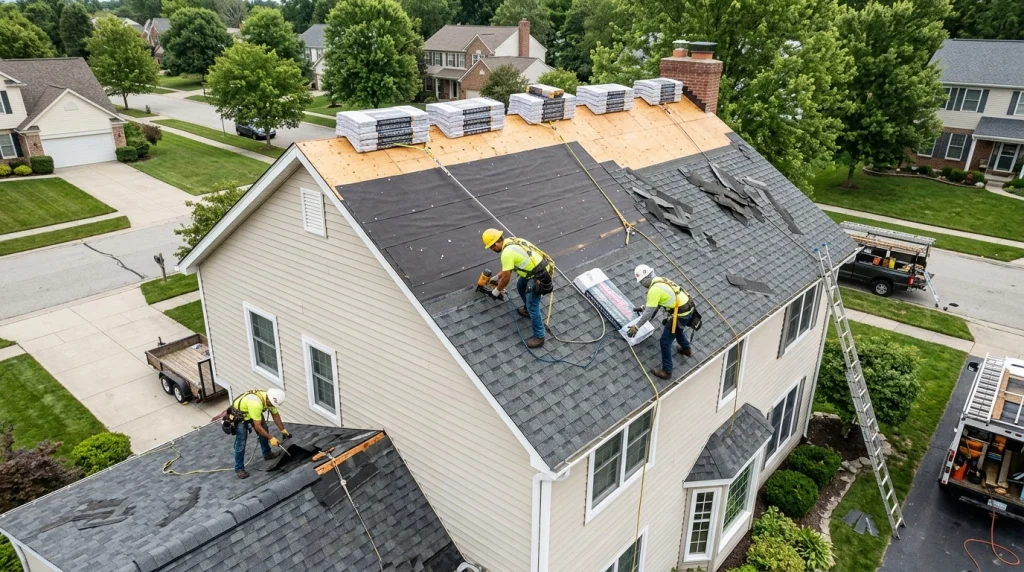
There is no single nationwide labor price that applies to every roof.
Current HomeAdvisor data indicates that labor for shingle installation commonly falls around $1.50 to $4 per square foot, with labor making up about 60% of a typical shingle replacement project. HomeAdvisor’s shingle roof replacement cost data
That means the labor portion of a straightforward 2,000-square-foot roof might roughly fall between $3,000 and $8,000 before considering unusual conditions.
Use that only as a planning range.
A contractor pricing your actual house may charge considerably more or less depending on local wages, roofing material, pitch, height, access, roof design, and how much preparation is required.
| Roof Area | Rough Labor Range at $1.50–$4/Sq. Ft. |
|---|---|
| 1,000 sq. ft. | $1,500–$4,000 |
| 1,500 sq. ft. | $2,250–$6,000 |
| 2,000 sq. ft. | $3,000–$8,000 |
| 2,500 sq. ft. | $3,750–$10,000 |
| 3,000 sq. ft. | $4,500–$12,000 |
These figures are examples, not contractor quotes. Specialty roofing, structural work, multiple layers of old roofing, unusual access, or a very steep roof can push labor above these ranges.
What Does Roof Replacement Labor Actually Include?
Roofing labor involves considerably more than nailing shingles to your house.
A professional roofing crew may perform several separate jobs during one replacement.
Removing the Existing Roof
Most complete replacements begin with tearing off the old roofing.
Workers may need to:
- Remove old shingles, tile, metal, or membrane material
- Strip deteriorated underlayment
- Pull or flatten old fasteners
- Remove damaged flashing
- Carry debris from the roof
- Load dumpsters or trailers
- Protect landscaping, siding, and windows
- Clean nails and debris from the property
More roofing layers mean more time.
If an older home has two layers that must be removed instead of one, the labor bill can rise noticeably.
Inspecting and Preparing the Roof Deck
The roof deck, sometimes called decking or sheathing, is the wood surface underneath the roofing system.
Once the old roof comes off, workers can inspect it for:
- Rot
- Moisture damage
- Soft spots
- Delamination
- Broken panels
- Improper previous repairs
Replacing damaged plywood or OSB adds both materials and labor.
If widespread damage is found, the original estimate may increase through an approved change order.
Installing Underlayment and Flashing
Underlayment provides an additional moisture-resistant layer beneath the roof covering.
Flashing is the metal or similar material used around vulnerable areas such as:
- Chimneys
- Skylights
- Valleys
- Plumbing vents
- Roof-to-wall intersections
These details take time to install correctly.
Poor flashing installation is one of the ways an otherwise new roof can still develop leaks.
Installing the Roofing Material
The labor required for the finished roofing material depends heavily on what you choose.
Standard asphalt shingles are relatively familiar to most residential roofing crews.
Metal panels, slate, clay tile, wood shake, and low-slope membranes may require additional preparation, cutting, fastening, layout work, or specialty knowledge.
Cleanup and Final Inspection
A complete replacement also involves cleanup.
The crew should remove loose materials, sweep or blow off work areas, collect roofing nails and dispose of job-related debris.
A responsible contractor should also inspect the finished work before considering the project complete.
Why Roofing Material Changes Labor Cost
Different materials require very different installation methods.
Asphalt Shingles
Asphalt shingles are among the most common residential roof coverings in the United States.
Because experienced roofing crews install them routinely, labor costs are often more predictable than for specialty systems.
However, labor still rises for complicated roof shapes, premium shingles, steep slopes, and extensive flashing.
Metal Roofing
Metal roofing installation may require precise panel layout, fastening, seam work, edge detailing, flashing, and specialty tools.
Standing-seam systems can be particularly labor-intensive.
Although a metal roof may offer a long service life, homeowners should expect its installation labor to potentially cost more than a straightforward asphalt-shingle project.
Tile and Slate
Clay tile, concrete tile, and natural slate are heavy and must be handled carefully.
Installation is slower, and cutting or replacing individual pieces takes skill.
Before installing particularly heavy materials, the roof structure may also need to be evaluated to confirm it can support the added weight.
Flat and Low-Slope Roofing
Low-slope roofs often use systems such as EPDM, TPO, PVC, or modified bitumen rather than traditional shingles.
These systems involve different seams, adhesives, fasteners, insulation, drainage details, and flashing techniques.
Contractors experienced in steep-slope shingle roofing are not automatically specialists in low-slope membrane installation.
The Biggest Factors That Increase Roofing Labor

Two houses with the same roof area can have very different labor prices.
Here are the major reasons.
Roof Pitch
Pitch describes how steep a roof is.
For example, a 6:12 roof rises six inches vertically for every 12 inches of horizontal distance.
As roofs become steeper, crews generally move more slowly and may need additional fall-protection measures.
That increases time and labor.
Roofing work also involves serious fall hazards. OSHA establishes fall-protection requirements for workers exposed to roof edges and other elevated work areas. OSHA’s fall-protection information
For homeowners, the safety implications are equally important: climbing onto a steep or damaged roof to save inspection costs is usually not worth the risk.
Roof Height
A single-story ranch is generally easier to stage than a tall two- or three-story house.
Higher roofs can require more equipment and additional time for moving materials between the ground and roof.
Roof Complexity
A simple gable roof normally takes less time to replace than a roof with numerous:
- Hips
- Valleys
- Dormers
- Chimneys
- Skylights
- Turrets
- Intersections
- Plumbing vents
- Different roof levels
Every interruption in the roof surface may require cutting, fitting, sealing, or flashing.
Accessibility
Workers need space to safely stage materials and remove debris.
Labor can increase when crews must work around:
- Narrow side yards
- Fences
- Pools
- Large landscaping beds
- Attached structures
- Limited driveway access
- Closely spaced neighboring houses
Old Roof Removal
A replacement involving a complete tear-off takes more labor than installation on a prepared new structure.
Heavy materials such as tile may also require much more handling than ordinary asphalt shingles.
Hidden Decking Damage
A contractor cannot always see the complete condition of your roof deck before the old material comes off.
A small amount of damaged decking may be routine.
Large areas of rot, however, can significantly increase labor and material costs and may signal a long-standing moisture problem.
Labor Cost Example for a Typical Roof
Suppose your home has approximately 2,000 square feet of actual roof surface.
At a rough labor rate of $1.50 to $4 per square foot, the labor component might initially appear to be:
2,000 × $1.50 = $3,000
to
2,000 × $4 = $8,000
But imagine the contractor discovers that the roof is steep, has multiple valleys, two skylights, several damaged plywood sheets, and two old layers that must be removed.
The final labor price may exceed the simple square-foot calculation.
That is why homeowners should use online averages for budgeting rather than expecting a contractor’s proposal to match them exactly.
Should Labor Be Listed Separately on the Estimate?
Not necessarily.
Some contractors separate materials, labor, removal, disposal, permits, and repairs.
Others provide one project price covering the complete scope of work.
Either approach can be legitimate.
What matters more is whether the scope is clearly defined.
The National Roofing Contractors Association recommends obtaining a written proposal with detailed descriptions of the work, specifications, scheduling information, and payment procedures. It also recommends reviewing contractor insurance, references, project supervision, and warranty terms rather than judging contractors by price alone. NRCA contractor-selection guidance
Ask each contractor whether the estimate includes:
- Tear-off
- Disposal
- Decking replacement
- Underlayment
- Flashing
- Ventilation components
- Roofing installation
- Permits
- Cleanup
- Workmanship warranty
- Manufacturer warranty requirements
This makes competing quotes much easier to compare.
Expert Tip
Expert Tip: When comparing roofing quotes, ask every contractor to price the same scope of work. A $2,000 difference means little if one proposal includes flashing, tear-off, ventilation, disposal, and a workmanship warranty while another leaves several of those items unclear.
Does Cheaper Roofing Labor Save Money?
Sometimes, but not automatically.
An efficient local company may legitimately operate at a lower cost than a larger contractor.
However, unusually cheap labor deserves closer examination.
Installation quality directly affects how well the roofing system performs. Problems involving flashing, nail placement, underlayment, ventilation, seams, and penetrations can lead to water intrusion or reduce the service life of the roof.
The FTC recommends checking licensing and insurance where applicable, obtaining multiple written estimates, reviewing the contract carefully, and avoiding contractors who pressure homeowners into immediate decisions or demand the entire project cost upfront. FTC guidance for avoiding home-improvement scams
The lowest price should not be your only selection criterion.
How Roof Lifespan Relates to Labor Quality
Roof lifespan depends on material, climate, ventilation, maintenance, weather exposure, and installation quality.
Even premium roofing materials can perform poorly when installed incorrectly.
Conversely, careful installation helps the roofing system perform closer to its intended service life.
This is one reason workmanship warranties deserve attention.
There may be two different types of protection involved:
- Manufacturer warranty: Primarily relates to the roofing product and its stated warranty conditions.
- Contractor workmanship warranty: Covers qualifying installation-related problems for a defined period.
Read both carefully.
Warranty terms vary considerably, and certain installation mistakes or unapproved modifications can affect coverage.
Storm Damage and Insurance Claims
If you are replacing a roof after hail, wind, or another covered event, do not assume an insurance payment automatically covers every labor item your contractor recommends.
Coverage depends on your individual policy, damage assessment, deductibles, exclusions, depreciation rules, and insurer procedures.
Document visible damage from a safe location and keep copies of contractor estimates, inspection reports, photographs, invoices, and insurance communications.
Avoid climbing onto a storm-damaged roof yourself. Loose shingles, wet surfaces, hidden structural problems, and damaged decking can create serious fall hazards.
When to Consult a Licensed Roofing Contractor
Professional evaluation is particularly important when you notice:
- Persistent roof leaks
- Water stains on ceilings
- Sagging roof areas
- Missing shingles after a storm
- Widespread shingle deterioration
- Soft or damaged decking
- Rot around roof edges
- Damaged flashing
- Multiple previous repairs
- An aging roofing system
- Poor attic ventilation
- Structural movement
- Hail or wind damage
A contractor can determine whether you need a localized repair or full replacement.
If there is visible sagging, widespread rot, damaged framing, or another structural concern, a structural engineer or other qualified building professional may also need to evaluate the home.
DIY Roof Replacement vs. Professional Labor
Roof replacement is not simply a large-scale handyman project.
DIY installation can expose homeowners to:
- Serious fall hazards
- Incorrect flashing
- Improper nail placement
- Water intrusion
- Material waste
- Building-code problems
- Warranty complications
- Damage that remains hidden until a future leak develops
A homeowner may safely handle certain ground-level planning tasks, such as collecting estimates or reviewing warranty documents.
Working on an elevated, steep, wet, damaged, or structurally questionable roof should be left to qualified professionals.
Common Mistakes Homeowners Should Avoid
- Comparing only the final price. Compare the actual work included in each estimate.
- Assuming house square footage equals roof square footage. Roof slope, overhangs, garages, and additions change the roof area.
- Ignoring removal costs. Tear-off and disposal require significant labor.
- Not asking about decking prices. Find out how unexpected plywood replacement will be charged.
- Choosing a contractor based only on cheap labor. Qualifications, insurance, installation quality, supervision, and warranty terms matter.
- Paying the entire bill upfront. Review your state rules and the written payment schedule first.
- Ignoring ventilation. A roof replacement is an opportunity to evaluate whether intake and exhaust ventilation are functioning correctly.
- Climbing onto the roof to inspect it yourself. Falls are a serious risk, particularly on steep or storm-damaged surfaces.
FAQs
How much does roof replacement labor cost per square foot?
For many standard asphalt-shingle projects, labor and installation may cost roughly $1.50 to $4 per square foot. Your actual rate depends on roof pitch, height, accessibility, location, removal work, roof complexity, and material type.
What percentage of roof replacement cost is labor?
Labor frequently represents a large portion of a roofing bill. For asphalt-shingle installations, current consumer cost data suggests labor can account for around 60% of the project cost, though the percentage can vary significantly from one roof and material system to another.
Does roofing labor include removing old shingles?
Sometimes. Contractors structure estimates differently. Ask specifically whether tear-off, hauling, dumpster or disposal fees, and cleanup are included.
Why is labor more expensive on a steep roof?
Workers move more slowly on steep slopes and may require additional safety systems and staging. A steep roof can therefore take considerably more time to complete than a simple low-slope roof of similar size.
Does replacing roof decking count as labor?
Yes. Damaged decking requires additional removal, cutting, fitting, fastening, and materials. Contractors often list decking replacement separately because the full extent of damage may not be visible until the existing roofing is removed.
Can I negotiate roofing labor costs?
You can ask contractors to explain their pricing and compare multiple proposals. Instead of focusing only on negotiating the labor rate, compare what each contractor includes, their qualifications, insurance, warranties, installation approach, and change-order policies.
Is it worth paying more for an experienced roofer?
Experience alone does not guarantee quality, but installation workmanship is an important part of roof performance. Review references, insurance, licensing requirements, written scope, warranties, supervision, and previous work before choosing a contractor.
Conclusion
So, how much does roof replacement labor cost? For a straightforward asphalt-shingle installation, a rough budgeting range of about $1.50 to $4 per square foot may be useful, with labor often representing a substantial portion of the overall replacement cost.
Your actual bill can change significantly based on roof pitch, height, material, tear-off requirements, complexity, access, hidden decking damage, local labor rates, ventilation work, and flashing details.
Rather than shopping for the lowest labor number, get several detailed written estimates and compare the scope line by line.
A properly installed roof protects much more than shingles. It protects the decking, attic, ceilings, insulation, walls, and belongings beneath it. Choosing qualified roofing professionals and understanding exactly what their labor price covers can help you make a safer, more informed investment in your home.