How Long Can a Well-Maintained Roof Last?

A roof is one of the most expensive parts of a home to replace, so it is natural to want as many useful years from it as possible. If you are seeing a small leak, loose flashing, rust around a metal panel, or signs of storm damage, you may also wonder whether the roof is simply aging or whether a repair can keep it going for many more years.
So, how long can a well-maintained roof last? The answer depends heavily on the roofing material, installation quality, climate, ventilation, storm exposure, and how quickly small problems are repaired.
A well-maintained metal roof may remain useful for several decades, while asphalt shingles usually have a shorter service life. Tile and some other premium roofing systems can last even longer when their supporting components remain in good condition.
This guide explains realistic roof lifespan ranges, the role maintenance plays, how leaks affect a metal roof, warning signs to watch for, and when repair or replacement makes more sense.
Quick Answer
How long can a well-maintained roof last? Depending on the material, a properly installed and regularly maintained roof may last about 20 years to 70 years or more. Metal and tile roofs generally have longer potential lifespans than asphalt shingles, but installation quality, leaks, storms, ventilation, drainage, and timely repairs can greatly affect actual service life.
What Does a “Well-Maintained Roof” Really Mean?
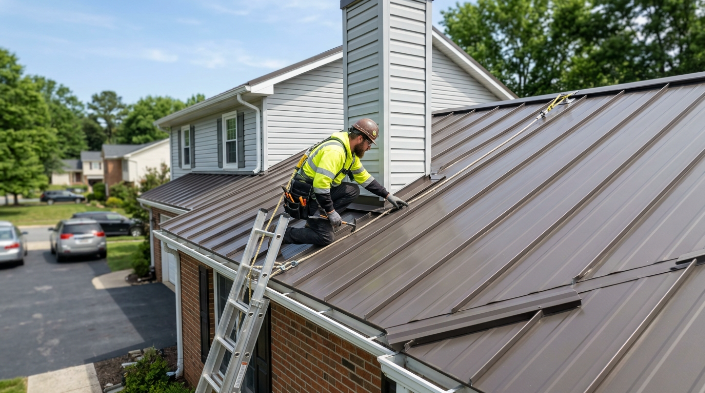
Roof maintenance does not mean climbing onto the roof every few weeks or constantly applying sealant.
It means identifying problems before they become serious.
The National Roofing Contractors Association emphasizes that regular inspections and proper maintenance are important to long-term roof performance. Homeowners can review its roof maintenance guidance for additional industry information.
A practical roof maintenance routine usually includes:
- Checking the roof after major storms
- Keeping gutters and downspouts clear
- Watching for damaged or missing roofing material
- Inspecting flashing around chimneys, vents, and skylights
- Looking for loose or deteriorated metal roof fasteners
- Monitoring sealants and seams
- Checking the attic for moisture
- Correcting ventilation problems
- Removing debris that traps water
- Repairing leaks promptly
The goal is simple: keep small defects from becoming large failures.
A loose metal roof screw may be inexpensive to correct. If ignored for years, water entering through that same opening can damage insulation, decking, drywall, and framing.
How Long Do Different Roofing Materials Last?
There is no single lifespan that applies to every roof.
These ranges are useful for planning, but they are not guarantees. Climate, product grade, workmanship, roof slope, ventilation, maintenance, and severe weather can shorten or extend actual service life.
| Roofing Material | Typical Planning Range | Common Factors That Shorten Life |
|---|---|---|
| Asphalt shingles | 20–30 years | Heat, storms, poor ventilation, lost granules |
| Metal roofing | 40–70 years | Failed fasteners, corrosion, flashing problems, poor installation |
| Clay or concrete tile | 50+ years | Broken tiles, failed underlayment, structural movement |
| Wood shake | 20–40 years | Moisture, decay, moss, insects, poor ventilation |
| EPDM flat roofing | 20–30 years | Seam failure, punctures, standing water |
| TPO roofing | 20–30 years | Seam problems, punctures, drainage issues |
These numbers should be treated as general service-life ranges rather than automatic replacement dates.
A 25-year-old roof in excellent condition may not require immediate replacement. A much younger roof with chronic leaks or installation defects may need major work.
Why Maintenance Can Add Useful Years to a Roof
Maintenance cannot make roofing materials last forever.
What it can do is prevent avoidable deterioration.
Small Leaks Can Become Large Problems
Water intrusion is one of the biggest threats to a roofing system.
A small opening around flashing, a roof vent, a metal fastener, or a seam may allow only a little water inside at first. Over time, that moisture can affect:
- Roof decking
- Insulation
- Rafters or trusses
- Drywall
- Paint
- Electrical components
- Interior finishes
Roof decking is the structural surface beneath the visible roofing material. When decking remains repeatedly wet, repairs can become much more extensive.
Clean Drainage Protects Roof Edges
Gutters and downspouts move rainwater away from the roof and foundation.
When gutters clog, water may overflow or back up near vulnerable roof edges. On low-slope roofs, blocked drainage can also contribute to standing water.
Cleaning gutters is one of the simpler homeowner maintenance tasks, provided it can be completed safely from an appropriate location.
Ventilation Matters More Than Many Homeowners Realize
A roof is affected from both sides.
Poor attic ventilation can allow excess heat and moisture to build beneath the roof system. That can contribute to moisture problems and may accelerate deterioration of some roofing components.
Proper insulation also matters because it helps control heat movement between the living space and attic.
The ENERGY STAR information on cool roofs explains how roof reflectivity can reduce roof surface temperatures and heat transfer into a building.
Ventilation, insulation, and roofing materials should work together rather than being treated as completely separate systems.
How Long Can a Well-Maintained Metal Roof Last?

Metal roofing is popular partly because of its potential longevity.
A properly installed and well-maintained metal roof can often provide roughly 40 to 70 years of service, depending on the metal type, coating, climate, design, installation, and maintenance.
However, a long expected lifespan does not mean a metal roof is maintenance-free.
A metal roofing system contains more than panels.
It may also include:
- Fasteners
- Clips
- Flashing
- Ridge caps
- Sealants
- Underlayment
- Pipe boots
- Roof penetrations
- Valleys
- Gutters and drainage components
A failure at one small connection can create a leak even when most of the metal panels remain in excellent condition.
Does a Metal Roof Leak Mean Its Life Is Almost Over?
Usually not.
One leak does not automatically mean a metal roof needs replacement.
The source matters much more than the existence of the leak itself.
Common Metal Roof Leak Sources
Metal roof leaks frequently develop around connections and penetrations rather than through the center of an undamaged panel.
Possible causes include:
- Loose screws
- Deteriorated fastener washers
- Failed sealant
- Damaged flashing
- Open seams
- Poorly detailed roof penetrations
- Corrosion
- Punctured panels
- Storm damage
- Improper installation
Exposed-fastener roofs deserve particular attention because screws and sealing washers are directly exposed to weather.
Standing-seam roofs hide many fasteners beneath the panels, but flashing, penetrations, transitions, seams, and other details can still develop problems.
Thermal Movement Matters
Metal expands when it becomes hot and contracts when it cools.
A properly designed metal roof accommodates that movement.
When details are poorly installed or components deteriorate, repeated expansion and contraction can place stress on fasteners, seams, flashing, and sealants.
That is why covering every suspicious area with roofing sealant is rarely a good long-term repair strategy.
The real source of the leak should be identified first.
Expert Tip: When a roof leaks, write down exactly when it happens. Note whether moisture appears during light rain, wind-driven rain, heavy rain, snowmelt, or hours after a storm. That information can help a roofing contractor narrow down the entry point.
Warning Signs Your Roof May Be Losing Service Life
Roof age is useful information, but condition is more important.
Watch for changes such as:
- Repeated ceiling stains
- Damp attic insulation
- Musty odors
- Peeling interior paint
- Visible daylight through roof openings
- Loose or missing shingles
- Significant granule loss
- Cracked roofing materials
- Loose metal fasteners
- Rust around screws or flashing
- Open metal roof seams
- Damaged flashing
- Sagging roof areas
- Standing water on a low-slope roof
- Persistent gutter overflow
- Storm-damaged panels or shingles
Recurring leaks deserve special attention.
A repair that fails repeatedly may indicate that the visible defect is not the real source of the water or that the surrounding roof system has deteriorated.
Storm, Wind, and Hail Damage Can Shorten Roof Life
Even a relatively new roof can lose years of service life after severe weather.
Wind can lift roofing materials or damage roof edges. Hail may dent metal, crack other materials, or damage protective surfaces. Falling branches can puncture roofing and flashing.
The Insurance Institute for Business & Home Safety recommends professional roof inspections and needed repairs as part of preparing homes for severe wind and hurricane conditions. Its homeowner storm-preparation guidance emphasizes the roof as a critical part of a home’s protection.
After a severe storm, look from the ground for obvious changes.
Do not assume a roof is fine simply because water is not dripping into the house immediately.
Some damage takes time to become visible indoors.
Repairing a Roof vs. Replacing It
Roof age alone should not make this decision.
Consider the extent, location, and cause of damage.
Repair May Make Sense When:
- The problem is localized
- Most roofing material remains sound
- Flashing can be properly repaired
- Only a small number of components have failed
- Decking remains structurally sound
- Leaks have not become widespread
- The roof still has significant expected service life
Replacement May Make More Sense When:
- Leaks occur in multiple areas
- Large sections of material are deteriorated
- Decking or framing has extensive damage
- Corrosion is widespread
- Previous repairs repeatedly fail
- Installation defects affect much of the roof
- The roof is already near the end of its expected lifespan
- Repair costs are becoming disproportionate to remaining roof life
A contractor should be able to explain why replacement is being recommended rather than relying only on the age of the roof.
Roof Maintenance and Repair Costs
There is no single maintenance or repair price that applies nationwide.
Costs vary based on:
- Roof size
- Roof height
- Pitch or steepness
- Material
- Accessibility
- Local labor rates
- Damage severity
- Flashing complexity
- Number of roof penetrations
- Decking damage
- Whether specialty equipment is needed
A minor flashing or fastener repair generally involves far less work than replacing panels and water-damaged decking.
For a major repair or replacement, getting more than one detailed proposal can help you compare scope rather than simply choosing the lowest number.
NRCA’s guidance for selecting a roofing contractor recommends reviewing items such as insurance, licensing where required, references, written proposals, warranties, and project supervision.
Do Roof Warranties Guarantee a Long Lifespan?
Not necessarily.
A warranty is not the same thing as a guaranteed service life.
Roofing warranties may cover different things, including:
- Manufacturing defects
- Specific roofing materials
- Installation workmanship
- Certain repair costs
They may also contain exclusions or maintenance requirements.
For example, damage caused by improper installation, unauthorized alterations, neglected maintenance, severe weather, or another trade working on the roof may not be covered under some warranties.
Before authorizing repairs, check your warranty paperwork when possible.
Avoid making changes that could affect coverage until you understand the warranty terms.
Roof Safety: What Homeowners Should and Should Not Inspect
Many useful observations can be made without walking on the roof.
From the ground, you may be able to see:
- Missing materials
- Bent metal
- damaged ridge areas
- Tree debris
- Gutter problems
- Sagging
- Obvious storm damage
Inside the home, you may be able to check ceilings and accessible attic areas for moisture.
Walking on a roof is different.
Metal roofing can be particularly slippery, especially when wet. Steep roofs, damaged decking, ice, moss, and loose roofing materials create additional hazards.
OSHA’s residential roofing fall-protection guidance demonstrates the serious fall hazards associated with residential roofing work.
Do not climb onto a wet, steep, damaged, icy, or unfamiliar roof to investigate a leak.
A professional inspection is much less expensive than a serious fall injury.
When to Consult a Licensed Roofing Contractor
Contact a licensed roofing contractor where licensing is required in your state or locality when:
- A leak keeps returning
- Storm damage is visible
- Metal panels have lifted or shifted
- Flashing is damaged
- Roof seams are separating
- Multiple fasteners are failing
- Significant corrosion is present
- Decking feels or appears deteriorated
- The roof is sagging
- Mold or widespread moisture is found
- You suspect structural damage
- Your insurance company requires professional documentation
- You are considering full replacement
A contractor can inspect the roof as a complete system instead of treating only the visible symptom.
When structural movement or serious framing damage is suspected, a roofer may also recommend evaluation by a qualified structural professional.
Common Mistakes Homeowners Should Avoid
- Waiting for an active drip. A roof may leak into insulation or framing long before water reaches the ceiling.
- Assuming an old roof automatically needs replacement. Condition and damage matter along with age.
- Assuming a young roof cannot fail. Installation defects can cause problems early.
- Applying sealant everywhere. Excess sealant can hide the actual cause without creating a durable repair.
- Ignoring small metal roof fastener problems. A failed washer or loose screw can become a water-entry point.
- Letting gutters stay clogged. Poor drainage can increase moisture exposure around roof edges.
- Walking on a wet metal roof. The fall risk can be severe.
- Choosing a contractor only by price. Compare scope, insurance, workmanship, materials, warranty terms, and experience.
- Ignoring ventilation. Heat and moisture beneath the roof can affect the overall roofing system.
- Skipping post-storm inspections. Wind and hail damage may not immediately create visible indoor leaks.
FAQs
How long can a well-maintained roof last?
A well-maintained roof may last roughly 20 to 70 years or more depending on the material. Asphalt shingles generally have a shorter potential lifespan than metal or tile. Installation, climate, ventilation, storms, and maintenance can significantly change the actual result.
Can a metal roof really last 50 years?
Yes. A properly installed metal roof can potentially remain useful for 40–70 years, depending on the system and conditions. Regular inspections and timely repair of flashing, fasteners, seams, coatings, and penetrations help protect that lifespan.
Does one metal roof leak mean I need a new roof?
No. A single leak may come from one failed fastener, flashing detail, seam, penetration, or damaged section. Replacement becomes more likely when deterioration is widespread, structural damage exists, or repeated repairs are no longer dependable.
How often should a roof be inspected?
A practical approach is to check the roof regularly and after severe storms. Professional inspection frequency depends on roof type, age, climate, warranty requirements, and previous problems. Older roofs or roofs with past leaks may need closer monitoring.
Is it worth repairing an old roof?
Sometimes. A localized repair may still be worthwhile when most of the roof remains serviceable. If leaks are widespread or major components are failing, money spent on repeated repairs may be better applied toward replacement.
Can poor attic ventilation shorten roof life?
It can contribute to roofing problems by allowing excess heat or moisture to build in the attic. Proper ventilation and insulation help manage conditions beneath the roof and should be evaluated when moisture or overheating problems are present.
Should I inspect a leaking metal roof myself?
Ground-level observations and safe interior inspections may be reasonable. Walking on a metal roof can be dangerous, especially when it is wet, steep, damaged, or unfamiliar. Professional inspection is safer when roof access is required.
Conclusion
So, how long can a well-maintained roof last? For many homes, the answer ranges from a few decades to 70 years or more depending on the roofing material and conditions.
But age alone does not determine when a roof is finished.
Installation quality, ventilation, drainage, flashing, storm exposure, leak history, and maintenance all influence how long a roof can continue protecting the home.
Metal roofs can provide especially long service lives, but they still need attention. Loose fasteners, failing sealants, damaged flashing, open seams, corrosion, and storm damage should be addressed before small defects become expensive water problems.
Keep gutters clear, monitor the attic, document changes after storms, and arrange professional inspections when problems are beyond what you can safely evaluate from the ground.
If your roof is leaking repeatedly, showing widespread deterioration, or approaching the end of its expected service life, ask a qualified roofing contractor for a detailed inspection and a clear repair-versus-replacement recommendation before spending money on another temporary fix.