
What to Do During a Roof Leak Emergency: A Metal Roof Homeowner Guide

A roof leak can turn from a small drip into damaged drywall, insulation, flooring, electrical components, and roof decking surprisingly quickly. With a metal roof, the visible drip may not even be directly below the place where water entered because moisture can travel along panels, framing, seams, and underlayment before reaching your ceiling.
Knowing what to do during a roof leak emergency helps you protect your family, reduce interior damage, document the problem, and avoid risky repairs. The priority is not to climb onto the roof in the rain. It is to control the situation safely from inside, identify warning signs, and arrange a professional inspection as soon as practical.
This guide explains the immediate steps to take, common metal roof leak sources, emergency repair considerations, insurance documentation, costs, warranties, and when a licensed roofing contractor is needed.
Quick Answer
During a roof leak emergency, keep people away from wet ceilings and electrical hazards, move valuables, place containers under active drips, document the damage, and call a qualified roofer. Do not climb onto a wet metal roof. Have the source inspected professionally and make only safe temporary measures until permanent repairs can be completed.
What to Do Immediately When Your Roof Starts Leaking
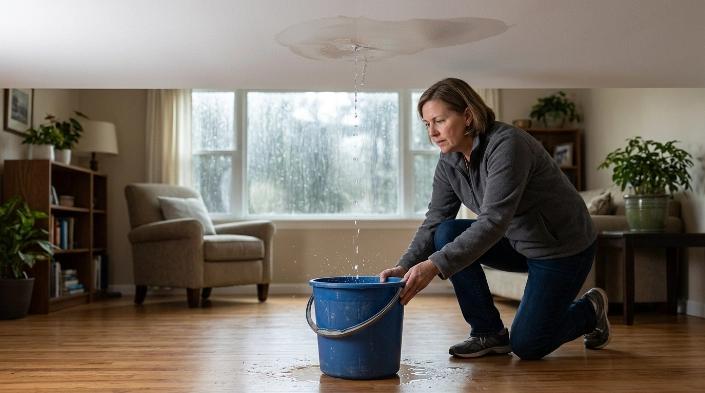
When water starts dripping into your home, it is easy to focus entirely on stopping the leak. Your first responsibility, however, is protecting people inside the house.
Follow these steps in order.
1. Keep People Away From the Damaged Area
Move children, pets, furniture, electronics, and valuables away from the leak.
Pay close attention to the ceiling. A small stain is one thing, but a ceiling that is sagging, cracking, or visibly holding water can fail without much warning.
Do not stand directly underneath a bulging or heavily saturated ceiling.
If drywall begins falling, keep the room closed off until the area can be evaluated.
2. Watch for Electrical Hazards
Water entering near a light fixture, ceiling fan, outlet, appliance, electrical panel, or visible wiring requires extra caution.
Do not touch wet switches, fixtures, cords, or appliances. If electricity can be safely shut off from a completely dry location, turning off the affected circuit may reduce risk.
If reaching the electrical panel requires walking through water, do not attempt it. Contact an electrician or emergency service when there is sparking, smoke, burning odor, or another immediate electrical hazard.
3. Catch and Contain the Water
Place a bucket, plastic container, or waterproof tub under the drip.
Protect nearby flooring with towels or plastic sheeting. Move furniture rather than simply covering it when possible because moisture can still collect underneath protective coverings.
For multiple leaks, concentrate first on areas near:
- Electrical equipment
- Finished hardwood flooring
- Cabinets
- Beds and upholstered furniture
- Electronics
- Important papers and valuables
Containing water will not fix the metal roof leak, but it can significantly reduce secondary interior damage.
4. Do Not Climb Onto a Wet Metal Roof
A wet metal roof can be extremely slippery, especially during heavy rain, wind, lightning, snow, or ice.
The National Roofing Contractors Association advises property owners to evaluate storm-related roof damage from ground level and leave close inspection and repair to roofing professionals. NRCA guidance on roof repairs after storms
Professional roofing work also involves fall-protection procedures because falls are a serious roofing hazard. OSHA’s residential roofing guidance describes fall-protection requirements and safer work practices for roofing operations. OSHA residential fall-protection guidance
An emergency leak is rarely worth risking a serious fall.
Inspect the Leak Safely From Inside
If the attic is accessible without climbing onto the roof and the area is structurally safe, an interior inspection may help you understand what is happening.
Use a flashlight and look for:
- Wet roof decking
- Damp rafters or trusses
- Dripping fasteners
- Wet insulation
- Water trails along framing
- Rust marks
- Daylight through an opening
- Moisture near vents, chimneys, or skylights
Remember that the interior drip does not necessarily identify the exterior entry point.
Water often runs downhill along decking, metal panels, rafters, pipes, or wiring before dropping onto the ceiling below.
Look Uphill From the Visible Leak
When inspecting from the attic, begin above the interior stain and follow moisture toward the roof ridge.
For example, water appearing near the center of a bedroom might actually be entering around a roof vent several feet uphill.
Do not remove structural components or insulation aggressively during an emergency. Your goal is to gather useful information, not perform extensive investigation while the roof is actively leaking.
Common Causes of Emergency Leaks in Metal Roofs
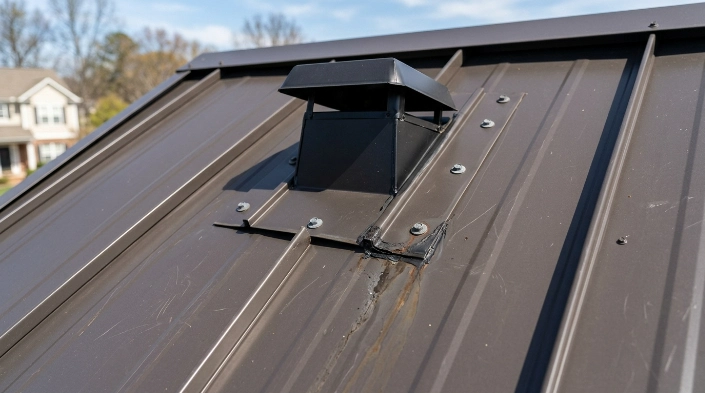
Metal roofing is durable, but it still depends on correctly installed seams, flashing, fasteners, sealants, penetrations, and drainage components.
Loose or Failed Fasteners
Exposed-fastener metal roofs use screws with sealing washers. Over time, movement, installation problems, deterioration, or weather exposure can reduce the effectiveness of those seals.
A loose screw or deteriorated washer can leave a small opening where rain enters.
Simply tightening every screw is not always the solution. Overtightening can damage washers or deform panels.
Failed Seams
Standing-seam and other metal roof systems rely on properly formed and connected panel seams.
Wind-driven rain can expose problems caused by improper installation, movement, damaged seam components, or previous repairs.
Damaged Flashing
Flashing directs water away from roof transitions and penetrations.
Common problem locations include:
- Chimneys
- Plumbing vents
- Skylights
- Roof-to-wall intersections
- Valleys
- HVAC penetrations
- Ridge areas
Damaged, poorly installed, or deteriorated flashing is one of the first areas a roofer may investigate.
Aging or Failed Sealant
Roof sealants do not necessarily last as long as metal panels.
Sealant around penetrations, flashing details, fasteners, and transitions can shrink, crack, separate, or deteriorate.
Covering every suspicious area with general-purpose caulk is usually a poor long-term repair. Metal roofing moves as temperatures change, so the correct repair must account for that movement.
Storm, Wind, or Hail Damage
Strong storms can damage flashing, loosen panels, move ridge components, damage fasteners, or cause debris and tree limbs to strike the roof.
During an active thunderstorm, remain indoors rather than attempting an exterior inspection. Ready.gov advises people to move indoors when thunderstorms threaten and to watch for dangers such as fallen trees and power lines afterward. Ready.gov thunderstorm safety guidance
Clogged Gutters or Drainage Problems
Water that cannot drain normally may back up against roof edges, valleys, transitions, or flashing.
Clean gutters and functioning downspouts are therefore part of roof leak prevention, even when the roofing panels themselves are still in good condition.
Condensation That Looks Like a Leak
Not every metal roof moisture problem comes from rain entering through a hole.
Condensation can form beneath metal roofing when warm, humid indoor air reaches a cold surface. Poor ventilation, insulation problems, or uncontrolled indoor moisture can contribute.
A professional should distinguish condensation from exterior water intrusion before repairs begin.
Emergency Roof Leak Action Table
| Situation | What the Homeowner Should Do | Professional Urgency |
|---|---|---|
| Small ceiling drip | Catch water, move valuables, document damage | Schedule prompt roof inspection |
| Water near electrical fixtures | Avoid contact and isolate power only if safely possible | Urgent roofer/electrician evaluation |
| Sagging or bulging ceiling | Keep everyone away from the area | Urgent inspection |
| Tree or large debris on roof | Stay away from affected rooms and roof | Emergency professional assessment |
| Leak during lightning or heavy wind | Stay indoors and contain water safely | Wait for safe conditions, then call roofer |
| Multiple new leaks after a storm | Photograph damage from safe locations | Prompt professional inspection and possible insurance claim |
| Repeated leak after previous repair | Document where and when it returns | Detailed diagnostic inspection |
| Rusted or deteriorated metal panels | Avoid temporary cosmetic fixes | Contractor assessment for repair or replacement |
Document the Damage Before Repairs
Once immediate safety concerns are under control, take photographs and video from safe locations.
Document:
- Ceiling stains
- Active dripping
- Wet walls
- Damaged flooring
- Wet insulation you can safely see
- Damaged belongings
- Exterior damage visible from the ground
- Fallen limbs or storm debris
Record the date and approximate time the leak started, especially if it occurred during a significant storm.
If an insurance claim may be necessary, contact your insurer promptly and ask what documentation they require.
Insurance guidance recommends photographing or recording damage, taking reasonable measures to prevent additional damage, and keeping receipts for temporary repairs and related expenses. Homeowners insurance claim guidance from Triple-I
Avoid throwing away damaged materials or belongings immediately when they may need to be documented for the claim.
Should You Put a Tarp Over a Leaking Metal Roof?
A tarp can sometimes provide temporary weather protection, but installing one during rain, wind, or lightning can create more danger than the leak itself.
Metal roofing is particularly slippery when wet.
A tarp also needs to be secured correctly. Poorly installed temporary coverings can tear loose, trap water, interfere with drainage, or create additional roof damage.
For a substantial emergency leak, ask a roofing contractor whether professional temporary weatherproofing is appropriate.
A temporary repair should be treated as exactly that: temporary. The source of the leak still needs to be diagnosed and repaired correctly.
Expert Tip
Expert Tip: Before anyone seals a metal roof leak, make sure the actual water-entry point has been identified. Water can travel several feet from the roof opening before appearing inside. Sealing only above the ceiling stain may hide the symptom without fixing the source.
How Metal Roof Type Affects the Repair
Not every metal roof is repaired the same way.
Exposed-Fastener Metal Roofing
These systems have visible screws through the roofing panels. Leak investigations commonly include washers, screw placement, panel laps, flashing, penetrations, and sealant details.
Standing-Seam Metal Roofing
Standing-seam systems usually conceal their main attachment points. Contractors may inspect seams, clips, flashing, panel movement, penetrations, and transition details.
Metal Shingles or Tiles
Metal shingles have overlapping components that behave differently from long metal panels. Repairs may require carefully removing and reinstalling individual units.
Using the wrong repair method can damage finishes, restrict normal movement, or create new leak paths.
Repair Cost and Labor Considerations
There is no single standard price for emergency metal roof repair.
The final cost depends heavily on:
- Roof height
- Roof pitch
- Accessibility
- Leak location
- Metal roof system
- Number of damaged areas
- Required safety equipment
- After-hours or emergency service
- Flashing complexity
- Panel damage
- Wet insulation or decking
- Structural damage
- Matching replacement materials
A straightforward fastener or flashing repair may require relatively little material but still involve substantial labor because the contractor must safely access the roof and diagnose the actual source.
Leaks involving damaged decking, large sections of deteriorated metal, complex flashing, structural problems, or extensive interior water damage can become much more expensive.
Ask for the problem diagnosis and proposed repair method in writing, especially when comparing contractor estimates.
Roof Age, Lifespan, and Replacement Decisions
Metal roofs commonly have long service lives, but longevity depends on the metal type, coating, installation quality, environment, roof design, maintenance, and exposure to severe weather.
One isolated leak does not automatically mean the roof needs replacement.
Repair may make sense when:
- The roof is otherwise in good condition.
- Damage is limited to a small area.
- A flashing detail has failed.
- A penetration needs correction.
- A limited number of fasteners or components are defective.
Replacement or major rehabilitation becomes more reasonable when:
- Leaks occur repeatedly in multiple locations.
- Panels have widespread corrosion or deterioration.
- Previous repairs repeatedly fail.
- The roof was installed incorrectly across large areas.
- Decking or structural components have significant damage.
- Replacement cost is becoming more reasonable than repeated repairs.
A contractor should evaluate the complete roof rather than making a replacement recommendation based solely on one ceiling stain.
Check Your Roof Warranty Before Authorizing Major Work
Metal roof warranty coverage varies significantly.
You may have separate protection for:
- Roofing materials
- Factory-applied coatings or finishes
- Installation workmanship
- Flashing or accessory components
A manufacturer warranty does not necessarily cover contractor workmanship, and a workmanship warranty may not cover storm damage or normal material aging.
Before authorizing a major repair, locate your original contract and warranty paperwork if available.
Ask whether the proposed repair could affect existing warranty coverage. Some roofing systems require approved materials, specific installation methods, or authorized contractors.
When to Consult a Licensed Roofing Contractor
Contact a qualified roofing contractor when the leak is active, difficult to locate, related to storm damage, or potentially involves structural components.
Professional evaluation is particularly important when you notice:
- Multiple leaks
- Large ceiling stains
- Sagging ceilings
- Wet roof decking
- Damaged or displaced metal panels
- Missing flashing
- Widespread loose fasteners
- Significant rust
- Tree impact
- Hail or wind damage
- Water near electrical components
- Recurring leaks after previous repairs
A roofing professional can inspect areas that homeowners cannot safely access and determine whether the problem involves flashing, seams, fasteners, panels, underlayment, decking, drainage, or another component.
If the structure appears damaged after a tree impact, severe storm, or prolonged water exposure, a structural assessment may also be appropriate.
Common Mistakes Homeowners Should Avoid
During a roof leak emergency, rushed decisions can make the situation more expensive or dangerous.
Avoid these common mistakes:
- Climbing onto a wet metal roof. Slippery metal and bad weather create a serious fall hazard.
- Assuming the leak is directly above the ceiling stain. Water frequently travels before becoming visible.
- Applying caulk everywhere. Random sealant may hide the real problem and complicate proper repairs.
- Ignoring a small leak. A minor drip can wet insulation and decking before obvious interior damage appears.
- Walking beneath a sagging ceiling. Saturated drywall can fail.
- Ignoring electrical exposure. Water near wiring or fixtures requires caution.
- Throwing away damaged items too quickly. Insurance documentation may be necessary.
- Hiring the first storm-chasing contractor who appears. Check licensing requirements, insurance, references, written estimates, and warranty terms.
- Treating temporary tarping as a permanent repair. The actual defect still needs correction.
- Replacing the entire roof without a diagnosis. A localized flashing or penetration problem may sometimes be repairable.
How to Reduce the Chance of Another Emergency Leak
After the immediate problem has been repaired, preventive maintenance can reduce the likelihood of another emergency.
Have the roof checked periodically and after significant storms when appropriate.
From the ground or other safe locations, watch for:
- Displaced metal panels
- Loose trim
- Rust or coating damage
- Debris accumulation
- Damaged gutters
- Overflowing drainage
- Tree limbs touching the roof
- Visible flashing damage
Inside the home, inspect ceilings and attic areas periodically for stains, damp insulation, rust marks, or musty odors.
Catching moisture early is generally easier than repairing extensive hidden water damage later.
FAQs
What should I do first when my roof suddenly starts leaking?
Move people and valuable belongings away from the affected area, watch for electrical hazards, place a container under the drip, and document the damage. Then contact a qualified roofer. Do not climb onto a wet roof.
Can I repair a metal roof leak while it is raining?
Roof-top repairs during rain are generally unsafe for homeowners. Metal surfaces become slippery, and thunderstorms or strong winds add additional hazards. Control interior water safely and wait for qualified professionals and safe weather conditions.
Why is my metal roof suddenly leaking?
Common reasons include loose fasteners, failed seams, damaged flashing, deteriorated sealant, storm damage, drainage problems, panel movement, or problems around roof penetrations. Condensation can sometimes imitate a roof leak as well.
Should I call my insurance company for a roof leak?
Consider contacting your insurer when the leak resulted from wind, hail, falling trees, or another potentially covered event, especially when there is significant interior damage. Coverage depends on your policy, deductible, roof condition, and cause of loss.
Can a small metal roof leak be repaired without replacing the roof?
Often, yes. Localized problems involving flashing, fasteners, sealant details, penetrations, or limited panel damage may be repairable. Widespread deterioration, repeated leaks, or structural damage may justify larger repairs or replacement.
How can I find where a metal roof is leaking?
Start from the interior stain or drip and, if the attic is safely accessible, trace moisture uphill toward the ridge. Look for wet decking, rafters, insulation, penetrations, seams, and fastener locations. Because water travels, professional leak diagnosis is often needed.
Is a leaking roof an emergency?
It can be. Treat the situation urgently when water is near electrical equipment, the ceiling is sagging, a tree has struck the roof, water is entering heavily, or structural damage is suspected. Keep people away from dangerous areas and seek professional help.
Conclusion
Knowing what to do during a roof leak emergency can prevent a stressful situation from becoming a much larger repair.
First protect people from electrical, structural, and fall hazards. Contain the water from inside, move valuables, photograph the damage, and contact an experienced roofing professional. With a metal roof, do not assume the ceiling stain identifies the source because water can travel along panels and framing.
Once conditions are safe, have the entire problem diagnosed rather than relying on a quick surface patch. Review your insurance and warranty requirements, compare the recommended repair with the roof’s age and overall condition, and choose a solution that addresses the actual cause.
If your metal roof is actively leaking now, protect the interior and arrange a professional inspection as soon as conditions allow.