
OSHA Rooftop Fall Protection: A Homeowner’s Guide to Metal Roof Safety
Roof work can look surprisingly simple from the ground. A contractor climbs a ladder, walks across the panels, and starts repairing or replacing the roof. But once workers are several feet above the ground, a slip can become a life-threatening accident.
That is why OSHA rooftop fall protection matters during metal roof installation, replacement, inspection, and repair. Metal roofing can become especially slippery when wet, dusty, icy, or covered with loose debris.
For homeowners, OSHA rules are mainly important because they help you recognize whether a roofing contractor takes jobsite safety seriously. This guide explains the basic fall-protection requirements, how they apply to different roof slopes, what equipment you may see on your property, and what questions to ask before work begins.
Quick Answer
OSHA rooftop fall protection generally requires construction workers exposed to falls of 6 feet or more to have appropriate protection. Depending on the roof and work being performed, protection may include guardrails, safety nets, personal fall arrest systems, warning lines, or other OSHA-permitted systems.
What Is OSHA Rooftop Fall Protection?
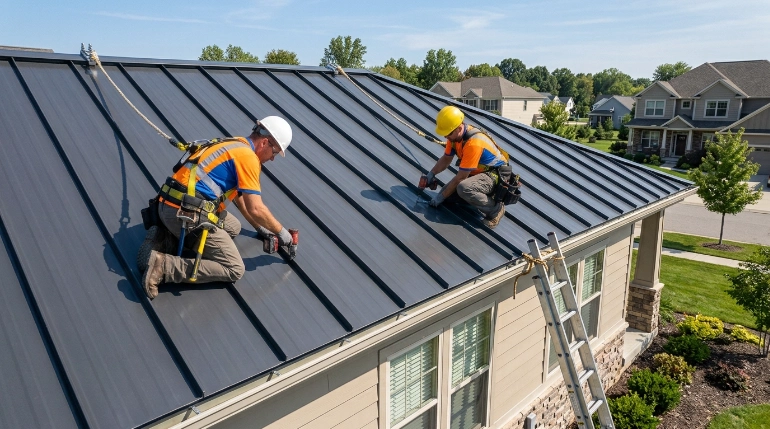
OSHA rooftop fall protection refers to workplace safety requirements designed to prevent workers from falling from roofs, roof edges, openings, and other elevated surfaces.
OSHA’s construction rules generally require fall protection when workers are exposed to an unprotected edge 6 feet or more above a lower level. The exact system allowed depends on factors such as roof slope and the type of work being performed.
The main rules homeowners may hear roofing contractors discuss include:
- Guardrail systems
- Personal fall arrest systems
- Safety nets
- Warning-line systems
- Safety-monitoring systems in certain situations
- Covers or guardrails around roof openings
- Secure anchor points for lifelines and lanyards
You can review the requirements directly in OSHA’s fall-protection construction standard.
These rules are workplace requirements aimed primarily at employers and workers. A typical homeowner does not need to design the contractor’s fall-protection system. However, understanding the basics makes it easier to identify contractors who treat safety as a real part of the project rather than an afterthought.
Why Fall Protection Matters on a Metal Roof
Metal roofs are durable, weather-resistant, and capable of providing a long service life when correctly installed. However, their smooth surfaces can create serious footing problems.
A worker may lose traction because of:
- Rain or morning dew
- Frost or ice
- Dust and construction debris
- Loose metal shavings
- Roofing underlayment
- Steep roof pitch
- Improper footwear
- Wind
- Carrying large metal panels
- Walking near valleys, skylights, or roof edges
Metal roof panels can also be large and difficult to control in strong wind. Workers may need both hands to position panels, fasteners, flashing, or tools.
A fall does not have to occur from a two-story home to cause serious injury. OSHA notes that falls are among the common causes of serious workplace injuries and deaths, which is why construction fall protection generally begins at the 6-foot level.
OSHA’s 6-Foot Rule for Roofing Work
One of the most useful numbers for homeowners to understand is 6 feet.
Under OSHA’s construction fall-protection rules, workers exposed to unprotected sides or edges 6 feet or more above a lower level generally require an approved form of fall protection.
That does not mean every worker must always be attached to the same type of harness.
OSHA permits different systems depending on the roof configuration and work situation.
For example, protection may involve:
- A personal fall arrest system
- Guardrails
- Safety nets
- Certain warning-line arrangements on qualifying low-slope roofing work
- Other systems specifically permitted by OSHA
A warning line by itself is not automatically an acceptable substitute for fall arrest protection in every roofing situation.
Roof slope, roof width, work type, and other jobsite conditions matter.
Low-Slope vs. Steep Metal Roofs
OSHA divides roofs into low-slope and steep categories.
A low-slope roof has a slope of 4:12 or less, meaning the roof rises no more than 4 inches for every 12 inches of horizontal distance.
A steep roof has a slope greater than 4:12.
This distinction matters because OSHA permits different fall-protection approaches.
| Roof Condition | OSHA Classification | Common Protection Methods |
|---|---|---|
| 4:12 slope or less | Low-slope roof | Guardrails, safety nets, personal fall arrest systems, or certain permitted warning-line combinations |
| Greater than 4:12 | Steep roof | Guardrails with toeboards, safety nets, or personal fall arrest systems |
| Roof opening or skylight | Opening hazard | Cover, guardrail, or other required protection |
| Unprotected edge 6+ feet above lower level | Fall hazard | OSHA-compliant protection based on the work situation |
OSHA states that workers performing roofing activities on qualifying low-slope roofs may use several protection options, including combinations involving warning lines. On steep roofs with unprotected edges 6 feet or more above lower levels, workers generally must be protected by guardrails with toeboards, safety nets, or personal fall arrest systems.
Common Fall-Protection Systems You May See
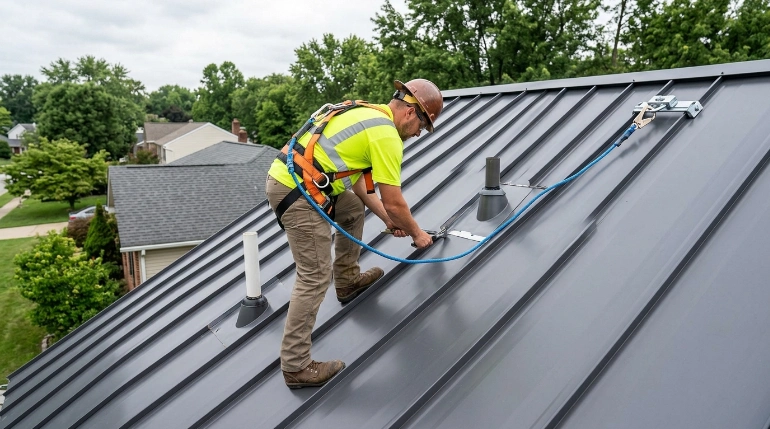
Homeowners do not need to become safety-equipment experts, but recognizing the main systems can help you understand what is happening on your property.
Personal Fall Arrest Systems
A personal fall arrest system is designed to stop a worker after a fall begins.
A complete system can include:
- A full-body harness
- Connectors
- A lanyard or self-retracting lifeline
- A suitable anchorage
- Other compatible components
An anchor is the secure attachment point used for a lifeline, lanyard, or other fall-protection component.
The system must be planned correctly. Simply wearing a harness does not mean a roofer is protected if the worker is not properly connected to an appropriate anchor.
Guardrail Systems
Guardrails create a physical barrier around an exposed edge.
OSHA’s criteria address rail height, strength, intermediate members, and other construction details. For example, top edges of qualifying guardrail systems are generally required to be around 42 inches above the walking or working surface, subject to OSHA’s permitted tolerance.
Guardrails can be useful where workers need repeated access to the same roof area.
Safety Nets
Safety nets are another recognized fall-protection option.
They are positioned below the working surface to catch a falling worker. OSHA specifies requirements for placement, strength, clearance, and installation.
You are less likely to see nets on a simple residential metal roof than harness-based systems, but they remain an OSHA-recognized option in appropriate circumstances.
Warning-Line Systems
A warning line creates a visible boundary intended to warn workers that they are approaching an unprotected roof edge.
These systems are associated with specific low-slope roofing situations. They should not be treated as a universal solution for every roof.
A steep standing-seam metal roof, for example, cannot simply be treated like a broad low-slope commercial roof because using a warning line is easier.
Roof Anchors on Metal Roofing
Roof anchors deserve special attention because installing an anchor incorrectly can create both a safety problem and a roofing problem.
Different metal roof systems may use different anchoring methods. Some systems can use engineered clamps or attachment devices designed for particular standing seams. Other situations may require an anchor connected to structural framing.
The important point for a homeowner is this:
A roofer should not randomly drill into a finished metal panel simply because a tie-off point is needed.
Poorly planned penetrations can potentially affect:
- Water resistance
- Panel movement
- Coatings
- Fastener performance
- Underlayment
- Manufacturer warranty requirements
Ask your roofing contractor how the fall-protection system will be attached and whether the method is compatible with the roofing manufacturer.
Expert Tip: Before signing a metal-roof contract, ask how workers will tie off and whether the anchoring method requires permanent roof penetrations. That question addresses worker safety and your finished roof at the same time.
Skylights and Roof Openings Are Fall Hazards Too
Roof edges are not the only danger.
Skylights, open roof hatches, removed panels, and unfinished openings can create serious fall hazards.
OSHA requires employees to be protected from falls through qualifying roof holes by measures such as personal fall arrest systems, covers, or guardrails. Covers also need to meet OSHA criteria for strength and secure installation.
From a homeowner’s perspective, pay attention if your project involves:
- Skylight replacement
- Chimney removal
- Roof ventilation openings
- Rotten decking replacement
- Large sections of removed metal roofing
- Addition framing
- Roof access hatches
These areas may require additional protection beyond what is used at the roof perimeter.
Does OSHA Require Homeowners to Provide Fall Protection?
For an ordinary contracted roofing project, the roofing employer is generally responsible for protecting its workers under applicable workplace safety requirements.
That means homeowners normally should not be selecting harnesses, installing anchors, or deciding whether a warning line satisfies OSHA rules.
Your role is different.
You can evaluate whether the contractor appears professional by asking:
- How will your crew be protected from falls?
- Who is responsible for the site’s safety plan?
- What tie-off or anchor method will you use on my metal roof?
- How will skylights or openings be protected?
- Will your safety setup create permanent penetrations?
- Are your workers trained to use the equipment?
- Do you carry appropriate insurance?
OSHA also requires employers to train workers regarding job hazards and provide required personal protective equipment in applicable situations.
How Fall Protection Can Affect Roofing Cost and Labor
Fall protection takes planning, equipment, setup time, and training.
That means a professional estimate may indirectly include labor or overhead for:
- Installing anchors
- Setting guardrails
- Establishing warning-line systems where allowed
- Inspecting harnesses and lifelines
- Moving protection as work progresses
- Creating safe ladder-access areas
- Protecting skylights and openings
- Supervising workers
- Removing temporary systems after completion
Do not automatically assume the lowest labor quote is the best value.
If one roofing contractor’s estimate is noticeably lower than others, ask what is included. A contractor who budgets for proper equipment, trained workers, insurance, and safe setup may have higher operating costs than a crew cutting those corners.
Safety is part of professional roofing work, not an optional upgrade.
Fall Protection, Roof Lifespan, and Warranty Coverage
Fall protection does not directly increase a metal roof’s rated lifespan. However, a well-managed jobsite can support better workmanship.
Workers who have secure footing and properly planned access are in a better position to install:
- Panel fasteners
- Flashing
- Ridge details
- Valleys
- Pipe boots
- Trim
- Snow-retention components
- Sealants
Safety systems must also be selected carefully so they do not damage the roofing system.
This is especially important with finished metal roofs because poorly positioned anchors or temporary attachments could scratch coatings, distort seams, or create unnecessary penetrations.
Before work begins, ask whether the contractor’s safety attachment method is compatible with the roof manufacturer’s installation and warranty requirements.
Weather Can Change a Safe Roof Into a Dangerous One
Metal roofs can become dramatically more hazardous when weather changes.
Rain is an obvious concern, but other conditions matter too.
Morning Dew
A panel may look dry from the ground while moisture remains on its surface.
Wind
Large metal roofing panels can catch wind like a sail. Workers carrying or positioning them can suddenly lose balance.
Frost and Ice
Even a small frozen area can eliminate traction.
Extreme Heat
Hot roofing surfaces can affect worker comfort, concentration, and handling conditions.
Professional crews should evaluate conditions rather than continue working simply because the project’s schedule is tight.
OSHA’s broader fall-protection resources emphasize controlling fall hazards and providing appropriate worker protection.
What Homeowners Should Look for During Roof Work
You do not need to supervise the roofing crew, but obvious warning signs can justify a conversation with the contractor.
Watch for situations such as:
- Workers repeatedly approaching high edges without apparent protection
- Harnesses being worn but not connected
- Loose materials placed near roof edges
- Unprotected skylights or openings
- Workers climbing unsafe or visibly unstable ladders
- Roofing continuing during dangerous wind, ice, or severe weather
- Safety equipment apparently attached to weak or improvised points
OSHA’s system criteria also state that roofing materials and equipment generally should not be stored within 6 feet of a roof edge unless guardrails are erected at the edge, and stacked materials near an edge should remain stable and self-supporting.
If something looks dangerous, contact the project supervisor rather than climbing onto the roof yourself.
DIY Roof Inspection and Repair Limitations
A homeowner may be tempted to climb onto a metal roof to locate a leak, inspect storm damage, clean debris, or check loose flashing.
That can be dangerous.
Unlike a roofing company, most homeowners do not have:
- Proper fall-protection equipment
- Engineered anchor points
- Roof-access training
- Appropriate footwear
- Rescue procedures
- Experience judging safe weather conditions
Whenever possible, inspect from the ground, from inside the attic, or with a qualified professional.
For example, water staining on roof decking, wet insulation, mold-like discoloration, rust near fasteners, damaged flashing, or daylight through the roof assembly can all justify professional evaluation without requiring you to walk across the roof.
OSHA provides dedicated residential fall-protection resources for contractors and workers involved in residential construction.
When to Consult a Licensed Roofing Contractor
Contact a qualified roofing contractor when the work involves significant height, difficult access, structural concerns, or damage you cannot safely inspect.
Professional evaluation is particularly important when you have:
- Active roof leaks
- Storm or hail damage
- Loose metal panels
- Damaged flashing
- Sagging or weakened roof decking
- Rotten structural wood
- Skylight leaks
- Suspected wind uplift
- Aging fasteners or seams
- Extensive rust or corrosion
- Insurance-related damage
- A roof requiring replacement
A structural assessment may also be necessary if there is visible sagging, fire damage, major impact damage, extensive rot, or concern about rafters or trusses.
For insurance claims, document damage from a safe location and avoid making unnecessary temporary repairs that could complicate the evaluation.
Common Mistakes Homeowners Should Avoid
- Choosing a roofer based only on price. Safety equipment, training, insurance, and proper installation all cost money.
- Assuming a harness automatically means compliance. Fall-protection equipment must be properly selected, connected, and used.
- Walking onto the roof to monitor the contractor. Stay off the work area unless appropriate access and protection have been arranged.
- Ignoring anchor penetrations. Ask whether fall-protection attachments could affect waterproofing or warranty coverage.
- Allowing roof work during obviously dangerous weather. Wind, rain, frost, and ice can significantly increase risk.
- Assuming every roof uses the same safety system. Roof pitch, design, height, openings, and type of work all matter.
- Trying to perform risky repairs yourself. A small leak is not worth a potentially serious fall.
FAQs
Does OSHA require fall protection when working on a roof?
For construction work, OSHA generally requires fall protection when workers are exposed to unprotected sides or edges 6 feet or more above a lower level. Specific requirements depend on the roof and work situation.
At what height does OSHA require rooftop fall protection?
For construction work covered by the applicable standard, the commonly relevant threshold is 6 feet above a lower level.
Does a roofer always have to wear a harness?
Not necessarily. OSHA permits multiple fall-protection methods depending on the situation, including guardrails, safety nets, personal fall arrest systems, and certain systems used during qualifying low-slope roofing work.
What is considered a steep roof by OSHA?
OSHA defines a steep roof as having a slope greater than 4:12. A low-slope roof has a slope of 4:12 or less.
Are warning lines allowed on metal roofs?
They may be used in certain qualifying low-slope roofing situations, but they are not a universal replacement for fall arrest or other protection. The work type, roof slope, dimensions, and OSHA requirements must be considered.
Can roof anchors damage a metal roof?
Improperly selected or installed attachments can potentially damage panels, coatings, seams, or waterproofing. Contractors should use a system appropriate for the specific roof assembly and manufacturer requirements.
Should I climb onto my roof to check whether my roofer is working safely?
No. Homeowners should avoid entering an active roofing work area unless safe access has been arranged. Speak with the project supervisor from the ground if you have concerns.
Conclusion
OSHA rooftop fall protection is an important part of professional metal roofing work. For construction workers exposed to significant fall hazards, appropriate protection may include personal fall arrest systems, guardrails, safety nets, warning-line arrangements in permitted situations, and protection around roof openings.
Homeowners do not need to design these systems themselves. Your job is to hire a contractor who understands the requirements, trains workers, uses equipment correctly, and protects the finished roof while protecting the crew.
Before your next metal roof repair or replacement begins, ask the contractor how fall hazards will be handled and how anchors or other safety equipment will interact with your roofing system. A clear, confident answer is one more sign that you are dealing with a professional roofing company.