
What to Do When Your Roof Starts Leaking: Metal Roof Guide

A roof leak can turn a normal rainy day into an emergency. You may notice a brown ceiling stain, hear water dripping in the attic, or find wet insulation after a storm. With a metal roof, the place where water appears indoors may be several feet away from the actual opening.
Knowing what to do when your roof starts leaking can limit interior damage and help you avoid rushed repairs that do not solve the real problem.
This guide explains the first steps to take, common metal roof leak causes, what you can safely inspect, typical repair considerations, and when it is time to call a licensed roofing contractor.
Quick Answer
When your roof starts leaking, protect the room below, keep water away from electrical fixtures, document the damage, and check the attic only if it is safe. Do not climb onto a wet metal roof. The next step is finding the true leak source and arranging the correct repair before more water enters.
What to Do Immediately When Your Roof Starts Leaking
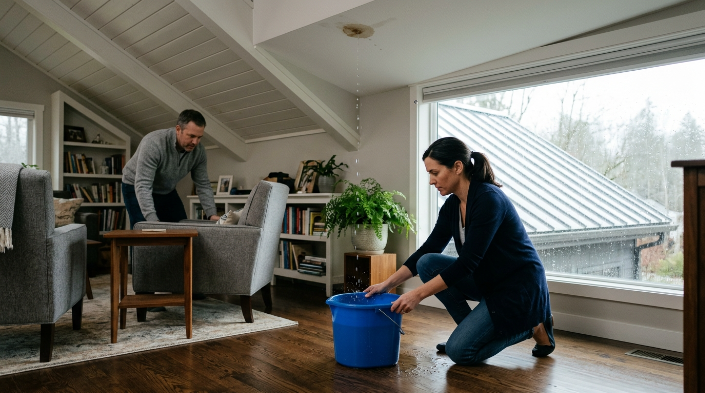
When water appears inside your home, focus first on safety and damage control. Finding the roof opening can wait until conditions are safe.
1. Protect the Area Below the Leak
Move furniture, electronics, rugs, and valuables away from the wet area.
Place a bucket or waterproof container beneath an active drip. Put towels around the container if water is splashing onto flooring.
If a ceiling is bulging with trapped water, keep people away from the area. Wet drywall can become heavy and may collapse without warning.
2. Watch for Electrical Hazards
Water near electrical wiring, recessed lights, outlets, ceiling fans, or an electrical panel requires extra caution.
Do not touch wet electrical equipment. If you can safely shut off the affected circuit from a dry location, do so. When you are uncertain, contact an electrician.
3. Document What You See
Take photos and videos of:
- Ceiling stains
- Active dripping
- Wet insulation
- Damaged drywall
- Wet flooring or furniture
- Visible storm damage
- Fallen branches or debris
Also note when the leak started. Record whether it appeared during light rain, heavy rain, wind-driven rain, or several hours after the storm began.
These details can help a roofing contractor trace the source. They may also be useful if you later file an insurance claim.
4. Do Not Rush Onto the Roof
A wet metal roof can be extremely slippery.
Roof work also involves serious fall hazards. OSHA’s fall-prevention guidance for roofing work emphasizes the importance of proper equipment and fall-protection practices when working at height. Homeowners without suitable training and safety equipment are usually better off inspecting from the ground or attic.
Never climb onto a roof during rain, lightning, high winds, snow, or icy conditions.
Why Metal Roof Leaks Can Be Hard to Find
The ceiling stain is not necessarily directly below the roof opening.
Water can enter around a screw, seam, vent, chimney, flashing detail, or damaged panel. It may then travel along the underside of the metal, roof framing, insulation, or decking before dripping into the room below.
Decking is the structural surface beneath the roofing material. Underlayment is the water-resistant layer installed between the roofing and the decking. Flashing is shaped material used to keep water out where different roof surfaces or structures meet.
This is why spreading sealant over the area directly above an indoor stain often fails.
Industry guidance on investigating roof leaks also stresses the importance of identifying the actual water-entry path before deciding how to repair a leak.
Common Causes of a Leaking Metal Roof
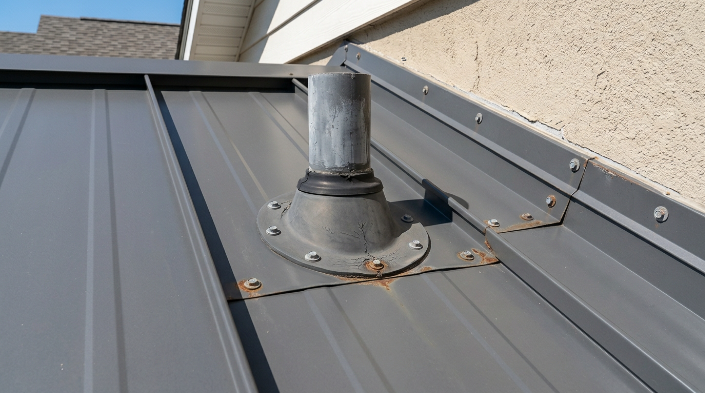
A metal panel may look perfectly good while a small connection point nearby allows water inside.
Loose or Failed Fasteners
Exposed-fastener metal roofs use screws with sealing washers.
Temperature changes cause metal panels to expand and contract. Over time, fasteners may loosen, washers may deteriorate, or screw holes may become enlarged.
Possible clues include:
- Screws sitting above the panel
- Cracked or dried washers
- Rust around screw heads
- Missing fasteners
- Water stains after heavy rain
Do not automatically tighten every screw you see. Overtightening can damage the washer or deform the panel.
Damaged Flashing
Flashing protects vulnerable areas such as:
- Chimneys
- Plumbing vents
- Skylights
- Sidewalls
- Valleys
- Roof transitions
- HVAC penetrations
Loose, bent, corroded, or poorly installed flashing can allow water beneath the metal roofing even when the surrounding panels are undamaged.
Failed Seams and Joints
Metal roof panels connect at seams.
Standing-seam systems conceal most fasteners, but their seams, clips, penetrations, transitions, and flashing details still need to remain watertight.
Leaks may develop when seams separate, sealants age, panels move incorrectly, or previous repairs interfere with normal expansion and contraction.
Aging Sealant
Roof sealants do not necessarily last as long as the metal panels themselves.
Sunlight, temperature changes, moisture, and movement can eventually cause sealant to crack, shrink, separate, or lose adhesion.
Simply adding a thick layer of new caulk over old material is not always a lasting repair.
Corrosion or Panel Damage
Metal roofing is designed to resist weather, but corrosion can develop where protective coatings are damaged or moisture remains trapped.
Look for:
- Rust around fasteners
- Corroded panel edges
- Punctures
- Deep scratches
- Holes
- Bent panels
- Damage from fallen branches
Widespread corrosion is more concerning than one isolated damaged area.
Storm, Wind, or Hail Damage
Strong winds may loosen flashing or lift panels. Hail can damage coatings and accessories, while falling limbs can puncture or bend metal.
If the leak began immediately after severe weather, photograph the conditions before temporary repairs cover the evidence.
What You Can Safely Check From Inside
You may be able to learn a great deal without stepping onto the roof.
If your attic is safely accessible, use a bright flashlight and look around the area above the interior stain.
Check for:
- Wet rafters
- Damp roof decking
- Water trails
- Rust marks
- Wet insulation
- Mold or mildew
- Drips near vents or chimneys
- Daylight through an unexpected opening
Follow visible moisture uphill toward the roof ridge when possible. Water normally moves downward after entering, so the source may be higher than the wet area.
Do not disturb soaked insulation unnecessarily, and stop your inspection if there are exposed wires, unstable surfaces, strong mold growth, or structural damage.
Make Sure the Problem Is Actually a Roof Leak
Not every wet ceiling beneath a metal roof means rainwater is entering from outside.
Condensation can imitate a roof leak.
Warm, humid indoor air may reach a cold roof surface and create moisture. Poor attic ventilation, bathroom exhaust ducts venting into the attic, or excessive indoor humidity can make the problem worse.
Other possible sources include:
- Plumbing leaks
- HVAC condensation
- Bathroom exhaust ducts
- Frozen pipes
- Skylight condensation
A leak that appears without rainfall deserves a broader investigation.
Temporary Leak Control vs. Permanent Repair
Temporary measures are meant to reduce damage until proper repairs can be completed. They should not be confused with permanent waterproofing.
A permanent metal roof repair may involve:
- Replacing failed fasteners
- Installing new sealing washers
- Rebuilding flashing
- Repairing a seam
- Replacing damaged sealant correctly
- Patching a punctured panel
- Replacing a damaged panel
- Correcting drainage
- Replacing wet decking or insulation
Roofing cement, household caulk, spray foam, and random layers of sealant are not universal metal roof repairs.
Some products may prevent metal panels from moving normally, trap moisture, interfere with coatings, or create warranty problems.
Typical Metal Roof Leak Repair Considerations
There is no single price for repairing a leaking metal roof. The amount of water on your floor tells you very little about how complicated the repair will be.
| Problem | Repair Complexity | Main Cost Factors |
|---|---|---|
| One failed fastener | Low | Access, minimum service charge |
| Small sealant failure | Low to moderate | Cleaning, compatible materials, location |
| Vent flashing leak | Moderate | Flashing type, roof pitch, access |
| Open seam | Moderate to high | Panel system, seam length, labor |
| Corroded panel | Moderate to high | Panel replacement, matching material |
| Wet roof decking | High | Panel removal, structural repairs |
| Multiple recurring leaks | High | Diagnosis, widespread deterioration |
A small accessible repair may cost only a few hundred dollars in many markets. More complicated seam, flashing, decking, or panel work can quickly reach four figures.
Labor often becomes a major part of the bill when the roof is steep, high, difficult to access, or requires special equipment.
Ask for an estimate that explains what failed and how the proposed repair corrects that failure, rather than accepting a vague charge for “sealing the roof.”
Does One Leak Mean You Need a New Metal Roof?
Usually not.
A localized leak caused by one damaged flashing detail, failed fastener, penetration, or seam may be repairable.
Replacement becomes more reasonable when you have:
- Widespread corrosion
- Numerous recurring leaks
- Extensive deck deterioration
- Major storm damage
- Poor original installation throughout the roof
- Repeated failed repairs
- Panels that can no longer be repaired reliably
Metal roofing commonly provides decades of service, so age alone should not automatically determine whether it needs replacement.
The condition of the complete roof system matters more.
Consider Roof Age and Repair History Together
A relatively young metal roof with repeated leaks may have an installation or detailing problem.
An older roof with one minor flashing leak may still have many useful years remaining.
Ask the contractor whether the recommended work is addressing a localized defect or system-wide deterioration.
Warranty and Insurance Considerations
Before authorizing major work, review any roofing warranty documents you have.
A warranty may cover certain material defects or installation issues while excluding normal maintenance, storm damage, unauthorized alterations, or repairs performed with incompatible products.
If the roof was installed recently, contacting the original installer or manufacturer before another contractor modifies the system may protect your warranty rights.
Homeowners insurance may cover sudden damage caused by a covered event such as wind, hail, or falling debris. It generally should not be assumed to cover deterioration caused by neglected maintenance.
If you believe storm damage caused the leak:
- Photograph the damage.
- Take reasonable steps to prevent additional water damage.
- Save receipts for emergency work.
- Review your policy.
- Contact your insurer before authorizing extensive permanent repairs when practical.
Be especially cautious about contractors who appear immediately after a storm and pressure you to sign.
The Federal Trade Commission’s guidance on avoiding post-disaster repair scams recommends verifying licensing and insurance and getting repair terms in writing.
Expert Tip
Expert Tip: Keep a simple leak log. Record the date, rainfall intensity, wind direction, location of the indoor stain, and how long the water continues after rain stops. Those clues can make a difficult metal roof leak much easier for a contractor to diagnose.
How to Prevent Another Metal Roof Leak
Once the immediate leak is repaired, regular inspection can help catch small problems before they damage the interior.
The National Roofing Contractors Association’s roof maintenance guidance recommends regular roof inspections because problems such as loose seams and deteriorated flashing can often be found before serious leaking develops.
Homeowners should watch for:
- Loose or missing fasteners
- Failed sealant
- Rust
- Damaged flashing
- Debris collecting in valleys
- Clogged gutters
- Loose panels
- Damage after major storms
Gutters and roof drainage matter because backed-up water may reach roof edges, valleys, and flashing details that are not designed for prolonged water exposure.
Regular maintenance can also help protect the roof’s expected lifespan and may be required under certain warranties.
Common Mistakes Homeowners Should Avoid
- Climbing onto a wet metal roof. Metal can become dangerously slippery even on a mild slope.
- Assuming the ceiling stain identifies the roof opening. Water frequently travels before becoming visible indoors.
- Covering every seam with caulk. Excess sealant may hide rather than correct the defect.
- Overtightening roof screws. This can crush sealing washers and deform panels.
- Ignoring a small leak. Moisture can damage insulation, decking, drywall, and framing.
- Forgetting about condensation. Moisture without rain may have an indoor source.
- Throwing away storm-damage evidence. Photograph conditions before emergency repairs when possible.
- Choosing a contractor only by price. The cheapest patch is poor value when the cause has not been diagnosed.
- Ignoring warranty requirements. Unauthorized repairs or incompatible materials may affect coverage.
When to Consult a Licensed Roofing Contractor
A professional inspection is the better choice when:
- The roof is steep, high, wet, or difficult to access.
- You cannot locate the leak safely.
- Water is near electrical equipment.
- Metal panels are loose or badly damaged.
- A chimney, skylight, valley, or wall flashing is leaking.
- Multiple rooms show water damage.
- Decking appears soft, rotten, or sagging.
- The roof has widespread corrosion.
- Leaks repeatedly return after repairs.
- Significant wind or hail damage is present.
- Your warranty or insurance claim could be affected.
Look for a contractor with experience in your specific type of metal roofing. Standing-seam and exposed-fastener systems are constructed differently and may require different repair techniques.
Ask the contractor to show you photographs of the suspected entry point and explain the repair method before work begins.
FAQs
What should I do first when my roof starts leaking?
Move belongings away from the water, contain the drip, check for electrical hazards, and document the damage. Avoid climbing onto a wet roof. Once the immediate area is protected, arrange an inspection to identify the true water-entry point.
Can I temporarily stop a metal roof leak myself?
You may be able to control interior dripping safely, but exterior repair is different. If accessing the roof involves fall risk or you do not know which repair material is compatible with the metal system, professional help is safer.
Why does my metal roof leak only during heavy rain?
Heavy or wind-driven rain can force water through small gaps in flashing, seams, fasteners, ridge details, or wall connections that may remain dry during lighter rainfall.
Can loose screws cause a metal roof to leak?
Yes. On exposed-fastener metal roofing, loose screws or damaged sealing washers can allow water through the fastener holes. Correct replacement or adjustment is important because overtightening can also create problems.
How serious is a small ceiling stain?
Even a small stain deserves attention. The visible mark may represent water that has already soaked insulation, decking, or drywall. Monitor the area and find the source before the next storm.
Should I replace my entire metal roof because it leaks?
Not necessarily. Many isolated metal roof leaks can be repaired successfully. Replacement is more likely when deterioration is widespread, structural materials are damaged, or recurring repairs no longer provide reliable protection.
How often should a metal roof be inspected?
Periodic inspection and additional checks after severe storms are sensible. The exact maintenance schedule may depend on the roof system, manufacturer recommendations, climate, warranty requirements, and building conditions.
Conclusion
Knowing what to do when your roof starts leaking can make the difference between a manageable metal roof repair and extensive interior water damage.
Start by protecting people and belongings, controlling the indoor drip, documenting the damage, and avoiding unsafe roof access. Then focus on finding the actual entry point instead of simply covering the nearest seam with sealant.
Loose fasteners, worn washers, failed flashing, open seams, damaged sealant, corrosion, drainage problems, and storm damage are all possible causes of a metal roof leak.
Many problems can be repaired without replacing the entire roof. However, recurring leaks, structural damage, widespread corrosion, or extensive storm damage deserve a professional assessment.
If the leak continues, schedule an inspection with a qualified metal roofing contractor and ask for a clear diagnosis before approving repairs.