
What Roof Maintenance Prevents Leaks?

A roof leak often looks sudden, but the problem usually started much earlier. A loose screw, cracked sealant, clogged gutter, damaged flashing, or small patch of corrosion may allow moisture to enter long before water stains appear on your ceiling.
So, what roof maintenance prevents leaks? The most effective approach is regular inspection, clear drainage, prompt repair of damaged flashing and fasteners, debris removal, and attention to seams, sealants, roof penetrations, and ventilation.
This is especially important for metal roofs. Metal roofing can last for decades, but it is not maintenance-free. Small problems can grow as panels expand and contract through changing temperatures.
The goal is not to constantly repair your roof. It is to catch small weaknesses before rain finds them.
Quick Answer
What roof maintenance prevents leaks? Inspect your roof at least twice a year and after major storms, keep gutters and valleys clear, repair loose flashing and fasteners, replace failed sealant, remove debris, and watch for corrosion or damaged panels. Early maintenance helps stop small defects from becoming expensive interior water damage.
Why Regular Roof Maintenance Helps Prevent Leaks
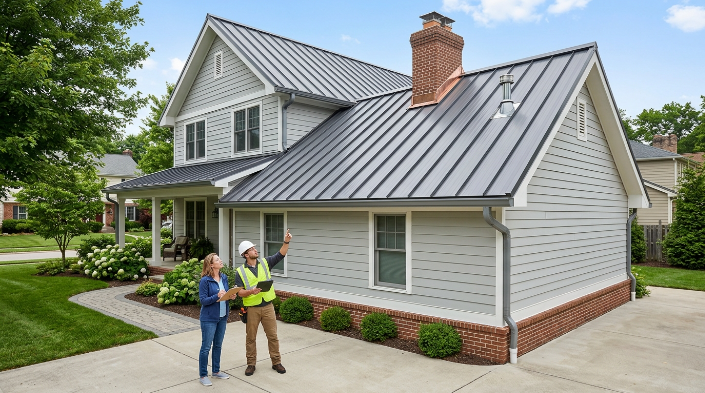
A roofing system works because many separate parts direct water away from your home.
The visible roof covering is only one part. A metal roof also depends on:
- Panels
- Seams
- Fasteners
- Flashing
- Sealants
- Underlayment
- Ridge and edge details
- Roof penetrations
- Gutters and downspouts
If one part fails, water may find its way beneath the roof covering.
The National Roofing Contractors Association’s roof-maintenance guidance recommends periodic inspections and routine maintenance, with inspections generally performed in spring and fall and after severe weather.
That schedule makes sense for homeowners because roof damage is often seasonal. Winter weather, summer heat, wind, hail, falling branches, and temperature changes can all affect roofing components.
Preventive maintenance is usually much easier than finding a hidden leak after water has entered the attic.
1. Inspect the Roof Twice a Year
One of the simplest ways to prevent leaks is to look for problems before they become active leaks.
A practical schedule is:
- Inspect in spring.
- Inspect again in fall.
- Perform an additional inspection after major wind, hail, or severe storms.
You do not necessarily need to walk on the roof.
From the ground, binoculars can help you see raised panels, displaced flashing, missing components, debris, and obvious storm damage.
From inside the attic, look for:
- Damp insulation
- Dark stains on decking
- Rusted nail or screw points
- Water trails
- Musty odors
- Mold-like discoloration
- Daylight entering through openings
Roof decking is the wood or structural surface beneath the roof covering. If repeated leaks soak the decking, deterioration can spread beyond the original leak location.
2. Keep Gutters and Downspouts Clear
Gutters may seem separate from the roof, but poor drainage can contribute directly to water problems.
Leaves, twigs, seed pods, roofing debris, and dirt can block water movement. When gutters overflow, water can back up near the roof edge, soak fascia boards, or run down areas that were not designed to handle constant moisture.
Check that:
- Gutters are free of debris.
- Downspouts drain freely.
- Gutters are securely attached.
- Water flows toward downspouts.
- Downspouts discharge away from the foundation.
- Roof drains on low-slope roofs remain open.
The Insurance Institute for Business & Home Safety recommends regularly inspecting roof drainage systems and addressing damaged or loose flashing that could contribute to water intrusion.
Homes surrounded by mature trees may need gutter cleaning more often than twice a year.
3. Remove Leaves and Debris From the Roof
Debris can create several problems at once.
Leaves may trap moisture against the roofing surface. Branches can scratch coatings. Debris collected in valleys can slow drainage and redirect rainwater.
Pay special attention to:
- Roof valleys
- Behind chimneys
- Around dormers
- Near skylights
- Around roof-mounted equipment
- Low spots on low-slope roofs
A valley is the channel where two roof slopes meet. Large amounts of rainwater can pass through this area, so even a minor obstruction can increase the chance of water finding a weak seam or flashing joint.
Do not climb onto a steep, wet, icy, or damaged roof just to remove debris. Have a roofing professional handle unsafe areas.
4. Check Metal Roof Fasteners
Exposed-fastener metal roofs deserve special attention.
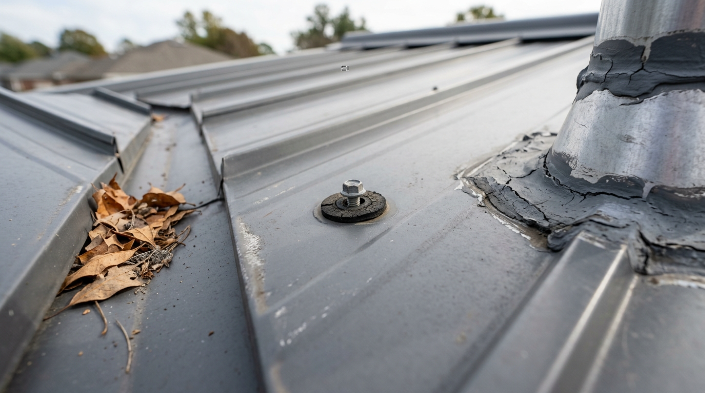
These systems commonly use screws with rubber or synthetic washers that seal the screw opening. Over time, temperature changes can cause metal panels to move slightly.
Fasteners may:
- Back out
- Loosen
- Become crooked
- Corrode
- Lose their washers
- Develop cracked or deteriorated washers
A screw that looks only slightly raised can become a water-entry point.
Standing-seam roofs hide most fasteners beneath the seams, so they generally have fewer exposed screw penetrations. However, they still require inspection of seams, clips, flashing, penetrations, and edge details.
If you see numerous failed fasteners, avoid randomly tightening every screw yourself. Over-tightening can crush washers and create another leak path.
5. Inspect Flashing Carefully
Flashing is one of the most important leak-prevention components on any roof.
Flashing is thin metal or another waterproof material installed where the roof changes direction or meets another object.
Typical flashing locations include:
- Chimneys
- Plumbing vents
- Skylights
- Walls
- Valleys
- Dormers
- Roof edges
- HVAC penetrations
Look for sections that appear:
- Loose
- Bent
- Lifted
- Rusted
- Separated
- Poorly sealed
A leak around flashing does not automatically mean your entire roof needs replacement. In many cases, the surrounding roof remains serviceable and the flashing itself needs professional repair.
If you want to understand the usual failure points in more detail, RoofersGazette’s guide to roof flashing explains how gaps, corrosion, failed sealants, and movement can allow water into a roofing system.
6. Watch Sealants and Seams
Metal roofs move as temperatures rise and fall.
That movement is normal. Problems develop when seams, joints, or sealants can no longer accommodate it.
Inspect areas around:
- Panel laps
- Flashing joints
- Ridge caps
- Vents
- Pipe boots
- Fasteners
- Roof-mounted equipment
Warning signs include sealant that is:
- Cracked
- Brittle
- Peeling
- Shrinking
- Separating from the metal
Do not coat every seam with generic caulk.
Metal roof systems use specific sealants and tapes designed to work with particular metals, coatings, joint designs, and movement patterns. The wrong product can fail quickly or interfere with a future professional repair.
7. Look for Rust and Coating Damage
A small scratch does not always mean a metal panel must be replaced.
However, damaged protective coatings can expose some metals to corrosion.
Inspect for:
- Rust around fasteners
- Corrosion at panel edges
- Scratches from branches
- Worn coatings
- Flaking metal
- Holes or punctures
Surface corrosion may sometimes be repairable. Deep rust, thinning metal, widespread deterioration, or holes can indicate that panel replacement is a better solution.
Corrosion around many fasteners may also signal a broader aging problem rather than one isolated defect.
8. Inspect After Wind, Hail, and Severe Weather
Do not wait until the next scheduled inspection after a major storm.
Wind can loosen panels, flashing, ridge caps, and trim. Hail may dent metal or damage other roof components. Falling branches can puncture panels or scrape protective finishes.
After a storm, safely check for:
- Lifted metal panels
- Loose trim
- Missing components
- Bent flashing
- New dents
- Fallen limbs
- Gutter damage
- Interior water stains
Take photographs if you suspect storm damage.
For insurance-related damage, documentation can be useful before temporary repairs alter the appearance of the affected area.
Avoid permanent DIY repairs when an insurance claim may be involved unless you understand the policy requirements. Emergency measures to limit ongoing water damage may still be necessary.
Roof Maintenance Checklist for Preventing Leaks
| Maintenance Task | What to Look For | Suggested Timing | Why It Matters |
|---|---|---|---|
| Visual roof inspection | Loose panels, damaged flashing, corrosion | Spring and fall | Finds developing problems early |
| Storm inspection | Hail, wind, branch or panel damage | After severe weather | Catches sudden damage |
| Gutter cleaning | Leaves, clogs, standing water | At least twice yearly | Keeps water moving away |
| Fastener check | Raised screws, damaged washers | During roof inspection | Prevents water around penetrations |
| Sealant check | Cracking, shrinking, separation | During roof inspection | Protects seams and penetrations |
| Flashing inspection | Gaps, rust, loose sections | Twice yearly | Protects vulnerable roof transitions |
| Attic inspection | Stains, dampness, odors | Several times yearly | Detects hidden moisture |
| Debris removal | Leaves and branches | As needed | Prevents trapped water and damage |
Don’t Ignore the Attic
Some roof leaks are easier to detect from below than from above.
Check your attic during or shortly after heavy rain if it is safe to do so.
Bring a flashlight and look for moisture on:
- Rafters
- Roof decking
- Insulation
- Pipes
- Vent openings
Remember that water can travel.
The ceiling stain in your bedroom may not be directly below the exterior opening. Water can follow framing, metal panels, underlayment, or pipes before dripping.
That is why professional leak detection sometimes takes more investigation than simply looking above the stain.
Roof Ventilation and Moisture Control Matter Too
Not every wet attic is caused by rain entering through the roof.
Poor ventilation can allow warm, humid indoor air to condense on cold roofing surfaces. That moisture can resemble a roof leak.
Possible signs of ventilation or condensation trouble include:
- Widespread dampness rather than one water trail
- Moisture on metal surfaces
- Mold-like growth
- Wet insulation
- Rusted fasteners
- Problems that appear during cold weather without rain
A roofing contractor or qualified building professional can help distinguish condensation from exterior water intrusion.
This distinction matters because applying sealant to the roof will not solve an attic ventilation problem.
How Maintenance Changes With Roof Material
Maintenance is not identical for every roof.
Metal Roofs
Focus on seams, fasteners, flashing, coatings, corrosion, penetrations, and panel movement.
Asphalt Shingles
Watch for missing, cracked, curled, or damaged shingles and excessive granules collecting in gutters.
Tile Roofs
Look for cracked, displaced, or missing tiles. Avoid unnecessary foot traffic because tiles can break.
Wood Shakes
Watch for splitting, decay, biological growth, and damaged shakes.
Flat or Low-Slope Roofs
Pay close attention to ponding water, drains, seams, punctures, edge flashing, membrane deterioration, and roof-mounted equipment.
Each system has different repair materials and installation methods. A maintenance product that works on one roof may be unsuitable for another.
What Does Preventive Roof Maintenance Cost?
Costs vary widely because routine visual inspection is very different from repairing flashing or replacing deteriorated metal panels.
Price can depend on:
- Roof size
- Roof pitch
- Height
- Accessibility
- Roofing material
- Amount of damage
- Labor rates
- Number of penetrations
- Type of metal roofing system
- Need for specialty equipment
Simple gutter cleaning or a basic inspection usually costs much less than repairing wet decking, insulation, drywall, and structural materials after a long-term leak.
That is the main financial benefit of maintenance: small repairs can be addressed before water damage spreads into other parts of the home.
Can Maintenance Extend Roof Lifespan?
Maintenance cannot make roofing materials last forever.
It can, however, help a roof reach more of its expected service life by preventing avoidable damage.
A properly installed metal roof can commonly serve for several decades, but actual lifespan depends on the metal type, coating, climate, installation quality, roof design, maintenance, and exposure conditions.
Maintenance is especially useful for extending the serviceability of components that may age faster than the main panels, including:
- Sealants
- Fasteners
- Pipe boots
- Flashing details
- Coatings
- Drainage components
A roof can have panels that remain structurally sound while smaller waterproofing details begin failing.
How Roof Maintenance Can Affect Warranty Coverage
Read your roofing warranty before performing repairs.
Some warranties require periodic maintenance or prompt correction of known problems. Others may limit coverage if unauthorized materials, coatings, fasteners, or repair methods are used.
Keep records of:
- Inspection dates
- Contractor reports
- Photographs
- Repair invoices
- Materials used
- Storm events
If a newer roof develops a leak, check whether the problem may involve workmanship or manufacturer coverage before making permanent alterations.
Expert Tip
Expert Tip: Keep a simple roof-maintenance folder with dated photos from the same viewpoints each spring and fall. Comparing old and new photos makes slow changes—such as lifting flashing, spreading rust, or backing-out fasteners—much easier to notice.
Common Mistakes Homeowners Should Avoid
- Waiting for a ceiling drip. Water damage may already exist before a leak becomes visible indoors.
- Covering everything with caulk. Excess sealant can hide the real problem without creating a durable repair.
- Ignoring clogged gutters. Poor drainage can damage roof edges, fascia, and nearby building materials.
- Walking unnecessarily on metal or tile roofs. Foot traffic can damage roofing and creates a serious fall hazard.
- Pressure-washing the roof without proper guidance. High-pressure water can damage finishes or force water beneath roofing components.
- Ignoring small rust spots or loose fasteners. Minor defects can grow.
- Using incompatible repair products. Sealants, coatings, and metals can react differently.
- Assuming every leak requires replacement. Localized flashing, fastener, or seam problems may be repairable.
- Assuming every old roof can be patched indefinitely. Widespread corrosion, structural deterioration, or repeated leaks may make replacement more sensible.
When to Consult a Licensed Roofing Contractor
Some maintenance can be performed from the ground, but actual roof repair often deserves professional attention.
Call a licensed or appropriately qualified roofing contractor when you notice:
- Active interior leaking
- Large areas of corrosion
- Multiple loose metal panels
- Widespread fastener failure
- Damaged flashing
- Storm damage
- Soft or deteriorated decking
- Repeated leaks after previous repairs
- Structural sagging
- Large punctures
- Problems near electrical equipment
- A leak you cannot locate safely
You should also call a professional when the roof is steep, high, wet, icy, fragile, or difficult to access.
The Occupational Safety and Health Administration’s fall-prevention information emphasizes that roofing work involves serious fall hazards and requires appropriate planning, equipment, and training.
For homeowners, the safest rule is simple: inspect from the ground or another secure location whenever possible and leave risky roof access to trained professionals.
When Maintenance Is No Longer Enough
Good maintenance prevents many leaks, but it cannot repair every aging roof.
A contractor may recommend broader repairs or replacement when there is:
- Widespread panel corrosion
- Extensive damaged decking
- Repeated leaks in multiple areas
- Major installation defects
- Structural movement
- Severe storm damage
- A roof near the end of its practical service life
- Repair costs that no longer make financial sense
A structural assessment may also be needed if decking or framing has become soft, sagged, rotted, or seriously water-damaged.
The decision should be based on the condition of the complete roofing system, not just the age printed on a product brochure.
FAQs
How often should I maintain my roof?
A good starting point is a visual inspection in spring and fall, plus additional checks after major wind, hail, or severe storms. Homes surrounded by trees may need more frequent gutter and debris maintenance.
What is the most important maintenance for preventing metal roof leaks?
Inspecting fasteners, flashing, seams, sealants, roof penetrations, drainage systems, and corrosion is especially important. These are common areas where water can enter even when the main metal panels remain in good condition.
Should I seal metal roof screws every year?
Not automatically. Screws and washers should be inspected, but applying sealant over every fastener is not necessarily the correct repair. Failed fasteners may need replacement with properly sized, compatible components.
Can clogged gutters really cause roof leaks?
Yes. Blocked gutters can cause water to overflow or back up near roof edges. They can also contribute to fascia damage and poor drainage around vulnerable roof areas.
Can I inspect a metal roof myself?
You can safely observe many conditions from the ground and inspect the attic from inside the home. Avoid walking on the roof unless you have the necessary training and safety equipment.
Does a small roof leak mean I need a new roof?
No. A small leak may come from one failed fastener, seam, flashing joint, or penetration. However, repeated leaks, widespread deterioration, or structural damage can make replacement a better long-term choice.
Can regular maintenance prevent every leak?
No. Severe storms, installation defects, falling objects, and unexpected material failures can still cause leaks. Maintenance mainly reduces preventable problems and improves the chance of finding damage early.
Conclusion
So, what roof maintenance prevents leaks? The most useful routine is straightforward: inspect the roof regularly, keep drainage paths clear, remove debris, watch fasteners and seams, maintain flashing and sealants, check for corrosion, inspect the attic, and look again after severe storms.
For metal roofing, small details matter. The panels may remain durable for decades while washers, sealants, flashing, and penetrations need attention much sooner.
Do what you can safely from the ground, document changes over time, and arrange professional repairs when you find damage.
A few minutes spent noticing a loose flashing edge or clogged gutter today may prevent months of hidden water damage tomorrow. If you see active leaking, storm damage, widespread corrosion, or unsafe roof conditions, schedule an inspection with a qualified roofing contractor before the problem grows.