
How to Spot Roof Problems Before They Cause Leaks on a Metal Roof

A roof problem usually starts long before water drips from the ceiling. A loose fastener, cracked sealant, clogged gutter, damaged flashing, or small area of corrosion may stay unnoticed for months before it becomes an obvious metal roof leak.
Learning how to spot roof problems before they cause leaks can save you from damaged insulation, stained ceilings, rotted decking, and more expensive repairs.
The good news is that homeowners can identify many early warning signs without climbing onto the roof. This guide explains what to check inside your home, what to look for from the ground, which metal roof areas deserve extra attention, and when it is safer to call a licensed roofing contractor.
Quick Answer
To spot roof problems before they cause leaks, check ceilings and attic spaces for stains or dampness, inspect the roof from the ground for loose panels, damaged flashing, rust, debris, and gutter problems, and look again after storms. On metal roofs, pay special attention to fasteners, seams, penetrations, and sealants.
Why Finding Roof Problems Early Matters
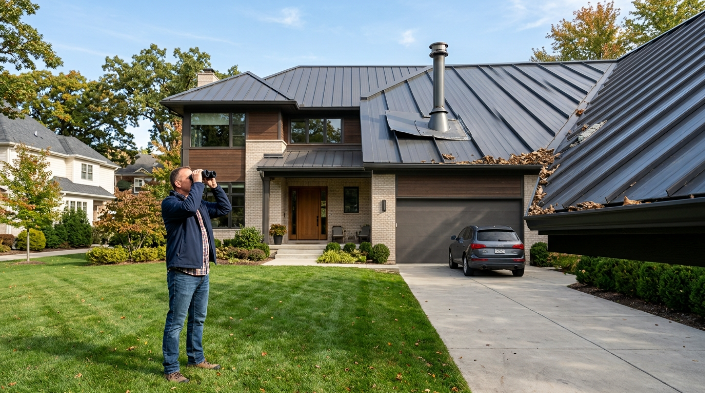
A small roofing defect does not always leak immediately.
Water may first reach the underlayment, which is the protective layer beneath the visible roof covering. From there, it can reach the roof decking—the plywood, OSB, or other structural surface supporting the roof.
By the time water appears inside a room, the problem may already involve:
- Wet insulation
- Ceiling or drywall stains
- Rotted decking
- Damaged paint
- Mold or mildew
- Corroded fasteners
- Damaged framing
- Higher repair costs
The National Roofing Contractors Association’s homeowner roofing guidance emphasizes the importance of periodic inspection and maintenance rather than assuming a roof warranty eliminates the need for ongoing care.
Early detection gives you more options. A loose screw or small flashing defect may be repairable. The same issue left alone for several seasons could damage the materials underneath and turn a minor repair into a larger project.
Warning Signs to Look for Before a Roof Starts Leaking
You do not need to wait for dripping water.
Several clues can warn you that the roof system is beginning to fail.
| Warning Sign | What It May Mean | Best Next Step |
|---|---|---|
| Loose or raised metal panels | Wind damage, movement, or attachment problems | Have the area inspected |
| Missing or backed-out screws | Fastener movement or aging washers | Professional fastener evaluation |
| Cracked sealant | Aging or movement at a joint | Check nearby seams and flashing |
| Rust or corrosion | Coating damage or long-term moisture | Determine whether metal is weakened |
| Bent flashing | Storm damage or movement | Repair before water enters |
| Clogged gutters | Poor drainage and water backup | Clean drainage safely |
| Ceiling discoloration | Possible existing moisture entry | Inspect attic and roof promptly |
| Damp attic insulation | Roof leak or condensation | Identify moisture source |
| Sagging roof area | Possible decking or structural damage | Seek professional help quickly |
Ceiling Stains and Discoloration
A yellow, brown, or gray ceiling mark is one of the most common clues.
Do not assume an old-looking stain is harmless. Photograph it and check whether it becomes darker or larger during the next rain.
Water can travel along rafters, decking, metal panels, or insulation before reaching the ceiling. The visible stain may therefore be several feet away from the actual roof opening.
Damp or Compressed Insulation
Check accessible attic areas after rain.
Wet insulation may look darker, feel damp, or appear compressed compared with the surrounding material.
Do not step between ceiling joists onto drywall. Use only proper attic walking surfaces.
Musty Odors
A persistent musty smell in an attic or upper room may indicate hidden moisture even when no stain is visible.
A roof leak is only one possible cause. Condensation, plumbing, or HVAC problems can create similar symptoms, so identifying the source matters before making repairs.
Peeling Paint or Bubbling Drywall
Moisture trapped behind paint can cause bubbling, cracking, or peeling.
Pay particular attention to areas near exterior walls, chimneys, skylights, vents, and roof-to-wall intersections.
Metal Roof Problems That Can Eventually Cause Leaks
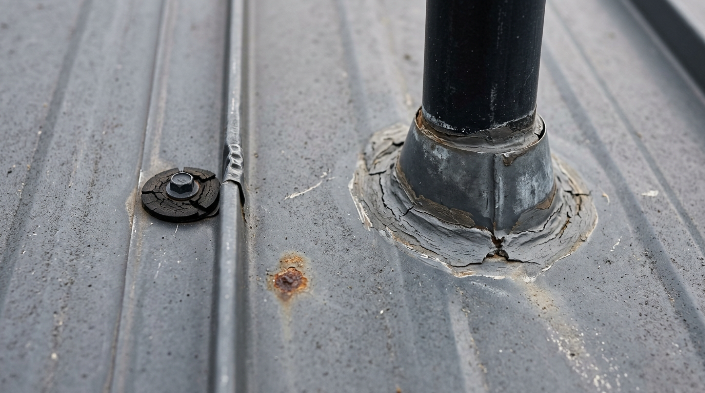
Metal roofing is durable, but it still depends on many individual components working together.
Most metal leak problems begin at connections, penetrations, edges, or damaged details rather than through the middle of a sound panel.
Loose or Failing Fasteners
Exposed-fastener metal roofs use screws with sealing washers.
Temperature changes cause metal panels to expand and contract. Over time, some fasteners can loosen or washers can deteriorate.
Watch from a safe viewing location for:
- Raised screw heads
- Missing fasteners
- Rust around screw locations
- Damaged washers
- Uneven panel areas
Avoid tightening roof screws yourself unless you understand the roofing system. Over-tightening can damage the washer and create another leak path.
Failed Seams
Metal panels connect at seams.
Movement, installation problems, aging sealant, wind, or physical damage can allow a seam to separate.
Standing-seam roofs hide many attachment points, while exposed-fastener systems have more visible penetrations. Each system has different inspection and repair requirements.
Damaged Flashing
Flashing is the metal or waterproof material that directs water away from vulnerable roof joints.
Common flashing locations include:
- Chimneys
- Skylights
- Plumbing vents
- Roof valleys
- Sidewalls
- Roof edges
- HVAC or exhaust penetrations
Bent, loose, cracked, or poorly sealed flashing can allow water underneath otherwise healthy metal panels.
Worn Sealant
Roof sealants are commonly used at certain joints and penetrations, but they do not last forever.
Look for sealant that appears:
- Cracked
- Split
- Dried
- Detached
- Missing
- Pulled away from metal
Covering every suspicious area with new caulk is rarely a good diagnostic strategy. The real problem could be movement, failed flashing, a loose panel, or improper installation.
Corrosion
Metal roofing is normally protected by coatings or finishes.
If those protective surfaces are damaged, corrosion can develop.
Small cosmetic marks are different from deep rust, perforation, or corrosion around seams and fasteners. Widespread corrosion deserves professional evaluation because weakened metal may eventually lose its ability to shed water properly.
Inspect the Roof After Wind, Hail, and Heavy Rain
Storms often expose weak roofing details before normal weather does.
Wind can affect edges, flashing, panels, gutters, ridge components, and attachments. Hail can affect roofing materials differently depending on the roof type and impact.
IBHS research on roof weathering, wind, and hail notes that damage varies by roof covering. Metal roofing may show dents after hail, and appearance alone does not necessarily tell you whether the roof has lost its water-shedding ability.
After a significant storm, check from the ground for:
- Lifted panels or trim
- Loose flashing
- Missing components
- New dents or coating damage
- Fallen branches
- Damaged gutters
- Debris collecting in drainage areas
- Obvious roof deformation
Also inspect ceilings and accessible attic spaces during or after the next rain.
If you may file an insurance claim, take dated photographs of visible damage from safe locations before temporary repairs change the appearance of the area.
Keep Gutters and Drainage Areas Clear
A roofing system is designed to move water away from the building.
Even a sound roof can face trouble when drainage becomes blocked.
Leaves, branches, roofing debris, and other material can clog gutters and downspouts. Water may then overflow near fascia boards, walls, roof edges, or foundations.
On low-slope metal roofs, standing water or debris can keep moisture against roofing materials longer than intended.
Check drainage areas regularly, especially after:
- Heavy storms
- High winds
- Autumn leaf drop
- Nearby tree trimming
Cleaning gutters from a roof surface can be dangerous. Use a safe method from the ground where possible or hire someone equipped for work at height.
Watch for Ventilation and Condensation Problems
Not every wet attic means the exterior roof is leaking.
Poor ventilation can allow warm, moist household air to collect beneath a cold roof deck. That moisture may condense and resemble a leak.
Possible condensation clues include:
- Moisture appearing without rain
- Widespread dampness instead of one concentrated path
- Water droplets on metal surfaces
- Mold on several attic surfaces
- Wet insulation across a broad area
Bathroom fans, kitchen exhaust, and other moisture sources should vent outdoors rather than into the attic.
A roofing contractor or qualified building professional can help determine whether the moisture is entering through the roof or forming inside the attic.
Does Roof Age Matter?
Yes, but age should not be considered by itself.
A properly installed and maintained metal roof can provide decades of service. Actual lifespan depends on:
- Metal type
- Protective coating
- Installation quality
- Climate
- Roof slope
- Maintenance
- Flashing details
- Fasteners
- Ventilation
- Previous damage
An older roof with good drainage, sound seams, and intact flashing may perform better than a younger roof with installation defects.
Other materials age differently. Asphalt shingles may lose granules, crack, curl, or loosen. Wood shakes can split or decay. Tile can crack. Flat membrane roofing can develop open seams, punctures, or drainage problems.
The key question is not simply, How old is the roof?
It is, What condition is the entire roofing system in now?
A Safe Homeowner Roof Inspection Routine
You can learn a lot without walking on the roof.
1. Start Inside
Check upper-floor ceilings for stains, bubbling paint, discoloration, or damp areas.
2. Inspect Accessible Attic Areas
Use a flashlight and look for:
- Water stains
- Damp decking
- Darkened wood
- Rusted fasteners
- Wet insulation
- Mold-like growth
- Daylight through unexpected openings
Never step onto unsupported drywall.
3. Walk Around the House
From the ground, inspect roof edges, panels, gutters, flashing, ridge areas, and visible penetrations.
Binoculars can help.
4. Look After Rain
Some defects become easier to identify during or immediately after wet weather.
Record where and when moisture appears.
5. Compare After Storms
Take photographs from the same safe locations. Changes are easier to recognize when you have earlier images for comparison.
Expert Tip: Create a simple roof photo record twice a year. Photograph each roof side, gutters, visible flashing, and any existing stain inside the attic or ceiling. Comparing dated photos can reveal gradual changes that are difficult to notice from memory.
Do Not Turn Roof Inspection Into a Dangerous DIY Project
Metal roofs can be especially slippery.
Roof pitch, wet surfaces, loose materials, damaged decking, electrical lines, and unfamiliar walking paths add to the danger.
OSHA’s fall-prevention and ladder safety resources illustrate why work at roof height requires proper equipment and procedures. Although OSHA rules are primarily workplace standards, the hazards they address are just as real for homeowners.
You do not need to walk on the roof to perform a useful preliminary inspection.
Call a professional when the inspection requires climbing onto a steep, wet, damaged, high, or unfamiliar roof.
Repair Costs and Why Early Detection Can Save Money
Roof repair cost depends heavily on what has failed.
A simple localized issue may involve a small amount of material but still require skilled labor to locate and repair correctly.
Costs can rise when a contractor must:
- Remove metal panels
- Replace damaged decking
- Rebuild flashing
- Repair several penetrations
- Correct installation defects
- Replace corroded sections
- Work around solar panels or skylights
- Access a steep or difficult roof
- Investigate an intermittent leak
Labor and diagnosis can matter as much as the cost of the replacement material.
A repair involving one flashing detail is very different from a roof with several leaking seams, widespread corrosion, or deteriorated decking.
Check the Warranty Before Authorizing Repairs
Metal roofing may involve more than one warranty.
You may have:
- A manufacturer material warranty
- A finish or coating warranty
- A contractor workmanship warranty
Coverage varies widely.
Some warranties may limit coverage for storm damage, poor maintenance, unauthorized alterations, new penetrations, building movement, or repairs performed by another company.
Before approving work, find the warranty documents and ask whether the proposed repair affects existing coverage.
Never assume a long warranty means every future leak is covered.
Repair or Replace?
Finding one roof problem does not automatically mean you need a full replacement.
Repair may make sense when:
- The problem is isolated
- The surrounding panels remain sound
- Decking is healthy
- Corrosion is limited
- The roof has not developed repeated leaks
- The defect can be corrected properly
A broader replacement evaluation becomes more reasonable when:
- Leaks occur in several unrelated areas
- Corrosion is widespread
- Decking has significant deterioration
- Panels or seams are failing throughout the roof
- Previous repairs repeatedly fail
- Major storm damage affects large areas
- Original installation defects are extensive
Ask contractors to explain why they recommend repair or replacement and what evidence supports that recommendation.
When to Consult a Licensed Roofing Contractor
Contact a qualified roofing professional when:
- Water is actively entering the home
- Metal panels are loose or lifted
- Flashing has separated
- You see repeated ceiling stains
- Several rooms show moisture
- Roof decking appears soft or sagging
- Corrosion looks deep or widespread
- A major wind or hailstorm has occurred
- The leak source is unclear
- The roof remains under warranty
- Previous repairs did not work
- You are preparing an insurance claim
- Diagnosis requires walking on the roof
If the roofline appears visibly bowed, collapsed, displaced, or structurally unstable, avoid the area and seek qualified structural assessment as well.
Common Mistakes Homeowners Should Avoid
- Waiting for dripping water. Damage can begin well before a leak reaches the ceiling.
- Assuming the stain is directly below the opening. Water frequently travels before it drips.
- Covering everything with sealant. This can hide the real defect instead of fixing it.
- Over-tightening metal roof screws. Damaged washers can create leak paths.
- Painting over ceiling stains immediately. Confirm that the moisture source is repaired first.
- Ignoring gutters. Poor drainage can contribute to moisture problems.
- Walking on a wet metal roof. Fall risk is serious.
- Ignoring condensation. Moisture does not always come through the roof covering.
- Choosing repairs only by price. Diagnosis, scope, workmanship, materials, and warranty terms matter.
- Skipping storm documentation. Photographs and inspection records may help with insurance or warranty questions.
FAQs
What is usually the first sign of a metal roof leak?
A ceiling stain, damp attic insulation, rusted fastener, musty odor, or moisture mark on roof decking may appear before active dripping begins.
How often should I check my roof for problems?
A practical routine is to visually check the roof and accessible attic areas periodically and after significant wind, hail, or heavy rain. Professional inspection may also be appropriate when the roof is aging or has a history of leaks.
Can a loose metal roof screw cause a leak?
Yes. A loose fastener or damaged sealing washer can create a path for water. However, not every suspicious screw is the actual source, so proper diagnosis is important.
Does a dented metal roof automatically mean it will leak?
No. Hail can create cosmetic dents without automatically causing water entry. Damage to seams, coatings, flashing, fasteners, or panel integrity is more important when evaluating leak risk.
Can clogged gutters cause roof leaks?
Clogged gutters can cause water to overflow or collect where it should not. This can contribute to moisture damage around roof edges, fascia, walls, and drainage areas.
Should I repair a metal roof leak myself?
Simple ground-level maintenance may be reasonable, but roof access, flashing repairs, panel work, structural damage, and difficult leak diagnosis are usually safer in professional hands.
Does one leak mean I need a new roof?
No. A single localized flashing or fastener problem may be repairable. Multiple recurring leaks, extensive corrosion, widespread installation defects, or damaged decking may justify a replacement evaluation.
Conclusion
Knowing how to spot roof problems before they cause leaks is mostly about paying attention to small changes.
Watch ceilings and attic spaces. Look at your metal roof from the ground. Keep drainage areas clear. Check again after storms. Pay special attention to fasteners, seams, flashing, penetrations, corrosion, and sealant.
Most importantly, do not put yourself at risk trying to diagnose a problem from the roof surface.
Catching a weak detail early can mean the difference between a focused repair and extensive damage to the roof deck, insulation, ceilings, and framing. If you see repeated moisture, damaged metal, loose flashing, storm damage, or signs of structural trouble, arrange an inspection with a qualified roofing contractor before the problem grows.