Does a Metal Roof Increase Home Value? A Homeowner’s Guide

If you are thinking about replacing your roof, one of the biggest questions is simple: does a metal roof increase home value enough to justify the cost? For many homeowners, the answer is yes—but not always in the same way people expect.
A metal roof can improve resale appeal, lower future maintenance concerns, strengthen curb appeal, and make your home more attractive to buyers who care about durability. But it is not a guaranteed dollar-for-dollar return. The real value depends on your location, roof style, installation quality, home condition, and local buyer expectations.
This guide explains how metal roofing affects home value, when it makes financial sense, when it may not, and what homeowners should consider before spending money on a metal roof.
Quick Answer
Does a metal roof increase home value? Yes, a metal roof can increase home value by improving durability, curb appeal, energy performance, and buyer confidence. However, homeowners usually should not expect to recover the full installation cost at resale. The best value comes from quality materials, proper installation, and choosing a roof style that fits the home.
How a Metal Roof Can Increase Home Value
A metal roof can add value in more than one way. Some value is direct, such as resale appeal. Some value is indirect, such as fewer future roof problems.
Buyers often look at the roof early because roof replacement is expensive. A newer, well-installed metal roof can make the home feel better maintained. It can also reduce buyer concerns about leaks, storm damage, and upcoming repair costs.
A metal roof may help increase value through:
- Long service life
- Strong curb appeal
- Lower maintenance needs
- Better storm resistance when properly installed
- Energy-related benefits in hot climates
- Improved buyer confidence during inspection
- Possible insurance or resale advantages in some markets
However, value depends heavily on the quality of the roof. A poorly installed metal roof can hurt a sale instead of helping it.
Why Buyers May Like a Metal Roof
Homebuyers often think in terms of future risk. If a home has an old roof, buyers may worry that they will need to replace it soon. That can lead to lower offers, repair requests, or financing problems.
A metal roof can make buyers feel more confident because it is seen as a premium roofing material. It can signal that the homeowner invested in long-term protection rather than choosing the cheapest option.
Buyers may see a metal roof as valuable because:
- They may not need a roof replacement for many years.
- Metal roofing can handle harsh weather better than many basic roofing materials.
- It can give the home a cleaner, more modern look.
- It may reduce maintenance worries.
- It can help a listing stand out from nearby homes.
This matters most in markets where metal roofs are already common or respected. In coastal, mountain, rural, wildfire-prone, and storm-prone areas, buyers may value metal roofing more than in markets where asphalt shingles dominate.
Metal Roof Value vs Return on Investment
A metal roof can increase home value, but homeowners should understand the difference between value and return on investment.
Value means the roof makes the home more desirable, durable, or easier to sell. Return on investment means how much of the roof cost you recover when selling.
A metal roof often costs more upfront than asphalt shingles. Because of that, the percentage return at resale may not always look higher than cheaper roofing options. The Cost vs. Value report from Journal of Light Construction is often used by remodelers and homeowners to compare project costs with resale value, but local market conditions can change the result.
Important point: A metal roof is usually a long-term value upgrade, not a quick flip strategy.
If you plan to sell next month, a metal roof may help the home show better, but it may not return every dollar spent. If you plan to stay in the home for many years, the value can be stronger because you benefit from durability, lower maintenance, and fewer replacement cycles.
What Factors Affect How Much Value a Metal Roof Adds?
Not every metal roof adds the same value. The result depends on several practical factors.
| Factor | How It Affects Home Value |
|---|---|
| Roof age | A new or recently installed roof usually adds more confidence than an older one. |
| Installation quality | Proper flashing, fasteners, underlayment, and ventilation are critical. |
| Material type | Standing seam metal often feels more premium than basic exposed-fastener panels. |
| Home style | The roof should match the home’s architecture and neighborhood. |
| Local climate | Metal roofs may be more valuable in areas with heat, storms, fire risk, or heavy snow. |
| Buyer expectations | In some markets, buyers actively prefer metal; in others, they may need education. |
| Documentation | Permits, warranties, invoices, and inspection records can support resale value. |
Standing Seam vs Exposed-Fastener Metal Roofs
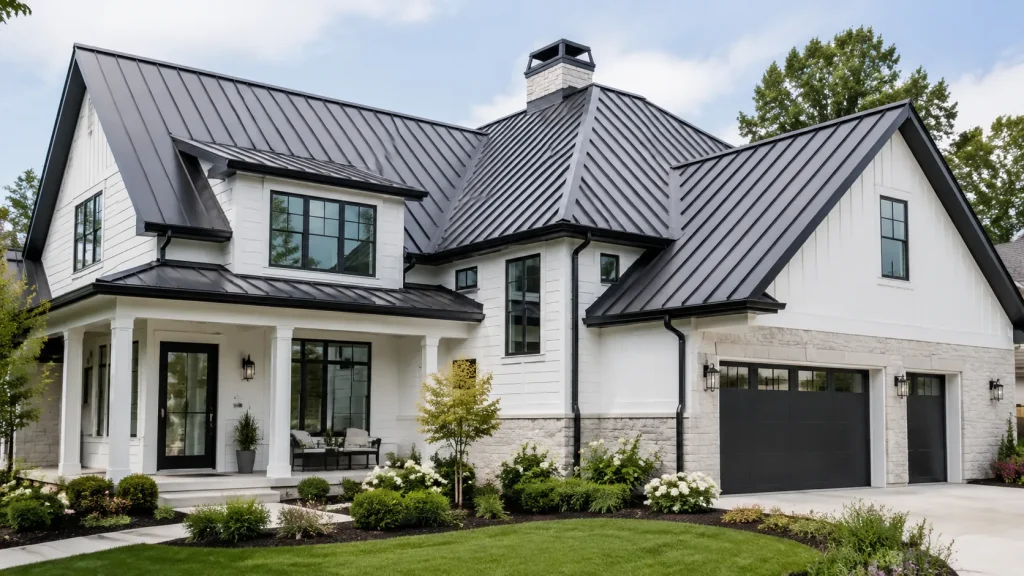
Homeowners often hear the term “metal roof” and assume all metal roofs are the same. They are not.
Standing Seam Metal Roof
A standing seam roof has raised seams and concealed fasteners. The screws are not exposed directly to weather. This gives the roof a clean appearance and usually better long-term performance.
Standing seam roofs often look more premium, especially on modern, farmhouse, coastal, and high-end homes.
Exposed-Fastener Metal Roof
An exposed-fastener roof uses visible screws through the metal panels. It is often more affordable, but the fasteners need more attention over time because washers can age, loosen, or wear.
This type of metal roof can still be a good option for some homes, barns, cabins, and budget-conscious projects. But for maximum resale appeal, standing seam often has the advantage.
For home value, buyers usually respond better to a clean, professionally installed standing seam roof than to a low-cost metal panel system that looks more agricultural.
Energy Efficiency and Buyer Appeal
A metal roof may also improve value by supporting energy efficiency, especially in hot climates. Many metal roofing products are available with reflective coatings that help reduce heat absorption.
The U.S. Department of Energy explains that cool roofs reflect more sunlight and absorb less solar energy, which can help lower roof surface temperatures and reduce cooling demand in some homes.
This does not mean every metal roof automatically lowers energy bills. The result depends on:
- Roof color
- Coating type
- Attic insulation
- Ventilation
- Climate
- Home design
- HVAC efficiency
A light-colored or reflective metal roof may be more attractive to buyers in hot states such as Florida, Texas, Arizona, Georgia, and parts of California. In colder regions, energy savings may be less important than snow shedding, durability, and long-term maintenance.
Durability: A Major Reason Metal Roofs Add Value
One of the strongest selling points of metal roofing is durability. A properly installed metal roof can last much longer than many standard asphalt shingle roofs.
Durability matters because buyers do not want surprise expenses after closing. A strong roof can make the home feel safer and more stable.
Metal roofs can perform well against:
- Heavy rain
- Wind when installed to proper specifications
- Snow and ice shedding
- Fire exposure, depending on the roof assembly and rating
- UV exposure
- Mold and rot because metal itself does not absorb water
However, metal roofs are not damage-proof. Hail can dent some metal panels. Poor installation can cause leaks. Low-quality coatings can fade. Exposed fasteners can need maintenance.
A metal roof adds the most value when it is installed as a full roofing system, not just as panels screwed onto the house.
Storm, Fire, and Insurance Considerations
In storm-prone or fire-prone regions, a metal roof may be more valuable to buyers. Some homeowners also ask whether a metal roof can reduce insurance costs. The answer depends on the insurer, location, roof rating, and local risk.
The Federal Alliance for Safe Homes notes that metal roofing can be attractive and lightweight, but installation details matter, especially in high-wind areas. Their guidance on roof coverings for natural disasters highlights the importance of proper fasteners, clips, and installation practices.
Homeowners should not assume automatic insurance savings. Instead, ask your insurance company before installation.
Questions to ask your insurer:
- Do you offer discounts for impact-rated metal roofing?
- Do you require a specific roof rating?
- Are standing seam systems treated differently from exposed-fastener systems?
- Are there discounts for fire-rated roofing?
- Do you need documentation after installation?
Keep all paperwork. Product specifications, permits, warranties, and contractor invoices may help during insurance reviews or a future sale.
Curb Appeal and Neighborhood Fit
Curb appeal is one of the easiest ways a metal roof can increase perceived home value. A clean metal roof can make a home look newer, sharper, and more expensive.
But style matters. A roof that looks beautiful on one home may look out of place on another.
Good curb appeal choices include:
- Matte black or charcoal for modern homes
- Bronze or dark gray for craftsman-style homes
- Light gray or white for hot climates
- Forest green or brown for cabins and rural homes
- Classic standing seam for farmhouse-style homes
Avoid choosing a color only because it is trendy. Roof color lasts a long time. A bold color may look exciting now but may limit buyers later.
The safest resale choices are usually neutral colors that match the siding, trim, gutters, and neighborhood style.
When a Metal Roof May Not Add Enough Value
A metal roof is not always the best financial choice. Sometimes a simpler roof replacement makes more sense.
A metal roof may not add enough value if:
- You plan to sell very soon.
- Your neighborhood mostly has lower-priced homes.
- The roof style does not match the home.
- The installation cost is far above local resale expectations.
- The home has other major problems, such as old plumbing, foundation issues, or damaged siding.
- You choose a low-quality system to save money.
- Buyers in your area are unfamiliar with metal roofing.
For example, if your home needs major exterior repairs, replacing only the roof with a premium metal system may not produce the best overall resale result. Buyers look at the whole property.
In that case, a balanced improvement plan may be smarter.
Repair vs Replacement: What Adds More Value?
Sometimes homeowners ask whether they should repair the existing roof or replace it with metal. The right answer depends on the roof’s condition.
| Situation | Better Option | Why |
|---|---|---|
| Small leak around flashing | Repair | A full replacement may not be needed. |
| A few missing shingles | Repair | Localized damage can often be fixed. |
| Roof is near the end of life | Replacement | Repairs may become temporary and costly. |
| Repeated leaks in different areas | Replacement | The roof system may be failing. |
| Selling soon with an old roof | Inspection first | You need to know whether replacement will help negotiations. |
| Staying long-term | Metal replacement may make sense | You can benefit from durability over time. |
A roof inspection is often the best first step. It tells you whether your roof problem is minor, serious, or part of a larger system failure.
Inspection and Documentation Matter
A metal roof can help resale value, but documentation makes the value easier to prove.
When buyers, agents, or inspectors ask questions, you should be able to show what was installed and who installed it.
Keep copies of:
- Contractor contract
- Material specifications
- Roof warranty
- Workmanship warranty
- Building permits
- Inspection reports
- Final invoice
- Ventilation upgrades
- Deck repair records
- Photos before, during, and after installation
This paperwork helps buyers trust the roof. It can also reduce confusion during the home inspection process.
Expert Tip
Expert Tip: Before choosing a metal roof, ask your contractor for addresses or photos of similar completed homes in your area. This helps you judge curb appeal, panel style, color, and whether the roof fits local buyer expectations.
Safety: Do Not Treat Metal Roofing as a DIY Value Upgrade
Metal roofing installation is not a simple weekend project for most homeowners. Panels can be slippery, edges can be sharp, and installation mistakes can cause expensive leaks.
Roof work also involves serious fall hazards. OSHA’s residential fall protection guidance explains that falls are a major danger in residential construction, including roofing work.
Do not climb onto a metal roof to inspect, clean, or repair it unless you have proper training, equipment, and safe roof access. Metal roofs can be especially slippery when wet, dusty, icy, or steep.
A DIY mistake can damage the roof, void a warranty, or cause injury.
When to Call a Roofing Professional

Call a roofing professional before making a decision if you are unsure about your roof condition, resale plans, or installation options.
You should call a roofer if:
- Your roof is leaking.
- You see rust, dents, loose panels, or lifted seams.
- Your current roof is more than 15–20 years old.
- You are planning to sell within the next year.
- You are comparing metal vs asphalt shingles.
- You live in a high-wind, hail, wildfire, or coastal area.
- You need help choosing between standing seam and exposed-fastener panels.
- Your attic has heat, moisture, or ventilation problems.
- You want to know whether your roof deck needs repairs.
A professional inspection can help you avoid spending money in the wrong place.
Questions to Ask Before Installing a Metal Roof
Before signing a contract, ask practical questions. Good contractors should answer clearly.
Ask these questions:
- What type of metal roof do you recommend for my home and climate?
- Is this standing seam or exposed-fastener roofing?
- What gauge or thickness is the metal?
- What coating system is used?
- What underlayment will be installed?
- Will old roofing be removed first?
- Will damaged decking be replaced?
- How will ventilation be handled?
- What flashing details are included?
- What warranty covers materials and workmanship?
- Are permits included?
- Do you have local references?
A low price is not always a good deal. Poor installation can erase the value of a premium roofing material.
Common Mistakes Homeowners Should Avoid
- Assuming a metal roof always returns 100% of its cost. It can add value, but full cost recovery is not guaranteed.
- Choosing the cheapest metal roof system. Low-cost panels and poor fasteners may reduce long-term value.
- Ignoring roof style. A roof that clashes with the home can hurt curb appeal.
- Skipping attic ventilation. Even a strong roof can perform poorly if heat and moisture are trapped underneath.
- Not checking local buyer expectations. Metal roofing is more desirable in some markets than others.
- Installing over old roofing without understanding the risks. This may hide damaged decking or moisture problems.
- Forgetting documentation. Warranties, permits, and invoices can support resale value.
- Hiring an unqualified contractor. Metal roofing requires careful detailing around seams, valleys, penetrations, chimneys, skylights, and edges.
- Walking on the roof unnecessarily. Foot traffic can dent panels, damage coatings, or create safety risks.
So, Is a Metal Roof Worth It?
A metal roof is often worth it for homeowners who plan to stay in the home long enough to benefit from durability and lower maintenance. It can also be worth it in areas where buyers appreciate premium roofing materials.
A metal roof may be a smart choice if:
- Your current roof needs replacement anyway.
- You plan to stay in the home for several years.
- Your climate is hard on asphalt shingles.
- You want a long-lasting roofing system.
- You care about curb appeal.
- You want to reduce future roof replacement concerns.
- Your neighborhood supports premium exterior upgrades.
It may be less ideal if you need the lowest upfront cost, plan to sell immediately, or live in a market where buyers will not pay extra for metal roofing.
FAQs
Does a metal roof increase home value more than shingles?
A metal roof can increase home value, but it does not always produce a higher percentage return than asphalt shingles because it costs more upfront. Metal roofing often adds stronger long-term value through durability, appearance, and lower maintenance.
Will a metal roof help my home sell faster?
It can help, especially if buyers in your area value durable roofing. A newer metal roof can reduce buyer concerns during inspection and make your listing stand out. However, pricing, location, home condition, and market demand still matter.
Is a standing seam metal roof better for resale?
In many cases, yes. Standing seam metal roofing usually has a cleaner look and concealed fasteners, which can improve curb appeal and buyer confidence. It often feels more premium than exposed-fastener metal roofing.
Can a metal roof lower insurance costs?
Sometimes, but not always. Insurance discounts depend on your location, insurer, roof rating, fire rating, impact rating, and installation details. Ask your insurance company before installation so you know what documentation they require.
What color metal roof is best for home value?
Neutral colors are usually safest for resale. Charcoal, black, bronze, gray, white, and muted earth tones often appeal to more buyers. The best color should match your siding, trim, gutters, climate, and neighborhood style.
Should I install a metal roof before selling my house?
It depends on your timeline and local market. If your current roof is failing, replacement may help avoid buyer objections. But if you are selling very soon, get a roof inspection and talk with a local real estate agent before choosing a premium metal roof.
Can a poorly installed metal roof reduce home value?
Yes. Poor installation can cause leaks, noise, loose panels, oil canning, fastener problems, and warranty issues. A metal roof only adds strong value when the materials and installation are both high quality.
Conclusion
So, does a metal roof increase home value? Yes, it can—but the best results come from choosing the right system, hiring a qualified contractor, and matching the roof to your home, climate, and local market.
A metal roof is not just a resale upgrade. It is a long-term protection decision. It can improve curb appeal, reduce future roof worries, support energy performance in the right conditions, and make buyers feel more confident about the home.
Before you invest, start with a professional roof inspection, compare material options, ask about warranties, and choose a contractor with proven metal roofing experience. A well-planned metal roof can be one of the smartest exterior upgrades a homeowner makes.