
How Much Does Roof Underlayment Cost? A Homeowner’s Cost Guide

Roof underlayment is one of the most important parts of a roofing system that homeowners rarely see. It sits between the roof decking and the shingles, metal panels, tiles, or other finished roofing material, helping protect the structure from moisture that gets past the outer roof covering.
If you are budgeting for a roof replacement, you may be wondering: how much does roof underlayment cost?
As a general estimate, homeowners can expect roof underlayment installation to cost roughly $0.75 to $4.00 per square foot, including material and labor. The final price can be much higher or lower depending on the type of underlayment, roof size, slope, accessibility, tear-off requirements, and whether damaged decking is discovered.
This guide explains typical underlayment costs, the differences between felt, synthetic, and self-adhered products, what affects your estimate, and when professional installation makes sense.
Quick Answer
How much does roof underlayment cost? A typical installed price is about $0.75 to $4.00 per square foot. For a 2,000-square-foot roof, that works out to roughly $1,500 to $8,000, although underlayment installed as part of a complete roof replacement may be bundled into the contractor’s total roofing price.
What Is Roof Underlayment?
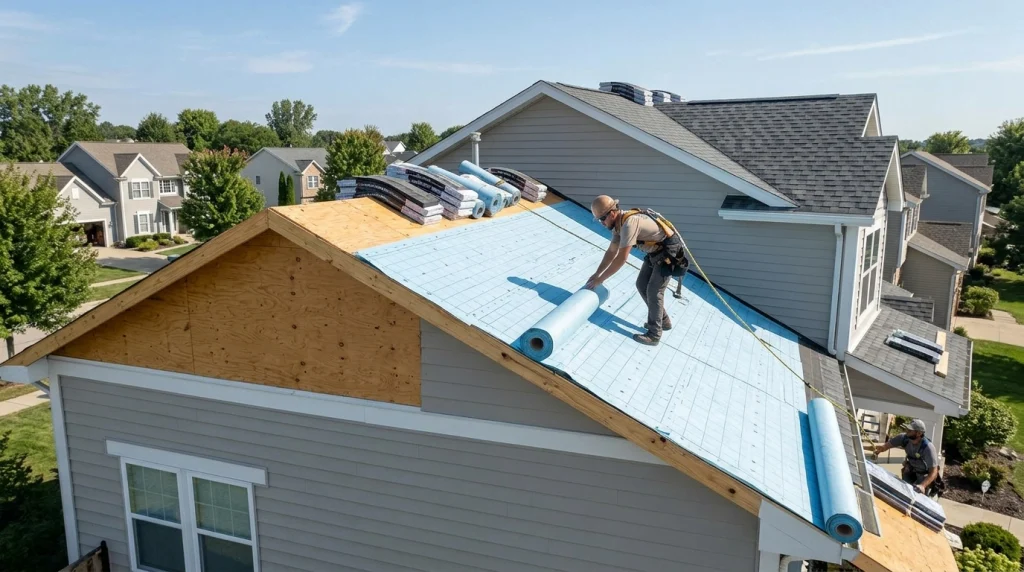
Roof underlayment is a protective layer installed directly over the roof decking, also called sheathing, and beneath the finished roof covering.
The decking is usually plywood or oriented strand board (OSB). The underlayment creates another line of defense against water before shingles, tiles, or metal panels are installed above it.
It can help protect the roof deck from:
- Wind-driven rain
- Moisture that gets beneath shingles
- Water during roof installation
- Ice dams in vulnerable areas when appropriate membranes are used
- Minor leaks around roofing components
- Weather exposure before the finished roof covering is installed
Underlayment does not replace properly installed shingles, flashing, ventilation, or drainage. It works as part of the complete roofing system.
The National Roofing Contractors Association notes that underlayment selection and installation are important parts of steep-slope roofing performance, and certain conditions may require enhanced materials or application methods. NRCA guidance on roofing underlayments
Average Roof Underlayment Cost
The cost of underlayment varies considerably because inexpensive felt and premium self-adhering membranes are very different products.
A reasonable national planning range is:
| Cost Item | Typical Price Range |
|---|---|
| Underlayment materials | $0.10–$0.80+ per sq. ft. |
| Installation labor | $0.65–$3.20+ per sq. ft. |
| Underlayment installed | $0.75–$4.00+ per sq. ft. |
| 1,500-sq.-ft. roof | $1,125–$6,000 |
| 2,000-sq.-ft. roof | $1,500–$8,000 |
| 2,500-sq.-ft. roof | $1,875–$10,000 |
These figures are budgeting ranges, not contractor quotes. Current market data also places many complete underlayment replacement projects within this general installed-per-square-foot range.
Your actual roofing estimate may look different because roofers often include underlayment within the price of a complete roof replacement rather than showing it as one separate charge.
Roof Underlayment Cost by Type
Three broad underlayment categories are commonly encountered on residential roofs.
Asphalt-Saturated Felt
Traditional roofing felt, sometimes called tar paper, has been used for decades.
It is generally the least expensive option and may be suitable beneath asphalt shingles when allowed by the roofing manufacturer and local building requirements.
Advantages include:
- Low material cost
- Wide availability
- Familiar installation methods
Limitations include:
- Heavier rolls
- Greater risk of tearing
- Less resistance to prolonged weather exposure
- Wrinkling when wet
- Shorter expected service life than some premium synthetics
Felt may make sense for a straightforward asphalt-shingle project when budget is the priority, but the cheapest product is not automatically the best long-term choice.
Synthetic Underlayment
Synthetic roofing underlayment is typically manufactured from polymer-based materials. It has become common on modern roof replacements.
It is usually lighter and more tear-resistant than conventional felt.
Potential advantages include:
- High tear resistance
- Lower weight
- Easier handling
- Good water resistance
- Larger rolls that can speed installation
- Better resistance to temporary weather exposure for many products
Synthetic products vary significantly in thickness, permeability, approved roof coverings, and exposure limits.
Always check the roofing manufacturer’s installation requirements. Using an incompatible underlayment can potentially affect roof performance or warranty coverage.
Self-Adhered or Rubberized Membrane
Self-adhering waterproof membranes are commonly used in especially vulnerable locations rather than necessarily covering every square foot of the roof.
Common installation locations include:
- Eaves
- Valleys
- Roof penetrations
- Around chimneys
- Areas susceptible to ice dams
- Other leak-prone transitions
Premium self-adhering products generally cost more than standard felt or synthetic underlayment.
However, paying more for targeted waterproofing can be worthwhile when the home’s climate, roof design, or building requirements call for it.
What Affects Roof Underlayment Cost?
Two houses with the same indoor living area can have very different roofing costs.
Several factors determine the actual price.
1. Actual Roof Size
Roofing contractors price materials using the roof surface area, not simply the home’s finished square footage.
A 2,000-square-foot house does not necessarily have a 2,000-square-foot roof.
Roof pitch, overhangs, attached garages, porches, dormers, and multiple roof sections all increase surface area.
Roofing materials are also commonly measured in squares. One roofing square equals 100 square feet of roof surface.
2. Roof Pitch
Pitch describes how steep the roof is.
A steep roof usually costs more because installation takes longer and requires greater safety precautions. It may also have more surface area than a low-slope roof over an otherwise identical house.
Very steep roofs may require specialized staging, fall-protection equipment, or additional workers.
3. Underlayment Material
Basic felt normally costs less than premium synthetic or self-adhered products.
When comparing estimates, do not look only at the words roof underlayment. Ask contractors for the specific product or product class they plan to install.
Two quotes may appear similar while specifying very different materials.
4. Existing Roof Removal
Replacing underlayment normally requires access to the roof deck.
That means shingles, tiles, or another existing covering generally must be removed first.
During a full roof replacement, tear-off is already part of the project. Replacing only underlayment can therefore be surprisingly expensive because contractors still need to remove and reinstall the roofing above it.
5. Damaged Roof Decking
Contractors cannot accurately determine the condition of every section of decking until the old roofing materials are removed.
If plywood or OSB is:
- Rotted
- Soft
- Delaminated
- Mold-damaged
- Structurally weakened
- Badly deteriorated around leaks
it may need replacement before new underlayment can be installed.
Current cost guides commonly place roof sheathing replacement around $2 to $5 per square foot installed, though local prices and material costs vary.
Ask your contractor how decking replacement is priced before work begins so an unexpected repair does not become a surprise.
6. Roof Complexity
A simple gable roof is generally faster to cover than a roof containing many:
- Valleys
- Dormers
- Skylights
- Chimneys
- Plumbing vents
- Intersections
- Changes in slope
Each feature creates extra cutting, fastening, sealing, and flashing work.
7. Local Labor Costs
Roofing labor varies by region.
Costs may be higher in areas with expensive labor, strict permitting requirements, extreme climates, short roofing seasons, or high demand following major hail or windstorms.
Is Roof Underlayment Included in Roof Replacement Cost?

Usually, yes.
When a roofing contractor quotes a complete replacement, the estimate often includes:
- Removing the existing roof covering
- Inspecting the decking
- Replacing damaged decking as authorized
- Installing underlayment
- Installing flashing and related components
- Installing the new roof covering
- Cleaning up and disposing of debris
However, estimate formats vary.
Do not assume underlayment is included. Look for it in the written scope of work.
The proposal should ideally identify the underlayment product or at least specify its type.
Is Premium Underlayment Worth the Extra Cost?
Sometimes.
Spending more on underlayment makes the most sense when it solves a real roofing need rather than simply adding another premium product to the estimate.
For example, upgraded underlayment may be worth considering for:
- Long-life roofing materials
- High-wind locations
- Roofs exposed to severe weather
- Metal roofs requiring compatible underlayment
- Tile roofing systems
- Homes in areas prone to ice dams
- Complicated roofs with multiple leak-prone areas
NRCA explains that roof system longevity depends on several factors, including proper design, material suitability, installation, environmental conditions, and maintenance. NRCA homeowner roofing resources
The goal is therefore not to purchase the most expensive underlayment available. It is to choose one that works correctly with the roof covering, climate, manufacturer requirements, and local code.
Expert Tip: When comparing roofing bids, ask each contractor to write down the exact underlayment product being installed. A lower quote may simply use a less expensive underlayment, while another contractor may include upgraded synthetic material or self-adhered membrane in vulnerable areas.
How Long Does Roof Underlayment Last?
There is no single lifespan that applies to every product.
Traditional felt may perform for decades when protected beneath a properly functioning roof, while some synthetic products are designed for longer service lives.
Actual performance depends on:
- Material quality
- Installation quality
- Roof covering
- Moisture exposure
- Heat
- Ventilation
- Roof leaks
- Climate
- Manufacturer specifications
Underlayment is normally replaced when the finished roof covering is replaced because accessing it later requires removing the roofing above it.
If you are installing a roof designed to last several decades, choosing compatible underlayment with an appropriate expected service life becomes especially important.
Signs Your Roof Underlayment May Be Damaged
Because underlayment is hidden beneath the roof covering, homeowners usually cannot inspect it directly.
Possible warning signs include:
- Water stains on ceilings
- Moisture in the attic
- Leaks during wind-driven rain
- Missing or lifted shingles after a storm
- Deteriorated roof decking
- Repeated leaks despite surface repairs
- Damage around valleys, chimneys, skylights, or vents
These symptoms do not automatically mean the underlayment has failed.
Water can enter through damaged flashing, shingles, roof penetrations, or other components. A roofing professional may need to trace the leak before recommending repairs.
Can You Replace Underlayment Without Replacing the Roof?
Technically, the finished roofing can sometimes be removed so the underlayment can be replaced and usable materials reinstalled.
In practice, this is not always economical.
With asphalt shingles, removing shingles without damaging them can be difficult. Labor costs may make installing a new roof covering more practical, especially when the existing shingles are already well into their service life.
Tile roofs are different because tiles may sometimes be carefully removed, stacked, and reinstalled while the aging underlayment beneath them is replaced.
The correct approach depends on:
- Roofing material
- Roof age
- Material condition
- Leak history
- Manufacturer requirements
- Labor cost
A contractor should evaluate whether reusing the existing roofing makes financial and technical sense.
DIY vs. Professional Underlayment Installation
Installing underlayment may look straightforward from the ground, but roofing is dangerous.
A homeowner must safely remove roofing materials, work around roof edges, handle large rolls, maintain proper overlaps, seal penetrations, and keep water out while the roof is temporarily exposed.
Improper installation can also result in leaks that remain hidden until decking, insulation, drywall, or interior finishes are damaged.
The Occupational Safety and Health Administration’s fall-prevention guidance emphasizes the serious fall hazards associated with roof work and the importance of proper fall-protection equipment. OSHA residential roofing fall-protection guidance
For most homeowners, roof underlayment replacement is not a good DIY project.
Even though OSHA rules primarily govern workplace safety rather than private homeowners, the hazards they describe—roof edges, openings, steep slopes, ladders, and falls—are just as physically real for someone working on their own house.
Common Mistakes Homeowners Should Avoid
Avoid these common mistakes when budgeting for underlayment:
- Comparing bids only by total price. Compare the actual underlayment products and installation scope.
- Assuming all synthetic products are equal. Specifications and approved applications vary.
- Ignoring decking damage. New underlayment should not simply cover deteriorated structural sheathing.
- Choosing underlayment without considering the roof covering. Metal, tile, asphalt shingles, and other materials can have different requirements.
- Skipping vulnerable areas. Valleys, eaves, penetrations, and transitions often need special attention.
- Ignoring warranty requirements. Roofing manufacturers may specify acceptable underlayment or installation methods.
- Trying to save money with unsafe DIY roof work. A fall can turn a modest material saving into a serious emergency.
When to Consult a Licensed Roofing Contractor
Contact a qualified roofing contractor when you have active leaks, storm damage, missing roofing materials, soft decking, an aging roof, or signs that moisture has entered the attic.
Professional evaluation is especially important when:
- The roof is steep or difficult to access
- Structural decking appears damaged
- Several roof areas are leaking
- You are filing an insurance claim
- A storm has caused widespread damage
- The roofing system is still under warranty
- You are comparing a repair with full replacement
- Local permits or code requirements are unclear
Request written estimates from multiple established contractors when possible.
Ask each one to identify the roof covering, underlayment, flashing work, decking allowance, tear-off, disposal, ventilation work, warranty, and any exclusions.
This makes it much easier to compare similar scopes instead of comparing totals that include different materials.
FAQs
How much does roof underlayment cost per square foot?
Roof underlayment commonly costs approximately $0.75 to $4.00 per square foot installed, though premium membranes, steep roofs, difficult access, and complicated roof designs can increase the price.
How much does underlayment cost for a 2,000-square-foot roof?
Using a broad installed range of $0.75 to $4.00 per square foot, approximately 2,000 square feet of roof underlayment could cost around $1,500 to $8,000. Actual roof surface area may differ from your home’s floor area.
What is the cheapest roof underlayment?
Asphalt-saturated felt is generally among the least expensive common options. However, price should not be the only consideration. The underlayment must be compatible with the roofing material, manufacturer instructions, climate, and applicable building requirements.
Is synthetic underlayment better than felt?
Synthetic underlayment typically provides better tear resistance and easier handling than conventional felt, but that does not mean every synthetic product is right for every roof. Product specifications and roofing-manufacturer requirements should guide the choice.
Does underlayment need to be replaced with new shingles?
In most complete roof replacements, contractors install new underlayment after removing the old shingles and inspecting the decking. Reusing old underlayment usually provides little benefit when the roof is already stripped to the deck.
Can roof underlayment stop a leak?
Underlayment provides secondary moisture protection, but it is not a substitute for repairing the source of a leak. Damaged shingles, failed flashing, penetrations, or deteriorated roof components still need proper repair.
Does homeowners insurance pay for roof underlayment?
It depends on the cause of damage and the terms of your policy. Insurance may contribute when covered storm damage requires roof replacement, while normal aging, deterioration, or maintenance problems are generally treated differently. Review your policy and ask your insurer how underlayment is handled within a covered roofing claim.
Conclusion
So, how much does roof underlayment cost? A useful starting estimate is approximately $0.75 to $4.00 per square foot installed, but the underlayment itself is only one part of the final roofing bill.
Roof size, pitch, material choice, labor, tear-off, decking repairs, climate, and roof complexity can all change the total substantially.
When comparing roof replacement estimates, ask contractors to identify the underlayment they are proposing instead of accepting a generic line item. Confirm that it is compatible with your roofing material and warranty requirements, and make sure unexpected decking repairs are priced clearly.
For the most useful number, get detailed written quotes based on your actual roof rather than relying on square-foot averages alone.