
How Much Does Roof Flashing Replacement Cost?

Roof flashing may be a small part of your roofing system, but when it fails, the resulting leak can lead to damaged shingles, wet insulation, rotted roof decking, stained ceilings, and even mold problems.
If you have noticed water around a chimney, skylight, vent pipe, roof valley, or wall intersection, you may be wondering: how much does roof flashing replacement cost?
For most U.S. homeowners, the answer depends heavily on where the flashing is located, how much roofing must be removed to reach it, the roof’s pitch, and whether water has already damaged the materials underneath.
This guide explains typical flashing replacement costs, the factors that affect your estimate, warning signs to watch for, when repair may be enough, and when professional replacement is the safer choice.
Quick Answer
Roof flashing replacement typically costs about $500 to $1,500 or more, while smaller localized flashing repairs may cost roughly $200 to $600. Chimneys, long valleys, steep roofs, difficult access, and damaged roof decking can raise the total significantly. Always compare written contractor estimates for your specific roof.
What Is Roof Flashing?
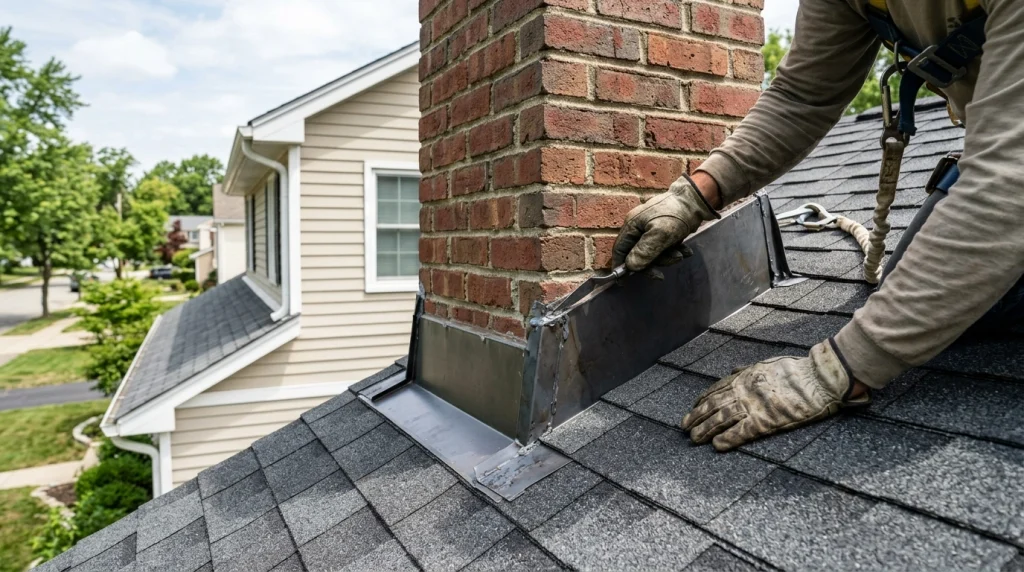
Roof flashing is a thin, water-resistant material installed around vulnerable areas of your roof where shingles or another roofing material cannot provide enough protection by themselves.
Metal flashing is commonly made from:
- Galvanized steel
- Aluminum
- Copper
- Stainless steel
- Coated sheet metal
The purpose of flashing is simple: direct water away from seams, joints, penetrations, and roof transitions before it can get underneath the roofing system.
The Insurance Institute for Business & Home Safety explains that flashing helps direct water away from roof edges and penetrations to prevent water infiltration. IBHS guidance on metal roof flashing
You will commonly find flashing around:
- Chimneys
- Skylights
- Plumbing vents
- Roof valleys
- Dormers
- Walls that meet a roof
- Roof edges
- HVAC or exhaust penetrations
A problem with just one of these areas can allow water to travel underneath shingles and appear inside the house several feet away from the actual leak.
How Much Does Roof Flashing Replacement Cost?
A reasonable national planning range for professional roof flashing work is approximately $200 to $600 for many localized repairs and $500 to $1,500 or more when significant flashing replacement is required.
Current 2026 estimates vary because some pricing guides classify small flashing replacement jobs as repairs, while others reserve the term “replacement” for removing and reinstalling an entire flashing assembly.
Here is a practical homeowner budgeting guide:
| Flashing Work | Approximate Cost Range |
|---|---|
| Minor sealing or localized repair | $150–$300 |
| Small flashing repair/replacement | $200–$600 |
| Vent pipe flashing | $200–$500 |
| Skylight flashing | $200–$500+ |
| Valley flashing | $200–$850+ |
| Chimney flashing | $200–$1,000+ |
| Larger or complete flashing replacement | $500–$1,500+ |
| Flashing plus decking/water-damage repairs | $1,000–$3,000+ depending on damage |
These figures are budgeting ranges, not guaranteed contractor prices. Your actual cost may be substantially different depending on your location, roofing material, roof height, contractor minimum charges, and the extent of hidden water damage.
What Affects Roof Flashing Replacement Cost?
The metal itself is usually not the most expensive part of flashing replacement. Labor, access, roof disassembly, waterproofing details, and repairing surrounding materials often account for much more of the bill.
Type and Location of the Flashing
A simple vent-pipe flashing replacement is usually easier than replacing flashing around a large masonry chimney.
Common flashing types include:
Step flashing: Small overlapping pieces commonly used where a sloped roof meets a wall or chimney.
Counterflashing: Flashing installed over another flashing layer, frequently around masonry chimneys.
Valley flashing: Installed where two roof slopes meet and large amounts of rainwater flow.
Drip edge: Metal installed around roof edges to direct water away from the roof decking and fascia.
Pipe flashing or vent boot: Seals around plumbing vents and other round roof penetrations.
Complex flashing systems take longer to remove and reinstall correctly.
Roof Pitch
Roof pitch describes how steep your roof is.
A steep roof generally costs more to work on because contractors may need additional fall-protection equipment and more time to move safely around the work area.
Very steep roofs may also require specialized staging or access equipment.
Roof Height and Accessibility
Flashing on a low, easily accessible garage roof usually costs less to replace than flashing around a chimney on a three-story house.
Obstacles can also increase labor time, including:
- Landscaping
- Fences
- Solar panels
- Multiple roof levels
- Narrow side yards
- Power lines
- Difficult driveway access
Roofing Material
Replacing flashing often requires removing some of the surrounding roofing material.
Asphalt shingles are generally straightforward to work with. Tile, slate, wood shake, and some metal roofing systems require more specialized handling.
Breaking or damaging surrounding roofing materials during removal can also increase material costs.
Amount of Flashing Being Replaced
Replacing one damaged vent boot is very different from replacing:
- An entire roof valley
- Flashing around several skylights
- All chimney step flashing
- Long wall-to-roof flashing sections
Longer runs require more labor, material, and removal of adjacent roofing.
Hidden Water Damage
This is one of the biggest variables.
Once shingles and old flashing are removed, a contractor may discover deteriorated roof decking, which is the plywood or wood sheathing forming the structural surface beneath your roofing materials.
Water may also have damaged:
- Underlayment
- Rafters
- Insulation
- Fascia
- Interior drywall
If the decking is soft or rotten, simply installing new flashing over it is not a proper repair.
The damaged material should be replaced before the area is waterproofed again.
Local Labor Costs
Roofing labor varies considerably across the United States.
Prices are often higher in large metropolitan areas, high-cost regions, and locations where contractors face additional licensing, permitting, insurance, or labor expenses.
Contractors may also have a minimum service charge, meaning a very small flashing job can still cost several hundred dollars.
Repairing vs. Replacing Roof Flashing
Not every flashing problem requires complete replacement.
A contractor may be able to repair flashing when:
- The metal is still in good condition.
- A small section has become loose.
- A sealant joint has failed.
- Fasteners have loosened.
- Damage is highly localized.
- No significant corrosion is present.
Replacement is usually more appropriate when:
- Flashing is heavily rusted or corroded.
- Metal is cracked or punctured.
- Flashing was installed incorrectly.
- Sections are missing.
- Repeated repairs continue leaking.
- The surrounding roof is being replaced.
- Water has reached the roof decking.
Be cautious about repeated applications of roof cement or caulk.
Sealant can be useful in the correct roofing detail, but smearing sealant over failed flashing is not a substitute for rebuilding a defective flashing assembly.
Common Signs Your Roof Flashing May Need Replacement

Flashing problems are sometimes visible from the ground, but many are discovered only after a leak begins.
Watch for these warning signs:
- Water stains on ceilings or walls
- Moisture around a chimney
- Leaks near skylights
- Rusted or corroded metal
- Bent or lifted flashing
- Missing flashing sections
- Loose shingles around roof penetrations
- Cracked sealant
- Damp attic insulation
- Rotting roof decking
- Recurring leaks after heavy rain
Storms can also loosen flashing even when the metal does not look badly damaged.
Wind-driven rain is especially good at finding small openings around chimneys, walls, valleys, and penetrations.
Why Proper Flashing Installation Matters
Flashing does more than cover a gap.
A properly designed flashing system uses overlapping layers so gravity moves water down and away from the roof assembly.
For example, chimney flashing commonly combines step flashing and counterflashing. Manufacturer installation guidance also specifies minimum overlaps and particular arrangements for chimney components rather than relying solely on sealant. GAF steep-slope roofing installation guidance
That is why installation quality can matter more than saving a small amount on materials.
Poorly installed new flashing can leak almost immediately.
Does Flashing Need to Be Replaced When Replacing a Roof?
Often, yes.
When replacing an entire roof, the contractor should inspect all existing flashing rather than automatically covering or reusing it.
Some flashing may technically remain serviceable, but replacing deteriorated or questionable flashing while the surrounding roofing is already removed can be more economical than reopening a new roof later.
Ask your roofing contractor whether the estimate includes:
- Valley flashing
- Step flashing
- Counterflashing
- Vent boots
- Drip edge
- Skylight flashing
Also ask which existing pieces, if any, the contractor plans to reuse.
The answer should be written clearly in your roofing proposal.
Will Homeowners Insurance Pay for Flashing Replacement?
It depends on why the flashing failed and the terms of your policy.
Homeowners insurance may potentially cover resulting damage when flashing is damaged by a covered event such as:
- Severe wind
- Hail
- Falling objects
- Certain storm events
Insurance generally does not function as a maintenance plan. Gradual corrosion, aging, neglected maintenance, poor workmanship, or ordinary deterioration may not be covered.
If storm damage is suspected, document visible damage safely and contact your insurer before major repairs when practical.
Do not allow an unfamiliar contractor to pressure you into immediately signing over an insurance payment.
The Federal Trade Commission recommends verifying contractor licensing and insurance, obtaining multiple written estimates, reviewing contracts carefully, and avoiding demands for full payment upfront. FTC guidance for avoiding home-improvement scams
Can You Replace Roof Flashing Yourself?
Minor sealing work may look simple, but actual flashing replacement can require removing shingles and rebuilding several waterproofing layers.
That creates two major risks.
Risk 1: Creating a Larger Leak
Incorrect flashing overlap, misplaced nails, or improper sealant can redirect water underneath your roofing system.
A repair that appears watertight during light rain may fail during wind-driven rain.
Risk 2: Falling From the Roof
Roof work has serious fall hazards.
Even a one-story roof can cause life-changing injuries. Steep slopes, wet shingles, loose granules, extension ladders, and carrying tools make the risk greater.
OSHA maintains specific fall-prevention resources for roof repair and ladder safety and emphasizes proper ladder placement, inspection, and fall-protection practices. OSHA roofing and fall-prevention resources
Homeowners who do not already have appropriate roofing experience and fall-protection equipment should generally leave flashing replacement to a qualified roofing professional.
Expert Tip: Ask the contractor to photograph the area after the old flashing is removed but before the new flashing is installed. This lets you see whether damaged decking or underlayment was discovered and gives you useful documentation of the repair.
When to Consult a Licensed Roofing Contractor
Contact a licensed roofing contractor when you see an active leak, damaged flashing, storm damage, or signs that water may have entered the roof structure.
Professional evaluation is particularly important when:
- The roof is steep or high.
- The chimney flashing is leaking.
- A valley is damaged.
- Several flashing areas are failing.
- Roof decking feels soft or appears rotten.
- Interior water damage is spreading.
- The roof is near the end of its expected life.
- The problem followed a major storm.
- An insurance claim may be involved.
- Previous flashing repairs have failed.
A roofer should evaluate more than the visible metal.
The contractor should determine why the flashing failed and whether the surrounding underlayment, shingles, decking, or roof structure has also been affected.
For extensive rot or suspected structural damage, additional assessment may be necessary before the roof is closed back up.
How to Compare Roof Flashing Replacement Quotes
Do not compare estimates based only on the final price.
Ask each contractor to specify what is included.
A useful written estimate should identify:
- Which flashing will be removed
- Which flashing material will be installed
- Whether surrounding shingles are included
- Whether underlayment will be replaced
- How rotten decking will be priced if found
- Whether debris removal is included
- Whether permits are needed
- The workmanship warranty
- Estimated project timing
- Payment terms
If one estimate is dramatically cheaper, ask why.
Perhaps one contractor is replacing an entire flashing system while another is proposing only to reseal the existing metal.
Those are not equivalent repairs.
Common Mistakes Homeowners Should Avoid
- Assuming every roof leak comes from shingles. Chimneys, vents, valleys, and other flashing points are common leak locations.
- Repeatedly applying caulk to failed flashing. This may temporarily hide the problem without correcting the underlying installation.
- Ignoring small stains. Water entering through flashing can damage decking long before interior damage looks severe.
- Automatically choosing the lowest quote. Confirm that each contractor is pricing the same scope of work.
- Allowing damaged decking to remain. New flashing needs a sound supporting roof assembly.
- Walking onto a wet or steep roof. The savings from DIY inspection are not worth a serious fall.
- Hiring immediately after a storm without checking credentials. Verify insurance, licensing requirements, references, and written contract terms.
- Failing to ask about warranties. Know whether the repair includes both material and workmanship coverage.
FAQs
How much does roof flashing replacement cost around a chimney?
Chimney flashing work commonly costs several hundred dollars and may reach $1,000 or more depending on chimney size, roof pitch, access, masonry condition, and the amount of surrounding roofing that must be removed. Hidden decking damage can increase the cost further.
How much does it cost to replace flashing around a vent pipe?
A localized vent-pipe flashing repair or replacement often falls around $200 to $500. Contractor minimum service charges may significantly affect the price of a single small repair.
How long does roof flashing last?
Properly installed metal flashing can last for many years and may last as long as the surrounding roofing system. Its lifespan depends on the metal, installation quality, climate, corrosion exposure, movement, and maintenance. Flashing should still be inspected whenever the roof is repaired or replaced.
Can you replace flashing without replacing the roof?
Yes. Localized flashing can often be replaced while leaving most of an otherwise serviceable roof intact. A roofer may need to remove and replace shingles immediately surrounding the flashing to integrate the new metal correctly.
Is replacing roof flashing expensive?
Compared with a complete roof replacement, flashing replacement is usually a smaller project. However, costs increase when the work involves large chimneys, long valleys, steep roofs, tile or specialty roofing, or hidden water damage.
Can damaged flashing cause roof decking to rot?
Yes. Water passing behind failed flashing may wet the roof decking repeatedly. Over time, wood sheathing can soften, delaminate, or rot. Replacing flashing without addressing damaged decking can leave part of the underlying problem unresolved.
Should flashing be replaced during a new roof installation?
Existing flashing should at least be thoroughly evaluated. Deteriorated, corroded, damaged, or improperly installed flashing should normally be replaced while the surrounding roofing materials are already removed. Ask your roofer to identify exactly which flashing components are included in the roof-replacement estimate.
Conclusion
So, how much does roof flashing replacement cost?
For budgeting purposes, many homeowners can expect roughly $500 to $1,500 or more for substantial flashing replacement, while smaller localized flashing repairs often fall closer to a few hundred dollars. Complicated chimney work, long valleys, steep roofs, specialty materials, and water-damaged decking can push the price higher.
The most important issue is not simply the price of the metal. It is whether the new flashing is properly integrated with the shingles, underlayment, roof decking, and surrounding structure so water stays outside where it belongs.
If you notice a leak near a chimney, vent, skylight, wall, or valley, arrange an inspection before the damage spreads. Get several detailed written estimates, compare the actual scope of work, and choose a qualified contractor who explains both the cause of the leak and how the repair will correct it.