
Does Roof Removal Add to Replacement Cost? A Homeowner Guide

If you are comparing roofing estimates, you may notice one contractor includes “tear-off and disposal” while another gives you a single replacement price. That naturally raises an important question: does roof removal add to replacement cost?
In most full roof replacement projects, yes. Removing old shingles or other roofing materials takes labor, creates debris that must be hauled away, and may require dumpsters, dump fees, additional safety equipment, and extra time.
Removal can also uncover rotten decking, damaged flashing, or moisture problems that were impossible to see beforehand.
That does not mean tear-off is an unnecessary charge. In many cases, removing the old roofing is an important part of installing a dependable new roof.
This guide explains what roof removal includes, why it affects your final price, which factors make removal more expensive, when installing over an existing roof may be possible, and what to check before accepting a contractor’s estimate.
Quick Answer
Yes, roof removal adds to replacement cost because the crew must tear off the existing material, move debris safely to the ground, haul it away, and pay disposal fees. The amount depends on roof size, material, number of existing layers, pitch, accessibility, labor rates, and what damage is discovered underneath.
Why Roof Removal Costs Extra
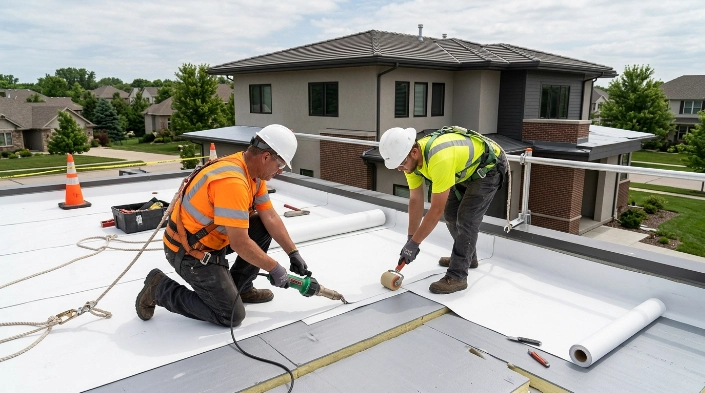
A roof replacement involves much more than putting new shingles on your house.
When a contractor performs a full tear-off, workers must first remove the existing roofing system before the new material can be installed. That creates a separate phase of labor and waste handling.
Removal may include:
- Stripping shingles, metal, tile, membrane, or wood roofing
- Removing old underlayment
- Pulling or managing old nails and fasteners
- Taking out deteriorated flashing when necessary
- Moving debris from the roof to a dumpster
- Protecting siding, windows, landscaping, and driveways
- Hauling waste to an approved disposal facility
- Paying landfill or recycling fees
- Cleaning the property after the tear-off
The more material that must be removed, the more time and disposal capacity the project usually requires.
A simple one-story home with one layer of asphalt shingles is generally easier to tear off than a steep two-story house carrying multiple old roofing layers.
What Is Included in a Roof Tear-Off?
Homeowners sometimes assume “roof removal” means removing the entire roof structure. Usually, it does not.
A normal roofing tear-off removes the exterior roofing materials so the contractor can reach the roof deck.
The roof deck, sometimes called sheathing, is normally plywood, oriented strand board, or another structural surface attached to the roof framing.
For an asphalt-shingle roof, a tear-off commonly exposes the deck by removing:
- Existing shingles
- Old underlayment
- Nails or fasteners as required
- Certain flashing or accessories being replaced
- Damaged materials around valleys, vents, walls, or penetrations
The rafters or trusses underneath normally remain in place unless structural damage requires separate repairs.
How Much Can Roof Removal Affect Replacement Cost?
There is no single removal price that applies to every house.
Contractors may calculate tear-off as a separate line item, include it within an installed price per roofing square, or quote one total price covering both removal and installation.
A roofing square equals 100 square feet of roof surface.
Several variables determine how much of your replacement budget goes toward removal.
| Cost Factor | Why It Changes Removal Cost | Question to Ask |
|---|---|---|
| Roof size | More surface means more material and debris | How many roofing squares are being removed? |
| Existing layers | Multiple layers require more labor and hauling | How many layers are included in the quote? |
| Roofing material | Tile, slate, metal, wood, and shingles differ in weight and handling | Is my existing material more expensive to remove? |
| Roof pitch | Steep roofs may require slower work and added safety measures | Is steep-roof labor included? |
| Number of stories | Moving debris from higher roofs can take more time | Is height reflected in the estimate? |
| Accessibility | Fences, landscaping, narrow drives, or limited dumpster access can increase handling | Are access-related charges included? |
| Disposal fees | Local waste fees vary | Does the price include hauling and disposal? |
| Hidden damage | Rotten decking may appear after tear-off | How is additional decking priced? |
The key is to compare scope of work, not just the final number.
A quote that appears cheaper may simply exclude tear-off, disposal, decking repairs, or other necessary work.
One Roofing Layer vs. Multiple Layers
The number of existing roof layers can make a noticeable difference.
Removing one layer of ordinary asphalt shingles is relatively straightforward. If another roof was previously installed over those shingles, the crew must remove significantly more material.
Multiple layers mean:
- More tear-off labor
- More debris
- Greater dumpster capacity
- Higher hauling weight
- More disposal fees
- More nails and old fasteners
- Additional cleanup
There may also be older installation problems hidden between the layers.
If you do not know how many roofs are currently installed, ask your roofing contractor to inspect the edges of the roof and other accessible areas before finalizing the estimate.
Roofing Material Makes a Difference
Not every roof is equally easy to remove.
Asphalt Shingles
Asphalt shingles are common on U.S. homes and relatively familiar to roofing crews. Removal still requires considerable labor, especially when multiple layers are present.
Metal Roofing
Metal panels may require careful removal of screws, clips, seams, flashing, and trim pieces. Large panels also need controlled handling to avoid creating hazards around the property.
Tile Roofing
Concrete and clay tile are heavier than standard asphalt shingles. Removing and transporting large quantities can increase labor and disposal requirements.
Wood Shakes
Old wood shakes can be brittle, fragmented, or installed over spaced sheathing. The condition underneath may require additional preparation before a modern roofing system can be installed.
Flat Roofing and Membranes
EPDM, TPO, modified bitumen, and built-up roof systems have different attachment methods. Adhesives, insulation, fasteners, multiple membrane layers, and saturated materials can affect removal difficulty.
Do not assume two roofs of the same size should have identical tear-off pricing.
Why Contractors Often Recommend Removing the Old Roof
Tearing off the existing roofing does more than create a clean installation surface.
It gives the contractor an opportunity to see what is happening underneath.
The Deck Can Be Inspected
Old shingles can hide:
- Rotten plywood
- Soft decking
- Water staining
- Delamination
- Previous leak damage
- Improper repairs
- Deterioration around vents or chimneys
Covering the old roof may leave these problems hidden.
Flashing Can Be Evaluated
Flashing directs water away from vulnerable areas such as chimneys, walls, valleys, skylights, and roof penetrations.
Old or improperly installed flashing can be a major source of leaks.
The New Roof Starts With a Known Surface
A clean deck allows the roofing crew to install underlayment, leak barriers, flashing, fasteners, and roofing materials without relying on the condition of an unknown older system.
Can You Install a New Roof Without Removing the Old One?
Sometimes an additional roofing layer may be allowed, depending on local building requirements, the roofing material, existing roof condition, manufacturer requirements, and the number of layers already present.
This is sometimes called a roof-over or overlay.
An overlay may reduce tear-off and disposal work, but it has important limitations.
It can make it harder to inspect the deck. Existing irregularities may affect the appearance of the new roofing. Future removal may also become more expensive because both layers eventually have to come off.
An overlay is generally a poor shortcut when the existing roof has:
- Active leaks
- Soft or damaged decking
- Significant curling or deterioration
- Multiple existing layers
- Structural problems
- Serious flashing failures
- Widespread storm damage
The contractor should explain why an overlay is appropriate rather than recommending it solely because it lowers the initial price.
Hidden Decking Damage Can Increase the Final Bill

This is one of the most important budgeting issues in a roof replacement.
Even a careful inspection cannot always reveal every damaged section of decking before tear-off.
Once the old roofing is removed, workers may discover wood that is:
- Rotten
- Soft
- Delaminated
- Water damaged
- Sagging
- Unable to hold roofing fasteners properly
Damaged decking usually should not simply be covered with new roofing.
Your proposal should explain how unexpected wood replacement will be handled.
For example, ask whether the contract states:
- How much decking replacement is included
- The price for additional sheets
- Whether repairs require homeowner approval
- Whether photographs will document discovered damage
Avoid signing a contract that simply says “wood extra” without explaining how extra work will be priced.
Expert Tip: Before the old roof comes off, ask the contractor for the exact unit price for unexpected decking replacement. A clearly written price helps prevent an unpleasant change-order surprise halfway through the project.
Does Disposal Add to the Roof Replacement Cost?
Yes. Roofing debris has to go somewhere.
A typical tear-off can produce a substantial amount of heavy waste. Contractors may need dumpsters, trailers, dump trucks, or specialized equipment to remove it.
Disposal costs can depend on:
- Weight of the old roofing
- Number of roofing layers
- Local landfill charges
- Recycling options
- Distance to disposal facilities
- Dumpster size
- Number of loads required
Tile, slate, and multiple layers can create considerably more weight than a single asphalt-shingle layer.
Ask whether dumpster, hauling, disposal, and final cleanup are all included in the proposed contract.
Roof Pitch, Height, and Complexity Matter Too
Removal takes longer when crews cannot move around the roof easily.
A steep roof may require additional fall-protection planning and slower material handling. Dormers, valleys, skylights, chimneys, multiple roof levels, and tight working areas also increase labor.
Roof work involves serious fall hazards. OSHA’s residential fall-protection guidance emphasizes fall protection during residential roofing work.
For homeowners, the practical lesson is simple: do not climb onto a steep, damaged, wet, icy, or unstable roof to investigate tear-off conditions yourself.
Ground-level observations and attic inspections are safer starting points, but questionable roof conditions should be evaluated by a qualified roofing professional.
How Roof Removal Affects Warranties
Warranty terms vary considerably among manufacturers and contractors.
A material manufacturer may have installation requirements involving the deck, underlayment, fasteners, ventilation, or number of roofing layers.
The contractor may also provide a separate workmanship warranty.
Before choosing an overlay to save money, ask:
- Does this installation method meet the roofing manufacturer’s requirements?
- Will it affect the material warranty?
- Will the contractor provide the same workmanship warranty?
- Can the existing deck be properly evaluated?
- Are ventilation or moisture problems being hidden?
Never assume a lower-cost installation provides identical warranty protection.
Storm Damage and Insurance Considerations
If the replacement follows wind, hail, or another covered event, contact your insurer before authorizing major work when your policy requires it.
Photograph visible damage from a safe location and keep copies of contractor estimates, inspection findings, invoices, and correspondence.
Be cautious about high-pressure contractors appearing immediately after severe weather.
The Federal Trade Commission’s home-improvement scam guidance recommends checking licensing and insurance where applicable, obtaining multiple written estimates, and carefully reviewing contracts instead of automatically selecting the lowest bidder.
How to Compare Roofing Estimates Fairly
If one quote is significantly cheaper than another, check whether both contractors are quoting the same work.
Compare these items line by line:
- Measured roof area
- Number of layers being removed
- Tear-off labor
- Dumpster and disposal
- Decking allowances
- Underlayment
- Ice-and-water protection where required
- Flashing
- Drip edge
- Ventilation components
- Roofing material and product line
- Cleanup
- Permits
- Material warranty
- Workmanship warranty
The National Roofing Contractors Association’s contractor-selection guidance recommends obtaining a detailed written proposal and understanding the contractor’s insurance, supervision, scope of work, payment procedures, and warranties.
A lower quote is not necessarily a bad quote. It simply needs to cover the same work before you can make a meaningful comparison.
Common Mistakes Homeowners Should Avoid
- Assuming tear-off is included. Confirm it in writing.
- Comparing only total prices. Compare materials and scope line by line.
- Ignoring disposal charges. Ask whether dumpsters, hauling, and landfill fees are included.
- Leaving decking pricing undefined. Get a written unit price before work begins.
- Choosing an overlay solely because it is cheaper. Make sure the existing roof and deck are suitable.
- Ignoring ventilation. Replacement is an important opportunity to evaluate intake and exhaust ventilation.
- Walking on a damaged roof yourself. Loose shingles, rotten decking, steep slopes, and wet surfaces create serious fall hazards.
- Paying everything upfront. Use a written contract and payment schedule consistent with applicable state and local rules.
- Accepting storm-chaser pressure. Verify credentials and compare written proposals.
When to Consult a Licensed Roofing Contractor
Roof replacement is generally not an appropriate DIY project for most homeowners.
Consult a qualified roofing contractor when you notice:
- Repeated roof leaks
- Large areas of missing shingles
- Major wind or hail damage
- Sagging roof sections
- Soft or deteriorated decking
- Widespread shingle failure
- Damaged structural components
- Multiple existing roofing layers
- Persistent attic moisture
- Serious flashing problems
- An aging roof approaching the end of its serviceable life
Licensing requirements vary by state and locality, so verify the credentials required where your home is located.
A structural engineer or other qualified professional may also be appropriate if the roof shows significant sagging, framing movement, extensive structural deterioration, or concerns about supporting a substantially heavier roofing material.
FAQs
Does roof removal always add to replacement cost?
Usually, yes. A full tear-off requires additional labor, debris handling, hauling, disposal, and cleanup. Some contractors bundle these expenses into the total roof replacement price instead of listing them separately.
Is it cheaper to put new shingles over old shingles?
It may reduce immediate tear-off and disposal expenses when an overlay is permitted and appropriate. However, it can hide deck problems and may affect installation quality, warranty conditions, or future removal costs. Have the existing roof evaluated first.
How do I know whether roof removal is included in my estimate?
Look for terms such as tear-off, removal, disposal, dumpster, hauling, or existing roofing removal. If they are not clearly listed, ask the contractor to confirm the scope in writing before signing.
Does removing two layers cost more than removing one?
Normally, yes. Two layers require more labor, create more debris, increase weight, and may require additional hauling or disposal capacity.
What happens if rotten wood is found after the roof is removed?
Damaged decking generally needs to be repaired or replaced before the new roofing system is installed. Your contract should state how unexpected decking replacement is priced and approved.
Can I remove my own roof to save money?
Roof tear-off exposes homeowners to fall hazards, sharp fasteners, falling debris, unstable decking, heavy materials, and disposal challenges. Unless you have appropriate roofing experience, equipment, fall protection, and knowledge of local requirements, professional removal is usually the safer choice.
Conclusion
So, does roof removal add to replacement cost? In most full roof replacements, it does.
Removing the existing roofing requires labor, debris handling, hauling, disposal, property protection, and cleanup. The cost can increase further when the roof is steep, difficult to access, covered by multiple layers, made from heavy materials, or hiding damaged decking.
That added expense also serves an important purpose. A complete tear-off gives the roofing contractor access to the roof deck, making it possible to find deterioration and prepare a sound surface for the new roofing system.
Before signing a proposal, make sure the contractor clearly explains what is being removed, how many layers are included, who pays disposal fees, and how hidden decking damage will be priced.
Get several detailed written estimates and compare the actual scope rather than automatically choosing the lowest total. A clear contract now can prevent expensive surprises once your old roof starts coming off.