
Does Roof Material Affect Replacement Cost? A Homeowner’s Guide

If you are planning a roof replacement, the material you choose can change the final price substantially. Asphalt shingles, standing-seam metal, clay tile, slate, wood shake, and flat-roof membranes all have different material prices, installation requirements, labor needs, and expected lifespans.
So, does roof material affect replacement cost? Yes—often significantly. Material affects more than the price of the visible roof covering. It can influence tear-off costs, underlayment, fastening systems, structural reinforcement, flashing, labor time, disposal fees, and even the type of contractor needed.
For homeowners comparing estimates, understanding these differences makes it easier to determine why one quote may be thousands of dollars higher than another and whether a more expensive material offers enough long-term value to justify its cost.
Quick Answer
Yes, roof material directly affects replacement cost. Asphalt shingles are generally among the least expensive options, while metal, tile, slate, and specialty roofing usually cost more because of higher material prices, specialized installation, added labor, and sometimes structural modifications. Roof size, pitch, decking condition, location, and tear-off requirements also affect the final price.
Why Does Roof Material Affect Replacement Cost?
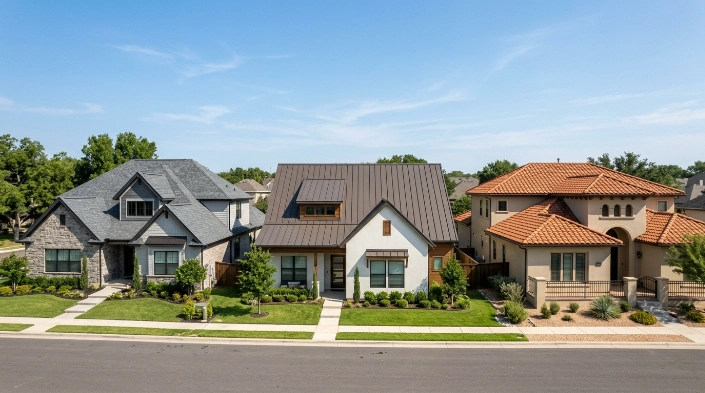
A roofing estimate is not simply the price of shingles or panels multiplied by the size of your house.
According to GAF’s guidance on factors that affect roof replacement cost, roof size is a major cost factor, but roofing material, slope, location, building requirements, and installation conditions also influence the estimate. Asphalt shingles generally cost less, while metal, wood, clay, slate, and other specialty systems tend to cost more.
Material choice affects several parts of the project:
- Price of the roofing product itself
- Amount and type of underlayment
- Installation time
- Crew skill requirements
- Fasteners and attachment systems
- Flashing details
- Tear-off and disposal
- Roof-deck preparation
- Possible structural reinforcement
- Ventilation requirements
- Manufacturer installation requirements
- Warranty options
Two homes with the same roof area can therefore receive very different estimates simply because one homeowner wants architectural asphalt shingles and the other wants clay tile or standing-seam metal.
Roof Material Replacement Cost Comparison

Exact prices vary considerably by region, roof size, contractor availability, roof complexity, and product grade. The table below is best used to understand relative cost rather than as a guaranteed estimate.
| Roof Material | Typical Upfront Cost Level | Installation Complexity | Approximate Service-Life Potential | Important Cost Consideration |
|---|---|---|---|---|
| Asphalt shingles | Lower | Low to moderate | 15–30+ years | Usually straightforward to install and widely available |
| Metal roofing | Moderate to high | Moderate to high | 40–70+ years | Specialized panels, flashing, and labor can increase cost |
| Clay/concrete tile | High | High | 50–100+ years | Heavy material may require structural evaluation |
| Slate | Very high | Very high | 75–100+ years | Specialized labor and structural support may be required |
| Wood shake/shingle | Moderate to high | High | 20–40+ years | Maintenance and local fire requirements can affect ownership cost |
| EPDM/TPO membrane | Moderate | Moderate | 20–30+ years | Mainly used on low-slope or flat roofs; detailing is critical |
These lifespan ranges are only general planning figures. Climate, installation quality, ventilation, maintenance, storm exposure, product quality, and roof design can shorten or extend actual service life.
Asphalt Shingle Replacement Costs
Asphalt shingles are one of the most common residential roofing materials in the United States. Their popularity helps keep both materials and qualified labor widely available.
They usually have a lower upfront replacement cost than premium systems because installers can cover roof areas relatively quickly and the supporting structure of a typical home generally does not require major changes.
However, not every asphalt roof has the same price.
Basic three-tab shingles may cost less than architectural or premium designer shingles. Upgraded impact-resistant shingles, enhanced warranties, ice-and-water barriers, improved ventilation, and premium underlayments can raise the project price.
A straightforward ranch-style home with a simple gable roof will also generally require less labor than a similarly sized house with valleys, dormers, skylights, chimneys, and multiple roof levels.
Lower material price does not automatically mean the lowest lifetime cost. A homeowner expecting to remain in a house for several decades may want to compare replacement frequency as well as initial price.
Metal Roofing Replacement Costs
Metal roofs usually require a larger upfront investment than standard asphalt shingles.
The National Roofing Contractors Association’s roofing-material guidance notes that residential metal roofing includes both panels and shingles. Metal is relatively lightweight and can provide long service life and strong resistance to adverse weather, depending on the particular system.
Cost varies significantly among:
- Exposed-fastener metal panels
- Standing-seam systems
- Steel shingles
- Aluminum roofing
- Copper and other premium metals
Standing-seam roofing usually requires careful measurements, custom panel work, clips, flashing, and experienced installers. Roof penetrations around chimneys, plumbing vents, skylights, and walls must also be detailed correctly.
This specialized workmanship helps explain why metal replacement estimates can be substantially higher than basic asphalt-shingle estimates.
Metal’s longer potential lifespan can offset some of that difference for homeowners planning to stay in the property long term.
Tile Roof Replacement Costs
Clay and concrete tile roofs are durable and visually distinctive, but replacement can become considerably more involved than installing shingles.
Tile itself is heavier, handling takes more time, and individual pieces can break if handled improperly.
More importantly, the house must be able to support the roofing system. NRCA specifically notes that tile is heavy and that homeowners replacing a different type of roof with tile should verify that the home can support the additional load.
If structural upgrades are necessary, the price can extend beyond normal roofing work.
Additional tile-related costs may include:
- Structural evaluation
- Deck repairs or reinforcement
- Heavy-duty underlayment
- Specialized flashing
- Labor-intensive removal
- Higher disposal costs
- Replacement of broken tiles during installation
Replacing an existing tile roof with a similar system may be simpler than converting a lightweight shingle roof to tile because the structure may already have been designed for the load.
Slate Roof Replacement Costs
Natural slate occupies the premium end of residential roofing.
The material can have exceptional longevity, but both material and installation are specialized. NRCA describes slate as extremely durable but more expensive than many other roofing materials and notes that proper application requires specialized skill and experience.
Slate is also heavy. A structural assessment may be necessary, particularly when converting from lightweight shingles.
Installation takes considerably longer than simply nailing down conventional shingles. Individual slate pieces need careful placement and fastening, and flashing details must be handled correctly.
The result is typically a much higher initial cost, although a properly designed and maintained slate roof can offer unusually long service life.
Wood Shake and Wood Shingle Costs
Wood roofs offer a distinctive appearance, but replacement costs can be higher than homeowners initially expect.
Material quality makes a difference, as does installation method. Cedar shakes, for example, require careful spacing, ventilation, underlayment, and flashing.
Climate is another consideration. Moist environments can increase maintenance requirements, while wildfire-prone areas may have building-code, insurance, or fire-rating considerations that limit certain products.
Before choosing natural wood, ask both your contractor and insurer whether there are local restrictions or coverage considerations.
Flat Roofing: EPDM and TPO Replacement Costs
Low-slope and flat roofs use different systems from conventional steep-slope residential roofs.
EPDM is a synthetic rubber membrane, while TPO is a thermoplastic membrane. These materials are frequently used on low-slope residential additions, garages, multifamily buildings, and light-commercial roofs.
Material price matters, but detailing often determines the project cost.
Contractors must properly handle drains, roof edges, parapet walls, vents, HVAC penetrations, seams, and flashing. Wet or damaged insulation beneath an existing membrane can also increase replacement costs once the old system is removed.
For this reason, a small flat roof is not necessarily inexpensive simply because it covers fewer square feet.
Material Is Only One Part of Your Roof Replacement Cost
Although roof material matters, homeowners should avoid assuming it determines the entire budget.
Several other variables can move an estimate significantly.
Roof Size
Roofers typically measure the actual roof surface rather than your home’s interior floor area.
In roofing, a square means 100 square feet of roof surface.
A 2,000-square-foot house could have significantly more than 2,000 square feet of roofing once slope, attached garages, porches, and complex sections are included.
Roof Pitch
Pitch describes how steep the roof is.
Steeper roofs can require more safety equipment, slower movement, additional staging, or specialized access. That usually increases labor.
Roof Complexity
Valleys, hips, dormers, chimneys, skylights, walls, and roof-to-roof intersections require extra cutting and flashing.
A simple rectangular roof will normally be faster to replace than an elaborate roof with the same surface area.
Tear-Off and Disposal
Removing one existing layer of asphalt shingles may be relatively straightforward.
Removing heavy tile, slate, multiple shingle layers, or an old membrane system may require considerably more labor and create more disposal weight.
Roof Decking Condition
Decking is the wood or structural surface underneath the roofing system.
Rotten, delaminated, or structurally damaged decking usually cannot simply be covered by new material. It must be repaired or replaced.
Because decking damage may not become completely visible until the old roof is removed, homeowners should ask how their contract handles unexpected wood replacement.
Flashing
Flashing is metal or another waterproof material installed around chimneys, valleys, walls, skylights, vents, and other vulnerable areas.
Poor flashing can cause leaks even when the main roofing material is new.
Replacing complex flashing properly can add labor and material cost, but cutting corners here can create expensive water problems later.
Can Switching Roof Materials Increase Replacement Cost?
Yes. Switching materials can cost more than replacing the roof with a similar system.
For example, moving from asphalt shingles to heavy tile may require an engineer or qualified professional to determine whether the roof structure can safely support the additional weight.
Changing materials can also require different:
- Underlayment
- Flashing
- Fasteners
- Deck preparation
- Ventilation details
- Edge treatments
- Structural support
Ask contractors to separate these conversion-related expenses in the estimate whenever possible.
That makes comparing a like-for-like replacement with a material upgrade much easier.
Upfront Cost vs. Long-Term Value
The cheapest roofing material at installation is not automatically the least expensive choice over the entire time you own the home.
Consider three questions:
How long do you expect to own the house?
A 50-year roofing system provides little financial benefit to someone who expects to move soon unless its other advantages add enough resale or personal value.
What weather does the roof face?
Hail, high winds, snow, coastal conditions, intense sun, wildfire exposure, and heavy rain can influence which material makes sense.
How much maintenance are you willing to perform?
Different roofing systems have different inspection and maintenance requirements.
Energy performance can matter as well. The U.S. Department of Energy explains that roof reflectance, climate, insulation, roof type, and heating and cooling efficiency can influence the potential energy benefit of a cool roof.
Expert Tip: Compare roofing quotes on the same scope of work. A low estimate may exclude upgraded underlayment, new flashing, decking allowances, ventilation improvements, tear-off, permits, or warranty coverage that another contractor has already included.
How Storm Damage Can Affect Material and Replacement Cost
Storm damage adds another layer to the decision.
Hail may crack tile, bruise shingles, damage metal finishes, or loosen components. High winds can lift shingles, panels, flashing, and ridge materials. Falling branches can damage both the roof covering and the underlying deck.
If insurance may be involved, document visible damage from a safe location and review your policy before authorizing major work.
Avoid assuming that a visibly damaged section is the only problem. Water may travel underneath the roofing material before appearing as a ceiling stain.
A professional inspection can help determine whether the problem is isolated or widespread.
When to Consult a Licensed Roofing Contractor
Roof replacement is generally not a practical DIY project for a typical homeowner.
You should consult an appropriately licensed or qualified roofing contractor when you notice:
- Active leaks
- Missing or badly damaged shingles
- Hail or wind damage
- Sagging roof areas
- Soft or deteriorated decking
- Widespread granule loss
- Repeated leaks despite repairs
- Damaged flashing
- An aging roof nearing the end of its service life
- A planned switch to a heavier roofing material
Safety is another major reason to leave detailed roof inspection and replacement to trained professionals.
OSHA’s residential fall-protection guidance explains that falls are a major hazard in residential construction and describes fall-protection requirements for roofing and related work.
NRCA also recommends that homeowners dealing with storm damage inspect roofs from ground level rather than climbing onto them without proper equipment and training.
Do not climb onto a steep, wet, icy, storm-damaged, or structurally questionable roof simply to obtain a closer look.
Common Mistakes Homeowners Should Avoid
- Choosing by price alone. Confirm exactly what materials, tear-off work, flashing, ventilation, permits, cleanup, and warranty coverage are included.
- Comparing different roofing systems as though they are identical. A premium metal system and a basic asphalt roof have very different material and installation requirements.
- Ignoring decking allowances. Ask how damaged plywood or boards will be priced if discovered.
- Changing to heavy roofing without checking structural capacity. Tile and slate may require professional evaluation.
- Assuming a long material warranty guarantees the entire roof. Manufacturer material warranties and contractor workmanship warranties are different.
- Ignoring ventilation. Poor attic ventilation can contribute to heat and moisture problems and may affect roof-system performance.
- Doing unsafe DIY inspections. Use binoculars or inspect from the ground when possible and call a professional when the roof needs close evaluation.
FAQs
Does roof material affect replacement cost more than roof size?
Both matter substantially. Roof size determines how much material and labor are needed, while material determines the cost and complexity of each unit of roofing. A large simple asphalt roof may sometimes cost less than a smaller but highly complex premium roof.
What is usually the least expensive roof material to replace?
For typical U.S. steep-slope homes, asphalt shingles are generally among the most affordable choices because materials are widely available and many contractors routinely install them. Premium shingle lines can cost considerably more than entry-level products.
Why does a metal roof cost more to replace?
Metal systems often involve more expensive products, specialized flashing, custom panel work, clips or fasteners, and experienced installers. Standing-seam systems in particular can require significantly more detailed installation than conventional asphalt shingles.
Is tile more expensive because of the material or labor?
Usually both. Tile is a heavier material that requires careful handling and specialized installation. In some homes, structural evaluation or reinforcement may also be necessary, increasing the total project cost.
Does replacing shingles with metal require new roof decking?
Not automatically. Existing decking may remain usable if it is structurally sound and compatible with the proposed roofing assembly. Damaged, deteriorated, or unsuitable decking may need repair or replacement. The contractor should evaluate it as part of the project.
Should I choose the roofing material with the longest lifespan?
Not necessarily. Lifespan is only one factor. Consider your budget, climate, structural capacity, maintenance expectations, insurance considerations, architectural style, how long you expect to own the home, and the availability of experienced installers.
Can a contractor give an exact replacement price before removing the old roof?
A contractor can usually provide a detailed estimate, but some underlying problems may remain hidden until tear-off begins. Ask the contractor how unexpected decking damage, structural repairs, or other concealed conditions will be documented and priced.
Conclusion
So, does roof material affect replacement cost? Absolutely. Asphalt shingles generally provide a lower-cost path to replacement, while metal, tile, slate, wood, and specialty membrane systems may involve higher material prices, additional labor, specialized installation, or structural considerations.
But material is only part of the equation. Roof size, pitch, design complexity, tear-off requirements, damaged decking, flashing, ventilation, regional labor rates, warranties, permits, and contractor qualifications can all influence your final estimate.
Instead of choosing the lowest number, ask several qualified roofing contractors to quote the same scope of work and clearly identify the material, underlayment, flashing, ventilation, decking allowances, warranty coverage, and cleanup included.
That gives you a much stronger basis for deciding which roof provides the right combination of upfront cost, durability, safety, and long-term value for your home.