
Does Roof Pitch Affect Replacement Cost? What Homeowners Should Know

If you are collecting estimates for a new roof, you may notice that two homes with similar floor plans can receive very different quotes. One reason is roof pitch.
So, does roof pitch affect replacement cost? Yes. Roof pitch can affect how much roofing material is needed, how quickly a roofing crew can work, what safety equipment is required, and how difficult it is to move shingles and tools around the roof.
A moderately sloped roof is generally easier to replace than a very steep or complicated roof. However, pitch is only one part of the estimate. Roofing material, roof size, tear-off requirements, decking condition, flashing, ventilation, accessibility, local labor rates, and roof complexity also matter.
This guide explains exactly how roof pitch affects roof replacement costs and what homeowners should look for when comparing contractor estimates.
Quick Answer
Yes, roof pitch affects replacement cost because steeper roofs usually require more labor, additional fall-protection equipment, slower installation, and sometimes more roofing material. A steep roof can therefore cost more to replace than a low- or moderate-slope roof of a similar footprint, although material type, roof complexity, and local labor prices also influence the final estimate.
What Is Roof Pitch?
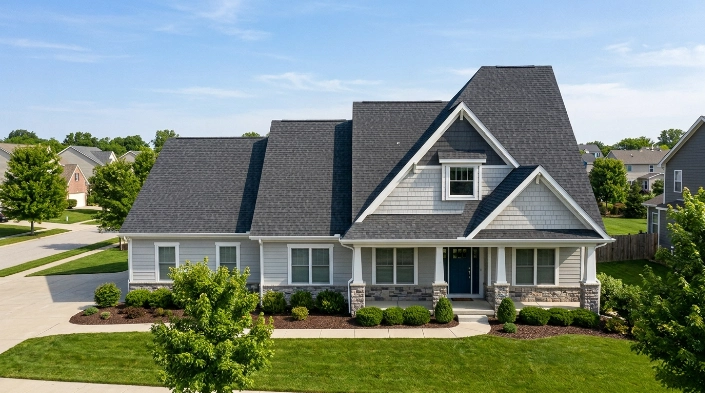
Roof pitch describes how steep a roof is.
In the United States, contractors usually express pitch as the number of inches a roof rises vertically for every 12 inches it runs horizontally.
For example:
- 2:12 pitch: rises 2 inches for every 12 inches of horizontal run
- 4:12 pitch: rises 4 inches
- 6:12 pitch: rises 6 inches
- 8:12 pitch: rises 8 inches
- 12:12 pitch: rises 12 inches
A 12:12 roof forms roughly a 45-degree angle and is significantly steeper than a typical 4:12 or 6:12 residential roof.
Pitch also matters when choosing roofing materials. GAF’s guidance on minimum slopes for asphalt shingles explains that asphalt shingles generally require at least a 2:12 slope, while roofs between 2:12 and below 4:12 need additional roof-deck protection.
Why Roof Pitch Changes Replacement Cost

The effect of pitch is mostly about three things: roof surface area, labor difficulty, and worker safety.
As a roof becomes steeper, workers cannot move around it as quickly or easily. Materials may need to be staged differently, and additional fall-protection systems may be required.
The actual roof surface may also be larger than it appears when you look only at the home’s floor area.
1. Steeper Roofs Can Have More Surface Area
Imagine two houses with the same basic footprint.
If one has a relatively shallow roof and the other has a steep roof, the steep roof has longer sloping surfaces. That means it can require more shingles, underlayment, flashing, fasteners, and other materials.
A simplified pitch multiplier illustrates the difference:
| Roof Pitch | Approx. Area Multiplier | Approx. Roof Area From 2,000 Sq. Ft. Projection* |
|---|---|---|
| 4:12 | 1.054 | 2,108 sq. ft. |
| 6:12 | 1.118 | 2,236 sq. ft. |
| 8:12 | 1.202 | 2,404 sq. ft. |
| 10:12 | 1.302 | 2,604 sq. ft. |
| 12:12 | 1.414 | 2,828 sq. ft. |
*Simplified example before adding overhangs, waste, dormers, valleys, hips, or other roof features.
Roofing materials are commonly estimated in squares, with one roofing square equal to 100 square feet of roof area.
Therefore, even if two houses have similar living space, their roofing-material requirements can differ substantially.
2. Steeper Roofs Usually Require More Labor
Labor is one of the largest parts of a roof replacement estimate.
On a relatively walkable roof, workers can tear off old shingles, inspect the decking, install underlayment, and place new roofing materials more efficiently.
A steep roof changes the process.
Workers may need to:
- Move more slowly
- Remain connected to fall-protection equipment
- Use roof brackets or staging
- Reposition ladders more frequently
- Carry smaller quantities of material
- Secure tools and materials more carefully
- Spend additional time setting up safety systems
Those steps take time.
Because roofing crews often price jobs partly according to expected labor hours and difficulty, a steep roof may receive a higher labor charge even before material differences are considered.
3. Fall Protection Becomes More Important
Steep roofing is not simply harder. It can be significantly more hazardous.
OSHA’s residential construction fall-protection guidance states that workers performing residential construction six feet or more above lower levels generally need appropriate fall protection, such as guardrails, safety nets, or personal fall-arrest systems, subject to the applicable rules and circumstances.
OSHA also defines roofs above a 4:12 slope as steep roofs for certain construction fall-protection provisions.
For homeowners, the practical point is simple:
A properly operated roofing company should account for worker safety in the job rather than cutting corners to produce the lowest possible quote.
Safety equipment, anchors, harnesses, staging, training, and setup time may contribute to labor costs.
Does a Low Roof Pitch Always Cost Less?
Not necessarily.
Although moderate slopes can be easier to work on, extremely low roof slopes can require different materials or installation techniques.
For example, asphalt shingles are not suitable for every low-slope situation. GAF states that most asphalt shingles require a minimum 2:12 slope, while shingle roofs between 2:12 and below 4:12 require additional roof-deck protection.
Very low-slope or flat sections may instead use systems such as:
- EPDM
- TPO
- Modified bitumen
- Built-up roofing
- Certain properly designed metal systems
These systems have different labor methods and material prices.
So a flatter roof is not automatically the cheapest roof to replace.
How Much More Does a Steep Roof Cost?
There is no universal steep-roof surcharge that applies to every roofing company.
Contractors may calculate difficulty in different ways. Some adjust the labor rate according to pitch. Others incorporate roof difficulty into the overall price per square.
Factors affecting the additional cost include:
- Exact roof pitch
- Number of stories
- Roof height
- Accessibility around the house
- Roofing material
- Number of valleys and hips
- Dormers and skylights
- Chimneys and penetrations
- Existing roofing layers
- Decking condition
- Amount of flashing work
- Required safety setup
- Local labor costs
For that reason, homeowners should be cautious about applying a single percentage found online to every steep roof.
A detailed written estimate is more useful.
A Simple Example
Suppose one homeowner has a relatively straightforward 4:12 gable roof while another has a 10:12 roof on a house with a similar footprint.
The 10:12 roof may have:
- More actual roof surface area
- More bundles of shingles to install
- More underlayment
- Greater fall-protection requirements
- Slower tear-off and installation
- More difficult material handling
All six factors can increase the total price.
Pitch Is Different From Roof Complexity
Homeowners sometimes focus entirely on steepness, but roof complexity can matter just as much as pitch.
A large, simple gable roof with a moderately steep slope may be easier to replace than a smaller roof filled with:
- Valleys
- Intersecting roof sections
- Dormers
- Skylights
- Chimneys
- Turrets
- Multiple elevations
Each intersection requires additional measuring, cutting, flashing, sealing, and attention to water drainage.
Complex roofs also create more material waste because shingles or metal panels must be cut to fit irregular sections.
When comparing bids, ask whether the contractor’s measurement includes both pitch and roof complexity.
How Roofing Material Changes the Equation
Pitch affects roofing materials differently.
Asphalt Shingles
Asphalt shingles are common on pitched residential roofs.
Steeper asphalt-shingle roofs may increase labor because workers must carefully position themselves while tearing off and installing shingles.
Extremely low slopes create a different concern: water drains more slowly.
GAF explains that roofs from 2:12 to below 4:12 require additional roof-deck protection because lower slopes do not shed water as quickly.
Metal Roofing
Metal roofing can work on a variety of slopes depending on the specific system.
Installation difficulty can increase substantially on steep roofs because large metal panels must be moved, aligned, and fastened safely.
A steep metal roof can therefore require specialized installation methods and experienced crews.
Tile Roofing
Clay and concrete tiles are heavy and can be difficult to transport across a steep roof.
Workers also have to avoid cracking installed tiles while moving around the roof.
That combination can increase labor time.
Wood Shakes
Wood shake installation is already relatively labor-intensive compared with many asphalt-shingle systems. A steep pitch may further slow installation and increase safety requirements.
Low-Slope Membrane Roofs
EPDM, TPO, and similar membrane systems are generally associated with low-slope roofs.
Their cost structure differs from steep-slope shingle roofing because installation methods, seams, insulation, drainage, and flashing details are different.
Other Factors That Can Cost More Than Pitch
Roof pitch matters, but homeowners should avoid evaluating an estimate based on pitch alone.
Several other conditions can significantly change the project price.
Damaged Roof Decking
Decking is the plywood, OSB, or other structural surface underneath the roofing system.
If contractors remove the old shingles and discover rotten or damaged decking, sections may need replacement before the new roof can be installed.
Leaks, trapped moisture, and long-term neglect can increase the chance of decking problems.
Multiple Roofing Layers
Removing multiple layers takes additional time and increases disposal costs.
Local building codes and manufacturer instructions may also affect whether another roofing layer can legally or appropriately be installed.
Flashing
Flashing directs water away from vulnerable areas such as:
- Chimneys
- Walls
- Valleys
- Skylights
- Plumbing vents
Replacing complicated flashing can add labor even on roofs with moderate pitch.
Ventilation
Poor attic ventilation can contribute to excessive heat and moisture problems.
A replacement project may therefore include ridge vents, intake vents, or other ventilation upgrades.
Storm Damage
Hail and wind can damage shingles, flashing, vents, decking, and other roof components.
The Insurance Institute for Business & Home Safety provides research and homeowner information about roof performance, including how roofing systems respond to wind and hail conditions.
If storm damage is involved, document the condition before repairs and understand your insurance company’s claim requirements.
Roof Pitch and Roof Lifespan
A steeper roof does not automatically last longer.
Pitch can influence drainage, snow movement, sun exposure, wind exposure, and installation methods, but roof lifespan depends heavily on the complete roofing system.
Important factors include:
- Roofing material
- Installation quality
- Ventilation
- Climate
- Storm exposure
- Maintenance
- Flashing quality
- Underlayment
- Manufacturer requirements
For example, water generally drains quickly from a steep roof, but steep sections can experience significant wind exposure.
The most important goal is matching the roofing system to the slope and installing it correctly.
Roof Pitch and Warranty Coverage
Pitch can also matter when reviewing manufacturer warranties.
Certain products have minimum slope requirements and specific installation instructions.
Installing a roofing product outside those requirements may create performance problems and potentially affect warranty eligibility depending on the manufacturer’s terms.
Before approving a roof replacement, ask the contractor:
- Is this material approved for my roof pitch?
- Are special underlayment requirements involved?
- Does my pitch change the fastening method?
- Are additional manufacturer installation steps required?
- Will the installation comply with the warranty requirements?
Never assume that a roofing product is suitable simply because it physically fits on the roof.
Expert Tip
Expert Tip: When comparing roof replacement estimates, ask each contractor to show the measured roof area, pitch, number of squares, tear-off quantity, and major complexity factors. Comparing these measurements can reveal why one estimate is significantly higher or lower than another.
Can You Measure Roof Pitch Yourself?
You can estimate pitch from inside an attic or from measurements taken at the roof edge, but homeowners usually do not need to climb onto the roof.
Modern roofing contractors commonly use aerial measurement systems, satellite imagery, drones, or physical measurements to determine roof dimensions and pitch.
Avoid climbing onto a steep roof simply to check its pitch.
Even an apparently dry roof can be slippery because of loose granules, algae, dust, moisture, damaged shingles, or unstable decking.
Professional roof work involves significant fall hazards, and OSHA maintains specific fall-protection requirements and guidance for roofing operations.
When to Consult a Licensed Roofing Contractor
Contact a qualified roofing contractor when you notice:
- Recurring roof leaks
- Missing or damaged shingles
- Significant storm or hail damage
- Sagging roof areas
- Soft or damaged decking
- Widespread shingle deterioration
- Water stains in the attic
- Persistent moisture or ventilation problems
- An aging roofing system approaching the end of its expected service life
A professional assessment is particularly important for steep roofs.
Contractors can inspect areas that homeowners should not attempt to access without the proper training and safety equipment.
For major structural sagging or suspected framing damage, the roofing contractor may also recommend evaluation by a structural professional.
Common Mistakes Homeowners Should Avoid
- Comparing only the final price. Check roof area, materials, labor scope, underlayment, flashing, ventilation, and cleanup.
- Assuming house square footage equals roof square footage. Pitch, overhangs, and roof design change the actual surface area.
- Choosing the lowest quote automatically. A very low estimate may exclude necessary work or adequate safety procedures.
- Ignoring decking costs. Ask how damaged plywood or OSB will be priced if discovered after tear-off.
- Using the wrong roofing material for the slope. Manufacturer slope requirements matter.
- Climbing onto a steep roof to inspect it yourself. Use ground-level observations and qualified professionals instead.
- Failing to confirm warranty terms. Ask whether both manufacturer and workmanship warranties are included.
- Not checking the contractor’s licensing and insurance requirements. Requirements vary by state and locality, so verify what applies where you live.
Questions to Ask Before Accepting an Estimate
A good roof replacement proposal should make the scope reasonably clear.
Ask:
- What is my roof pitch?
- How many roofing squares are included?
- Is there a steep-roof labor charge?
- How many existing roofing layers will be removed?
- What underlayment will be installed?
- How will damaged decking be priced?
- Is new flashing included?
- Are ventilation changes included?
- What safety measures will the crew use?
- What workmanship warranty is included?
Getting these answers makes it easier to compare contractors on an equal basis.
FAQs
Does roof pitch affect replacement cost?
Yes. A steeper roof can require more roofing material, additional safety equipment, and more labor time. Pitch is therefore one of several factors contractors consider when pricing a replacement.
What roof pitch is considered steep?
For OSHA construction fall-protection terminology, a roof with a slope greater than 4:12 is considered a steep roof. Contractors may use their own pricing categories when determining steep-roof labor charges.
Does a 12:12 roof cost more to replace than a 4:12 roof?
It often can, assuming other conditions are similar. A 12:12 roof has a larger surface area for the same horizontal projection and is substantially more difficult for workers to navigate. Roof design and material choice can change the comparison.
Does a higher roof pitch require more shingles?
For homes with the same horizontal roof projection, a higher pitch creates more sloped surface area. That generally means more shingles or other roof-covering material is required.
Can asphalt shingles be installed on a low-pitch roof?
Most standard asphalt shingles require a minimum slope around 2:12, and installations from 2:12 to below 4:12 generally require special roof-deck protection according to applicable manufacturer instructions. Always verify the requirements for the exact product being installed.
Should I measure my roof pitch myself?
You generally do not need to climb onto your roof. Contractors can measure pitch using physical tools, aerial measurements, or digital measurement systems. For safety, homeowners should avoid walking on steep, wet, damaged, or unfamiliar roofs.
Why do two roofing contractors give different estimates for the same steep roof?
Contractors may use different labor rates, measurement methods, material allowances, waste percentages, safety procedures, warranty packages, and assumptions about decking or flashing. Compare the full scope of work rather than looking only at the final price.
Conclusion
So, does roof pitch affect replacement cost? Yes. Roof pitch can influence material quantity, installation speed, fall-protection requirements, roof accessibility, and overall labor difficulty.
However, pitch should never be considered alone.
Roof size, material type, decking condition, roof complexity, flashing, ventilation, existing roofing layers, storm damage, and local labor rates all contribute to the final estimate.
The smartest approach is to obtain detailed written estimates from qualified roofing contractors and compare the measurements and scope of work carefully.
Ask each contractor to identify your roof pitch, measured roof area, number of roofing squares, material specifications, safety considerations, and potential additional charges. That information will help you understand what you are paying for and make a more informed roof replacement decision.