
Does Roof Size Affect Replacement Cost? What Homeowners Need to Know

If you are planning a new roof, you may be wondering: does roof size affect replacement cost? Yes. Roof size is one of the biggest factors contractors use when estimating a replacement because a larger roof normally requires more shingles or panels, more underlayment, more fasteners, more tear-off work, and more labor.
However, size is only part of the equation. Two roofs with the same square footage can have very different replacement prices because of pitch, material, roof shape, damaged decking, access, flashing, ventilation, and local labor costs.
Understanding how roof size affects an estimate makes it much easier to compare contractor quotes and build a realistic budget.
Quick Answer
Yes, roof size affects replacement cost because larger roofs require more roofing material, labor, underlayment, fasteners, removal work, and disposal capacity. However, cost does not depend on size alone. Roof pitch, material, complexity, decking condition, access, ventilation, flashing, warranties, and local labor rates can significantly change the final price.
Why Roof Size Has Such a Big Effect on Replacement Cost
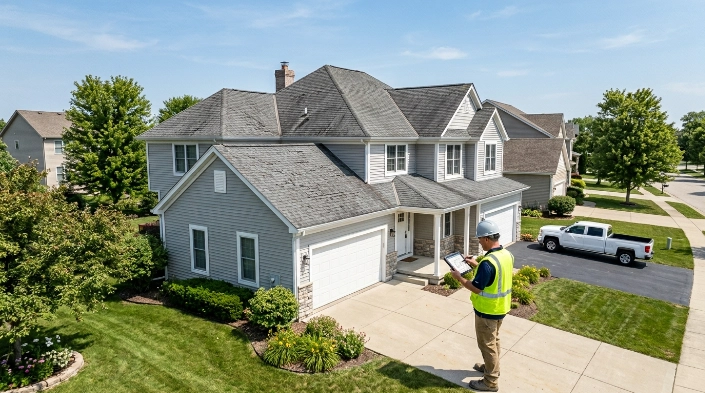
Roof replacement is largely a materials-and-labor project.
When the surface area increases, contractors generally need more of almost everything involved in the roofing system.
A larger roof may require more:
- Shingles, metal panels, tile, or membrane
- Underlayment
- Ice-and-water protection
- Starter strips and ridge caps
- Nails, screws, clips, or other fasteners
- Flashing materials
- Tear-off labor
- Dumpster or hauling capacity
- Installation time
- Cleanup labor
The National Roofing Contractors Association notes that the price of a new roof can vary based on factors including the materials selected, the contractor, the size and location of the home, local labor rates, and the time of year. Its consumer roofing resources also recommend obtaining several detailed proposals rather than judging a project by one price alone.
That is why roof area usually becomes one of the first measurements used when preparing a replacement estimate.
Roof Size Is Not the Same as House Square Footage
One of the most common homeowner mistakes is assuming that a 2,000-square-foot house automatically has a 2,000-square-foot roof.
It often does not.
Your home’s listed square footage usually describes interior living area. Roofing contractors are interested in the actual surface area of the roof.
That area may be affected by:
- Roof pitch or steepness
- Roof overhangs
- Attached garages
- Covered porches
- Additions
- Dormers
- Multiple roof levels
- Hips and valleys
- Other architectural sections
Consider two 2,000-square-foot houses.
One is a two-story rectangular home with a simple gable roof. The other is a sprawling one-story home with an attached garage, covered porch, several dormers, and multiple roof sections.
Even though both houses contain the same amount of living space, the second home could have substantially more roof surface to replace.
Always compare roof measurements rather than relying only on your home’s interior square footage.
What Is a Roofing Square?
Roofing contractors commonly measure roof area in squares.
One roofing square equals 100 square feet of roof surface.
For example:
- 1,500 square feet of roof area = about 15 roofing squares
- 2,000 square feet = about 20 squares
- 2,500 square feet = about 25 squares
- 3,000 square feet = about 30 squares
Those figures describe basic measured area before considering extra material needed for cuts, overlaps, ridges, valleys, installation patterns, and waste.
The amount of additional material needed varies with the roofing product and roof design.
A simple gable roof generally creates less cutting and waste than a roof filled with hips, valleys, dormers, and unusual intersections.
How Roof Size Changes Different Parts of the Estimate

A larger roof affects much more than the number of bundles or roofing panels purchased.
| Cost Factor | How Increasing Roof Size Can Affect It |
|---|---|
| Roofing material | More shingles, panels, tile, or membrane are required |
| Underlayment | More roof surface must be covered |
| Labor | Installation and tear-off generally take longer |
| Fasteners | More nails, screws, clips, or adhesives are needed |
| Disposal | More old roofing material must be hauled away |
| Decking repairs | A larger roof creates more potential area where damaged decking could be discovered |
| Flashing/accessories | Larger or more complex roofs may require additional components |
| Cleanup | More debris and jobsite work may be involved |
This is why contractors need an accurate roof measurement before producing a dependable proposal.
A rough online estimate can help you budget, but it cannot show hidden wood damage, deteriorated flashing, code-required upgrades, or difficult working conditions.
Does a Roof Twice as Large Cost Twice as Much?
Not necessarily.
If two roofs are otherwise identical, doubling the roof area will substantially increase the cost because material and labor quantities increase.
But replacement pricing is rarely perfectly proportional.
Some project expenses do not double just because the roof gets larger. Examples may include certain permit costs, delivery charges, administrative expenses, setup, or mobilization.
At the same time, a larger roof may contain additional valleys, penetrations, drainage areas, or multiple levels that raise labor requirements.
The practical rule is:
More roof area usually means a higher total replacement price, but you should not estimate the final bill simply by doubling the price of a smaller roof.
A Simple Roof Size Example
Imagine two straightforward homes that will receive the same asphalt-shingle roofing system.
Home A has approximately 1,500 square feet of roof surface.
Home B has approximately 3,000 square feet.
Home B will normally require roughly twice as much basic roof-covering area. It will also need considerably more underlayment, fasteners, tear-off work, disposal space, and installation labor.
However, suppose Home A has a steep roof with six valleys, two skylights, a chimney, and difficult backyard access while Home B has a low-complexity gable roof with easy driveway access.
The smaller roof may have a noticeably higher cost per square foot because it requires more detailed labor.
This is why size should be viewed as an important starting point rather than the only pricing factor.
Roof Pitch Can Increase Both Area and Labor
Roof pitch means how steep the roof is.
Pitch matters in two different ways.
First, a sloped roof has more actual surface than the flat footprint beneath it. As pitch increases, roof surface area can increase.
Second, steepness affects working conditions.
A steep roof may require slower movement, additional setup, specialized fall-protection procedures, more difficult material handling, and additional labor.
Roof work involves serious fall hazards. OSHA’s residential fall-protection guidance states that fall protection is critical during roofing activities and provides safety guidance intended to reduce fall-related injuries and fatalities.
For homeowners, the important lesson is simple: do not climb onto a steep, wet, storm-damaged, or unfamiliar roof simply to measure it yourself.
Contractors can use professional measuring methods, aerial imagery, building plans, or properly protected physical measurements.
Roof Complexity May Matter Almost as Much as Size
A 25-square roof is not automatically easier or cheaper than every 30-square roof.
Roof shape can create major differences in installation time.
Features that often add complexity include:
- Valleys
- Hips
- Dormers
- Skylights
- Chimneys
- Plumbing vents
- Roof-to-wall intersections
- Multiple elevations
- Turrets
- Low-slope sections connected to steep sections
These areas may require extra cutting, waterproofing, flashing, and careful detailing.
A large, simple gable roof can therefore be quicker to install per square than a smaller architectural roof containing many intersecting sections.
Roofing Material Changes the Cost of Every Extra Square Foot
Roof size becomes especially important when you choose a premium material.
Adding 500 square feet to an inexpensive roofing system and adding 500 square feet to a premium tile, slate, or standing-seam metal system do not have the same budget impact.
Common roofing choices include:
Asphalt Shingles
Asphalt shingles are widely used on U.S. homes and are generally among the more affordable mainstream choices.
A larger asphalt roof still means more bundles, underlayment, ridge material, fasteners, tear-off, and labor.
Metal Roofing
Metal roofing may have a higher upfront material and installation cost. Panel layout, roof geometry, flashing details, and installer experience can strongly influence the estimate.
Consequently, additional roof area can add more dollars to the overall project than the same amount of added area on a basic asphalt system.
Tile Roofing
Clay and concrete tile are heavy and can require specialized handling and installation.
If you are switching from a lighter roof to tile, the structure may also need evaluation to confirm that it can safely carry the load.
Flat and Low-Slope Roofing
EPDM, TPO, and other membrane systems are commonly used on appropriate low-slope roof sections.
Drainage layout, penetrations, insulation, substrate condition, seams, and edge detailing can all affect installation cost in addition to total area.
Material choice and roof size work together. You cannot accurately evaluate one without considering the other.
Tear-Off and Disposal Increase With Roof Size
A full replacement commonly involves removing old roofing before installing the new system.
The larger the roof, the more old material may need to be:
- Removed from the roof
- Lowered or transported safely
- Collected
- Loaded into containers
- Hauled away
- Disposed of properly
Multiple existing roofing layers can add even more labor and debris.
Heavy materials such as tile may also require different handling from asphalt shingles.
When reviewing an estimate, ask whether the price includes tear-off, hauling, dumpster charges, disposal fees, property protection, and final cleanup.
Hidden Decking Damage Can Change the Final Cost
Decking is the plywood, OSB, or other structural surface beneath the roof covering.
Some damaged decking can be identified before replacement, but contractors may not see the full condition until the existing roofing has been removed.
Possible problems include:
- Rot
- Moisture deterioration
- Soft or weakened sections
- Previous leak damage
- Improper earlier repairs
Larger roofs naturally contain more total decking area, but size alone does not determine how much repair will be necessary.
A smaller roof with years of unresolved leakage could need far more wood replacement than a much larger, well-maintained roof.
Ask your contractor to explain how unexpected decking replacement will be priced before work begins.
Flashing, Ventilation, and Drainage Also Affect Cost
Replacing a roof is not simply a matter of covering the deck with new shingles.
The system may also include:
- Chimney flashing
- Wall flashing
- Pipe boots
- Valley protection
- Drip edge
- Ridge ventilation
- Soffit or intake ventilation
- Ice-and-water membrane
- Gutters or drainage transitions
Ventilation deserves particular attention. NRCA notes that attic ventilation can help remove excess moisture under certain conditions and that some asphalt-shingle manufacturers make warranty coverage conditional on meeting ventilation requirements.
Increasing roof size can increase the amount of some accessories needed, but the roof’s design determines how much.
Does a Larger Roof Cost Less Per Square Foot?
Sometimes, but do not assume it will.
Certain fixed job costs can be spread across a larger project. That may occasionally make the effective cost per square foot slightly lower on a large, straightforward roof.
However, any possible economy of scale can disappear when the larger roof also has:
- Greater pitch
- Difficult access
- Multiple stories
- Numerous valleys
- Premium materials
- Extensive tear-off
- Decking damage
- Complex flashing
- More skylights or chimneys
For comparison purposes, ask contractors for both the total proposal price and the measured roof area.
More importantly, compare the scope of work line by line.
How Roof Size Relates to Lifespan and Warranty Coverage
A bigger roof does not automatically have a shorter lifespan.
Roof lifespan depends much more heavily on factors such as:
- Roofing material
- Installation quality
- Climate
- Storm exposure
- Ventilation
- Moisture control
- Maintenance
- Product quality
Size primarily changes how much material must eventually be repaired or replaced.
Warranty terms should also be reviewed carefully. Manufacturer material warranties and contractor workmanship warranties cover different things.
NRCA recommends carefully reading roofing warranties and understanding provisions that could void coverage. It also advises homeowners to obtain detailed written proposals showing the materials, scope, flashing, ventilation, installation method, payment procedures, and warranty terms.
Expert Tip
Expert Tip: When comparing roof replacement quotes, ask each contractor to write down the measured roof area, material system, tear-off scope, decking allowance, flashing work, ventilation work, disposal, permit responsibility, and warranties. Two quotes with different totals may not be pricing the same scope.
How to Compare Quotes for Different Roof Sizes
Do not focus only on the final dollar amount.
Use this process:
- Confirm measured roof area. Make sure each contractor is pricing approximately the same number of roofing squares.
- Confirm the roofing product. Compare manufacturer, product line, underlayment, accessories, and installation method.
- Check tear-off assumptions. Determine how many existing layers are included.
- Review decking terms. Ask what happens if rotten wood is discovered.
- Compare flashing and ventilation. Do not assume every proposal includes the same work.
- Review warranties. Compare both material and workmanship coverage.
- Verify contractor credentials. Check applicable licensing, insurance, references, and local requirements.
- Ask about exclusions. Find out what could become an additional charge.
NRCA’s guidance for selecting a roofing contractor recommends obtaining a written proposal with a complete description of the work and checking liability insurance, workers’ compensation coverage, references, warranties, supervision, and payment procedures.
Common Mistakes Homeowners Should Avoid
- Using interior square footage as roof area. The two measurements are not necessarily the same.
- Comparing quotes without checking measured size. One contractor may be pricing a different quantity.
- Assuming bigger always means the same cost per square foot. Complexity can change labor dramatically.
- Ignoring tear-off and disposal. These can represent meaningful project costs.
- Forgetting potential decking repairs. Hidden wood damage may appear after removal begins.
- Choosing the lowest proposal automatically. A cheaper estimate may include a different scope or material.
- Ignoring warranty details. Understand both material and workmanship coverage.
- Climbing onto the roof to measure it. Falls are a serious roofing hazard.
- Paying under pressure after a storm. Take time to review the contract and contractor credentials.
The Federal Trade Commission’s home-improvement scam guidance warns homeowners to carefully evaluate home-improvement arrangements and avoid rushed financing or payment decisions.
When to Consult a Licensed Roofing Contractor
Contact a qualified roofing contractor when you need an accurate replacement estimate or notice problems such as:
- Multiple or recurring leaks
- Missing or badly damaged shingles
- Major hail or wind damage
- Sagging roof areas
- Suspected rotten decking
- Widespread deterioration
- Damaged flashing
- Persistent attic moisture
- Roofing near the end of its expected service life
- Uncertainty about whether repair or replacement is appropriate
Professional evaluation is especially important after significant storm damage or when structural movement is visible.
If the roof is sagging or you are considering heavy materials such as tile or slate, a structural assessment may also be appropriate.
For an insurance claim, document damage from a safe location and follow your insurer’s claim procedures rather than attempting a risky rooftop inspection yourself.
FAQs
Does roof size affect replacement cost significantly?
Yes. A larger roof normally requires more roofing material, underlayment, fasteners, labor, tear-off work, and disposal capacity. However, pitch, complexity, material, access, and existing damage can be equally important when determining the final estimate.
Is roof square footage the same as house square footage?
Usually not. House square footage normally refers to interior living space. Roof surface area is affected by the building footprint, pitch, overhangs, garages, porches, additions, and roof design.
What does one square mean in roofing?
One roofing square equals 100 square feet of roof surface. Contractors often use squares when estimating material quantities and discussing project size.
Does a 3,000-square-foot roof cost twice as much as a 1,500-square-foot roof?
Not automatically. The larger roof needs substantially more materials and labor, but fixed costs, pitch, complexity, access, tear-off requirements, and roofing material can prevent the final price from being exactly double.
Why can a smaller roof cost more per square foot?
A smaller roof may have steep slopes, multiple valleys, skylights, chimneys, difficult access, several old roofing layers, or expensive materials. Those conditions can increase labor and installation difficulty.
Can I measure my roof myself to estimate replacement cost?
Ground-based measurements or available plans may help with rough budgeting, but climbing onto a roof carries serious fall risks. For an accurate replacement quote, allow a qualified contractor to determine the actual roofing area safely.
Should I choose the contractor with the lowest price per roofing square?
Not based on price alone. Compare materials, tear-off, flashing, ventilation, decking allowances, cleanup, warranties, insurance, contractor credentials, and the complete written scope before making a decision.
Conclusion
So, does roof size affect replacement cost? Absolutely. Larger roofs normally require more materials, labor, tear-off work, accessories, and disposal capacity, making roof area one of the most important factors in a replacement estimate.
But roof size should never be considered by itself.
Material type, pitch, architectural complexity, existing layers, damaged decking, flashing, ventilation, access, labor conditions, warranties, and local requirements can all change the final price.
The best next step is to obtain several detailed written estimates based on the actual measured roof. Compare the same scope of work, ask how unexpected repairs will be charged, review warranty terms, and verify the contractor’s credentials before signing.
A careful comparison gives you a much clearer picture of what your roof replacement should include—and helps you budget without relying on house square footage or a generic online estimate.