
How Much Does a Tile Roof Replacement Cost?

A tile roof can last for decades, but eventually cracked tiles, worn underlayment, storm damage, failing flashing, or repeated leaks may make replacement the smarter option. When that happens, one of the first questions homeowners ask is: how much does a tile roof replacement cost?
For most homes, tile roofing is more expensive to replace than a standard asphalt-shingle roof because the material is heavier, installation is more specialized, and the work often takes longer. Roof size, tile type, roof pitch, tear-off requirements, underlayment condition, labor rates, and structural repairs can all change the final bill.
This guide explains realistic tile roof replacement costs, what makes one estimate higher than another, hidden expenses to prepare for, and how to compare contractor quotes without looking only at the bottom-line price.
Quick Answer
How much does a tile roof replacement cost? A useful 2026 planning range is roughly $7 to $25 per square foot installed, although complex or premium projects can cost more. For a 2,000-square-foot roof surface, that can mean approximately $14,000 to $50,000 before major structural repairs or unusual site conditions.
Average Tile Roof Replacement Cost
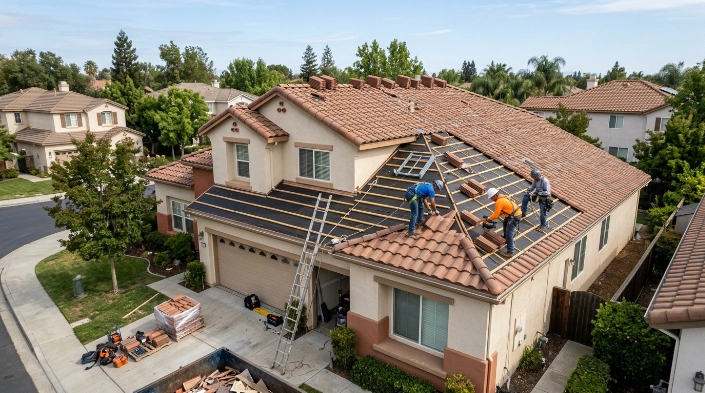
Tile roofing has one of the widest cost ranges among common residential roofing materials.
Current 2026 consumer pricing data places professional tile roof installation at roughly $8,500 to $26,000 for many projects, with a national average around $17,000. Larger roofs, premium clay or terracotta tiles, difficult access, steep slopes, extensive demolition, or structural work can push a replacement well above that range.
A practical way to budget is by actual roof surface area.
| Roof Surface Area | Broad Planning Range at $7–$25/Sq. Ft. |
|---|---|
| 1,500 sq. ft. | $10,500–$37,500 |
| 2,000 sq. ft. | $14,000–$50,000 |
| 2,500 sq. ft. | $17,500–$62,500 |
| 3,000 sq. ft. | $21,000–$75,000 |
These figures are budgeting estimates, not contractor quotes.
Your home’s living area is not the same as its roofing area. Overhangs, garages, porches, roof slope, dormers, hips, and multiple roof sections can make the actual roof considerably larger than the home’s interior square footage.
Roofers commonly measure roofing in squares. One roofing square equals 100 square feet of roof surface.
What Determines the Cost of Replacing a Tile Roof?

Two similar-looking houses can receive very different estimates. Tile roof replacement pricing depends on the complete roofing system, not just the visible tiles.
1. Tile Material
The type of tile is one of the biggest price variables.
Common options include:
- Concrete tile: Usually one of the more economical traditional tile choices.
- Clay tile: Often costs more than basic concrete and is available in many profiles.
- Terracotta tile: A premium clay product valued for its distinctive color and appearance.
- Specialty or imported tile: Can cost substantially more, especially if matching discontinued material.
- Synthetic tile: May provide a tile-like appearance with different weight, price, and installation requirements.
Current consumer cost data places many professionally installed tile systems between about $7 and $25 per square foot, with concrete generally toward the lower or middle portion of the range and premium clay or terracotta often higher.
Do not choose tiles on material price alone. Installation method, local climate, wind requirements, product availability, warranty terms, and the roof structure all matter.
2. Roof Size
A larger roof requires more:
- Tiles
- Underlayment
- Flashing
- Fasteners
- Ridge and hip materials
- Labor
- Tear-off work
- Disposal capacity
Ask your contractor for the measured roof area rather than assuming the price should be based on the square footage shown in your home’s real estate listing.
3. Roof Pitch and Complexity
Pitch means the steepness of the roof.
Steep roofs generally require more time, staging, fall protection, and careful material handling. Tile is also easier to damage through careless foot traffic than some roofing materials.
Complexity increases labor as well. Expect a higher estimate if your roof contains many:
- Valleys
- Hips
- Dormers
- Chimneys
- Skylights
- Roof-to-wall intersections
- Multiple levels
- Curved sections
- Unusual architectural details
A simple one-story roof can therefore cost considerably less per square foot than a steep, multi-level roof with the same overall area.
4. Removing and Disposing of the Existing Roof
A replacement estimate may include removing old tiles, underlayment, fasteners, flashing, and damaged materials.
Tile is heavy, so removal and disposal can involve more labor and hauling than lighter roofing products.
Ask whether your quote includes:
- Tear-off labor
- Dumpster or hauling fees
- Disposal fees
- Cleanup
- Magnetic nail sweeping where appropriate
- Protection for landscaping, driveways, windows, and exterior equipment
An estimate that leaves these items unclear may appear cheaper at first but produce additional charges later.
Does Every Tile Need to Be Replaced?
Not necessarily.
One important difference between tile roofing and many other systems is that the visible tile can sometimes outlast materials underneath it.
If existing clay or concrete tiles remain in good condition, a contractor may determine that some can be carefully removed, stored, and reinstalled after deteriorated underlayment and flashing are replaced. This type of project is sometimes described as a lift and relay or lift and reset.
Reusing serviceable tiles may reduce material costs, but it still requires substantial labor.
Some tiles will also break during removal or may already be too damaged to reuse.
Before choosing this approach, ask:
- How many existing tiles are expected to be reusable?
- Are matching replacement tiles available?
- Who is responsible for unexpected breakage?
- Is the new underlayment covered by a workmanship warranty?
- Will flashing and roof penetrations be replaced at the same time?
Underlayment Can Be a Major Cost Factor
The tiles you see from the ground are only one layer of the roof.
Below them is underlayment, which provides additional protection against water reaching the roof deck. Underlayment can deteriorate even when many of the tiles still look acceptable.
Persistent leaks on an older tile roof may therefore be caused by failed underlayment, flashing, penetrations, or installation details rather than by the tiles themselves.
Replacing underlayment across a large area requires removing the tile above it, which is why what appears to be a simple leak can sometimes turn into a significant roofing project.
Decking and Structural Repairs
The roof deck or decking is the wood or other structural surface attached to the roof framing beneath the roofing system.
Its true condition may not be completely visible until the old roofing is removed.
Water intrusion can lead to:
- Soft or rotten decking
- Delamination
- Mold or staining
- Damaged fascia
- Deteriorated framing
- Corroded fasteners
- Sagging areas
Ask each contractor how damaged decking is priced before signing the contract. Some estimates include a limited amount, while others charge for each sheet or unit of replacement material.
If significant structural movement, sagging, or framing deterioration is discovered, the project may require a structural assessment rather than a routine roofing repair.
Changing From Asphalt Shingles to Tile
If you are replacing an existing tile roof with another tile system, the house was generally designed or previously prepared for that type of roof load.
Changing from lightweight asphalt shingles to traditional clay or concrete tile is different.
Tile roofing is substantially heavier, so the structure may need to be evaluated before installation. A roofing contractor may recommend consultation with a structural professional if there is uncertainty about framing capacity.
Do not assume a house can accept a heavy tile roof simply because there are tile-roofed homes nearby.
Labor and Installation Quality
Tile installation is specialized work.
Poorly fitted tiles, incorrect flashing, weak attachment, improper underlayment detailing, and careless work around valleys or roof penetrations can shorten the effective life of an otherwise durable roof.
IBHS research also notes that tile can be vulnerable to accidental foot-traffic damage and that installation details matter under high winds. Homeowners in storm-prone areas should discuss tile attachment, roof-deck protection, flashing, and local wind requirements with an experienced installer. IBHS Roof 101 guidance
A lower labor quote is not automatically a better value if important installation steps are missing.
Flashing, Ventilation, and Drainage
A complete replacement should evaluate more than the tile.
Your contractor may need to address:
- Chimney flashing
- Valley flashing
- Wall flashing
- Pipe boots
- Skylight flashing
- Ridge and hip details
- Roof vents
- Intake ventilation
- Gutters
- Drainage
- Drip-edge details where applicable
Ventilation problems should also be addressed during replacement rather than covering them with a new roof.
Poor attic ventilation can contribute to excessive heat, moisture buildup, condensation, and deterioration of roof components.
Tile Roof Lifespan and Long-Term Value
One reason homeowners accept the higher cost of tile is durability.
Many clay and concrete tile systems can remain serviceable for several decades when properly installed and maintained. Current consumer guidance commonly describes tile roofs as capable of lasting 50 years or longer, although actual performance varies by product, underlayment, installation quality, climate, maintenance, and storm exposure.
However, tile lifespan and roofing-system lifespan are not always identical.
Tiles may remain reusable while underlayment, flashing, fasteners, sealants, or other components need major work.
When comparing replacement options, ask about the expected life and warranty of the entire system, not only the tile.
Repair or Replace: Which Makes More Sense?
A few cracked tiles do not automatically mean you need a complete roof replacement.
Repair may make sense when:
- Damage is limited to a small area.
- The underlayment remains sound.
- Leaks come from one identifiable detail.
- Compatible replacement tiles are available.
- The roof still has substantial useful life.
Replacement becomes more reasonable when:
- Leaks occur in several areas.
- Underlayment is failing across large sections.
- Many tiles are damaged or poorly attached.
- Flashing problems are widespread.
- Decking deterioration is extensive.
- Previous repairs repeatedly fail.
- Storm damage affects multiple roof planes.
- The cost of continued repairs is becoming difficult to justify.
Do not rely on one arbitrary percentage rule. Compare repair cost, roof condition, expected remaining service life, and the scope of future work.
What About Storm Damage and Insurance?
Hail and high winds can crack, loosen, or displace roofing tiles. IBHS notes that large hail can crack or shatter tile, with damage depending on tile material, thickness, and impact location.
After a significant storm, inspect the property safely from the ground and look for fallen tile pieces, visible gaps, interior water stains, damaged gutters, or debris.
Document visible damage before cleanup when practical and contact your insurer if you believe a covered event caused the loss.
Avoid signing an emergency replacement contract solely because a salesperson says insurance will pay for everything.
The Federal Trade Commission’s home-improvement scam guidance recommends verifying licensing and insurance where applicable, getting multiple written estimates, carefully reviewing contracts, and avoiding pressure to pay the entire project cost upfront.
How to Compare Tile Roof Replacement Quotes
Do not compare contractor estimates using only the total price.
Make sure each bid clearly describes the same scope of work.
Look for details about:
- Total measured roof area
- Tile manufacturer and product
- Underlayment type
- Tear-off and disposal
- Decking repair pricing
- Flashing replacement
- Tile attachment method
- Ridge and hip work
- Ventilation
- Permits
- Cleanup
- Manufacturer warranty
- Contractor workmanship warranty
- Payment schedule
- Handling of change orders
The National Roofing Contractors Association’s contractor-selection guidance recommends checking insurance coverage, asking for references, requiring a detailed written proposal, understanding project supervision, and carefully reviewing warranty terms.
Expert Tip
Expert Tip: Ask contractors to separate known costs from possible change-order costs. Before work begins, get written unit prices for decking replacement and other hidden damage that may only become visible after tear-off.
This makes competing estimates much easier to compare.
When to Consult a Licensed Roofing Contractor
Tile roof replacement is generally not a practical DIY project.
Consult an experienced roofing contractor when you have:
- Persistent or multiple leaks
- Missing or cracked tiles across several areas
- Storm or hail damage
- Sagging roof sections
- Deteriorated decking
- Widespread underlayment failure
- Chimney or skylight leaks
- A roof approaching the end of its useful service life
- Questions about structural support
- An insurance claim involving roof damage
Licensing requirements vary by state and locality, so verify what credentials are required where you live.
Roof work also creates a serious fall hazard. OSHA provides dedicated roofing and ladder fall-prevention resources for workers and employers. Homeowners should avoid walking on a steep or fragile tile roof simply to investigate a leak.
A ground-level inspection, attic inspection where safe, and professional roof evaluation are much safer options.
Common Mistakes Homeowners Should Avoid
- Comparing only the total bid. A cheaper estimate may exclude tear-off, flashing, permits, or decking repairs.
- Assuming every visible tile must be discarded. Some projects may allow usable tiles to be reset.
- Ignoring underlayment. The tiles may look good while waterproofing below them is failing.
- Choosing a contractor without tile experience. Tile installation requires different handling and detailing than asphalt shingles.
- Paying the entire bill upfront. Use a written payment schedule tied to the contract and local requirements.
- Ignoring structural concerns. Switching from a lighter roof material to traditional tile may require additional evaluation.
- Walking on the roof yourself. Tile can crack under foot traffic, and falls can cause life-changing injuries.
- Failing to confirm warranty details. Material and workmanship warranties may have different durations, exclusions, and maintenance requirements.
FAQs
How much does it cost to replace a 2,000-square-foot tile roof?
Using a broad installed planning range of about $7 to $25 per square foot, a 2,000-square-foot roof surface could cost roughly $14,000 to $50,000. Complex roofs, structural repairs, premium tile, and high-cost labor markets can push the price higher.
Is concrete tile cheaper than clay tile?
Concrete tile is commonly one of the less expensive traditional tile options. Clay and premium terracotta products can cost more. Installation complexity and labor can be just as important as material price, so compare complete installed estimates.
Can old roof tiles be reused?
Sometimes. Clay or concrete tiles that remain sound may be removed and reset while underlayment and flashing are replaced. A contractor should estimate expected breakage and confirm whether matching replacement tiles are available.
Why is tile roof replacement so expensive?
Tile roofs combine relatively costly materials with specialized labor. The project may also require careful tear-off, tile handling, new underlayment, flashing, disposal, decking repair, fall-protection measures, and more installation time than a simple asphalt-shingle roof.
Does homeowners insurance pay for tile roof replacement?
Insurance may cover roof damage caused by a covered event such as certain storms, but it generally does not pay simply because a roof is old or worn out. Coverage, deductibles, depreciation, exclusions, matching rules, and claim procedures vary by policy and state.
How long does a tile roof last?
Many tile roofs can remain serviceable for several decades, and some clay or concrete systems may last 50 years or longer under favorable conditions. Underlayment, flashing, fasteners, maintenance, weather exposure, and installation quality can affect when major work becomes necessary.
Should I repair or replace my leaking tile roof?
A localized leak may only require repair. Multiple leaks, widespread underlayment deterioration, severe storm damage, extensive decking problems, or repeated failed repairs make replacement worth comparing. Have the complete roofing system inspected before deciding.
Conclusion
So, how much does a tile roof replacement cost? A useful starting point is about $7 to $25 per square foot installed, but the actual total depends on roof size, tile type, pitch, labor, underlayment, tear-off work, flashing, structural condition, and your local market.
Tile roofing is expensive enough that small differences in project scope can change a quote by thousands of dollars.
Before signing a contract, get several detailed estimates from qualified contractors with genuine tile-roofing experience. Compare materials, underlayment, flashing, warranties, hidden-damage pricing, cleanup, and payment terms—not just the final number.
A careful inspection and clearly written scope of work are the best ways to turn a broad online cost estimate into a realistic budget for your home.