
How Much Does It Cost to Replace a Roof With Shingles? 2026 Homeowner Guide

Replacing a worn or leaking roof is a major home expense, so it is natural to want a realistic price before contacting contractors. If you are asking how much does it cost to replace a roof with shingles, the answer depends on much more than the price of the shingles themselves.
Current 2026 consumer cost data puts many professional shingle-roof replacements somewhere between roughly $6,000 and $24,000, with national averages hovering around $10,000 to $10,500. Your roof size, shingle grade, pitch, number of stories, old-roof removal, damaged decking, flashing, ventilation, permits, and local labor rates can all move your final quote significantly higher or lower.
This guide explains realistic shingle roof replacement costs, the biggest pricing factors, expenses homeowners sometimes overlook, and how to compare roofing estimates without focusing only on the lowest number.
Quick Answer
How much does it cost to replace a roof with shingles? In 2026, many U.S. homeowners can expect roughly $6,000 to $24,000 for professional shingle roof replacement. A typical project often lands near $10,000, but roof size, pitch, shingle type, labor, tear-off, decking repairs, flashing, ventilation, and location can substantially change the final price.
Average Cost to Replace a Roof With Shingles
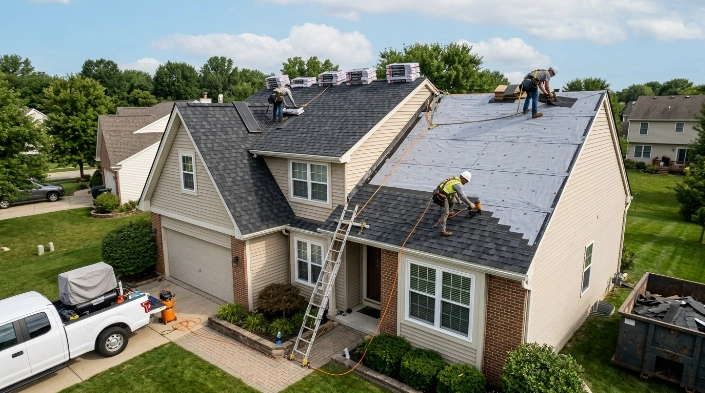
There is no single national price that applies to every house. Two homes with similar floor plans can have very different roofing costs.
HomeAdvisor’s 2026 data reports an average shingle-roof replacement cost of about $10,064, with a typical range of approximately $6,137 to $13,992. Angi’s 2026 shingle-roof data reports an average closer to $10,500, with many projects ranging from about $7,500 to $24,000.
The difference between those ranges is a useful reminder: national averages are budgeting tools, not estimates for your individual home.
For general planning, an installed asphalt-shingle roof may cost approximately $4 to $12 per square foot, depending on the project.
| Approximate Roof Area | Rough Installed Cost at $4–$12/Sq. Ft. |
|---|---|
| 1,000 sq. ft. | $4,000–$12,000 |
| 1,500 sq. ft. | $6,000–$18,000 |
| 2,000 sq. ft. | $8,000–$24,000 |
| 2,500 sq. ft. | $10,000–$30,000 |
| 3,000 sq. ft. | $12,000–$36,000 |
These numbers are broad planning ranges. A local contractor must inspect and measure your roof before giving you a dependable price.
Also remember that roof square footage is not necessarily the same as your home’s floor area. Roof pitch, overhangs, attached garages, porches, dormers, and multiple roof sections increase the actual surface area that needs shingles.
What Determines the Cost of a Shingle Roof Replacement?

Most homeowners naturally focus on shingle prices. However, materials are only part of the bill.
1. Roof Size
A larger roof needs more shingles, underlayment, flashing, fasteners, labor, disposal capacity, and installation time.
Roofers commonly measure roofing in squares. One roofing square equals 100 square feet of roof surface.
For example, a 2,000-square-foot roof contains roughly 20 roofing squares before extra material is added for cuts, waste, ridges, valleys, and complicated roof sections.
2. Type of Shingles
Asphalt shingles are available at several quality and price levels.
Three-tab shingles generally have the lowest upfront material cost. They have a flatter appearance and may provide around 15–20 years of service under suitable conditions.
Architectural shingles, sometimes called dimensional shingles, are thicker and create a more layered appearance. They often cost more but can provide a longer service life, commonly around 25–30 years depending on the product, climate, ventilation, and installation quality.
Luxury or designer shingles are heavier and may imitate slate or wood. They can significantly increase material and labor costs.
The cheapest shingle is not automatically the best value. Consider how long you plan to own the house, your local weather, warranty terms, and the condition of the roofing system underneath.
3. Roof Pitch and Complexity
Roof pitch describes how steep your roof is.
A low, simple gable roof is generally faster and easier to work on than a steep roof with dormers, valleys, skylights, chimneys, and multiple levels.
More complicated roofs require additional:
- Cutting and fitting
- Flashing work
- Safety equipment
- Labor time
- Waste material
- Setup and cleanup
A steep or difficult-to-access roof can therefore cost considerably more even when its total square footage is similar to a simpler roof.
4. Labor Costs
Labor is a major part of a roof replacement. HomeAdvisor estimates that labor can account for roughly 60% of a shingle installation project, although the exact percentage varies.
Labor rates are affected by:
- Your state and local market
- Roof height
- Roof pitch
- Number of roof penetrations
- Material type
- Crew experience
- Seasonal demand
- Accessibility around the house
A contractor with proper insurance, trained crews, reliable supervision, and strong workmanship may not submit the cheapest quote.
That does not necessarily mean the estimate is overpriced.
5. Removing and Disposing of the Old Roof
A complete replacement often involves tearing off existing shingles before installing the new system.
Tear-off allows the contractor to inspect the roof deck, locate hidden water damage, and create a clean surface for new materials.
HomeAdvisor’s 2026 data places old-roof removal broadly around $1 to $5 per square foot, depending on accessibility, roof conditions, labor rates, and other factors.
Your estimate should clearly state whether tear-off and disposal are included.
6. Damaged Roof Decking
Roof decking is the plywood or oriented strand board attached to the roof framing beneath the shingles.
A roofing crew cannot always know exactly how much decking needs replacement until the old shingles and underlayment are removed.
Rotten, soft, delaminated, or water-damaged decking must usually be replaced before new shingles are installed.
Ask your contractor:
- How much decking replacement is included?
- What is the price per additional sheet?
- Will damaged wood be photographed?
- Who approves additional work?
This prevents an unexpected change order from becoming a major surprise.
7. Underlayment, Flashing, and Ventilation
A shingle roof is a complete system rather than simply a decorative outer covering.
Underlayment is installed between the roof deck and shingles as an additional water-resistant layer.
Flashing directs water away from vulnerable areas such as chimneys, walls, valleys, plumbing vents, and skylights.
Roof ventilation helps manage attic heat and moisture.
Replacing worn flashing, correcting ventilation problems, or upgrading underlayment can increase your project price, but ignoring these components can shorten the life of a new roof.
Expert Tip: Ask each contractor to itemize the roof system—not just the shingles. A detailed quote should explain tear-off, underlayment, flashing, ventilation, decking allowances, shingles, cleanup, permits, and warranties.
Shingle Type and Lifespan Matter to Long-Term Cost
Upfront price is important, but it should not be the only consideration.
A less expensive roof that requires replacement sooner may ultimately cost more than a better roofing system that performs reliably for additional years.
| Shingle Type | Typical Cost Position | Approximate Planning Lifespan | Best For |
|---|---|---|---|
| 3-tab asphalt | Lower | Around 15–20 years | Budget-focused projects |
| Architectural asphalt | Moderate | Around 25–30 years | Many standard homes |
| Luxury/designer asphalt | Higher | Often 30+ years depending on product | Premium appearance and heavier construction |
These lifespan figures are approximate. Severe weather, poor installation, inadequate ventilation, extreme heat, repeated hail, maintenance problems, and manufacturer specifications can shorten or extend actual service life.
Costs That May Not Appear in the Initial Price
A roofing estimate can look inexpensive until optional or unforeseen expenses are added.
Before signing a contract, ask whether the price includes:
- Building permits
- Dumpster or disposal fees
- Existing roof removal
- Decking replacement allowance
- Ice-and-water protection where required
- New flashing
- Ridge vents or other ventilation work
- Chimney or skylight flashing
- Drip edge
- Gutter protection during installation
- Cleanup and magnetic nail collection
- Final inspection
- Manufacturer warranty registration
A detailed written proposal makes it easier to compare contractors fairly.
How Storm Damage Can Affect What You Pay
Wind and hail can damage shingles before they reach the end of their expected life.
Missing shingles, creases caused by wind, impact marks, exposed underlayment, damaged flashing, or active leaks deserve professional attention.
If the damage followed a storm, document visible problems from a safe location and contact your insurer promptly if you believe the damage may be covered.
Insurance coverage varies by policy. A policy may cover certain sudden weather-related losses while excluding normal aging, wear, neglect, or maintenance problems. Deductibles and settlement methods also differ.
Avoid assuming that a contractor’s statement automatically determines what your insurance company will cover.
Repair or Replace the Shingle Roof?
Not every roofing problem requires complete replacement.
A repair may make sense when:
- Damage is limited to one area.
- Only a few shingles are missing.
- One flashing detail has failed.
- The roof is relatively young.
- Decking is still sound.
- There are no widespread signs of deterioration.
Replacement becomes more reasonable when:
- Shingles are failing across multiple slopes.
- Leaks keep returning in different places.
- Large areas have curling, cracking, or granule loss.
- The roof is approaching the end of its expected service life.
- Storm damage is widespread.
- Decking has extensive moisture damage.
- Previous repairs are becoming frequent.
Repeatedly spending money on patches can be poor value when the overall roofing system is already near failure.
What Should a Good Roofing Estimate Include?
Do not compare roofing quotes using only the final price.
A useful proposal should identify:
- Exact shingle manufacturer and product line
- Estimated roof area
- Old-roof tear-off and disposal
- Underlayment specification
- Ice-and-water protection where required
- Flashing work
- Ventilation work
- Decking replacement pricing
- Permit responsibility
- Workmanship warranty
- Manufacturer warranty
- Cleanup process
- Payment schedule
- Estimated start and completion timing
The National Roofing Contractors Association’s contractor-selection guidance recommends checking a roofing contractor’s insurance, business credentials, references, written proposal, supervision practices, and warranty terms.
The FTC likewise recommends getting multiple written estimates and carefully reviewing the scope, materials, dates, pricing, and contractor information before signing. FTC guidance on avoiding home-improvement scams
Understand Roofing Warranties Before You Buy
A roofing project may have more than one warranty.
A manufacturer warranty generally applies to qualifying defects in roofing materials, subject to its specific conditions and exclusions.
A workmanship warranty comes from the installer and covers certain installation-related problems for the period stated in the contractor’s agreement.
Do not assume a “30-year shingle” means everything involving the roof will be repaired free for 30 years.
Ask:
- What exactly is covered?
- Is labor included?
- Is tear-off included for a covered claim?
- Is coverage prorated?
- Does the warranty transfer to a future owner?
- What installation or ventilation conditions could affect coverage?
- Who handles a future claim?
Keep your contract, invoices, warranty documents, product information, and photographs after the project is complete.
When to Consult a Licensed Roofing Contractor
Roof replacement is generally not a suitable DIY project for the average homeowner.
Call a qualified roofing contractor when you have:
- Active or repeated leaks
- Widespread shingle deterioration
- Sagging roof areas
- Soft or rotten decking
- Major hail or wind damage
- Multiple missing shingles
- Water stains spreading through ceilings
- Suspected structural damage
- An aging roof with repeated repairs
- Questions about ventilation or flashing
- A possible insurance claim
If you see sagging, major structural movement, or extensive water entry, the project may also require a structural assessment or other specialized evaluation.
Avoid walking onto the roof simply to inspect it yourself. Falls from roofs and ladders can cause severe or fatal injuries. OSHA provides extensive roofing and fall-prevention safety resources covering ladder use, fall protection, and roofing work.
Homeowners can often perform an initial visual check safely from the ground or through accessible attic areas instead.
Common Mistakes Homeowners Should Avoid
- Choosing the cheapest quote automatically. A low estimate may exclude tear-off, flashing, permits, ventilation, decking, or cleanup.
- Comparing different roofing systems as if they are identical. Confirm each contractor is quoting comparable materials and scope.
- Ignoring ventilation. Poor attic ventilation can contribute to moisture and heat problems.
- Failing to ask about decking costs. Hidden wood damage is one of the most common sources of added expense.
- Paying the full project price upfront. Review local laws and use a written payment schedule.
- Hiring an uninsured contractor. Ask for current liability and workers’ compensation documentation as applicable.
- Accepting high-pressure storm solicitations. The FTC warns homeowners about contractors who demand immediate decisions or large upfront payments after severe weather.
- Assuming every leak requires replacement. Localized flashing or shingle problems may still be repairable.
- Climbing onto a steep or damaged roof. Leave close inspection to properly equipped professionals.
FAQs
How much does it cost to replace a 2,000-square-foot roof with shingles?
Using a broad installed planning range of about $4–$12 per square foot, a 2,000-square-foot roof might cost approximately $8,000–$24,000. Your real price can differ because pitch, complexity, tear-off, decking, shingles, and local labor all matter.
Are architectural shingles much more expensive than 3-tab shingles?
Architectural shingles generally cost more because they use a heavier, dimensional construction. They may also provide a longer service life and different warranty options. Compare the total installed cost rather than material price alone.
Can new shingles be installed over old shingles?
It may be allowed in certain situations and jurisdictions, but a tear-off gives contractors a better opportunity to inspect the decking and correct hidden problems. Local building codes, manufacturer requirements, existing roof layers, and roof condition should guide the decision.
How long does a shingle roof replacement take?
Many straightforward residential asphalt-shingle replacements can be completed within a few days. Large, steep, complex roofs or projects involving extensive decking repairs can take longer. Weather can also delay the schedule.
Does homeowners insurance pay for a new shingle roof?
It depends on your policy and the cause of damage. Certain sudden wind or hail losses may be covered, while normal aging and maintenance-related deterioration commonly are not. Review your policy and insurer’s claim determination.
How many roofing estimates should I get?
Getting several written estimates makes it easier to compare materials, scope, warranties, and pricing. The FTC recommends obtaining multiple estimates and not automatically selecting the lowest bidder.
Should I replace my gutters at the same time as my roof?
Not necessarily. However, roof replacement can be a convenient time to inspect gutters, fascia, drip edge, and drainage. Replace gutters when they are damaged, leaking, poorly pitched, undersized, or nearing the end of their service life rather than simply because the shingles are being replaced.
Conclusion
So, how much does it cost to replace a roof with shingles? A realistic 2026 starting point for many U.S. homeowners is roughly $6,000 to $24,000, with many projects clustering around the $10,000 range. Your actual cost depends on roof area, shingle quality, pitch, labor, tear-off, decking repairs, flashing, ventilation, permits, and local market conditions.
The most useful number is not a national average—it is a detailed written estimate for your specific roof.
Get several qualified contractors to inspect the property, compare equivalent materials and scope, understand every warranty, and leave room in your budget for hidden decking or flashing repairs. A careful comparison now can help you avoid unnecessary costs while giving your home a roofing system designed to protect it for years.